Ακολουθήστε μας

Διεθνή

Η ηγεμονική αντιπαλότητα Ιράν – Σαουδικής Αραβίας
Δημοσιεύτηκε στις

The Iranian–Saudi Hegemonic Rivalry
Introduction: Exacerbated post-2011 hegemonic rivalry
The Persian Gulf region’s major powers, the Islamic Republic of Iran (IRI) and the Kingdom of Saudi Arabia (KSA), have, at least since the 2003 U.S.-led invasion of Iraq, been engaged in a hegemonic rivalry over power and influence, marked by differences in sectarianism, nationalism, revolutionary ideology, competition over regional hegemony, oil prices, attitudes towards the U.S. military presence in the Gulf, and towards the Hajj.

At the core of the rivalry stand maximalist positions taken by both sides that are hardly reconcilable with each other, barring a power-sharing arrangement constituting the only way out of this seemingly unending hegemonic rivalry. The latter has been exacerbated by (a) a post-2011 geopolitical environment marked by the Arab Uprisings (affecting both countries’ alliances and alignments structures), collapsing state orders (especially in Iraq and Syria), the relative retreat of U.S. power (especially over Syria) and Russia’s entry into regional crises (especially in Syria). Iran has been particularly successful in filling the vacuum left from failing and failed states by political and military means, often creating quasi-parallel state structures there; and (b) by the process of rapprochement between the IRI and the KSA’s traditional Western allies culminating in the July 2015 JCPOA, which deepened Riyadh’s strategic angst nurtured from its “Arab Spring” experience of the U.S. abandoning its long-time ally Hosni Mubarak of Egypt against the backdrop of a parallel process of a rehabilitation of Iran on the international arena, thus putting an end to the demonization of Iran under President Ahmadinejad that under the umbrella of rapprochement fuelled by economic and geostrategic interests turned into an equally misleading glorification of the IRI under President Rouhani and his Foreign Minister Zarif. At the core of Saudi mistrust has been the Western, above all, European tendency to extrapolate Tehran’s “constructive engagement” with the West on the nuclear issue onto other foreign policy fields, above all Syria and Iraq, where Iran has sought to maintain hegemony.

The hegemonic rivalry’s nature: Geopolitical and ideational factors

During the Cold War, Iran and Saudi Arabia formed the twin pillars of U.S. foreign policy in the Middle East, but this changed abruptly with the 1979 Iranian Revolution. Ever since, the IRI has pursued a foreign policy independent from the West, which pitted Tehran against the West, and the U.S. in particular, as well as with pro-Western states in the region, including Saudi Arabia.
In the 1990s, Iranian President Ali-Akbar Hashemi-Rafsanjani (1989–97) engaged in a bilateral process of détente between KSA and IRI, which in 1997 took the form of rapprochement during his successor Mohammad Khatami (1997–2005), before the rivalry experienced a revival under the subsequent Mahmoud Ahmadinejad administration (2005–13) – a development from ‘relative friendliness’ to a ‘state of enmity and rivalry’ that can be traced back to changes in the IRI’s dominant state identity during each of those periods as well as those in the geopolitics of the region. The rivalry can be seen through the lens of Realism, i.e. inter-state competition for survival or hegemony, but changes in the countries’ respective state identities, especially in the official foreign-policy discourse, have also assumed a significant role in shaping bilateral relations.[1]

The role of sectarianism

The Saudi–Iranian rivalry is not sectarian in nature nor is it the continuation of a supposedly ancient enmity between the Sunni and the Shiite branches of Islam. Rather, such interpretation is an integral part of an imperial divide-and-rule policy that most recently flourished during the first decade of the 2000s. The U.S.-led “regime change” in Iraq in 2003 and the dismantling of Saddam Hussein’s Baathist state paved the way for Iran’s rise in power, which peaked in the mid-2000s at a time when the U.S. occupation found itself entrenched in a “quagmire”. Since then, Iranian policy has arguably been marked by a degree of hubris, especially in Iraq and Syria.
Yet, there is sectarian dimension to this rivalry – with (a) 1979 and (b) 2003 being the watershed moments. (a) Despite the pan-Islamic nature of Ayatollah Khomeini’s “export of the revolution” discourse, it has had a sectarian appeal.[2] Not only that it reserved Iran – a predominately Shia country within a predominantly Sunni Islamic-majority world – the central place within a newly to be established pan-Islamic Middle East, its concomitant political message was clearly directed at Iran’s neighbouring Arab Sunni rulers dubbed illegitimate and acting as pawns of malign external forces (imperialism and Zionism), provoking Shia uprisings there. As such, it was perceived by the Arab monarchies’ ruling élites as implicit calls for “regime change.” Today, the IRI still engages in such rhetoric, although at a weaker level than compared to the revolutionary period, which GCC states view as threatening. More recently, at the 2016 IISS Manama Dialogue, Bahrain’s Foreign Minister insisted that dialogue with Iran would necessitate trust, which would lack given the persistence of the IRI’s velâyat-e faqih state doctrine that would bound the loyalty of the region’s Shia to Tehran rather than their respective home countries.[3] Indeed, the IRI tries to exploit the situation of Shias in the GCC, a move facilitated by the latter’s discrimination in some GCC states.
(b) The sectarian architecture of post-Saddam Hussein Iraq introduced by the U.S. occupation created the conditions for the establishment of a Shia-dominated central government in Baghdad, supported by both Washington and Tehran, much to the distaste of the KSA. In Iraq, Riyadh has long failed to exert political influence there; it was only by January 2016 that it re-opened its embassy in Baghdad after a 25-year hiatus.

Iran’s conventional view of Saudi Arabia: From denigration to demonization

It is fair to say that in both pre- and post-revolutionary Iran, a sense of civilizational superiority characterized the Iranian view held towards KSA. Generally speaking, the Arabian Peninsula’s petro-monarchies are seen in Tehran as superficial entities created by colonial powers as part of their imperialist divide-et-impera regional policies, which are not bound to survive long without their external supporters. In this vein, the KSA is viewed as either facilitating or being part and parcel of ‘imperialist–Zionist designs’ for the region. Iranian officials have continuously used derogatory language for those Arab leaders. Most recently, the IRI’s Supreme Leader Ayatollah Khamenei called KSA leaders “worthless, incompetent and mean” and “dairy cows” of the U.S., adding that “they will surely witness destruction, downfall, disaster and decline.”[4]
More recently, IS(IL) has been deemed by various factions of the IRI’s political élite as a creation of the KSA and/or the U.S., aimed at containing the rise of ‘Iranian–Shia’ power in Iraq and the Levant. Most recently, following the 7 June 2017 twin terrorist attacks in Tehran, Iranian officials have put the blame on the KSA that, according to them, acted via IS(IL) or the MKO (or MeK). The KSA has in recent years publically expressed support for this foreign-based militant Iranian opposition sect, confirming the IRI’s fears that the KSA is ready to support its most hated nemesis.[5] Meanwhile Speaker of Parliament Ali Larijani labeled the U.S. as an “international Daesh”, while Deputy Chief of Staff of the Iranian Armed Forces Major General Mostafa Izadi claimed Iran had evidence of U.S. support for IS(IL).[6]
Since the JCPOA, both Tehran (that found itself in a process of rapprochement with the the West) and Riyadh (that sought to defend its standing as the West’s prime partner in the wider Gulf region as well as to safeguard the latter’s support against Iranian regional power) engaged in a spat over who is the ‘West’s darling’ in the region. This competition has been best illustrated in the 2016 op-ed spats between Iranian Foreign Minister Mohammad-Javad Zarif and his Saudi counterpart Adel Al-Jubeir in the pages of U.S. élite newspapers, systematically trying to portray the other as the world’s leading state sponsor of terrorism in general and gravest threat to U.S. interests in particular.[7] 

Irreconcilable geopolitical aspirations (1): Leader of the Islamic world

Iran’s claim since the 1980s to constitute the nucleus – Umm al‐Qura, literally “the mother of all cities” – of the entire Islamic world, as reflected in the Supreme Leader’s title “Commander of the Faithful” (Amir‐ol‐mo’menin) or “Commander of the Affairs of the Muslims of the World” (Vali Amr‐e  Moslemin‐e Jahân), colludes with the similar claim put forward by KSA, whose King since 1986 has been granted the title “Custodian of the Tow Holy Mosques” (Khâdim al-arameyn ash-Sharifeyn), to be the leader of the Islamic world. This competition plays out on a number of levels, ranging from regional geopolitical alignments, their respective media engaging in sectarian propaganda, up to the Hajj pilgrimage.

Irreconcilable geopolitical aspirations (2): The wider Gulf region’s premier power

The Persian Gulf region is highly militarized, counting Iran, the GCC and the U.S. (with its Navy’s Fifth Fleet stationed in Bahrain) as its chief military powers. Over the last few years, the UK and France have also established military bases there. Meanwhile, it is widely held that Iran and the U.S. enjoy the greatest military prowess in the Gulf.
The security situation in the Gulf, where 40% of world oil exports pass through the Iranian-controlled Strait of Hormuz, remains highly volatile. While the GCC countries on the southern shore have assembled a huge military arsenal worth hundreds of billions of U.S. dollars, Iran on the waterways’ northern shore, subjected to a Western arms embargo practically since its 1979 revolution, has developed its own military-industrial complex with an expanding ballistic missile arsenal. In reaction to the latter, the GCC plans to purchase a missile defence system,[8] thus continuing the cycle of militarization instead of engaging in common-security efforts. Yet, the recent KSA/UAE-led confrontation on Qatar has surfaced deep contradictions within the GCC, making the latter’s survival in the current form an unlikely scenario. The crisis over Qatar has thus played into Iran’s hands.  
As the seemingly perennial dispute over the designation of the waterway separating Iran and the Arabian Peninsula illustrates, much of Tehran’s political élite sees the Persian Gulf as a region with Iran as its natural hegemon, thus calling on Western powers to abandon their military presence there. Since the 1979 revolution, Iran has seen itself encircled by U.S. military bases, occasionally exacerbated by threats of war, above all during the Bush/Cheney administration and its “regime change” agenda.
Yet, an arrangement between the littoral states of the Gulf might be feasible as an Iranian journalist working for state media writes:
The presence of Western powers such as the United Kingdom and the United States in and around the Persian Gulf has not led to a stable security order in the area. In fact, in past and present, their presence has been a source of conflict, aggression, and regional turmoil. A viable security order in the Persian Gulf region cannot be imposed from the outside and certainly not through perpetually feeding an arms race. It will only come about organically from within, established as a mutually beneficial pact by the littoral states and other immediate stakeholders.[9]

Iranian foreign-policy schools of thought’s accounts of Saudi Arabia: Defensive vs. Offensive Realism

The geostrategic views held on KSA vary starkly according to various Iranian foreign-policy schools of thought, ranging from confrontation to accommodation. 
When it comes to Iran’s regional policies, distinction has been made between Defensive and Offensive Realism.[10] On the one hand, Iranian behaviour towards reaching the nuclear deal has been informed by a foreign-policy school of thought that can be labelled ‘Defensive Realism.’ Here, Iran pursued the primary goal of establishing good relations with the West based on a win–win rationale in the conduct of foreign policy. This policy of engagement with Western great-powers is directed by the Rouhani administration and the Ministry of Foreign Affairs (MFA) which was granted the authority to deal with the nuclear dossier during the negotiations and which is headed by Iran’s former ambassador to the UN, Javad Zarif.
On the other hand, Iran’s policies in post-Saddam Hussein Iraq and in post-uprising Syria are informed by another foreign-policy school of thought that can be labeled ‘Offensive Realism.’ In Iraq, Iran has shown no interest in reversing the sectarian (and highly corrupt) system set up by Washington and sustained by Tehran, which favours the Shia majority over the Sunni minority. It continues to favour a Shia-led central government in Baghdad that exerts control over the country’s central and oil-rich, Shia-dominated southern regions. Tehran’s policies have thus deepened the de facto fragmentation of Iraq into three parts: the effectively autonomous northern part (Kurdish Regional Government), the Sunni areas where IS(IL) could expand, and the above-mentioned Shia regions. Tehran operates with Shia militias, which it has set up or which it supports, that have engaged – as have their Sunni counterparts – in numerous massacres, further alienating the Sunnis, many of whom started to consider IS(IL) as the only effective force that could re-establish their interests in the face of Iranian domination. Moreover, Iran also pursues a policy of economic development in those Shia regions of Iraq.[11]
On the KSA, both schools differ. Defensive Realists, on the one hand, highlight the importance of the KSA due to its role in global energy markets and its much more advanced standing in an international system that they see is still dominated by the West. Hence, they argue for the necessity of good relations with Riyadh, which can strengthen their overall objective of re-integrate into that international system. Offensive Realists, on the other hand, view the KSA more as a challenger for the IRI’s regional status which needs to be confronted on the basis of a zero-sum game rationale.
Despite its Defensive Realist credentials, the Rouhani administration has failed to realize the objective of improved ties with the KSA. While the latter’s rather uncompromising attitude has not facilitated any Iranian–Saudi détente, the Rouhani administration itself has failed to meaningfully engage with its GCC neighbours, despite such declarations at its beginning. Again, after his re-election on 19 May 2017, administration officials have stressed the priority to mend regional geopolitical tensions. Yet, the escalating tensions between the IRI and the KSA in late May/early June 2017 (Trump’s Riyadh visit and the Tehran attacks) have again, at least for the time being, shelved the prospect of an Iranian regional initiative towards détente.[12]

New configurations in post-ISIS West Asia: The Saudi–Iraqi rapprochement

Over the summer and into the fall, a new set of developments emerged that will impact the future course of Iranian–Saudi rivalry, above all the Qatar blockade, the territorial defat of ISIS in Syria and Iraq; , and Saudi–Iraqi rapprochement; the Qatar blockade; and the prospect of a new war between Israel and Hezbollah.
In June, a blockade was imposed on Qatar by Saudi Arabia, the United Arab Emirates (UAE), Egypt and Bahrain, kicking off the most serious crisis of the GCC to date. Although some have suggested the campaign against Qatar, primarily driven by the UAE in concert with Saudi-Arabia and prepared weeks in advance, was mainly due to its reluctance to fully align with Riyadh’s anti-Iran posture (as one of the demands put forward against Doha was to cut its ties with Tehran), the crisis’ underlying causes arguably lie elsewhere: in particular, in Qatar’s differing geopolitical preferences during and its support of the “Arab Spring”, putting it at odds with those of Saudi Arabia; and in general, in its decidedly independent foreign policy, embracing multi-alignment as is the case with other successful city-states. The intra-GCC discord has put a question mark over the very future of the Council, thereby potentially boosting Iran’s hand in the geopolitical rivalry across the Persian Gulf.
At least one month before the outbreak of the Qatar crisis, an e-mail leak revealed that Mohammed bin Salman (MbS), the heir to the Saudi throne, told two former U.S. officials that he “wants out” of the two-year war in Yemen that he himself had initially spearheaded but whose lack of success has become a liability for the Kingdom. Moreover, MbS also asked Iraq to mediate between the KSA and the IRI, while saying he was “okay” with Washington engaging with Tehran.[13] This has been widely interpreted as MbS being far more pragmatic than Saudi official rhetoric might have otherwise suggested.
By July and August, the territorial (and not necessarily the ideological) defeat of the self-proclaimed caliphate of the Islamic State (IS) in Iraq and Syria exacerbated concerns over the nature of Iran’s expanding influence under such circumstances,[14] leading some prominent observers to expect an escalation in the Saudi–Iranian rivalry.[15] Iran has been seen to engage in efforts to carve out an “arc of influence” consisting of land corridors across Iraq and Syria into Lebanon.[16] Earlier in the year, it has been reported that Iran was engaging in population swaps in lands freed from Sunni or IS control, repopulating them with Shia Muslims.[17] On 22 September, President Rouhani’s address at the UN General Assembly appeared to address these concerns, stating “Iran does not seek to restore its ancient empire, impose its official religion on others, or export its revolution through the force of arms. We are so confident in the depth of our culture, the truth of our face, and tenacity and longevity of our revolution that we will never seek to export any of them in the way neocolonialists do with the heavy boots of soldiers.”[18] Yet, given the fact that other power centres other than the presidency and the foreign ministry run Iran’s regional policies, it has to be doubted whether Iran’s neighbours have seen much credibility in his appeasing statements.

Moqtada al-Sadr goes Saudi Arabia: A watershed moment in Iraqi Shia geopolitical orientation

Yet, the most important development over the past months is the deepening rapprochement between Baghdad and Riyadh, which has already altered the geopolitical configuration according to which Iran has been the undisputedly dominant foreign force in Iraq. On 30 July, for the first time since 2006, Moqtada al-Sadr, the leader of the Sadrist movement, officially visited Saudi Arabia for three days, meeting Saudi Arabia’s new Crown Prince, Mohammed bin Salman in Jeddah. Prior to that, Saudi and Iraqi senior officials exchanged visits in an effort to boost bilateral ties. Perhaps most importantly, Saudi Foreign Minister al-Jubeir visited Baghdad in February, marking the highest Saudi official visit since 2004. In contrast to his earlier stances, Sadr this time around chose not to address Saudi domestic politics, above all its treatment of Shias, as well as regional policies, but instead to focus on Iraqi national issues alone. This was interpreted as Sadr, who has a broad popular base in Iraq, pursuing a non-sectarian stance in Iraqi politics, thereby trying to alleviate the sectarian tensions that threaten to tear up the country. Although Shia circles from Iran to Lebanon have criticized Sadr’s new stance,[19] the latter’s move needs to be seen against growing Iraqi Shia frustration over Iranian dominance in post-Sadddam Hussein Iraq.
For both Riyadh and Sadr, the recent Saudi–Iraqi rapprochement provides benefits. On one hand, Saudi Arabia undertook a foray into some Shia quarters so far mainly under Iranian influence. Part of this new strategy has been the opening of a new Saudi consulate in the Iraqi Shia stronghold of Najaf.[20] Beyond an additional $10 million from Riyadh to be paid to Baghdad to help with Iraq’s reconstruction,[21] Sadr after his visit ordered his followers to remove anti-Saudi posters all across his country.[22] On the other, Sadr effectively sent a signal to Tehran that he disposes of wider geopolitical options. In the same vein, two weeks later, Sadr travelled to the UAE where he met Sheikh Mohammed bin Zayed al-Nahayan, the Crown Prince of Abu Dhabi and deputy commander of the UAE armed forces.[23] Thus, some Iraqi Shia circles seem to be interested in diversifying their foreign relations (when it comes to support as well as resources) in order to counterbalance Iranian dominance in their country. In other words, the Saudi rapprochement with the Sadrists also prompts a rethinking of sectarianism in the region and its explanatory power for analyzing regional geopolitics, for thus far the idea has been dominant that the region’s Shias exercise almost exclusive loyalty to Iran. The same phenomenon applies to Sunni ties with Saudi Arabia.
The Saudi–Iraqi rapprochement is also in line with stepped-up efforts by Riyadh to diversify its foreign relations in order to reduce its geopoliticaldependency from Washington as well as to adjust to new geopolitical realities in its region where Russia has developed into an important player as the Syrian case has demonstrated. Thus, King Salman’s 4–7 October visit to Moscow, the first Saudi monarch to do so officially, must be seen in this vein. Saudi Arabia tries to establish a ‘gentlemen’s agreement’with Russia over Syria, who has been a de facto victor of the Syrian battleground and whose influence in Syria, for Riyadh, is preferable to that of Iran.[24] This comes against the backdrop of emerging differences between Russia and Iran over post-IS Syria, which had been buried under their joint campaign in favour of the Bashar al-Assad regime.[25]

Saudi–Iraqi rapprochement at its peak: Saudi Arabia–Iraq Coordination Council

The Saudi–Iraqi rapprochement reached its peak in the wake of President Donald Trump’s October 13th “decertification” of the Joint Comprehensive Plan of Action (JCPOA, or the Iran nuclear deal) and his announcement of a new Iran strategy.[26] Washington has in fact put its weight behind this rapprochement, as part of his own new strategy to contain Iranian power in the region. On his recent Middle East tour, , U.S. Secretary of State Rex Tillerson helped convene the inaugural meeting of the Saudi Arabia–Iraq Coordination Council on the 22nd of October in Riyadh with the attendance of Saudi Arabia’s King Salman and Iraq’s Prime Minister Haider al-Abadi who has also entertained good ties with Tehran. This new joint ministerial-level Saudi–Iraqi body officially aims to coordinate the fight against IS and to rebuild parts of Iraq destroyed by war. According to Tillerson, the Council would contribute to reforms geared towards building Iraq’s private sector and attract foreign investment. Enhanced Saudi investments, above all in Iraq’s agricultural and petrochemical sectors, are envisaged. Over that weekend, for the first time after 27 years (i.e. after Saddam Hussein invaded Kuwait in 1990), Saudi companies took part in an international business fair held in the Iraqi capital and commercial flights between the two were resumed.[27] In August, both countries said they planned to open the Arar land border crossing for trade, which was closed in 1990.
Following this trilateral meeting, Tillerson and his Saudi counterpart Al-Jubeir made a joint press conference where the Saudi desire to rebuild its ties with Iraq as well as their common anti-Iran agenda were highlighted. “The natural tendency of the two countries and people”, Al-Jubeir said, “is to be very close to each other as they have been for centuries. It was interrupted for a number of decades. We’re trying now to make up for lost ground.” Meanwhile Tillerson stated: “Iranian militias that are in Iraq, now that the fight against Daesh and ISIS is coming to a close, those militias need to go home. The foreign fighters in Iraq need to go home and allow the Iraqi people to regain control.” According to a U.S. senior official, the reference was made to the Qods Force, the IRGC’s foreign arm, as well as the Popular Mobilization Forces (PMF) that receive funding and training from Iran. The PMF was formed in 2014 when tens of thousands of Iraqis mobilized after IS had seized a third of their country’s territory, and it later became  part of Iraq’s official security apparatus.
The Trump administration’s intention to designate Iran’s IRGC as a terrorist organization plays into this context. At the same press conference, Tillerson also said: “Both of our countries believe that those who conduct business with the Iranian Revolutionary Guard, any of their entities – European companies or other companies around the globe – really do so at great risk.”[28] Hence, not only will Iran’s, and for most parts the IRGC’s, military and political standing in Iraq be challenged but also its economic clout with the Saudis entering the field. It has to be seen in how far such a potential terrorist designation of the IRGC will affect the latter’s operations in Iraq and the Baghdad governments dealings with it against the backdrop of assertive U.S. and Saudi positions.
In an apparent sign of frustration over this new Saudi–Iraqi rapprochement, Iran’s Foreign Minister Zarif tweeted on the same day: “Exactly what country is it that Iraqis who rose up to defend their homes against ISIS return to? Shameful US FP [foreign policy], dictated by [Saudi] petrodollars.”[29] The day after Trump’s announcement of a new Iran strategy, he had responded by tweeting: “Today, Iranians – boys, girls, men, women – are ALL IRGC; standing firm with those who defend us & the region against aggression & terror.”[30] This, together with President Rouhani’s similar statement, in fact, is a sign that despite differing preferences among Iran’s above-discussed foreign policy schools of thought, there is indeed a great degree of unity.
Although the Saudi–Iraqi rapprochement will fall short of eradicating  Iranian influence from Iraq, it can indeed be a positive development for Iraq itself which can now diversify its economic and political relations away from Iranian dominance. But despite Saudi and U.S. efforts to align Iraq into their emerging containment policy towards Iran, this cannot be taken for granted as Iran entertains a network of power and influence in the country established since the 2003 U.S.-led invasion.
These regional dynamics although all important in and of themselves, will not result in either Riyadh or Tehran taking the upper-hand in their continuing regional rivalry. While Iran seems be the beneficiary of the Qatar blockade and post-IS Iraq and Syria, Riyadh has signaled a pragmatic turn, forging closer ties with both Iraq and Russia in order to challenge Iran’s standing in post-IS West Asia. In the latter theatre of conflict, Iranian and Russian differences have now come to the fore in the wake of the territorial defeat of IS and the ensuing reconstruction of Syria.[31] Moreover, while the potential breakdown of the JCPOA will be detrimental to Iranian interests, a new war pitting Israel against Hezbollah (who last year openly admitted it is financed by Tehran) would result in unpredictable ramifications for the entire region.  
The Iranian–Saudi hegemonic rivalry is unlikely to vanish over night, for its driving forces, especially their irreconcilably geopolitical aspirations, continue to exist. Only when the costs should raise to a level that either side might see as threatening its regional or domestic standing, might there be a noticeable reduction of tensions.
[1] Adel Al Toraifi (2012)Understanding the Role of State Identity in Foreign Policy Decision-Making: The Rise of Saudi–Iranian Rapprochement (1997–2009), PhD thesis, The London School of Economics and Political Science (LSE).
[2] Vali Nasr (2006) The Shia Revival: How Conflicts Within Islam Will Shape the Future, New York & London: W.W. Norton & Company, pp. 143–144; Geneive Abdo (2017) The New Sectarianism: The Arab Uprisings and the Rebirth of the Shi’a–Sunni Divide, New York: Oxford University Press, p. 147.
[3] Ali Fathollah-Nejad, Brief aus Manama [Letter from Manama], impressions from the IISS (International Institute for Strategic Studies) Manama Dialogue 2016, WeltTrends: Das außenpolitische Journal, No. 125 (March 2017), pp. 19–21.
[4] “In the world of Islam, some worthless, incompetent and mean individuals have taken the fate of Islamic societies in their hands. For example, the governments that you witness – the Saudis and the like – are like this. This is because of drifting away from the Holy Quran. This is because of unfamiliarity with Quranic truths. Part of this originates from unfamiliarity and part of it is because of lack of faith. Of course, they believe in the Holy Quran on the face of it. […]They are friendly with and interested in kufar and they give them money out of their nations’ property. […] These idiots think that they can win the love of the enemies of Islam by giving them money and by helping them and the like. This is while there is no love. As they themselves have said, they are like dairy cows. They milk them and when the milking is over, they slaughter them. This is today’s condition of the world of Islam. They treat the enemies like that, but they treat the people of Yemen and the people of Bahrain like this. They behave towards them in an anti-religious manner. Of course, they will be destroyed. When you look at appearances, you should not be deceived by them. They will be gone. They are destructible and perishable: ‘For falsehood is by its nature bound to perish’ [The Holy Quran, 17: 81]. They are examples of falsehood and they will surely witness destruction, downfall, disaster and decline. There is no doubt about this. Of course, this might be done a little while sooner or later. This depends on the performance of believers and the believing community. If they act correctly, this will be done sooner, but if they do not act correctly, this will be done at a later time, but it will surely be done. Both they and those on whom they have pinned their hopes will be destroyed.” Officials of the Country Should Be Outspoken When Expressing Islamic Principles: Ayatollah Khamenei, speech at the annual Ramadhan Quranic recitation held on the first day of the month of Ramadan, khamenei.ir, 27 May 2017.
[5] Arash Karami, Saudi prince’s endorsement of MEK angers Iranian officials, Al-Monitor, 11 July 2016.
[7] See e.g. Zarif, Riyadh’s Reckless Sectarianism, New York Times, 11 Jan. 2016, p. A23 (New York edn.); Al-Jubeir, Why Iran Is Still Dangerous, New York Times, 20 Jan. 2016, p. A25 (New York edn.); Zarif, Rid the World of Wahhabism, New York Times, 4 Sep. 2016, p. A27 (New York edn.); Al-Jubeir, Iran Can’t Whitewash Its Record of Terror, Wall Street Journal, 18 Sep. 2016; Zarif, Arms Deals Won’t Bring Peace, New York Times, 26 May 2017, p. A27 (New York edn.).
[8]Missile-Defence Cooperation in the Gulf, London: The International Institute for Strategic Studies (IISS), 2016.
[9] Javad Heiran-Nia, A New Security Order Needed in the Persian Gulf, LobeLog, 8 Feb. 2017.
[10] See Farhi, Farideh & Lotfian, Saideh [Faculty of Law and Political Sciences, University of Tehran] (2012) ‘Iran’s Post‐Revolution Foreign Policy Puzzle’, in: Nau, Henry R. & Ollapally, Deepa M. (eds.) Worldviews of Aspiring Powers: Domestic Foreign Policy Debates in China, India, Iran, Japan, and Russia, New York: Oxford University Press, pp. 114–145.
[11] Ali Fathollah-Nejad, German–Iranian Relations after the Nuclear Deal: Geopolitical and Economic Dimensions, Insight Turkey, Vol. 18, No. 1 (Winter 2016), pp. 59–75.
[12] See e.g. the 27 May 2017 phone call between Rohani and the Qatari Emir: President in a phone call with Qatari Emir: Continuing cooperation with Persian Gulf neighbours one of Iran’s basic policies/We call for atmosphere of moderation, rationality among countries, president.ir (President Rouhani’s official website) 27 May 2017.
[13] Clayton Swisher & David Hearst, EXCLUSIVE: Saudi crown prince wants out of Yemen war, email leak reveals, Middle East Eye, 14 August 2017 (updated on 16 August).
[14] For a months-long report on Iranian regional policies, see Borzou Daragahi, Inside Iran’s Mission to Dominate the Middle East, BuzzFeed, 30 July 2017.
[15] For instance, Germany former Foreign Minister (1998–2005) Joschka Fischer, The Middle East’s Next War, Project Syndicate, 21 July 2017.
[16] See e.g. Martin Chulov, From Tehran to Beirut: Shia militias aim to firm up Iran’s arc of influence, The Guardian, 16 June 2017.
[17] Martin Chulov, Iran repopulates Syria with Shia Muslims to help tighten regime’s control, 14 January 2017. See also Bernedetta Berti,Reconstruction in Syria: The Next Battleground, Qantara.de: Dialogue with the Islamic World, 4 October 2017.
[18] Cited in FULL TEXT: Iran’s Hassan Rohani’s Address to UN General Assembly, Haaretz (online), 22 September 2017. Watch Rouhani’s address at the 72nd Session of the General Assembly of the UN here.
[20] See also the comment by Mohammed al-Sulami, the head of the Arabian Gulf Center for Iranian Studies (AGCIS) in Saudi Arabia, who on 30 July said: “We put all the Shiites under one category and said that they follow Iran. We should re-examine the Shiites again and revive the Shiite Arab authority in Najaf and Karbala, not in Qom.” (cited in Malik, op. cit.)
[24] See also Saudi Prince Turki Faisal Al Saud interviewed by Sputnik and the Russian television channel NTV:EXCLUSIVE: Saudi Prince Turki al-Faisal on Cooperation Between Moscow and Riyadh, Sputnik, 2 October 2017.
[26] For the latter, see The White House, President Donald J. Trump’s New Strategy on Iran, Office of the Press Secretary, 13 October 2017.
[27] See Stephen Kalin & Jonathan Landay,  Go home, Tillerson tells Iranian-backed militias in Iraq, Reuters, 22 October 2017; Tillerson Urges Europe to Avoid Iranian Markets, New York Times, 23 October, p. A7 (New York edn.); Nick Wadhams, Tillerson Warns Against Doing Business With Iran’s Revolutionary Guards, Bloomberg, 23 October 2017. 
[28]Ibid.
[31] On the latter, see Joseph Daher, Militias and crony capitalism to hamper Syria reconstruction, openDemocracy, 5 September 2017.
For more information on this publication: Please contact the Belfer Communications Office
For Academic Citation: Fathollah-Nejad, Ali.“The Iranian–Saudi Hegemonic Rivalry.” Iran Matters, October 25, 2017, https://www.belfercenter.org/publication/iranian-saudi-hegemonic-rivalry.

Αναλύσεις

Η Κίνα βρίσκει δρόμο που παρακάμπτει το Πακιστάν – Ο διάδρομος Ουαχάν αλλάζει τις γεωπολιτικές ισορροπίες

Μία νέα οδική αρτηρία μήκους 121 χιλιομέτρων στο βορειοανατολικό Αφγανιστάν δημιουργεί τις προϋποθέσεις για απευθείας χερσαία σύνδεση με την Κίνα, χωρίς διέλευση από το Πακιστάν. Η ολοκλήρωση του δρόμου στον ιστορικό διάδρομο Ουαχάν αποκτά ιδιαίτερη γεωπολιτική σημασία, καθώς το Πεκίνο αντιμετωπίζει σοβαρά προβλήματα ασφαλείας με τις επενδύσεις του στο Πακιστάν, ενώ η Καμπούλ επιδιώκει να μειώσει την εξάρτησή της από το Ισλαμαμπάντ.
Δημοσιεύτηκε

στις

από τον

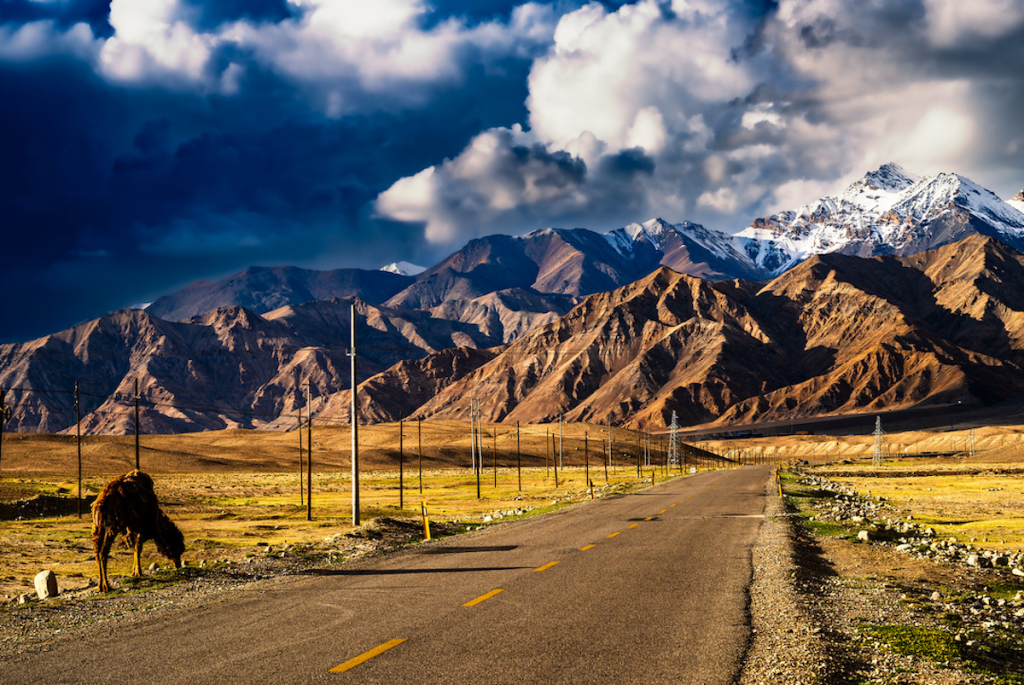
Μία σημαντική εξέλιξη στις χερσαίες μεταφορές και στις γεωπολιτικές ισορροπίες της Κεντρικής Ασίας καταγράφεται στο Αφγανιστάν, με την ολοκλήρωση νέου δρόμου στον στρατηγικής σημασίας διάδρομο Ουαχάν.

Σύμφωνα με ανάλυση του Imran Khurshid που δημοσιεύθηκε στις 9 Οκτωβρίου 2026 στο Asia Times, οι αφγανικές αρχές εγκαινίασαν οδική διαδρομή 121 χιλιομέτρων, η οποία εκτείνεται από την περιοχή Μπρογκίλ έως τα σύνορα με την Κίνα, στην επαρχία Μπανταχσάν.

Το έργο κόστισε περίπου 365 εκατομμύρια αφγάνι, ποσό που αντιστοιχεί σε περίπου 5,5 εκατομμύρια δολάρια.

Κατά τις αφγανικές ανακοινώσεις, κατασκευάστηκε από ντόπιους μηχανικούς και εργαζομένους, χωρίς τη συμμετοχή ξένων τεχνικών συμβούλων.

Η νέα διαδρομή φθάνει στα σινοαφγανικά σύνορα. Αυτό, ωστόσο, δεν σημαίνει ότι λειτουργεί ήδη πλήρης διεθνής εμπορευματικός διάδρομος, καθώς εξακολουθούν να υπάρχουν σημαντικοί τεχνικοί και συνοριακοί περιορισμοί.

Γιατί ο διάδρομος Ουαχάν έχει στρατηγική σημασία

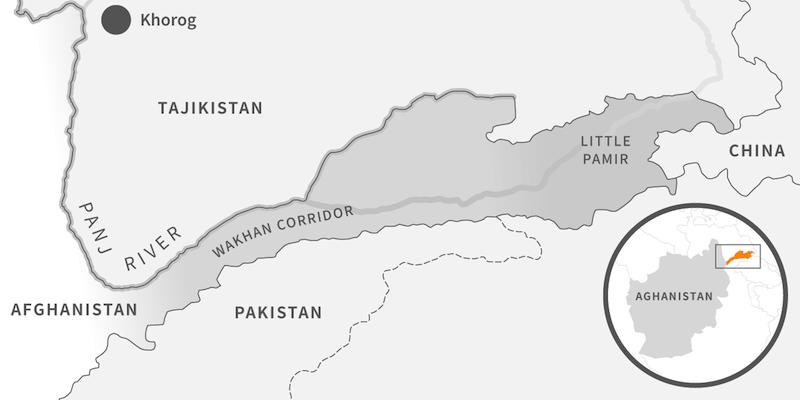
Ο διάδρομος Ουαχάν αποτελεί μια στενή λωρίδα αφγανικού εδάφους ανάμεσα στο Τατζικιστάν, το Πακιστάν και την Κίνα.

Η γεωγραφική του διαμόρφωση συνδέεται με τον ανταγωνισμό της Βρετανικής και της Ρωσικής Αυτοκρατορίας κατά τον 19ο αιώνα.

Η περιοχή διατηρήθηκε ως ζώνη διαχωρισμού των δύο αυτοκρατορικών σφαιρών επιρροής, αποτελώντας ένα από τα χαρακτηριστικότερα γεωγραφικά κατάλοιπα του λεγόμενου «Μεγάλου Παιχνιδιού».

Σήμερα, η ίδια περιοχή αποκτά νέα σημασία, αυτή τη φορά λόγω της προσπάθειας σύνδεσης της Κίνας με το Αφγανιστάν και ευρύτερα με την Κεντρική Ασία.

Ο δρόμος ανοίγει τη δυνατότητα δημιουργίας μιας εναλλακτικής οδού μεταφορών, περιορίζοντας δυνητικά την ανάγκη διέλευσης από το πακιστανικό έδαφος.
Το πρόβλημα της Κίνας με τον οικονομικό διάδρομο CPEC

Το ενδιαφέρον της εξέλιξης εντοπίζεται κυρίως στην προσπάθεια του Πεκίνου να περιορίσει την εξάρτησή του από ευάλωτες υποδομές.

Ο Οικονομικός Διάδρομος Κίνας–Πακιστάν, γνωστός ως CPEC, αποτελεί ένα από τα σημαντικότερα προγράμματα της κινεζικής πρωτοβουλίας Belt and Road.

Μέσω του συγκεκριμένου σχεδίου, η Κίνα επιχειρεί να ενισχύσει τις εμπορικές και ενεργειακές συνδέσεις της με τη Νότια Ασία και την Αραβική Θάλασσα.

Ωστόσο, η υλοποίηση των έργων έχει αντιμετωπίσει σοβαρές δυσκολίες.

Στην επαρχία Μπαλουχιστάν, οργανώσεις αυτονομιστών έχουν πραγματοποιήσει επανειλημμένες επιθέσεις εναντίον κινεζικών συμφερόντων, εγκαταστάσεων και εργαζομένων.

Οι επιθέσεις αυτές έχουν επιβαρύνει την ασφάλεια των υποδομών και έχουν αυξήσει το κόστος προστασίας των κινεζικών επενδύσεων.

Παράλληλα, έχουν διατυπωθεί καταγγελίες για καθυστερήσεις, κακοδιαχείριση και προβλήματα διαφάνειας σε επιμέρους προγράμματα του CPEC.

Η εδαφική διαμάχη με την Ινδία

Μια επιπλέον γεωπολιτική δυσκολία συνδέεται με τη διέλευση του CPEC από το Γκιλγκίτ–Μπαλτιστάν.

Η περιοχή διοικείται από το Πακιστάν, αλλά διεκδικείται από την Ινδία, στο πλαίσιο της ευρύτερης διαμάχης για το Κασμίρ.

Το Νέο Δελχί έχει αντιταχθεί επανειλημμένα σε έργα που διέρχονται από εδάφη τα οποία θεωρεί τμήμα της δικής του επικράτειας.

Αυτό σημαίνει ότι ο οικονομικός διάδρομος Κίνας–Πακιστάν δεν αποτελεί μόνο αναπτυξιακό πρόγραμμα, αλλά συνδέεται με μία από τις πιο ευαίσθητες εδαφικές αντιπαραθέσεις της Ασίας.

Η δημιουργία εναλλακτικών διαδρομών μέσω του Αφγανιστάν θα μπορούσε μακροπρόθεσμα να προσφέρει στο Πεκίνο μεγαλύτερη ευελιξία.

Δεν υπάρχει, πάντως, ένδειξη ότι ο δρόμος του Ουαχάν μπορεί σήμερα να αντικαταστήσει τις μεγάλες μεταφορικές υποδομές του CPEC.

Η Καμπούλ επιχειρεί να μειώσει την εξάρτησή της από το Ισλαμαμπάντ

Για την κυβέρνηση των Ταλιμπάν, το έργο έχει και μία σαφή πολιτική διάσταση.

Το Αφγανιστάν εξαρτάται σε σημαντικό βαθμό από συνοριακές διαβάσεις και μεταφορικούς άξονες που περνούν από το Πακιστάν.

Οι επανειλημμένες εντάσεις ανάμεσα στις δύο χώρες έχουν προκαλέσει κλείσιμο συνοριακών περασμάτων, διακοπές εμπορικών ροών και επιβάρυνση της αφγανικής οικονομίας.

Μια εναλλακτική χερσαία διέξοδος προς την Κίνα θα μπορούσε, εφόσον αναπτυχθεί και καταστεί λειτουργική, να μειώσει τη δυνατότητα του Πακιστάν να χρησιμοποιεί τη γεωγραφική του θέση ως μέσο πίεσης προς την Καμπούλ.

Η αφγανική πλευρά αντιμετωπίζει το έργο ως σημαντική υποδομή οικονομικής και στρατηγικής αυτονομίας.

Η στάση της Κίνας και της Ρωσίας

Παρά την προοπτική άμεσης σύνδεσης, το Πεκίνο δεν έχει εγκαταλείψει τον οικονομικό διάδρομο CPEC ούτε έχει ανακοινώσει ότι ο Ουαχάν θα τον αντικαταστήσει.

Η Κίνα εξακολουθεί να διατηρεί σημαντικά οικονομικά και στρατηγικά συμφέροντα στο Πακιστάν.

Αντίστοιχα, η Ρωσία ενδιαφέρεται για τη σταθερότητα του Αφγανιστάν και για την ανάπτυξη νέων δικτύων επικοινωνίας στην Κεντρική Ασία.

Η δημιουργία περισσότερων επιλογών διασύνδεσης ενδέχεται να περιορίσει την αποκλειστική σημασία ορισμένων παραδοσιακών μεταφορικών διαδρομών.

Η πραγματική αξία του Ουαχάν θα εξαρτηθεί από τη βελτίωση των οδικών υποδομών, τη λειτουργία συνοριακών και τελωνειακών εγκαταστάσεων, τις καιρικές συνθήκες και τις πολιτικές αποφάσεις της Κίνας.

Το μήνυμα προς το Πακιστάν

Η νέα διαδρομή αναδεικνύει μια σημαντική γεωπολιτική πραγματικότητα: η γεωγραφική θέση ενός κράτους προσφέρει στρατηγικά πλεονεκτήματα, αλλά η αξιοποίησή τους εξαρτάται από την ασφάλεια και την αξιοπιστία των μεταφορικών του δικτύων.

Το Πακιστάν εξακολουθεί να αποτελεί κρίσιμο εταίρο της Κίνας, ιδιαίτερα στο πλαίσιο του CPEC.

Ταυτόχρονα, όμως, η αστάθεια, οι επιθέσεις σε κινεζικά συμφέροντα και οι αντιπαραθέσεις με το Αφγανιστάν δημιουργούν κίνητρα αναζήτησης εναλλακτικών επιλογών.

Ο διάδρομος Ουαχάν δεν έχει ακόμη μετατραπεί σε μεγάλο εμπορικό πέρασμα. Η κατασκευή του δρόμου, ωστόσο, καταδεικνύει ότι το Αφγανιστάν επιχειρεί να αποκτήσει πρόσθετες διεθνείς συνδέσεις και ότι η αποκλειστική εξάρτηση από το Πακιστάν δεν αποτελεί πλέον τη μοναδική γεωγραφική επιλογή.

Για το Ισλαμαμπάντ, η εξέλιξη αποτελεί μια νέα στρατηγική παράμετρο που θα πρέπει να συνυπολογίσει στις σχέσεις του με το Πεκίνο και την Καμπούλ.

Συνέχεια ανάγνωσης

Διεθνή

Γερμανία: Το ρωσικό φυσικό αέριο επιστρέφει έμμεσα μέσω των λιπασμάτων, παρά τους ευρωπαϊκούς δασμούς
Δημοσιεύτηκε

στις

Οι εισαγωγές ρωσικών αζωτούχων λιπασμάτων μειώθηκαν κατά 66% το 2025-2026, αλλά παραμένουν 53% υψηλότερες από τα επίπεδα πριν από τον πόλεμο στην Ουκρανία.

Το υψηλό ενεργειακό κόστος στη Γερμανία διατηρεί ανταγωνιστικά τα ρωσικά προϊόντα, σύμφωνα με στοιχεία που δημοσίευσε η Berliner Zeitung. Η Γερμανία εξακολουθεί να συνδέεται εμπορικά με το ρωσικό φυσικό αέριο, παρά τις ευρωπαϊκές προσπάθειες περιορισμού της ενεργειακής εξάρτησης από τη Μόσχα.

Αυτή τη φορά, η σύνδεση δεν αφορά αποκλειστικά την άμεση προμήθεια φυσικού αερίου, αλλά τις εισαγωγές λιπασμάτων που παράγονται με τη χρήση ρωσικού αερίου ως πρώτης ύλης και πηγής ενέργειας. Σύμφωνα με δημοσίευμα της γερμανικής εφημερίδας, που βασίζεται σε στοιχεία του Γερμανικού Ομοσπονδιακού Στατιστικού Γραφείου και του Συνδέσμου Αγροτικής Βιομηχανίας (IVA), οι εισαγωγές αζώτου μέσω ρωσικών λιπασμάτων μειώθηκαν σημαντικά κατά το 2025-2026. Ωστόσο, εξακολουθούν να βρίσκονται πάνω από τα επίπεδα που καταγράφονταν πριν από τη ρωσική εισβολή στην Ουκρανία.

Τα στοιχεία των εισαγωγών και η σύγκριση με την προπολεμική περίοδο

Το 2025-2026, η Γερμανία εισήγαγε 48.800 τόνους αζώτου μέσω λιπασμάτων ρωσικής προέλευσης. Η ποσότητα αυτή είναι μειωμένη κατά περίπου 66% σε σύγκριση με το προηγούμενο έτος, αλλά παραμένει κατά 53% υψηλότερη από τους 31.800 τόνους που είχαν καταγραφεί το 2020-2021, πριν από τον πόλεμο.

Η εξέλιξη των εισαγωγών δείχνει πόσο έντονη ήταν η αύξηση μετά το 2022. Το 2021-2022 οι εισαγωγές έφτασαν τους 56.800 τόνους αζώτου, ενώ το 2022-2023 εκτοξεύθηκαν στους 185.100 τόνους. Στη συνέχεια καταγράφηκαν 140.200 τόνοι το 2023-2024 και 143.800 τόνοι το 2024-2025, προτού σημειωθεί η μεγάλη υποχώρηση της τελευταίας περιόδου. Τα στοιχεία αφορούν την ποσότητα του αζώτου που περιέχεται στα εισαγόμενα λιπάσματα και όχι το συνολικό βάρος των προϊόντων.

Τα λιπασματικά έτη υπολογίζονται από τον Ιούλιο έως τον Ιούνιο. Η ποσότητα αζώτου που εισήχθη στη Γερμανία μέσω ρωσικής ουρίας μειώθηκε από 71.600 τόνους σε 27.600 τόνους, καταγράφοντας πτώση άνω του 61%. Παρά τη μείωση, η ποσότητα εξακολουθεί να είναι σχεδόν τριπλάσια από τους 9.900 τόνους του 2020-2021. Η συγκεκριμένη εξέλιξη αναδεικνύει το βασικό πρόβλημα της ευρωπαϊκής πολιτικής περιορισμού των εμπορικών δεσμών με τη Ρωσία. Ακόμη και όταν περιορίζονται οι εισαγωγές συγκεκριμένων προϊόντων, οι οικονομικές σχέσεις μπορούν να διατηρούνται μέσω άλλων κατηγοριών αγαθών, ιδιαίτερα όταν αυτά έχουν χαμηλότερο κόστος παραγωγής.

Γιατί οι ρωσικές εισαγωγές παραμένουν ανταγωνιστικές

Καθοριστικός παράγοντας είναι το υψηλό ενεργειακό κόστος στη Γερμανία και στην υπόλοιπη Ευρώπη. Η παραγωγή αζωτούχων λιπασμάτων απαιτεί μεγάλες ποσότητες φυσικού αερίου, το οποίο χρησιμοποιείται τόσο ως πρώτη ύλη όσο και ως πηγή ενέργειας. Σύμφωνα με τον Σύνδεσμο Αγροτικής Βιομηχανίας (IVA), οι ευρωπαϊκοί δασμοί, που τέθηκαν σε ισχύ τον Ιούλιο του 2025, περιόρισαν σημαντικά τις εισαγωγές ρωσικών λιπασμάτων. Ωστόσο, δεν εξάλειψαν το ανταγωνιστικό πλεονέκτημα των ρωσικών προϊόντων. Ο σύνδεσμος επισημαίνει ότι οι υψηλές τιμές ενέργειας δυσκολεύουν τις ευρωπαϊκές επιχειρήσεις να αυξήσουν την εγχώρια παραγωγή και να καλύψουν μεγαλύτερο μέρος των αναγκών της αγοράς. Ως αποτέλεσμα, τα ρωσικά λιπάσματα εξακολουθούν να παραμένουν ελκυστικά, ακόμη και μετά την επιβολή πρόσθετων δασμών.

Παράλληλα, σύμφωνα με τον IVA, είναι πιθανό ορισμένες ποσότητες ρωσικών προϊόντων να φτάνουν στη γερμανική αγορά μέσω άλλων κρατών-μελών της Ευρωπαϊκής Ένωσης. Το μέγεθος αυτών των έμμεσων εισαγωγών, ωστόσο, δεν μπορεί να προσδιοριστεί με ακρίβεια από τα διαθέσιμα στοιχεία.

Δεν αποδίδονται οι αυξήσεις των τιμών αποκλειστικά στους δασμούς

Το ζήτημα έχει άμεση σημασία για τους Γερμανούς αγρότες, καθώς το κόστος των λιπασμάτων επηρεάζει την παραγωγή και, τελικά, την οικονομική βιωσιμότητα των καλλιεργειών. Ο IVA υποστηρίζει ότι η μείωση των ρωσικών εισαγωγών δεν έχει προκαλέσει μέχρι στιγμής σαφή αύξηση των τιμών εξαιτίας των δασμών. Σύμφωνα με τον σύνδεσμο, η εγχώρια παραγωγική δυναμικότητα και οι εισαγωγές από άλλες χώρες, μεταξύ των οποίων η Αίγυπτος, επαρκούν για την κάλυψη των αναγκών της αγοράς. Την ίδια στιγμή, ο σύνδεσμος αποδίδει τις υψηλές τιμές των λιπασμάτων το 2026 στις διεθνείς ενεργειακές αναταράξεις, στον πόλεμο με το Ιράν και στην κρίση γύρω από τα Στενά του Ορμούζ, παράγοντες που επηρεάζουν το κόστος μεταφοράς και τις παγκόσμιες τιμές ενέργειας και λιπασμάτων.

Οι εκτιμήσεις αυτές αποτελούν τις θέσεις του κλαδικού συνδέσμου και δεν συνιστούν από μόνες τους ανεξάρτητη αξιολόγηση όλων των παραγόντων που διαμορφώνουν τις τιμές.

Νέες πιέσεις για περιορισμό των ρωσικών εισαγωγών

Με αφορμή τα στοιχεία, ο IVA ζητά να εξεταστεί η επιβολή πρόσθετων δασμών στις εισαγωγές καλιούχων λιπασμάτων από τη Ρωσία και τη Λευκορωσία. Το κάλιο αποτελεί βασικό θρεπτικό στοιχείο για τις καλλιέργειες και αντιπροσωπεύει μια ακόμη κατηγορία προϊόντων στην οποία η ευρωπαϊκή αγορά διατηρεί εμπορικές σχέσεις με τις δύο χώρες.

Ο σύνδεσμος εκτιμά ότι η ευρωπαϊκή βιομηχανία μπορεί να καλύψει τις ανάγκες της γεωργίας χωρίς να εξαρτάται από τις συγκεκριμένες εισαγωγές και υποστηρίζει ότι πρόσθετοι δασμοί δεν θα πρέπει να οδηγήσουν αναγκαστικά σε αυξήσεις τιμών. Η συζήτηση, ωστόσο, αποτυπώνει το ευρύτερο δίλημμα της ευρωπαϊκής οικονομικής πολιτικής. Η μείωση της εξάρτησης από τη Ρωσία απαιτεί όχι μόνο εμπορικούς περιορισμούς, αλλά και ανταγωνιστική εγχώρια παραγωγή, προσιτό ενεργειακό κόστος και εναλλακτικές πηγές προμήθειας.

Τα δεδομένα της γερμανικής αγοράς δείχνουν ότι οι δασμοί μπορούν να περιορίσουν σημαντικά τις εισαγωγές, χωρίς όμως να εξαλείψουν αυτομάτως τις οικονομικές σχέσεις που στηρίζονται σε διαφορές κόστους παραγωγής. Για τη Γερμανία και την Ευρωπαϊκή Ένωση, η πρόκληση παραμένει η εξισορρόπηση τριών στόχων: της ενεργειακής και οικονομικής ασφάλειας, της στήριξης της εγχώριας βιομηχανίας και της διατήρησης προσιτού κόστους για τον αγροτικό τομέα.

Με πληροφορίες του Συνδέσμου Αγροτικής Βιομηχανίας (IVA) και του Γερμανικού Ομοσπονδιακού Στατιστικού Γραφείου.

Συνέχεια ανάγνωσης

Αναλύσεις

Πακιστάν: Μειώθηκαν οι τρομοκρατικές επιθέσεις, αλλά αυξάνονται οι απειλές – Αντάρτικες οργανώσεις αναπτύσσουν νέες τακτικές και στρατολογούν γυναίκες

Η νέα έκθεση του Pakistan Institute for Conflict and Security Studies (PICSS) αποκαλύπτει ένα αντιφατικό περιβάλλον ασφαλείας: Λιγότερες επιθέσεις και θύματα, αλλά αναδιοργάνωση ένοπλων ομάδων, χρήση drones, εσωτερικές συγκρούσεις και αυξανόμενη αστάθεια στο Μπαλουχιστάν. Η πολιτική κρίση επιβαρύνει την προσπάθεια αντιμετώπισης της τρομοκρατίας.
Δημοσιεύτηκε

στις

από τον

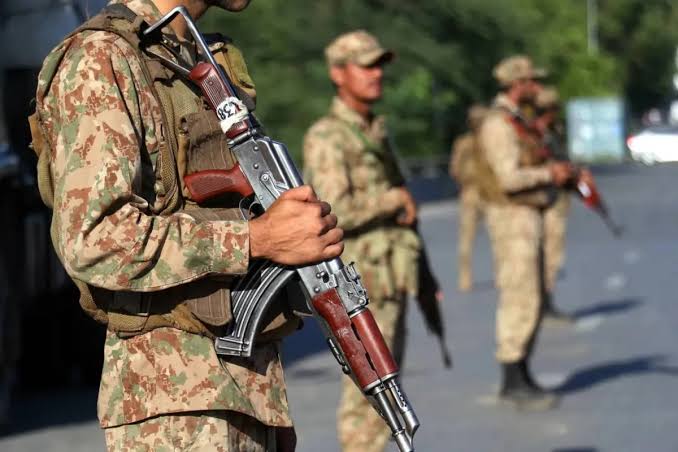
Μια εξαιρετικά σύνθετη εικόνα για την ασφάλεια στο Πακιστάν αποτυπώνει η νέα εβδομαδιαία ανάλυση του Pakistan Institute for Conflict and Security Studies (PICSS), η οποία δημοσιεύθηκε στις 10 Οκτωβρίου 2026. Παρά τη μείωση των επιθέσεων από ένοπλες οργανώσεις κατά την πρώτη εβδομάδα του μήνα, οι εξελίξεις στο εσωτερικό των εξτρεμιστικών και αυτονομιστικών ομάδων δημιουργούν σοβαρά ερωτήματα για την πραγματική αποτελεσματικότητα των επιχειρήσεων ασφαλείας.

Η έκθεση με τίτλο «Pakistan’s Security Paradox: Militant Attacks Decline as Militant Groups Signal New Developments» καταγράφει υποχώρηση των επιθέσεων, αλλά παράλληλα εντοπίζει ενδείξεις οργανωτικής αναδιάρθρωσης, νέων επιχειρησιακών μεθόδων και εντατικοποίησης της προπαγανδιστικής δραστηριότητας.

Μείωση 18% στις επιθέσεις – Παραμένει σοβαρή η απειλή

Σύμφωνα με το PICSS, από τις 2 έως τις 8 Οκτωβρίου καταγράφηκαν συνολικά 46 επιθέσεις ενόπλων οργανώσεων στο Πακιστάν, έναντι 56 την αμέσως προηγούμενη εβδομάδα.

Η μείωση ανέρχεται στο 18%, ενώ αισθητή είναι και η υποχώρηση του αριθμού των θυμάτων.

Οι νεκροί μειώθηκαν από 52 σε 42 και οι τραυματίες από 53 σε 23.

Ωστόσο, η εικόνα δεν είναι ομοιόμορφη σε ολόκληρη τη χώρα.

Στην επαρχία Μπαλουχιστάν, όπου δραστηριοποιούνται ιδιαίτερα ενεργές αυτονομιστικές οργανώσεις, οι απώλειες αυξήθηκαν παρά τη μείωση του αριθμού των επιθέσεων.

Το στοιχείο αυτό δημιουργεί προβληματισμό για το κατά πόσον οι ένοπλες ομάδες μεταβάλλουν τις τακτικές τους, πραγματοποιώντας λιγότερες αλλά δυνητικά πιο φονικές επιχειρήσεις.

Οι Πακιστανοί Ταλιμπάν αλλάζουν τακτική – Drones και ελεύθεροι σκοπευτές

Ιδιαίτερο ενδιαφέρον παρουσιάζουν οι εξελίξεις στο εσωτερικό της Tehrik-i-Taliban Pakistan (TTP), της οργάνωσης που είναι γνωστή ως Πακιστανοί Ταλιμπάν.

Σύμφωνα με την ανάλυση, η TTP επέβαλε περιορισμούς στη χρήση των μέσων κοινωνικής δικτύωσης από τα μέλη της.

Η συγκεκριμένη απόφαση αποκτά σημασία σε μια περίοδο κατά την οποία οι ένοπλες οργανώσεις χρησιμοποιούν τις ψηφιακές πλατφόρμες τόσο για προπαγάνδα όσο και για την προβολή των επιχειρησιακών τους δυνατοτήτων.

Την ίδια στιγμή, η TTP δημοσιοποίησε οπτικό υλικό στο οποίο υποστηρίζει ότι καταγράφονται επιθέσεις με τετρακόπτερα μη επανδρωμένα αεροσκάφη και ενέργειες ελεύθερων σκοπευτών.

Οι ισχυρισμοί αυτοί δεν συνιστούν ανεξάρτητη επιβεβαίωση της αποτελεσματικότητας ή της έκτασης χρήσης των συγκεκριμένων μέσων.

Παρ’ όλα αυτά, η προβολή τέτοιων επιχειρήσεων εντάσσεται σε μια ευρύτερη προσπάθεια των οργανώσεων να παρουσιάσουν εικόνα τεχνολογικής προσαρμογής και να ενισχύσουν την επιρροή τους.

Εσωτερικές συγκρούσεις στις ένοπλες οργανώσεις

Την ίδια περίοδο, η Jamaat-ul-Ahrar, οργάνωση που έχει συνδεθεί με το δίκτυο των Πακιστανών Ταλιμπάν, ανακοίνωσε ότι πραγματοποίησε 122 επιθέσεις κατά τη διάρκεια του Σεπτεμβρίου.

Πρόκειται για αριθμό που προέρχεται από τους ισχυρισμούς της ίδιας της οργάνωσης και δεν πρέπει να συγχέεται με τα ανεξάρτητα καταγεγραμμένα περιστατικά του PICSS.

Παράλληλα, αναφέρθηκαν αιματηρές συγκρούσεις ανάμεσα σε μαχητές της Jamaat-ul-Ahrar και αντίπαλης φράξιας της TTP στην περιοχή Ορακζάι.

Οι πληροφορίες αυτές αναδεικνύουν ένα επιπλέον πρόβλημα για την ασφάλεια του Πακιστάν: τον κατακερματισμό του περιβάλλοντος των ενόπλων οργανώσεων.

Οι εσωτερικές συγκρούσεις ενδέχεται να αποδυναμώνουν προσωρινά ορισμένα δίκτυα, αλλά μπορούν επίσης να προκαλέσουν νέες αντιπαραθέσεις, ανακατατάξεις και αποσχίσεις.

Μπαλουχιστάν: Ένοπλη γυναικεία μονάδα και κλιμάκωση της προπαγάνδας

Σημαντικές εξελίξεις καταγράφονται και στο Μπαλουχιστάν, την επαρχία του νοτιοδυτικού Πακιστάν που συνορεύει με το Ιράν και το Αφγανιστάν και έχει στρατηγική σημασία λόγω των φυσικών πόρων και της πρόσβασής της στην Αραβική Θάλασσα.

Το Balochistan Liberation Front (BLF), μία από τις οργανώσεις που επιδιώκουν την ανεξαρτησία του Μπαλουχιστάν, δημοσιοποίησε υλικό για τη συγκρότηση νέου γυναικείου ένοπλου σχηματισμού.

Η συγκεκριμένη κίνηση προβάλλεται από την οργάνωση ως οργανωτική εξέλιξη. Δεν υπάρχουν, ωστόσο, επαρκή ανεξάρτητα στοιχεία στο δημόσιο απόσπασμα της έκθεσης για τον αριθμό των μελών ή τις πραγματικές επιχειρησιακές δυνατότητες της νέας μονάδας.

Παράλληλα, ο Balochistan Liberation Army (BLA), άλλη σημαντική αυτονομιστική ένοπλη οργάνωση, απέρριψε κατηγορίες περί συνεργασίας με την TTP.

Ο BLA δημοσιοποίησε επίσης οπτικό υλικό από επιχειρήσεις που ισχυρίζεται ότι πραγματοποίησαν μέλη του.

Άλλες οργανώσεις των Μπαλούχων προχώρησαν σε ανάλογες κινήσεις, προβάλλοντας τη δράση τους και διατυπώνοντας ισχυρισμούς για δραστηριότητες συλλογής πληροφοριών.

Οι εξελίξεις καταδεικνύουν ότι η σύγκρουση στο Μπαλουχιστάν δεν περιορίζεται στις ένοπλες επιθέσεις, αλλά περιλαμβάνει και έναν παράλληλο αγώνα επιρροής, επικοινωνίας και πολιτικής νομιμοποίησης.

Πολιτική κρίση και αντιτρομοκρατία

Πέρα από την ένοπλη βία, η έκθεση του PICSS επισημαίνει ότι η εσωτερική πολιτική αστάθεια δυσχεραίνει τη διαμόρφωση αποτελεσματικής πολιτικής ασφαλείας.

Η κατάρρευση των διαπραγματεύσεων μεταξύ της κυβέρνησης και του Pakistan Tehreek-e-Insaf (PTI), του κόμματος που ίδρυσε ο πρώην πρωθυπουργός Ιμράν Χαν, περιπλέκει τις προσπάθειες συντονισμού στην επαρχία Χάιμπερ Παχτούνχβα.

Η περιοχή αποτελεί ένα από τα σημαντικότερα μέτωπα της δράσης των Πακιστανών Ταλιμπάν, λόγω της εγγύτητάς της με το Αφγανιστάν και της μακρόχρονης παρουσίας ένοπλων δικτύων.

Οι πολιτικές αντιπαραθέσεις μεταξύ κεντρικής κυβέρνησης και αντιπολίτευσης μπορούν να δυσχεράνουν τον συντονισμό, τη διοικητική συνεργασία και τη διαμόρφωση κοινής στρατηγικής για την αντιμετώπιση της τρομοκρατίας.

Το πρόβλημα αποκτά ιδιαίτερη σημασία όταν συνδυάζεται με την ανάγκη προστασίας παραμεθόριων περιοχών και αντιμετώπισης οργανώσεων με διασυνοριακές διασυνδέσεις.

Αφγανιστάν, Ινδία και περιφερειακές αμυντικές συμφωνίες

Οι προκλήσεις που αντιμετωπίζει το Ισλαμαμπάντ δεν περιορίζονται στο εσωτερικό της χώρας.

Οι σχέσεις με το Αφγανιστάν παραμένουν κρίσιμος παράγοντας ασφαλείας, καθώς το Πακιστάν αποδίδει σε ένοπλα δίκτυα που δρουν από αφγανικό έδαφος σημαντικό μέρος των επιθέσεων εναντίον του.

Την ίδια στιγμή, η αντιπαράθεση με την Ινδία εξακολουθεί να επηρεάζει τον στρατηγικό σχεδιασμό των πακιστανικών ενόπλων δυνάμεων.

Στο περιφερειακό περιβάλλον προστίθενται οι νέες αμυντικές διευθετήσεις και οι προσπάθειες του Πακιστάν να διατηρήσει ή να ενισχύσει τις στρατηγικές του συνεργασίες.

Η συνύπαρξη εσωτερικών απειλών, πολιτικής αβεβαιότητας και εξωτερικών δεσμεύσεων δημιουργεί αυξημένες απαιτήσεις για τον στρατιωτικό μηχανισμό και τις υπηρεσίες ασφαλείας.

Οι αριθμοί δεν λένε ολόκληρη την ιστορία

Η εβδομαδιαία έκθεση του PICSS θέτει ένα ουσιαστικό ερώτημα: αποτελεί η μείωση των τρομοκρατικών επιθέσεων ένδειξη βελτίωσης της ασφάλειας ή πρόκειται για προσωρινή υποχώρηση της βίας, ενώ οι οργανώσεις αναπροσαρμόζουν τις τακτικές και τις δομές τους;

Η απάντηση δεν μπορεί να προκύψει αποκλειστικά από την καταμέτρηση των επιθέσεων.

Η χρήση νέων επιχειρησιακών μέσων, οι εσωτερικές διαμάχες, η συγκρότηση νέων ένοπλων σχηματισμών και η αυξημένη προπαγανδιστική δραστηριότητα συνθέτουν μια εικόνα που απαιτεί διαρκή παρακολούθηση.

Άλλωστε, τα στοιχεία του PICSS για ολόκληρο τον Σεπτέμβριο είχαν καταγράψει 225 επιθέσεις, τον υψηλότερο μηνιαίο αριθμό εδώ και δώδεκα χρόνια, γεγονός που αναδεικνύει τη σοβαρότητα της κατάστασης παρά την πρόσφατη εβδομαδιαία υποχώρηση.

Το Πακιστάν βρίσκεται αντιμέτωπο με μια πολυεπίπεδη κρίση ασφαλείας, στην οποία αλληλεπιδρούν τζιχαντιστικές οργανώσεις, αυτονομιστικά κινήματα, πολιτικές αντιπαραθέσεις και περιφερειακοί ανταγωνισμοί.

Η μείωση της συχνότητας των επιθέσεων αποτελεί θετική ένδειξη σε επίπεδο εβδομαδιαίων στατιστικών. Δεν αρκεί, όμως, από μόνη της για να αποδείξει ότι οι απειλές περιορίζονται σε βάθος χρόνου.

Το κρίσιμο ζήτημα για το Ισλαμαμπάντ δεν είναι μόνο πόσες επιθέσεις καταγράφονται, αλλά κατά πόσον το κράτος μπορεί να αντιμετωπίσει τις οργανώσεις που εξακολουθούν να διαθέτουν δυνατότητα στρατολόγησης, προσαρμογής και πραγματοποίησης νέων επιχειρήσεων.

Συνέχεια ανάγνωσης

ΡΟΗ ΕΙΔΗΣΕΩΝ

GEOPOLITICO9 ώρες πριν

Πόλεμος συμφερόντων για το LNG – Το τουρκικό σχέδιο και η ελληνική απάντηση

Στο Direct News, ο Ανδρέας Μουντζουρούλιας παρουσιάζει τις πληροφορίες του για τον GSI, αναλύει τα τουρκικά δημοσιεύματα για την Γκίλφοϊλ...

Ιστορία - Πολιτισμός10 ώρες πριν

Arolsen Archives: Το αρχείο που αναζητά τα ίχνη εκατομμυρίων θυμάτων του ναζισμού

Στη γερμανική πόλη Μπαντ Άρολσεν φυλάσσεται μία από τις σημαντικότερες συλλογές τεκμηρίων για τα θύματα των ναζιστικών διώξεων. Περισσότερα από...

Αναλύσεις10 ώρες πριν

Πού βρίσκεται η Ελλάδα στον σχεδιασμό του IMEC;

Η επίκληση της ελληνικής κληρονομιάς, η κριτική για τις αμερικανικές τοποθετήσεις στα ελληνοτουρκικά και η ανάγκη μιας εθνικής στρατηγικής που...

GEOPOLITICO10 ώρες πριν

Νέα τουρκική πρόκληση νότια του Καστελλόριζου! NAVTEX της Άγκυρας στην περιοχή που θα περάσει το γαλλικό ερευνητικό για το καλώδιο Ελλάδας–Κύπρου

Η Άγκυρα εξέδωσε NAVTEX για περιοχή νότια του Καστελλόριζου, όπου έχει προγραμματιστεί η πολυεθνική άσκηση «EUNOMIA», αμφισβητώντας τη δικαιοδοσία του...

GEOPOLITICO10 ώρες πριν

EurAsia Review: Ποιοι προστατεύουν τα κυκλώματα λαθρεμπορίου στα σύνορα Ιράν, Πακιστάν και Αφγανιστάν – Ο σκοτεινός ρόλος παραγόντων ασφαλείας

Ένα εκτεταμένο σύστημα παράνομου εμπορίου, διαφθοράς και πολιτικής προστασίας περιγράφει σε ανάλυσή του το EurAsia Review. Από τα καύσιμα και...

Δημοφιλή