Γενικά θέματα
Οι προοπτικές του ρωσοτουρκικού αγωγού “Turkish Stream” – Πιθανά Σενάρια και Προκλήσεις
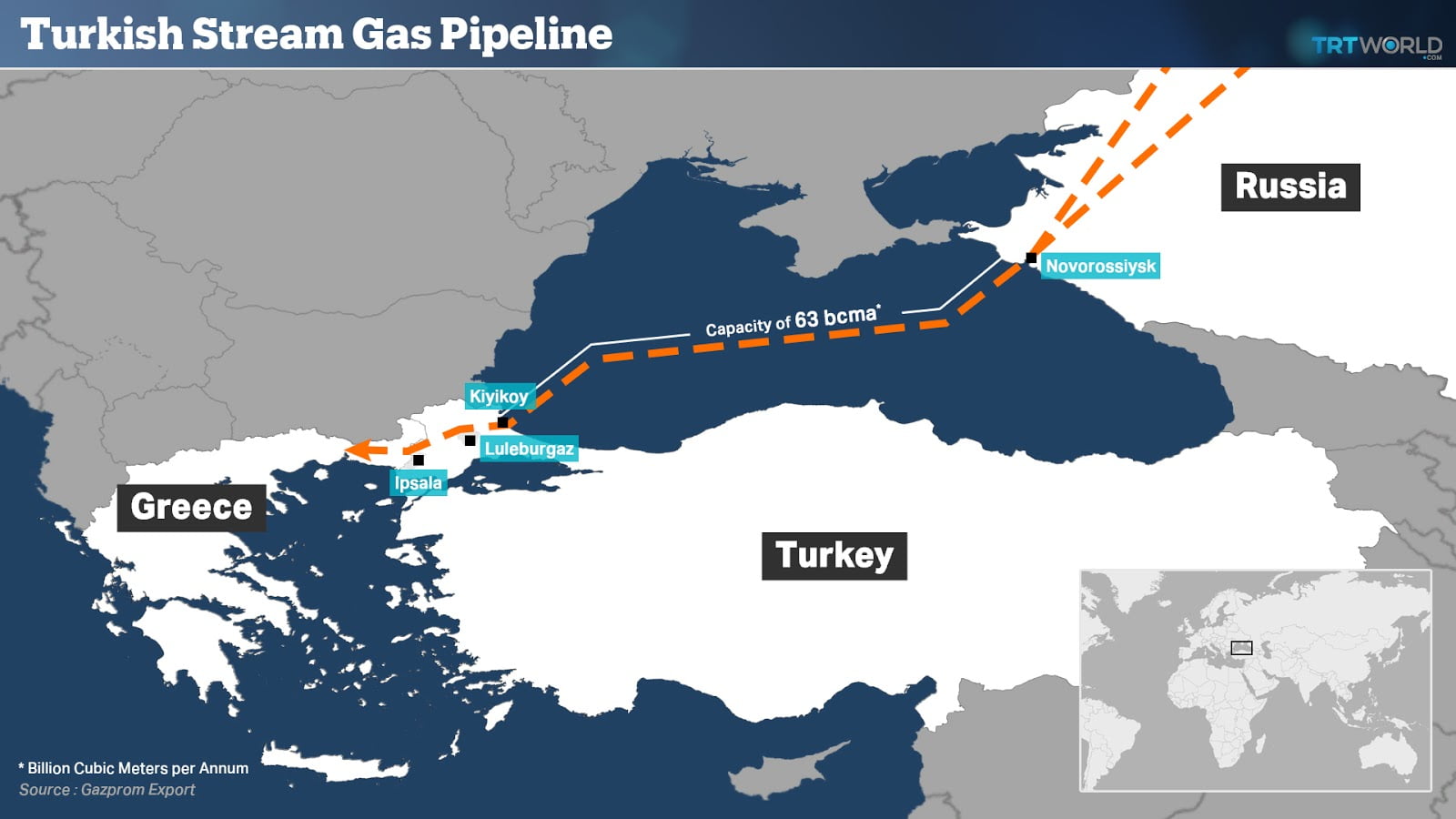

Following the cancellation of South Stream, Russia announced its plans to reroute the pipeline to Turkey, instead of Bulgaria. The new pipeline was dubbed “Turkish Stream”, with same capacity of South Stream, but less vulnerable to EU competition law. “Turkish Stream” has also experienced delays due to the crisis in Russia-Turkey relations. However, following the recent normalization of bilateral relations, the project regained its momentum. Russia’s aim is to complete the construction of the pipeline as soon as possible, namely before the Southern Gas Corridor is finished, or acquires additional gas from Iraq, Iran, or Turkmenistan. This article examines the possible scenarios and challenges for the Turkish Stream gas pipeline project, and argues that Russian Gazprom’s commitments to other pipeline projects, such as Nord Stream II and the pipeline to China, may prevent Gazprom from completing the pipeline in its entirety.
Introduction
Turkey is the second largest gas market for Russian Gazprom, as it imports 60 percent of its gas from Russia. Currently Turkey imports Russian gas via Trans-Balkan Pipeline through Ukraine and via the Blue Stream pipeline, which runs under the Black Sea. The crisis in relations between Russia and Ukraine has affected energy partnerships. Thus, in 2007, Russia launched the ‘South Stream’ gas pipeline project, which was to start from Russia’s Black Sea coasts, running to Bulgaria, and then onwards to Serbia, Hungary, Bosnia and Herzegovina, Croatia, Austria and Italy, carrying 63 billion cubic meter (bcm) of natural gas. Under the initial vision, South Stream was to be routed through Ukrainian territory in the Black Sea, but due to political changes in Ukraine, Moscow and Ankara agreed to re-route South Stream through Turkish waters. However, because of the EU’s unwavering stance on competition law, Russia cancelled the ‘South Stream’ pipeline project. Russia’s Gazprom and Turkey’s BOTAS signed a memorandum of understanding (MoU) on the construction of an alternative gas pipeline across the Black Sea, dubbed ‘Turkish Stream’. This article discusses the development, challenges and future prospects for this pipeline.
‘South Stream’ is down, ‘Turkish Stream’ is up
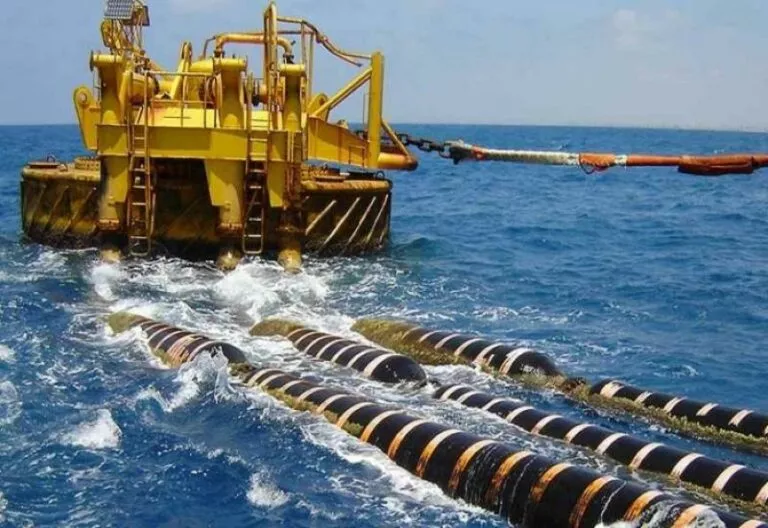
On December 1, 2014, during his visit to Turkey, Russian President Vladimir Putin announced the suspension of the South Stream project, for which he blamed the European Commission’s unconstructive position. In light of the new situation, Russia would build another pipeline to Turkey along with an additional gas hub for the South European customers on the Turkish-Greek border in Turkey.[1] Turkey’s BOTAS and Russian Gazprom signed a new Memorandum of Understanding on the construction of a new offshore natural gas pipeline across the Black Sea to the Turkey-Greece border with an annual capacity of 63 bcm. Of this total, some 15.75 bcm would be supplied to Turkey in the first phase, with the remaining 47 bcm destined for the planned gas hub near the Turkish-Greek border in the second phase.[2] Turkish Stream will consist of four parallel lines, each with a capacity of 15.75 bcm/y and each running 900 km across the Black Sea from the Russian port of Anapa to Kiyikoy, in Turkish Thrace, and then as an underground pipe to Ipsala, at the border with Greece. Turkish Stream will be developed by South Stream Transport BV, a subsidiary of Gazprom registered in the Netherlands.[3]
The first string of Turkish Stream will carry 15.75 bcm/a of natural gas to Turkey’s domestic market, replacing the current volume of the Trans-Balkan Pipeline’s (TBP) after the termination of the transit agreement between Russia and Ukraine.[4] Russia exports 14 bcm/year of gas to Turkey through the TBP via Ukraine through Moldova, Romania and Bulgaria. However, the current gas flow via TBP is vulnerable to possible disruptions due to the ongoing crisis between Russia and Ukraine.[5] Turkish Stream would enable Russia to redirect its export route via Turkey, without affecting the current volumes. By rerouting gas exports to Turkey, Russia can eliminate the extra tariff costs incurred along the Ukraine, Moldova, Romania and Bulgaria route, which make the gas expensive for Turkey. Gas export to Greece and Bulgaria through Turkey will be cheaper.[6] TBP could be used in reverse mode to supply gas to Bulgaria, Greece and Romania from Turkey.[7] However, under its existing contracts, Gazprom is obliged to provide natural gas to consumers to the exact point, but not any place in the EU border. The contracts state that gas delivery for the Central and Eastern European countries shall be via Ukraine.[8] Gazprom has a ‘ship or pay’ transit contract with Slovak Eustream SA until 2028, which obliges Gazprom to pay transit fees for a minimum of 50 bcm/y, whether or not the commodity is shipped. Thus, Russia’s plans to bypass Ukrainian may cost Gazprom hundreds of millions of Euros in fees.[9]
The construction of Turkish Stream’s first string is much easier from a legal point of view, because neither Russia nor Turkey belongs to the EU, and so neither is bound by the EU’s ‘Third Energy Package’ (TEP) rules. Otherwise, Russia would face same obstacle as it did in South Stream.[10]
The EU and the US position on ‘South Stream’ and ‘Turkish Stream’
Between 2008 and 2010, Russia signed intergovernmental agreements (IGA) with Bulgaria, Serbia, Hungary, Greece, Slovenia, Croatia, and Austria on the implementation South Stream. Russia was relying on its close relations and bilateral energy agreements with EU member states to prevail over EU legislation against Gazprom’s gas monopoly in Europe. However, the EU was unwilling to enable Member States’ preferential relationship with Russia on South Stream, which was dividing them on the EU’s common energy policy.
The EU demanded revision of those IGAs, which Russia could not agree with. Directive 2009/73/EC of the European Parliament and of the Council concerning common rules for the internal market in natural gas defines two major principles for the development of new gas infrastructures: 1) unbundling between the suppliers and the owners of infrastructure; and 2) granting of third party access to the transmission and distribution systems.[11]Therefore, Moscow shifted from South Stream to Turkish Stream because of the EU’s opposition to the IGAs. The EU’s position was based on the non-compliance of those IGAs with the EU’s TEP rules (regarding ‘unbundling’ and ‘third party access’), according to which, a single gas supplying company cannot own/control the pipeline and transport gas through it simultaneously.[12] Although Serbia is not an EU member, it is bound to implement EU energy regulations through its Energy Community membership.[13]
Judy Dempsey, Senior Associate from Carnegie Europe, wrote that the demise of South Stream would speed up the diversification of Europe’s energy sources, and encourage transparency in the energy sector over prices and contracts.[14] Although Brussels considered it as a diplomatic victory, the European transit countries (Serbia, Bulgaria and Hungary) were considered the losers in terms of potential investment, job opportunities and price discounts, as well as an alternative supply route in case of supply disruptions through Ukraine.[15] According to Keith Johnson, “Putin seemed to acknowledge that European sanctions torpedoed the financial prospects of the project”.[16] Fyodor Lukyanov, Editor-in-Chief of the ‘Russia in Global Affairs’ magazine, writes that, Nord Stream was implemented because of political resources and strong position of Germany within the EU, through which former wanted to ensure itself from possible transit risks.[17] The partners and stakeholders of South Stream were unable to circumvent EU law, though German Wintershall (Nord Stream stakeholder) was participating in South Stream as well.
It is important to note that Turkish Stream will still come up against the TEP rules if Russia decides to export further beyond Turkey-Greece border, since Greece is an EU member state.[18] Any failure of Turkish Stream would be a major threat to Russian economy. However, the EU regards Turkish Stream as “an attempt to thwart the Southern Gas Corridor”.[19] EU Vice-President, Maroš Šefčovič, has taken a clear stance against Turkish Stream, questioning the project’s viability and citing unresolved divergences between the EU and Russia on TEP.[20] Šefčovič stated that the “decision on construction of Turkish stream should be made taking into account the views of the EU”.[21] The EU Competition Commissioner Margaret Vestager did not exclude the examination of Gazprom’s talks with the European countries through which Turkish Stream could pass in regard to compliance with EU antitrust legislation.[22] “All companies that operate in the EU market – no matter if European or not – have to play by EU rules,” she said.[23] If the EU ill demonstrate same stance on energy regulations, then only first string of Turkish Stream will be built, which will make it a ‘‘Blue Stream-like’’ pipeline between Turkey and Russia.[24]
In May 2015, the US State Department’s special energy representative Amos Hochstein, during his visit to Athens, urged Greece to embrace a [Southern Gas Corridor] project that would link Europe to natural gas supplies from Azerbaijan, which would reduce the EU’s dependence on Russian gas supplies, rather than agree to a [Turkish Stream] gas pipeline pushed by Moscow. Hochstein said that “[this] is not an economic project, but is only about politics [and] So let’s put that to the side and focus on what’s important – the [Trans-Adriatic Pipeline] pipeline [to which] we already agreed.”[25] He added that “The SGC through Greece would enhance its longer-term goals of diversification”[26], and that “TAP will draw in Greece €1.5 billion of foreign investment.”[27] In the SGC Advisory Council’s meeting in Baku in February 2016, Amos Hochstein noted that “South Stream, Turk Stream, Nord Stream, all the other streams are simply restatements of political projects that have questionable economic value.”[28] The US is also worried about continuous delays of the Interconnector-Greece-Bulgaria project, the result of slow decision-making processes in Greece and Bulgaria.[29]
‘Turkish Stream’ versus ‘Southern Gas Corridor’[30]
‘Turkish Stream’ is planned to terminate in the Ipsala district of Turkey, near the Greek border, the also the planned endpoint of the Trans-Anatolian Pipeline (TANAP). The key question is whether Turkish Stream could be a competitor for either the TANAP or Trans-Adriatic Pipeline (TAP), which envisage the delivery of 16 bcm of Azerbaijani gas to Turkey and Europe by 2018 and 2020 respectively. The important consideration is whether the termination of both pipelines at the same location will create competition in terms of market share, given the possible expansion capacity of both TAP (from 10 to 20 bcm/a) and TANAP (from 16 to 23/31 bcm/a). There were similar tensions between the South Stream and Nabucco projects; while previously Nabucco was considered an alternative to South Stream, now Turkish Stream may play the same role in relation to TANAP/TAP.
In fact, theoretically Russia can export its gas via TAP from the Turkish Stream toward Europe, without Gazprom’s presence in the TAP Consortium, and without breaching the TEP rules. Specifically: 1) Russia has no stake in TAP; 2) in the first stage, only 50% of TAP’s total final capacity will be used for 10 bcm/a, and can expand its capacity up to 20 bcm/a (100% of total capacity) in the second stage; 3) the EU Commission’s regulation left 50% of TAP’s total (final) capacity open for third party access (TPA) for the expansion capacity; 4) the EU regulation also states that upon request of a third party, TAP is obligated to construct additional entry/exit points in Greece to receive gas from non-Shah-Deniz sources.[31] Thus, Russia can reserve a space in the TAP by requesting TPA to transport its gas (as a supplier, not an owner) at the second stage of gas delivery, or request the construction of additional entry/exit point for additional compressors at the expansion capacity of TAP. If Russia does not own the infrastructure, but simply sells its gas from the Turkey-Greece border, its actions will not contravene TEP rules. However, the Shah-Deniz Consortium has already secured 10 bcm of Azerbaijani gas with a 25-year-contract for the first stage of gas delivery via TAP. Under this contract, the Consortium has already secured 100% of TAP’s initial capacity. The Consortium has been granted a TPA exemption by the EU Commission for 100% of initial capacity (for 10 bcm) of the pipeline for 25 years. This means that Russian gas cannot be transported via TAP for at least the next 25 years, unless there are either significant market or geopolitical changes, or sufficient gas demand to drive expansion. The long-term contracts of Shah-Deniz Consortium together with the relevant provisions of EU law make this option unlikely.[32]
TAP’s expansion would enable Gazprom to deliver a maximum of 10 bcm/y, while the Turkish Stream’s second string was to pump 15.75 bcm/y. The injection of Russian gas into TAP could create rivalry between Russian and Azerbaijani gas in terms of volume, and Russia gas could block the prospects for additional volumes of Azerbaijani gas in the TAP’s stage II. Azerbaijan is expected to increase its gas flow via Azeri-Chirag-Guneshli, Umid, Babek, Shafag-Asiman, Zafar-Marshal, Absheron, Bulla-Deniz fields and Shah-Deniz stage III. Azerbaijan’s increased gas volume can be distributed for other Balkan countries via Interconnector-Greece-Bulgaria (IGB) to Bulgaria and the Ionian-Adriatic Pipeline (from Albania) to Montenegro, Bosnia-Herzegovina and Croatia in the second stage.[33] However, the MoU between Gazprom, Edison and DEPA could divert Bulgaria’s focus away from the IGB (developed by ICGB AD), which is supposed to receive Azerbaijani gas from Shah-Deniz II.[34] This is because Italian Edison and Greek DEPA are both shareholders of ‘IGI Poseidon’ joint venture, which is also a 50% shareholder in the ‘ICGB AD’ JV.[35]
According to energy consultant Mikhail Krutikhin, the construction of TAP is a painful blow to Gazprom. As Azerbaijani gas will flow to Italy via this route, it will be able to replace half of the volume that Italy receives from Gazprom. Without the EU’s consent, Russia invested in bilateral agreements and spent billions of dollars on South Stream, which at the final stage proved to be inconsistent with EU regulations and therefor illegal. Along with the political ambiguity of the Turkish Stream, Russia is seeking to resurrect the long-discarded Poseidon project. Although the initial volume of TAP is not comparable to what Russia can supply, with flow of Turkmen and Iraqi gas in the future, TAP could play a significant role in the EU’s energy diversification strategy.[36]
According to Vitaly Baylarbayov, deputy Vice President of SOCAR,“To imagine that Turkish Stream could ruin the SGC is nonsense. Unlike the Gazprom’s project, the SGC is about billions of dollars already being invested”.[37] SOCAR Vice President Elshad Nasirov had earlier said that “Turkish Stream is not a rival to the SGC. If the Turkish Stream is constructed, we will be able to use its extension,” given future increases in Azerbaijani gas production via the next generation of gas fields.[38] Turkish Foreign Minister Mevlut Cavusoglu has offered to connect the Turkish Stream pipeline to TANAP, since Turkey will buy 15.75 bcm/y of Russian gas via Turkish Stream, meaning that the remaining volume can be exported via TANAP (by connecting it to the Turkish Stream).[39]
Greece – a key country for Turkish Stream’s extension
Technically, Greece is the optimal country to receive Russian gas from the Turkey-Greece border and to deliver it onwards to Europe. Both current and previous Greek energy ministers have been in favor of the construction of the ‘Greek-Russian gas pipeline’ as an extension of Turkish Stream to Greece.[40],[41]
In the light of the EU-Russia standoff, Greek Prime Minister Alexis Tsipras paid a visit to Moscow on April 8 2015. He and Vladimir Putin discussed Greece’s role in the ‘Turkish Stream’ project,[42] as well as the creation of a Joint Venture (JV) for the construction of the Turkish Stream’s extension to Greece and Italy to transport Russian gas to the Balkans, Italy, and Central Europe.[43] Vladimir Putin said that the financing of the project still needed to be agreed upon between Russia and Greece.[44] To that end, the Russian side pledged financial support for the Greek government and private companies that will be involved in the project.[45] Regardless of warnings from the US and the EU to against joining the Turkish Stream project, Alexis Tsipras signed an MoU with Gazprom during a visit to St Petersburg on June 18 2015. The agreement, worth $2.3 billion, will set up a JV for the construction of the Turkish Stream’s extension through Greece. The extension has been dubbed the ‘South European Gas Pipeline’, and will allow the transit of 47 bcm of Russian gas further into Europe.[46] Russia’s development bank Vnesheconombank would own 50 percent of the €2 billion link and provide all financing, and Greece would own the rest.[47] Both countries pledged to assist a proposed 50-50 joint venture of Russian and Greek investment banks for the feasibility study for the ‘South European Gas Pipeline’.[48] Greece is hoping to start discussions with the European Commission for the construction of the South-European gas pipeline, and hopes also to involve Italy in the negotiations.[49]
Interconnector-Turkey-Greece-Italy
Greece had previously expressed its interest to transport Russian gas to Europe via the Interconnector-Turkey-Greece-Italy (ITGI), as an extension of the Turkish Stream.[50] The extension of the Turkish Stream would be divided into two routes, with first string passing through Greece to Italy (ITGI) and second string running northwards – via the Former Yugoslav Republic of Macedonia (FYROM), Serbia, Hungary – to Baumgarten, Austria. In February 2016, Russia’s Gazprom, Italian Edison SpA, and Greece’s DEPA signed an MoU in Rome on natural gas deliveries across the Black Sea from Russia via third countries to Greece and from Greece to Italy across the Ionian Sea via the ITGI/Poseidon pipeline.[51] The ITGI/Poseidon project was shelved in 2012 after it was opted out to Trans-Adriatic Pipeline (TAP) following the selection of latter pipeline. However, Bulgaria and Turkey were missing from the MoU. France’s EDF and Italy’s Edison expressed their unofficial support for the ITGI.[52]
The Interconnector-Turkey-Greece-Italy (ITGI) pipeline comprises the following sections: Turkish grid (operational, needs to be upgraded for extra gas volume); Interconnector Turkey-Greece/ITG (operational since 2007; transport capacity – 11.5 bcm/y); Interconnector Greece-Italy/IGI project (capacity 12 bcm/y). The IGI pipeline includes: IGI Onshore (600 km onshore pipeline in the Greek territory, to be developed by Greek Transmission System Operator/DESFA) and IGI Poseidon (200 km offshore pipeline across the Ionian Sea, under development by IGI Poseidon SA, a joint venture between Italian Edison and Greek DEPA).[53] The ITG from Karacabey (Turkey) to Komitini (Greece), launched in 2005, was intended to enable third suppliers to bring additional natural gas to Greece. The construction of the Greece-Italy undersea pipeline (Poseidon) is an extension of ITG.[54] The Poseidon pipeline has been included in the EU’s Project of Common Interest (PCI) list and the project has received all the necessary authorizations for construction and operation and third party access exemption for 25 years.[55] ITGI shareholders Edison and DEPA planned to boost the throughput capacity of pipeline from planned initial 12 bcm/y up to 20 bcm/y (equal to TAP’s maximum capacity in the second stage).[56]
Gazprom’s preference for ITGI was linked with the fact that both Italy and Greece are long-term importers of Russian gas and both Edison and DEPA have shares in ITGI/Poseidon. The final plan was to connect the ITGI and Turkish Stream in the Turkey-Greece borders.[57] The Greek government favors the ITGI for three reasons: 1) it bypasses Albania as a transit country, which requires more pipelining in Greek territory, and thus more investment; 2) Greece will be able to use Poseidon to receive Mediterranean gas;[58] 3) Greece does not own any shares in the TAP project, and its previous demands for a stake in TAP, revision of transit fees, and price discounts did not yield positive responses from the SDC.[59]
Vladimir Socor, a senior research fellow at the Jamestown Foundation, writes that, “Geography and capacity make ITGI-Poseidon almost a mirror image of TAP.”[60] He also states, “Gazprom will use it to promote a Russian gas transit route and obstructing the [TAP] via Greece to Italy”, like the previous South Stream was meant to block the Turkmen gas flow to Europe and the Nabucco project. Moscow was seeking to confuse and divide EU countries through promises of ‘gas hub’ and ‘intergovernmental contracts’[61] According to John Roberts, “the one of the key reasons for raising the prospect of an ITGI/Poseidon is simply to cause damage to current EU plans to develop the SGC”, though the technical, financial, feasibility and cost efficiency of ITGI/Poseidon is still under question.[62] However, the Turkey-Greece section of ITGI is operated by DESFA as part of the national gas transmission system in Greek territories.[63] Since SOCAR seeks to purchase 49% of DEFSA, the company could potentially control Russian gas flow through ITGI, if it were realized.
TESLA – a new branch for Russian gas to Europe
It is also possible to transport Russian gas via a new pipeline through FYROM and Serbia to Hungary and Austria (Baumgarten hub) after gas entered Greece through Turkish Stream’s extension or via ITGI. This proposal was put forth by Hungarian Premier Minister Victor Orban,[64] and the infrastructure was dubbed ‘Tesla pipeline’.[65] The 1,400 km-long ‘Tesla’, which will have a capacity of 27 bcm/y, is expected to be completed in 2019.[66] From Baumgarten hub, the northern regions of Italy and Germany can be supplied via the Tesla pipeline.[67] The route of ‘Tesla’ resembles that of ‘South Stream’ pipeline, although it excludes Bulgaria, but gives an enhanced role to Greece and FYROM.[68]
On 7 April 2015, Hungary, Serbia, Macedonia, Greece, and Turkey signed a declaration on the formation of a working group to facilitate natural gas deliveries to their markets, including the participation in the Turkish Stream project. The representatives of five countries expressed their intent “to create a commercially viable option of route and source diversification for delivering natural gas from Turkey through their territories to the countries of Central and South Eastern Europe”.[69] It called for the EU to co-fund related infrastructures and the interconnecting the natural gas infrastructures of their countries.[70] Thereafter, in August 2015, Hungary, Serbia, Macedonia and Greece discussed the possibility of signing a MoU for the construction of the so-called ‘Tesla’ pipeline, in order to realize it by 2019. The project had been already included in the EU’s PCI list.[71]
However, the ‘Tesla’ project only exists on paper as a non-binding Memorandum of Understanding, and it may experience the fate of ‘South Stream’, due to TEP rules. Moreover, it will be hard to find non-Russian financing for the pipeline, writes Robert Cutler, a senior researcher in the Institute of European, Russian and Eurasian Studies at Carleton University.[72] But even if the ‘Turkish stream’ is realized, the Tesla will have a rival – the Eastring pipeline (also included in EU’s PCI list). If Russia suspends gas transit through Ukraine, the Eastring project can help Ukraine.[73] The ‘Eastring’ project was proposed by Slovak gas pipeline operator Eustream as a means of linking Bulgaria, Romania, Hungary, Slovakia, and Balkan states by modernizing their gas infrastructures to bring western European gas to them. With its 20 bcm/y capacity, the Eastring project is scalable up to 40 bcm, and might challenge the extensions of Turkish Stream, carrying even Azerbaijani gas via interconnectors.[74]
Evolving Russia-Turkey relations
In July 2015, Gazprom halved the capacity of Turkish Stream pipeline from the original 63 bcm/a to 32 bcm, because of the expansion of its Nord Stream gas pipeline from Russia to Germany.[75] “The rest of the amount will flow to the EU via the ‘Nord Stream-2’, [therefore], southern direction is now no longer necessary for the construction of gas transportation capacities more than 32 bcm/y,” said Alexei Miller.[76] In September 2015, Turkey’s Energy Ministry deputy undersecretary Sefa Sadik Aytekin said that “talks with Russia on Turkish Stream are frozen, because of Russia’s hard-line attitude on gas price discount, which is the perquisite for Turkish Stream talks.”[77] Shortly thereafter, Gazprom announced it was in agreement with Turkish partners that they would only be working on the first line [between Russia and Turkey] of Turkish Stream.[78] In October 2015, Alexander Novak said “Moscow will wait for the formation of a new government for the granting of construction licenses for two of the four-stages of Turkish Stream”, because Turkey has thus far only awarded licenses for the first line.[79] However, after the ‘jet incident’, when Turkey shot down a Russian fighter jet near the Turkey-Syria border, Russian Energy Minister Aleksandr Novak announced on November 24, that “negotiations on Turkish Stream have been suspended.”[80] Turkish President Erdogan said that “It was not Russia, but Turkey [which] froze the Turkish Stream project, [even] before the crisis.”[81]
After several months of tension, on June 27, Russian President Vladimir Putin received a letter from President of Turkey Recep Tayyip Erdoğan, expressing Turkey’s willingness to restore ties with Russia.[82] Immediately, Gazprom spokesperson Sergey Kupriyanov announced his company’s openness to dialogue with Ankara on the construction of the ‘Turkish Stream’ natural gas pipeline.[83] Turkish Prime Minister Binali Yıldırım also expressed Ankara’s support for the project.[84] Russian Deputy Prime Minister Arkady Dvorkovich said that Turkey confirmed its willingness to resume dialogue with Russia on the construction of Turkish Stream.[85] Energy Minister Alexander Novak reported that Russia has submitted to Turkey its road map for building the Turkish Stream to sign an intergovernmental agreement (IGA) in October 2016 to launch works on the first string with 15.75 bcm/y capacity. The working group would be established to negotiate the draft of IGA.[86]
On October 10, Turkey and Russia signed an IGA on the construction of Turkish Stream. The agreement foresees the construction of two lines (15.75 bcm each) from Russia across the Black Sea, with construction forecast to start by the end of 2017 and be completed by 2019.[87] One of the lines is intended to deliver gas to Turkey while the other would branch off toward the Turkish–European Union border to carry gas to Europe. The cost of the project is estimated at $6 billion. Both lines are supposed to be completed by December 2019.[88] The agreement also envisaged special tax exemptions for the offshore section and a second land line of “Turkish stream”. Moreover, Turkey will release Gazprom from the tax revenues for the marine section of pipeline. The import of vehicles and equipment and other necessary materials are exempt from the payment of customs duties in Russia and Turkey. The Turkish side also eliminated the value added tax on gas transportation. According to Energy Minister Alexander Novak Gazprom will build and own the offshore section of Turkish stream, the first line of land section (including receiving terminal and connection lines) for the delivery of gas to Turkey will be built and owned by Turkey’s BOTAS. The second line towards Turkey-Greece border for gas transit to Europe will be owned by joint venture between Gazprom and BOTAS.[89] According to Russia’s Energy Ministry, Turkey has agreed to a second line in exchange for a discount for a discounted gas price promised by Moscow.[90]
Turkey has already granted Gazprom the first permits for the development of the Turkish Stream via Turkey, which likely relates to feasibility studies for the final section of pipeline on Turkish territories. Actually, main sections of the offshore pipeline in Turkey’s exclusive economic zones in the Black Sea were previously approved within the framework of South Stream’s implementation, and Gazprom has completed the environmental impact assessment for the offshore and landfall sections of Turkish Stream pipeline.[91]
Challenges and Perspectives for ‘Turkish Stream’
The Turkish Stream project will face dozens of challenges. Falling oil prices, the economic sanctions against Russian companies and banks, the cost of the project, etc. make it difficult to find financing for the gas pipeline. Gazprom faced serious financial losses as a result of South Stream’s suspension. The company had to pay fines worth $1 billion to Italian ENI, German Wintershall, and Electricite de France for their stakes in the consortium.[92] Russia had rented two pipe-laying vessels from Italian Saipem to lay pipelines for South Stream; however, following the suspension of ‘South Stream’ pipeline project in 2014, Gazprom had to pay Saipem €25 million per month, despite not using them.[93] The pipes initially purchased for the South Stream can be used to lay the Turkish Stream’s first line.[94] In July 2015, Gazprom cancelled its contract with Italian Saipem, involved in construction of the Turkish Stream’s offshore portion,[95] and agreed to pay penalties (around $300 million) to Saipem.[96] In November 2015, Saipem Stream Transport B.V., a subsidiary of Italy’s Eni, sued Gazprom for €759 million in damages for severing the contract on the construction of the underwater segment of the South Stream.[97]
According to a report by the Russia’s Ministry of Economic Development and the Sberbank, Russia’s natural gas production, notably that of Gazprom, demonstrated an unpredicted fall in2015 compared to 2014. The export revenues also experienced a rapid decline due to decreases in the price of natural gas exports, according to Russia’s Federal Customs Service. Sberbank’s report indicates that lower exports would also reduce Gazprom’s revenues. Gazprom’s lavish expenditures on infrastructure, costly diversification plans, etc., have cost it billions of dollars.[98]
Reportedly, the cost of the Turkish Stream’s four-line pipeline will amount to €11.4 billion (half the cost of South Stream, €23.5 billion), with the cost of the first line estimated around €5 to 6 billion. However, given the fluctuating oil prices, the costs may overrun. Since most of the revenue is generated by energy export and the company’s costs are in rubles, falling oil prices have heavily affected the Russian economy and market value of the Russian ruble.[99]
Russia would not be able to influence Turkey in the same way it has Ukraine, and consequently there is little room for Moscow to politicize Turkish Stream.[100] Apart from that, the EU’s increasing options for diversification, economic sanctions etc., are serious challenges to Russian gas exports. Amidst the withdrawal of sanctions on Iranian oil and gas exports, Turkish Stream could lose its significance for Russia’s European clients.
If Gazprom goes forward with the construction of the third and fourth strings of the Turkish Stream, beyond the Turkey-Greece border, the company will encounter the same regulatory obstacles, namely the TEP rules.
Conclusion
The Ukraine crisis left Russia little room to maneuver for South Stream, which was hindered by the EU’s Third Energy Package rules along with the economic sanctions that blocked financing capabilities of Russian banks. Russia abandoned the South Stream to avoid falling under EU energy legislation. Russia used the TEP as an excuse for the suspension of South Stream, but in reality is was obvious that Gazprom would not be able to proceed with project because of political and financial obstacles. The EU is not eager to import additional Russian gas; rather it wants to diversify routes and sources. South Stream was intended as a means of entirely bypassing Ukraine, like the Nord Stream.
The Ukraine crisis re-emphasized the role of Turkey not only for the EU, but also for Russia, in preventing supply disruption to Europe. Turkey also wants to avoid dependence on a single supplier, and to meet its energy demands with lower prices from reliable sources. The best way which is considered the SGC, which will carry Azerbaijani gas. Turkey seeks to take advantage of its geography– i.e. turning itself into a regional hub by hosting the Turkish Stream and transporting Turkmen, Iraqi, Iranian and Mediterranean gas. Fully eliminating reliance on Russian gas exports is unlikely, given its significant export role at present and noting that Turkey does not have an alternative supplier to substitute this volume. Whereas, the crisis between Russia and Turkey could divert latter to diversify its gas imports away from former.
If Turkish Stream is realized, Turkey will play a larger role in the region’s energy map. ‘Turkish Stream’ can bring Turkey and Russia together, regardless of their disagreements on many issues. Both Russia and Turkey were vindictive towards the EU, due to EU-led sanctions toward Russia and delays on Turkey’s EU membership, respectively. With Turkish Stream, Russia wanted to demonstrate to the world that it is not totally isolated. The rejection of Turkish Stream by Turkey would weaken Russia’s position vis-à-vis Ukraine. Russia knows that after suspension of the gas flow through Ukraine, Gazprom’s European partners will have no other option than to import gas via the Turkish Stream.
As the implementation of the Southern Gas Corridor gathers pace, Russia is pushing forward its own options. The Turkish Stream might be a potential challenger to Azerbaijani gas exports to Southeast Europe. On the other hand, by transporting Russian gas via ITGI, and Azerbaijani gas via TAP, Greece wants to pursue a balanced energy policy, playing to both Russia and Azerbaijan. However, the realization of ITGI remains doubtful given its previous failure on financial grounds. The question that remains is how Greece will come up with the financing for ITGI, given its precarious economic situation. The transportation of Russian gas via ITGI is matter of time and financing, while the planned ‘Tesla’ pipeline might encounter TEP rules.
Russia is seeking either to target potential markets for Azerbaijani gas, or to use the additional capacity of Azerbaijan’s gas export routes. At first glance, it might seem that the timeline and capacity of Turkish Stream will hinder Azerbaijan’s gas strategy in Southeast Europe, given that Azerbaijani gas will reach Turkey in 2018 and Europe by 2020. However, the 16 bcm of gas from Shah-Deniz’s Phase II that TANAP/TAP will carry to Europe has already been sold, based on a 25-year contract with European companies, and the initial capacity of TAP has been secured via a TPA exemption. The long-term agreements protect SOCAR from the risk of competition from other gas suppliers.
Russia could focus on the expansion of the existing Blue Stream by laying additional lines across the already functioning pipeline, which would be more cost-effective than laying new pipelines underwater. However, with the extension of the Blue Stream, Russia will not be able to reach the Turkey-Greece border directly, and the pipeline would supposedly have a smaller capacity.
Since Gazprom prioritized ‘Nord Stream II’ to compensate for its political and economic losses, the company will only implement the first line of Turkish Stream to feed Turkey’s domestic market without relying on Ukraine’s transit status after the suspension of the Trans-Balkan Pipeline. In the most optimistic scenario, the second string of the Turkish Stream will be realized in order to replace the TBP’s current delivery to Bulgaria and Greece, and onwards. The move from South Stream to Turkish Stream will not change Russia’s energy market, as the latter might be extended into Greece or Bulgaria via different pipelines. However, it is not yet clear which will be the second string in Europe: ITGI (Poseidon), or TAP, or a new onshore pipeline. The second string will definitely need to tackle the EU’s regulatory obstacles.
Gazprom understands that financing constitutes the biggest challenge in finalizing the entire Turkish Stream project. Gazprom’s financial situation remains worrisome; the declining gas exports and decreasing gas prices have been a serious blow to the company. Greece is not in a position to fund the pipeline alone, and the Greek government can hardly convince the EU that Turkish Stream is important for Europe’s long-term diversification plans. This means the entire four-line ‘Turkish Stream’ is unlikely to come on-stream anytime soon. Until Russia finalizes the construction of Turkish Stream’s first or second strings, Ukraine will remain a major transit country for Russian gas exports to Europe, supplying Romania, Bulgaria, and Greece – even after the termination of the transit agreement.
Ilgar Gurbanov
This article was originally published in the Caucasus International Journal
[1] President of Russia, (2014) News conference following state visit to Turkey, en.kremlin.ru/events/president/news/47126#sel= (Accessed: 10 July 2016)
[2] Gazprom, (2014), New gas pipeline towards Turkey, www.gazprom.com/press/news/2014/december/article208505/ (Accessed: 10 July 2016)
[3] Cutler, R. (2016) ‘The Turkish Stream Agreement and What It Means’, Intersection, intersectionproject.eu/article/economy/turkish-stream-agreement-and-what-it-means (Accessed: 22 November 2016)
[4] Chow, E. (2015) ‘New Russian Gas Export Projects – From Pipe Dreams to Pipelines’, Centre for Strategic and International Studies, https://www.csis.org/analysis/new-russian-gas-export-projects-–-pipe-dreams-pipelines (Accessed: 20August 2016)
[5]Apa.az, (2014) SOCAR Stala Monopolistom Na Postavki Gaza V Yujnuyu Evropu: Putin Voshel v Yujniy Gazoviy Koridor, http://abc.az/rus/news/85236.html(Accessed: 20August 2016)
[6] Tsafos, N. (2015) ‘Don’t Fear Turkey’s Energy Power Play’, The National Interests, nationalinterest.org/feature/dont-fear-turkeys-energy-power-play-11947?page=show(Accessed: 20August 2016)
[7] Szymon, K. (2014) ‘The unwanted gas pipeline: Russia has halted the construction of South Stream’, OSW, www.osw.waw.pl/en/publikacje/analyses/2014-12-03/unwanted-gas-pipeline-russia-has-halted-construction-south-stream(Accessed: 20August 2016)
[8] Milov, V. (2015) ‘Obkhod Kiyeva: smojet li Rossiya otkazatsya ot gazovogo tranzita?’, Forbes Rossiya, www.forbes.ru/mneniya-column/gosplan/286537-obkhod-kieva-smozhet-li-rossiya-otkazatsya-ot-gazovogo-tranzita(Accessed: 22August 2016)
[9] Bauerova, L. (2015) ‘Gas-Transit Deal Shows Cost to Russia of Bypassing Ukraine’, Bloomberg, www.bloomberg.com/news/articles/2015-06-05/slovak-gas-transit-deal-shows-bypassing-ukraine-will-cost-russia(Accessed: 21August 2016)
[10]Gurbanov, I. (2015) ‘In the Search of New Partners: Putin’s Turkic Stream for Turkey’, Natural Gas Europe, http://www.naturalgaseurope.com/new-partners-putin-turkish-stream-turkey(Accessed: 19August 2016)
[11] European Parliament and of the Council, (2009) Directive 2009/73/ECof 13 July 2009 concerning common rules for the internal market in natural gas and repealing Directive 2003/55/EC, http://eur-lex.europa.eu/LexUriServ/LexUriServ.do?uri=OJ:L:2009:211:0094:0136:en:PDF(Accessed: 16August 2016)
[12] European Union, (2016) Market legislation, ec.europa.eu/energy/node/50(Accessed: 11August 2016)
[13] Gurbanov, I. (2014) ‘Who Buried the South Stream and Why? The EU or Russia?’, The GW Post, https://thegwpost.com/2014/12/18/who-buried-the-south-stream-and-why-the-eu-or-russia/(Accessed: 12August 2016)
[14] Dempsey, J. (2014) ‘Europe’s Energy Strategy and South Stream’s Demise’, Carnegie Europe, carnegieeurope.eu/strategiceurope/?fa=57386(Accessed: 11July 2016)
[15] Kahn, M. & Tsolova, T. (2014) ‘Sinking of Kremlin gas project leaves south-east Europe high and dry’, Reuters, uk.reuters.com/article/uk-russia-europe-pipeline-losers-idUKKCN0JG12W20141202(Accessed: 10July 2016)
[16] Johnson, K. (2014) ‘Putin’s Pipe Dreams’, Foreign Policy, foreignpolicy.com/2014/12/02/putins-pipe-dreams-south-stream-russia-turkey-natural-gas/(Accessed: 11July 2016)
[17]Lukyanov, F. (2014), ‘Vostochnaya Politika – Teper Rossiyskaya’, RossiyavGlobalnoyPolitike, www.globalaffairs.ru/redcol/Vostochnaya-politika—teper-rossiiskaya-17160(Accessed: 10July 2016)
[18]Gurbanov, ‘In the Search of New Partners’, op.cit.
[19] Pourzitakis, S. (2015) ‘Turkish Stream: The energy security dilemma of the project’, Natural Gas Europe, www.naturalgaseurope.com/turkish-stream-energy-security-dilemma-24844(Accessed: 15July 2016)
[20] Levoyannis, C. (2015) ‘Greece: A Backdoor to Fortress Europe: The Fallout of Tsipras’ Visit to Moscow’, Natural Gas Europe, www.naturalgaseurope.com/greece-tsipras-vist-to-moscow-23129(Accessed: 10July 2016)
[21] Rbc.ru, (2015), Turetskiy Gambit: Kak Silno Riskuet Gazprom s Novim Gazoprovodom, www.rbc.ru/economics/25/05/2015/555da0219a794742870f398b(Accessed: 11July 2016)
[22]Serov, M., Tretyakov, P., Trentyeva, A., (2015) ‘Evrokomissiya ne iskluchayet antimonopolnogo rassledovaniya po ‘Turetskomy Potoku”, Vedomosti, www.vedomosti.ru/business/articles/2015/04/30/evrokomissiya-ne-isklyuchaet-antimonopolnogo-rassledovaniya-po-turetskomu-potoku(Accessed: 11July 2016)
[23] Cohen, A. (2015) ‘Will Greece–Russia Gas Deal Threaten EU Energy Security?’, Natural Gas Europe, www.naturalgaseurope.com/greece-russia-gas-deal-threaten-eu-energy-security-23487(Accessed: 10July 2016)
[24]Gafarli, O. (2016) ‘Turkey and Russia Work on Normalizing Relations, Sign Agreement on Scaled-Back Turkish Stream Pipeline’, The Jamestown Foudation, Eurasia Daily Monitor Volume: 13 Issue: 169, https://jamestown.org/program/turkey-russia-work-normalizing-relations-sign-agreement-scaled-back-turkish-stream-pipeline/(Accessed: 11October 2016)
[25] Rt.com, (2015) US urges Greece to reject Turkish Stream, focus on Western-backed project, https://www.rt.com/business/256981-greece-russia-us-gas/(Accessed: 12July 2016)
[26] Kanter, J. (2015) ‘U.S. Urges Greece to Reject Russian Energy Project’, The New York Times, www.nytimes.com/2015/05/09/business/international/greece-us-russia-energy-pipeline.html?_r=2(Accessed: 15August 2016)
[27] Caspian Barrel, (2015) Voyna troboprovodov: v delo nachalo vmeshivatsya SSHA, caspianbarrel.org/?p=30621(Accessed: 15August 2016)
[28] Huseynaliyev, F. (2016) ‘Gas Without Political Impurities’, Region Plus, www.regionplus.az/en/articles/view/5867(Accessed: 15November 2016)
[29] Natural Gas Europe, (2015) Gas Diplomacy in the Balkans on the Move, www.naturalgaseurope.com/gas-diplomacy-in-the-balkans-on-the-move-25129(Accessed: 7 September 2016)
[30]’Southern Gas Corridor’ has four key components: Azerbaijan’s Shah Deniz field’s stage II, South Caucasus Gas Pipeline’s extension (along Baku-Tbilisi-Erzurum pipeline); Trans-Anatolian Pipeline (from Turkey-Georgia border to Turkey-Greece border); Trans-Adriatic Pipeline (through Greece, Albania to Italy).
[31] European Commission, (2013) Decision of 16.5.2013 on the exemption of the Trans Adriatic Pipeline from the requirements on third party access, tariff regulation and ownership unbundling laid down in Articles 9, 32, 41(6), 41(8) and 41(10) of Directive 2009/73/EC, pg.2, https://ec.europa.eu/energy/sites/ener/files/documents/2013_tap_decision_en.pdf(Accessed: 2August 2016)
[32] Gurbanov, I. (2015) ‘Repercussions of Turkish Stream for the Southern Gas Corridor: Russia’s New Gas Strategy’, Caspian Centre for Energy and Environment, No.15, http://ccee.ada.edu.az/files/articles/1956/CCEE%20Policy%20Brief-15–final.pdf(Accessed: 3May 2016)
[33] TAP AG, (2013) ‘Albania, Bosnia and Herzegovina, Croatia and Montenegro sign MoU supporting TAP and IAP’, official website of TAP project, www.tap-ag.com/news-and-events/2013/05/23/albania-bosnia-and-herzegovina-croatia-and-montenegro-sign-mou-supporting-tap-and-iap(Accessed: 12August 2016)
[34] Roberts, J. (2016) ‘Bulgaria’s Hub Ambitions and Revived South Stream’, Natural Gas Europe, www.naturalgaseurope.com/bulgarias-ambitions-28400 (Accessed: 12September 2016)
[35]ICGB AD, ‘The shareholders of the Interconnector-Greece-Bulgaria’, official website of IGB project,http://www.icgb.eu/about/shareholders; IGI Poseidon, ‘The Shareholders of the IGI Poseidon’, official website of IGI Poseidon, http://www.igi-poseidon.com/en/igb(Accessed: 12September 2016)
[36]Krutikhin, M. (2016) ‘Gazoprovod TAP: Chto on oznachaet dlya Gazproma’, Carnegie Moscow, carnegie.ru/commentary/2016/05/19/ru-63625/iyfv(Accessed: 23November 2016)
[37] Gotev, G. (2015) ‘Interview with Vitaly Baylarbayov, SOCAR’s deputy vice president – ‘SOCAR: It is impossible to stop the Southern Gas Corridor’, Euractiv, www.euractiv.com/section/europe-s-east/interview/socar-it-is-impossible-to-stop-the-southern-gas-corridor/(Accessed: 12September 2016)
[38] Trend.az, (2015) Capacity of Turkish Stream can be useful to Azerbaijan – SOCAR, en.trend.az/business/energy/2408950.html(Accessed: 4 August 2016)
[39] Abbasova, N. (2016) ‘Ankara offers to connect Turkish Stream, TANAP’,Azernews, www.azernews.az/oil_and_gas/100692.html(Accessed: 4 August 2016)
[40] Rt.com, (2015) Turkish Stream pipeline priority for Greece, despite EU pressure – ex-minister, https://www.rt.com/business/310283-greece-russia-pipeline-europe/(Accessed: 4 August 2016)
[41] Sputnik, (2015), US Opposes Extension of Russia’s Turkish Stream Pipeline – Greek Minister,sputniknews.com/business/20150529/1022727025.html(Accessed: 8 August 2016)
[42] Sputnik, (2015) Greece Could Earn Hundreds of Millions of Euros From Turkish Stream – Putin, sputniknews.com/business/20150408/1020618884.html(Accessed: 10 August 2016)
[43] Rferl.org, (2016) Greek Prime Minister To Meet With Medvedev, www.rferl.org/content/russia-greece-putin-tsipras-talks/26944917.html(Accessed: 28 August 2016)
[44] Michalopoulos, S. (2015) ‘Tsipras: ‘Turkish Stream’ will have another name on Greek territory’, EurActiv, www.euractiv.com/section/global-europe/news/tsipras-turkish-stream-will-have-another-name-on-greek-territory/(Accessed: 28 August 2016)
[45] 1prime.ru, (2015), Putin: RF budet finasirovat prodoljenie v Grecii Turetskogo Potoka, 1prime.ru/energy/20150507/809728096.html(Accessed: 20 August 2016)
[46] Kardaś, S.& Łoskot-Strachota, A. (2015) ‘Gazprom’s call for proposals: how many new gas pipelines to Europe?’, The Centre for Eastern Studies, www.osw.waw.pl/en/publikacje/analyses/2015-06-24/gazproms-call-proposals-how-many-new-gas-pipelines-to-europe(Accessed: 21 July 2016)
[47] Mazneva, E.& Chrepa, E. (2015) ‘Russia Strengthens Greece Ties With Gas Link Deal to Europe’, Bloomberg, www.bloomberg.com/news/articles/2015-06-19/russia-clinches-greece-accord-to-build-gas-pipeline-to-europe(Accessed: 21 August 2016)
[48] Krutikhin, M. (2016) ‘Turkish Stream: Imaginary and Real’, Bulgaria Analytica, bulgariaanalytica.org/en/2016/09/14/турски-поток-илюзия-и-реалност/(Accessed: 28 October 2016)
[49] Komrakov, A. (2016) ‘Perspektivi ‘Turetskogo Potoka’ zavisyat ot Evrokomissii’, Nezavisimaya, www.ng.ru/economics/2016-09-12/4_stream.html
[50] Natural Gas Europe, (2015) Interconnector Greece-Bulgaria in the Spotlight, www.naturalgaseurope.com/interconnector-greece-bulgaria-spotlight(Accessed: 28 August 2016)
[51] Gazprom, (2016) Gazprom, DEPA and Edison sign Memorandum of Understanding, www.gazprom.com/press/news/2016/february/article267671/(Accessed: 28 August 2016)
[52] Michaletos, I. (2015) ‘The Turkish Stream Mystery’, Natural Gas Europe, www.naturalgaseurope.com/turkish-stream-future-prospects-development-26795(Accessed: 28 August 2016)
[53]Edison, ‘ITGI pipeline’, the official website of Edison company,http://www.edison.it/en/itgi-pipeline(Accessed: 28 August 2016)
[54] Gurbanov, I. (2015) ‘Gas Policy of Greece under New Government: Russia, Turkic Stream and Diversification’, Newtimes.az, newtimes.az/en/views/3406/(Accessed: 20 August 2016)
[55]European Commission, (2016) Regulation (EU) 2016/89 of 18 November 2015 amending Regulation (EU) No 347/2013 of the European Parliament and of the Council as regards the Union list of Projects of Common Interest, eur-lex.europa.eu/legal-content/EN/TXT/PDF/?uri=OJ:JOL_2016_019_R_0001&from=EN; Poseidon, Development status of Poseidon, www.igi-poseidon.com/en/poseidon(Accessed: 28 August 2016)
[56] Mustafayeva, K. (2016) ‘Gazprom, Edison, Depa Renew South Stream Vows’, Natural Gas Europe, www.naturalgaseurope.com/gazprom-proposes-a-third-southern-gas-project-o-eu-28344(Accessed: 28 September 2016)
[57] Vukmanovic, O.& Jewkes, S. (2016) ‘Pipe dreams: Gazprom courts southern Europe to exclude Ukraine’, Reuters, www.reuters.com/article/gazprom-europe-gas-idUSL8N16C3N1(Accessed: 28 August 2016)
[58] Roberts, ‘Bulgaria’s Hub Ambitions’, op.cit.
[59] Liaggou, C. (2015) ‘Athens to ask for TAP stake, transit fees’, Ekathimerini, www.ekathimerini.com/167221/article/ekathimerini/business/athens-to-ask-for-tap-stake-transit-fees(Accessed: 23 August 2016)
[60]Socor, V. (2016) ‘Gazprom Promotes Greece–Italy Transit Route to Obstruct European Corridor’, The Jamestown Foundation, EDM, Vol.13, Issue 43, www.jamestown.org/single/?tx_ttnews%5Btt_news%5D=45166&tx_ttnews%5BbackPid%5D=7&cHash=b33acfbeaa26e3723cb89d1c845ead8f#.V8A4YvmLSUn(Accessed: 25 August 2016)
[61] Socor, V. (2016) ‘Turkey-Greece-Italy Interconnector: South Stream’s Latest Avatar?’, The Jamestown Foundation, EDM, Vol.13, Issue 44, www.jamestown.org/single/?tx_ttnews%5btt_news%5d=45171&tx_ttnews%5bbackPid%5d=7&cHash=b90b8919f10455659452a72607c0ba88#.V8A4ofmLSUn(Accessed: 25 August 2016)
[62] Roberts, ‘Bulgaria’s Hub Ambitions’, op.cit.
[63] Thanos Dokos & Theodoros Tsakiris, (2012) ‘A Strategic Challenge: The role of Greece in Europe’s Southern Gas Corridor Strategy’, Hellenic Foundation for European & Foreign Policy, p.18, www.eliamep.gr/wp-content/uploads/2012/02/policy-paper.pdf
[64] Natural Gas Europe, (2015) The Resurrection of South Stream, www.naturalgaseurope.com/the-resurrection-of-south-stream-22337(Accessed: 25 August 2016)
[65] Geropoulos, K. (2015) ‘Greece could funnel gas through Italy’, New Europe, https://www.neweurope.eu/article/tap-on-tap-russias-turkish-stream-picks-up-steam/(Accessed: 25 August 2016)
[66] Daily Sabah, (2015) EU approves construction of link roads for Turkish Stream, www.dailysabah.com/energy/2015/11/20/eu-approves-construction-of-link-roads-for-turkish-stream(Accessed: 25 August 2016)
[67] Natural Gas Europe, (2015) The Interconnector Greece-Italy is Back on Track, http://www.naturalgaseurope.com/itgi-back-on-track-26367(Accessed: 25 August 2016)
[68] Natural Gas Europe, (2015) Greece Seemingly Gets Closer To Turkish Stream, www.naturalgaseurope.com/greece-moves-towards-turkish-stream-23013(Accessed: 25 August 2016)
[69]Official website of Greece’s MFA, (2015) Joint Declaration on the Strengthening of Energy Cooperation, www.mfa.gr/en/current-affairs/top-story/joint-declaration-on-the-strengthening-of-energy-cooperation-budapest-april-2015.html(Accessed: 22 June 2016)
[70] Rettman, A. (2015) ‘Greece and Hungary sign up to Russia gas pipeline’, EUobserver, https://euobserver.com/energy/128261(Accessed: 22 June 2016)
[71]Serov, M. &Peschinskiy, I. (2015) ‘Prodlenie’Turetskogo Potoka’v Evropeobsudyat osenyu’, Vedemosti, https://www.vedomosti.ru/business/articles/2015/08/19/605369-balkanskie-strani-osenyu-hotyat-dogovoritsya-o-prodlenii-turetskogo-potoka-v-evrope(Accessed: 3 July 2016)
[72]Cutler, R. (2015) ‘Russia Turkey Energy Conflict Keeps Azerbaijan Gas on Target for Europe’, Eurasian Security, www.eurasiansecurity.com/energy-security-geopolitics/russia/russia-turkey-energy-conflict-azerbaijan-europe/(Accessed: 3 July 2016)
[73]Serov, M. &Peschinskiy, I., op.cit.
[74] G



Γενικά θέματα
Η πετρελαϊκή «μάχη» που ενώνει Τραμπ-Πούτιν και δισεκατομμυριούχους του Κόλπου
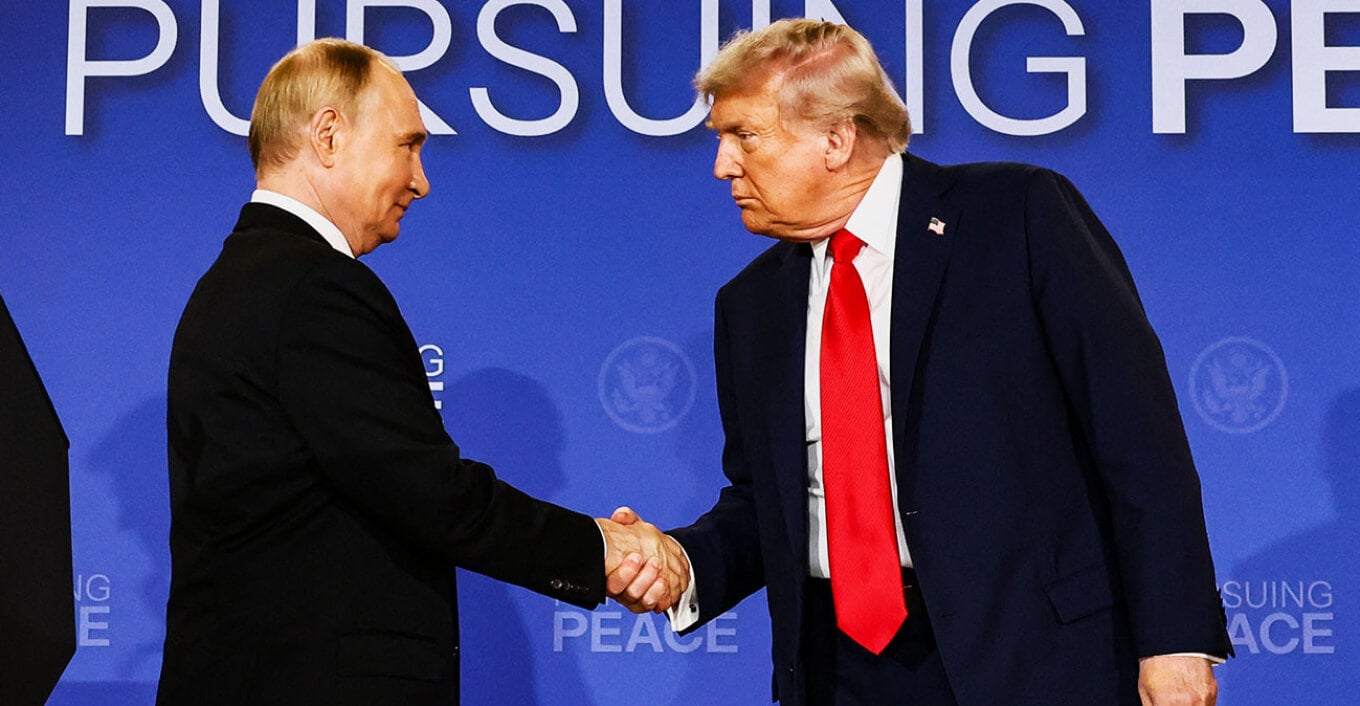
Οι συνομιλίες της κυβέρνησης του Ντόναλντ Τραμπ με τη Ρωσία για τον τερματισμό του πολέμου στην Ουκρανία έχουν διευρυνθεί και περιλαμβάνουν πλέον μια υπό διαπραγμάτευση συμφωνία δισεκατομμυρίων δολαρίων για την εξαγορά διεθνών περιουσιακών στοιχείων της ρωσικής πετρελαϊκής εταιρείας Lukoil, σύμφωνα με δημοσίευμα των «New York Times».
Οι συνομιλίες της κυβέρνησης του Ντόναλντ Τραμπ με τη Ρωσία για τον τερματισμό του πολέμου στην Ουκρανία έχουν διευρυνθεί και περιλαμβάνουν πλέον μια υπό διαπραγμάτευση συμφωνία δισεκατομμυρίων δολαρίων για την εξαγορά διεθνών περιουσιακών στοιχείων της ρωσικής πετρελαϊκής εταιρείας Lukoil, σύμφωνα με δημοσίευμα των «New York Times».
Η συμφωνία, η οποία δεν έχει ακόμη οριστικοποιηθεί και τελεί υπό την αίρεση της έγκρισης της αμερικανικής κυβέρνησης και του Κρεμλίνου, αφορά ένα εκτεταμένο χαρτοφυλάκιο πετρελαιοπηγών, διυλιστηρίων και πρατηρίων καυσίμων της Lukoil σε διάφορες χώρες.
Σύμφωνα με τους «New York Times», στο επίκεντρο της υπόθεσης βρίσκεται κοινοπραξία με επικεφαλής τον Αμερικανό επενδυτή Τοντ Μπόελι, στην οποία συμμετέχουν επίσης επενδυτικοί όμιλοι από τη Μέση Ανατολή. Στην προτεινόμενη συμφωνία συμμετέχει και η αμερικανική κυβέρνηση, μέσω της U.S. International Development Finance Corporation (DFC).
Στο τραπέζι των συνομιλιών Τραμπ-Πούτιν
Οι πολύμηνες διαπραγματεύσεις, σύμφωνα με οκτώ πρόσωπα με γνώση της υπόθεσης που επικαλούνται οι «New York Times», συνδέονται με την ευρύτερη προσπάθεια της κυβέρνησης Τραμπ να αποκαταστήσει οικονομικούς δεσμούς με τη Ρωσία στο πλαίσιο των συνομιλιών για τον τερματισμό του πολέμου στην Ουκρανία.
Το ζήτημα της Lukoil φέρεται να τέθηκε από τον Βλαντιμίρ Πούτιν κατά τη συνάντησή του με τους Αμερικανούς διαπραγματευτές Στιβ Γουίτκοφ και Τζάρεντ Κούσνερ στο Κρεμλίνο, στις 5 Σεπτεμβρίου. Σύμφωνα με πηγή που επικαλείται η αμερικανική εφημερίδα, ο Ρώσος πρόεδρος πρότεινε την προώθηση της συμφωνίας ως ένδειξη ότι η Ρωσία και οι Ηνωμένες Πολιτείες μπορούν να συνεργαστούν επιχειρηματικά.
Οι Αμερικανοί διαπραγματευτές φέρεται να απάντησαν ότι θα εργαστούν για την προώθηση της συμφωνίας, τόσο ως ένδειξη «καλής θέλησης» προς το Κρεμλίνο όσο και με στόχο τη μείωση των διεθνών τιμών ενέργειας.
Η ενδεχόμενη συμφωνία παρουσιάζει ιδιαίτερο οικονομικό ενδιαφέρον για τους υποψήφιους αγοραστές. Η έγκρισή της από τις Ηνωμένες Πολιτείες θα μπορούσε να οδηγήσει στην απελευθέρωση των ρωσικών περιουσιακών στοιχείων από τις αμερικανικές κυρώσεις, αυξάνοντας παράλληλα την αξία τους.
Οι διασυνδέσεις των επενδυτών
Στην κορυφή της κοινοπραξίας βρίσκεται ο Αμερικανός επενδυτής Τοντ Μπόελι, συνιδιοκτήτης των Los Angeles Dodgers και γνωστός υποστηρικτής του Τραμπ. Στο επενδυτικό σχήμα συμμετέχουν επίσης επιχειρηματικοί όμιλοι από το Κατάρ και τα Ηνωμένα Αραβικά Εμιράτα.
Οι «New York Times» επισημαίνουν ότι ορισμένοι από τους επενδυτές διατηρούν επιχειρηματικές σχέσεις με πρόσωπα που βρίσκονται κοντά στην κυβέρνηση Τραμπ.
Μεταξύ αυτών είναι οι αδελφοί Μουτάζ και Ράμεζ αλ-Χαγιάτ από το Κατάρ, οι οποίοι έχουν συνεργαστεί με τον Τζάρεντ Κούσνερ και την Ιβάνκα Τραμπ για τη χρηματοδότηση επενδυτικού σχεδίου στην Αλβανία.
Στην κοινοπραξία συμμετέχει επίσης επενδυτικό ταμείο με έδρα το Αμπού Ντάμπι, το οποίο ελέγχεται από τον σεΐχη Ταχνούν μπιν Ζαγιέντ Αλ Ναχιάν, σύμβουλο εθνικής ασφάλειας των Ηνωμένων Αραβικών Εμιράτων. Ο ίδιος συνδέεται με επενδύσεις στην World Liberty Financial, την εταιρεία κρυπτονομισμάτων της οικογένειας Τραμπ.
Παράλληλα, επενδυτικό ταμείο που συνδέεται με τον σεΐχη Ταχνούν αποτελεί σημαντικό μέτοχο της εταιρείας private equity που ίδρυσε ο Κούσνερ μετά την αποχώρησή του από τον Λευκό Οίκο.
Τα ερωτήματα για πιθανές συγκρούσεις συμφερόντων
Οι διασυνδέσεις αυτές έχουν προκαλέσει ερωτήματα σχετικά με το κατά πόσο προσωπικές επιχειρηματικές σχέσεις μπορεί να διασταυρώνονται με τη διαδικασία λήψης αποφάσεων για μια συμφωνία που συνδέεται με την αμερικανική εξωτερική πολιτική.
Οι «New York Times» αναφέρουν ότι δεν υπάρχει ένδειξη πως ο Γουίτκοφ ή ο Κούσνερ πρόκειται να αποκομίσουν προσωπικό οικονομικό όφελος από τη συμφωνία. Ωστόσο, η υπόθεση έχει εγείρει ζητήματα σχετικά με τις σχέσεις μεταξύ των εμπλεκόμενων επιχειρηματιών και προσώπων του στενού περιβάλλοντος του Τραμπ.
Η Χούι Τσεν, πρώην εισαγγελέας και σύμβουλος σε θέματα οικονομικού εγκλήματος και δεοντολογίας, χαρακτήρισε τις διασυνδέσεις «ανησυχητικές» και έθεσε το ερώτημα κατά πόσο προσωπικά συμφέροντα θα μπορούσαν να επηρεάσουν την αξιολόγηση των υποψήφιων αγοραστών.
Από την πλευρά του, εκπρόσωπος του Γουίτκοφ απέρριψε οποιοδήποτε ζήτημα σύγκρουσης συμφερόντων, υποστηρίζοντας ότι ο Αμερικανός διαπραγματευτής δεν λαμβάνει μισθό και καλύπτει ο ίδιος τα έξοδα των ταξιδιών του στο πλαίσιο της αποστολής του για λογαριασμό του Τραμπ.
Η κούρσα για τα περιουσιακά στοιχεία της Lukoil
Η Lukoil είχε θέσει προς πώληση τα διεθνή περιουσιακά της στοιχεία μετά την επιβολή αμερικανικών κυρώσεων. Αρκετοί υποψήφιοι αγοραστές είχαν εκδηλώσει ενδιαφέρον, μεταξύ των οποίων και μεγάλοι αμερικανικοί ενεργειακοί όμιλοι.
Τον Ιανουάριο, η επενδυτική εταιρεία Carlyle είχε καταλήξει σε προκαταρκτική συμφωνία για την εξαγορά σημαντικού μέρους του διεθνούς χαρτοφυλακίου της Lukoil. Η συμφωνία, ωστόσο, δεν ολοκληρώθηκε, καθώς απαιτούσε την έγκριση της αμερικανικής κυβέρνησης.
Στη συνέχεια, ο όμιλος υπό τον Μπόελι εμφανίστηκε ως ένας από τους βασικούς διεκδικητές των περιουσιακών στοιχείων.
Η αξία των διεθνών περιουσιακών στοιχείων της Lukoil είχε υπολογιστεί από την ίδια την εταιρεία σε περίπου 20 δισ. δολάρια στις αρχές του έτους. Ωστόσο, οι οικονομικοί όροι της υπό διαπραγμάτευση συμφωνίας δεν έχουν γίνει γνωστοί.
Ο ρόλος της αμερικανικής κυβέρνησης
Η αμερικανική κυβέρνηση συμμετέχει στην προτεινόμενη συμφωνία μέσω της U.S. International Development Finance Corporation, η οποία επενδύει και παρέχει χρηματοδότηση για έργα στο εξωτερικό.
Αμερικανός αξιωματούχος δήλωσε ότι μια ενδεχόμενη συμφωνία για τη Lukoil θα μπορούσε να ενισχύσει την οικονομική ασφάλεια των ΗΠΑ, να εξυπηρετήσει στόχους της αμερικανικής εξωτερικής πολιτικής και να συμβάλει στη μείωση του ενεργειακού κόστους για τους Αμερικανούς.
Η συμφωνία, ωστόσο, χρειάζεται την έγκριση του αμερικανικού υπουργείου Οικονομικών, το οποίο είναι αρμόδιο για την εφαρμογή των κυρώσεων κατά της Ρωσίας.
Η ενεργειακή διάσταση
Στο υπό διαπραγμάτευση χαρτοφυλάκιο περιλαμβάνονται διυλιστήρια της Lukoil στην Ολλανδία, τη Βουλγαρία και τη Ρουμανία, καθώς και άλλες ενεργειακές υποδομές και πρατήρια καυσίμων σε διάφορες χώρες.
Η ενεργειακή διάσταση αποκτά ιδιαίτερη σημασία καθώς η κυβέρνηση Τραμπ έχει επανειλημμένα υποστηρίξει ότι η αποκατάσταση οικονομικών σχέσεων με τη Ρωσία θα μπορούσε να λειτουργήσει ως κίνητρο για τη Μόσχα ώστε να προχωρήσει σε συμβιβασμούς για τον τερματισμό του πολέμου στην Ουκρανία.
Ο Ρώσος οικονομικός απεσταλμένος Κίριλ Ντμίτριεφ έχει επίσης εμπλακεί στη διαδικασία, ενώ, σύμφωνα με τους «New York Times», έχει δηλώσει ότι ο διάλογος ΗΠΑ-Ρωσίας συνεχίζεται σε πολλούς τομείς, μεταξύ των οποίων και η ενέργεια.
Η συμφωνία για τη Lukoil παραμένει, πάντως, ανοικτή και δεν έχει οριστικοποιηθεί. Η τελική απόφαση θα εξαρτηθεί από τις απαιτούμενες εγκρίσεις των αμερικανικών αρχών και της ρωσικής πλευράς.
skpress.gr
Γενικά θέματα
Πώς μια «Ελληνίδα» έγινε το «θεμέλιο» της Εθνικής Πινακοθήκης της Ουγγαρίας
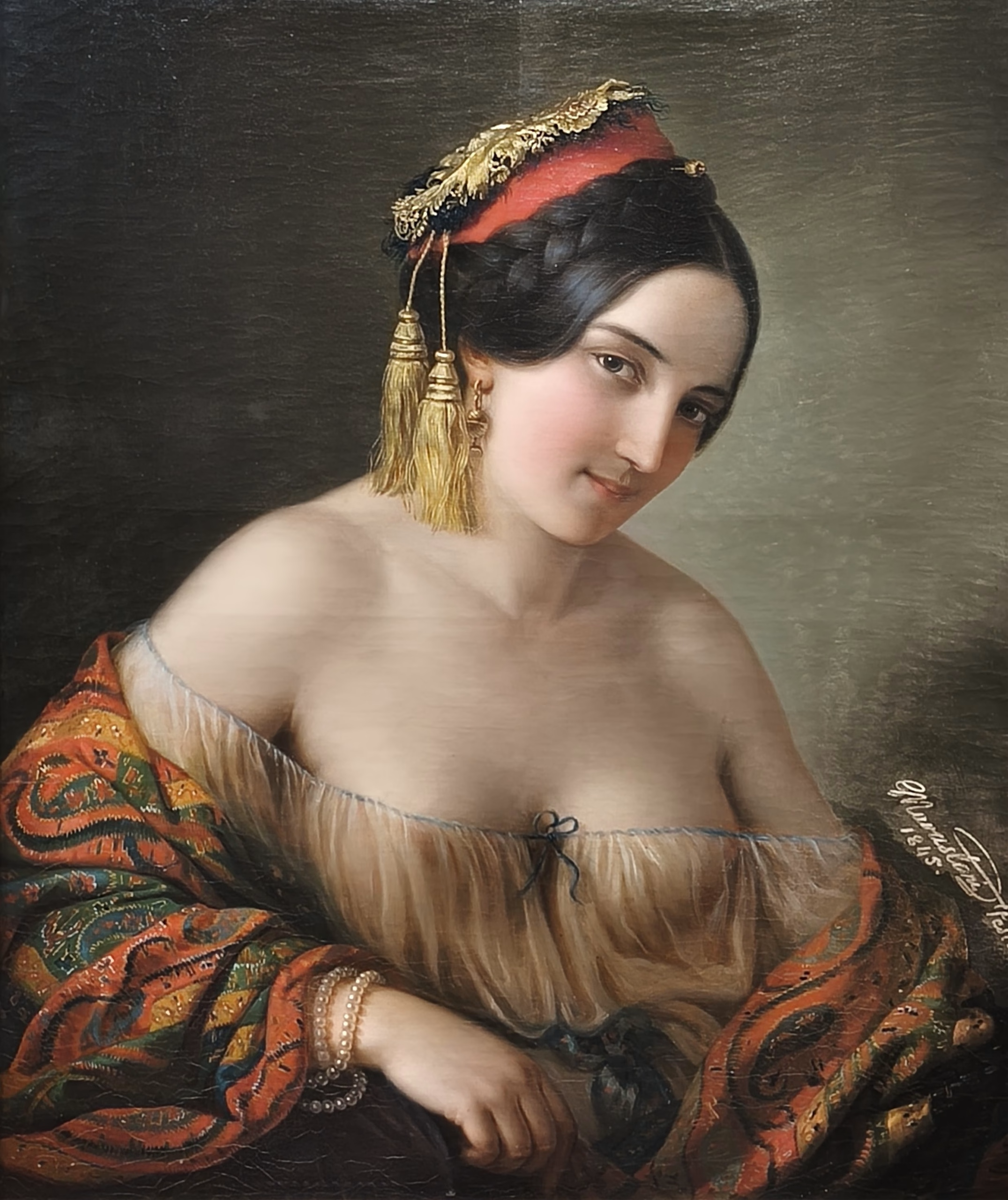
Στον πρώτο όροφο της Πινακοθήκης συναντήσαμε την «Ελληνίδα». Πρόκειται για ένα έργο του Jakob Marastoni (1804-1860), ενός ζωγράφου ιταλικής καταγωγής που εγκαταστάθηκε και εργάστηκε στην Πέστη και έγινε μία από τις σημαντικότερες μορφές στην ιστορία της ουγγρικής τέχνης.
Πριν λίγο καιρό επισκεφθήκαμε την Εθνική Πινακοθήκη της Ουγγαρίας στη Βουδαπέστη, ένα από τα πλέον σημαντικά μουσεία της χώρας, στο οποίο παρουσιάζεται με μοναδικό τρόπο η εξέλιξη της ουγγρικής εικαστικής τέχνης από τον 11ο αιώνα μέχρι σήμερα. Βρίσκεται στο Βασιλικό Ανάκτορο του Κάστρου της Βούδας και ιδρύθηκε το 1957 με βάση κυρίως τις ουγγρικές συλλογές του Μουσείου Καλών Τεχνών. Η συλλογή της περιλαμβάνει περίπου 110.00 έργα.
Στον πρώτο όροφο της Πινακοθήκης συναντήσαμε την «Ελληνίδα». Πρόκειται για ένα έργο του Jakob Marastoni (1804-1860), ενός ζωγράφου ιταλικής καταγωγής που εγκαταστάθηκε και εργάστηκε στην Πέστη και έγινε μία από τις σημαντικότερες μορφές στην ιστορία της ουγγρικής τέχνης.
Το έργο του με τίτλο «Ελληνίδα», φιλοτεχνημένο το 1845, θεωρείται εξαιρετικά σημαντικό για τη δημιουργία της συλλογής της Ουγγρικής Εθνικής Πινακοθήκης. Είναι το πρώτο έργο που σηματοδότησε την έναρξη της συστηματικής συλλογής ουγγρικής ζωγραφικής στα εθνικά ιδρύματα. Είναι επίσης το πιο γνωστό και εμβληματικό έργο του ζωγράφου.
Οι διαστάσεις του είναι 77Χ61,5 cm περίπου. Το μοντέλο δεν είναι Ελληνίδα, αλλά η σύζυγος του Marastoni, η Giovanna Bianchi, με καταγωγή από τη Βενετία. Ο ζωγράφος την απεικόνισε με παραδοσιακή (ή φανταστική) ελληνική φορεσιά της εποχής, σύμφωνα με τη μόδα του ρομαντισμού. Η εικόνα συνδυάζει εξωτισμό, ελαφρύ ερωτισμό και ιδανική ομορφιά.
Η ιστορία
Το 1845 η Pest Art Society — η πρώτη καλλιτεχνική εταιρεία στην Ουγγαρία — αγόραζε κάθε χρόνο ένα έργο από την ετήσια έκθεσή της για να το δωρίσει στο Ουγγρικό Εθνικό Μουσείο, το οποίο τότε περιλάμβανε και την πινακοθήκη.
Η «Ελληνίδα» του Marastoni ήταν αυτό που επέλεξαν και δώρισαν τον Νοέμβριο του 1845. Έτσι, καταγράφηκε ως το πρώτο έργο στη συλλογή ζωγραφικής του μουσείου. Το Εθνικό Μουσείο είχε ήδη κάποιες δωρεές, αλλά η συστηματική συλλογή ουγγρικής τέχνης ξεκινάει ουσιαστικά με αυτό το έργο. Η Εθνική Πινακοθήκη κληρονόμησε αυτή τη συλλογή από το Εθνικό Μουσείο.
Η επιλογή του προκάλεσε έντονες συζητήσεις και αποτέλεσε το «πρώτο καλλιτεχνικό σκάνδαλο» της εποχής, λόγω του ερωτισμού που απέπνεε το μοντέλο. Ωστόσο ο πίνακας αυτός ήταν και ιδιαίτερα δημοφιλής, κάτι που ενίσχυσε την εθνική συζήτηση για την τέχνη.
Σήμερα, το έργο παραμένει εμβληματικό και εκτίθεται συχνά ως αφετηρία της συλλογής ζωγραφικής του 19ου αιώνα στην Πινακοθήκη. Συμβολίζει το πώς η ουγγρική τέχνη χτίστηκε με συνεισφορές από ξένους καλλιτέχνες που ενσωματώθηκαν στη χώρα, όπως ο Marastoni.
Η δημιουργία της Πινακοθήκης
Αν κάνετε περίπατο στην οδό Deák Ferenc στο κέντρο της πόλης ίσως αξίζει κάποιες φορές να σηκώσετε το βλέμμα πάνω από τις βιτρίνες των καταστημάτων. Το βλέμμα σας θα συναντήσει όχι μόνο κλασικές προσόψεις, αλλά και αναμνηστικές πλάκες, όπως για παράδειγμα εκείνη στον αριθμό 21, όπου αναγράφεται: «Η Πρώτη Ουγγρική Ακαδημία Ζωγραφικής – ιδρυθείσα από τον Jakab Marastoni».
Η Πέστη του 19ου αιώνα ήταν μια πραγματικά πολυπολιτισμική πόλη. Γερμανοί, Ούγγροι, Έλληνες, Ιταλοί, Σέρβοι και πολλές άλλες μικρότερες εθνότητες ζούσαν εδώ δίπλα-δίπλα ειρηνικά. Ο καθένας καλλιεργούσε τον δικό του πολιτισμό, αλλά ένα πράγμα τους ένωνε: όλοι ήθελαν να είναι και Ούγγροι και επιδίωκαν να υπηρετήσουν τον ουγγρικό πολιτισμό με τις δραστηριότητές τους.
Εκείνη την εποχή ο Marastoni υπέβαλε την αίτησή του για την ακαδημία ζωγραφικής στο Βασιλικό Συμβούλιο των Κυβερνητών, όταν ιδρύθηκε εντός του Ουγγρικού Εθνικού Μουσείου ο Σύλλογος Εθνικής Πινακοθήκης, ένα «τμήμα που συνέλεγε αποκλειστικά ουγγρική ζωγραφική».
Όλα αυτά συνέβησαν το 1845 και αυτή η μεγάλη πολιτιστική δραστηριότητα μπορεί να ήταν αποτέλεσμα του γεγονότος ότι εκείνη τη χρονιά το Εθνικό Μουσείο ήθελε να τιμήσει δεόντως την πεντηκοστή επέτειο της ανάληψης καθηκόντων του αρχιδούκα Ιωσήφ της Αυστρίας.
Ο σύλλογος που έφερε το όνομα του αρχιδούκα εγκρίθηκε τελικά από το Βασιλικό Συμβούλιο των Κυβερνητών τον Σεπτέμβριο του 1845. Η Εθνική Πινακοθήκη του αρχιδούκα Ιωσήφ μπορεί, επομένως, να θεωρηθεί ως το πρώτο εθνικό ίδρυμα που συνέλεγε ουγγρικούς πίνακες.
Η πινακοθήκη δέχθηκε δωρεές έργων τόσο από συλλόγους, όσο και από ιδιώτες, και ανάμεσά τους το σημαντικότερο ήταν το έργο του Jakab Marastoni «H Ελληνίδα», το οποίο δωρήθηκε στην πινακοθήκη τον Νοέμβριο του 1845 από την Καλλιτεχνική Εταιρεία της Πέστης. Έτσι, μπορεί να πει κανείς ότι η ιστορία της μουσειακής συλλογής ουγγρικής ζωγραφικής ξεκίνησε με την «Ελληνίδα».
Αλλά γιατί μια Ελληνίδα; Το σύγχρονο (όχι αρχαίο) ελληνικό θέμα εμφανίστηκε στην ευρωπαϊκή ζωγραφική με την Ελληνική Επανάσταση ενάντια στην Οθωμανική Αυτοκρατορία τη δεκαετία του 1820. Φυσικά, οι συμπάθειες του ευρωπαϊκού ρομαντισμού προς τους Έλληνες άσκησαν επιρροή και στην ουγγρική τέχνη.
Οι Έλληνες, και ιδιαίτερα οι Ελληνίδες, αποτελούσαν συχνά θέμα στην ουγγρική ζωγραφική του 19ου αιώνα, και κατά μία έννοια η «Ελληνίδα» κατέληξε να αντιπροσωπεύει ένα εξωτικό θέμα αρωματισμένο με ερωτισμό.
Και αν σήμερα βρίσκουμε την «Ελληνίδα» να αποκαλύπτει ανοιχτά την ομορφιά και τη γοητεία της, δεν πρέπει να ξεχνάμε ότι επρόκειτο για θέμα μόδας. Και όσο κι αν μας γνέφει σαγηνευτικά αυτή η όμορφη γυναίκα, με την ιστορική έννοια το έργο αυτό είναι ένα από τα σημαντικότερα της ουγγρικής μουσειολογίας.
Ο ζωγράφος
Ο Jakab Marastoni (Giacomo Marastoni) γεννήθηκε το 1804 στη Βενετία και σπούδασε στην περίφημη Ακαδημία Καλών Τεχνών.
Ταξίδεψε στη Βιέννη στις αρχές της δεκαετίας του 1830, πέρασε από τη σημερινή Μπρατισλάβα το 1833 και εγκαταστάθηκε οριστικά στην Πέστη το 1836. Έγινε περιζήτητος πορτρετίστας μεταξύ αριστοκρατικών και αστικών οικογενειών, αλλά και κατά τη διάρκεια κοινοβουλευτικών συνεδριάσεων.
Το 1846 ίδρυσε την Πρώτη Ουγγρική Ακαδημία Ζωγραφικής στην Πέστη – την πρώτη ιδιωτική σχολή αποκλειστικά για ζωγραφική στην Ουγγαρία. Ανάμεσα στους μαθητές του περιλαμβάνονται σημαντικοί Ούγγροι καλλιτέχνες όπως ο Károly Lotz, ο Mihály Zichy, ο Soma Orlai Petrich κ.ά. Το 1846 έγινε Επίτιμος Πολίτης της Πέστης.
Στα τελευταία χρόνια της ζωής του ασχολήθηκε με την δαγκεροτυπία ήταν ο πρώτος επαγγελματίας αυτής της τεχνικής στην Ουγγαρία. Πέθανε σε ψυχιατρική κλινική και η σχολή του έκλεισε λίγο μετά.
tovima.gr
Γενικά θέματα
Ούμαρ Κρέμλεφ: Ο άνθρωπος του Πούτιν που «εισέβαλε» στον αμερικανικό αθλητισμό
Πριν γίνει γνωστός ως Ούμαρ Κρέμλεφ, ο 43χρονος που χρόνια αργότερα θα συνδεόταν ακόμη και με το πολυτελές πάρτι του Ντόναλντ Τραμπ Τζούνιορ στις Μπαχάμες, ήταν γνωστός με το όνομα Ούμαρ Λουτφουλόεφ. Μέχρι τον Μάρτιο του 2010, το όνομα Κρέμλεφ παρέμενε ουσιαστικά άγνωστο
Πριν γίνει γνωστός ως Ούμαρ Κρέμλεφ, ο 43χρονος που χρόνια αργότερα θα συνδεόταν ακόμη και με το πολυτελές πάρτι του Ντόναλντ Τραμπ Τζούνιορ στις Μπαχάμες, ήταν γνωστός με το όνομα Ούμαρ Λουτφουλόεφ. Μέχρι τον Μάρτιο του 2010, το όνομα Κρέμλεφ παρέμενε ουσιαστικά άγνωστο.
Όταν «πάτησε» τα 28 κι έχοντας, σύμφωνα με δημοσιεύματα της εποχής, καταδίκες για εκβιασμό και ξυλοδαρμό, είδε τις φιλοδοξίες του για καριέρα στην πυγμαχία να σβήνουν εξαιτίας της έλλειψης πειθαρχίας και θέλησε να κάνει μια νέα αρχή για να ανεβεί τα σκαλοπάτια της ρωσικής κοινωνίας.
Ο 43χρονος μεγάλωσε στο Σερπούχοφ, μια πόλη περίπου 120.000 κατοίκων, 60 μίλια νότια της Μόσχας και 5.729 μίλια ανατολικά του Little Pipe Cay, του νησιού στις Μπαχάμες που νοίκιασε για τον γιο του Αμερικανού προέδρου. Γεννημένος από μητέρα Τατζίκα σε μουσουλμανική οικογένεια, «παντρεύτηκε» αρχή τον ρόλο του αουτσάιντερ.
Σύμφωνα με το ρωσικό ερευνητικό μέσο Proekt, καταδικάστηκε για εκβιασμό το 2004 και για ξυλοδαρμό το 2007, αν και οι ακριβείς συνθήκες των υποθέσεων παραμένουν ασαφείς. Ο ίδιος δεν έχει αρνηθεί τις καταδίκες.
Οι Night Wolves εμφανίστηκαν την περίοδο της Περεστρόικα, της οικονομικής αναδιάρθρωσης της δεκαετίας του 1980, ως μια ομάδα μοτοσικλετιστών και φίλων της ροκ μουσικής. Επικεφαλής τους ήταν ο Αλεξάντερ Ζαλντοστάνοφ, γνωστός ως «Χειρουργός», στενός φίλος του Βλαντίμιρ Πούτιν.
Μέσα σε αυτόν τον ετερόκλητο κόσμο που ο Κρεμλέφ άρχισε να καλλιεργεί τις σχέσεις που θα τον μετέτρεπαν από πυγμάχο σε ισχυρό παράγοντα της ρωσικής κοινωνίας. Η σημαντικότερη από αυτές ήταν με τον Αλεξέι Ρουμπέζνι, υποστράτηγο της Ομοσπονδιακής Υπηρεσίας Προστασίας (FSO) ψηλόβαθμων κρατικών αξιωματούχων, με τον οποίο έγιναν αχώριστοι.
Το 2016, ο Ρουμπέζνι ήταν πλέον επικεφαλής της Υπηρεσίας Ασφαλείας του Προέδρου και ο Κρεμλέφ είχε αποκτήσει, με αυτό τον τρόπο, πρόσβαση στον Πούτιν. Έκτοτε, η καριέρα του απογειώθηκε.
Ανέβηκε γρήγορα στην ιεραρχία και το 2017 ανέλαβε την ηγεσία της Ρωσικής Ομοσπονδίας Πυγμαχίας. Όμως η ορεξη του Κρεμλέφ είχε ανοίξει και δεν χόρταινε. Η Association Internationale de Boxe Amateur (AIBA – Διεθνής Ομοσπονδία Ερασιτεχνικής Πυγμαχίας) βρισκόταν τότε σε βαθιά κρίση, αντιμέτωπη με καταγγελίες διαφθοράς που οδήγησαν το 2019 στην αρχική αναστολή της από τους Ολυμπιακούς Αγώνες ως φορέα που είχε την ευθύνη της ολυμπιακής πυγμαχίας.
Ο Κρεμλέφ υποσχέθηκε σαρωτικές μεταρρυθμίσεις και την εξόφληση χρέους που υπολογιζόταν στα 16 εκατ. δολάρια, με στόχο ο οργανισμός να ανακτήσει τον έλεγχο της ολυμπιακής πυγμαχίας. Έτσι, το 2020 κέρδισε με άνεση την ψηφοφορία για την προεδρία, ενώ το γεγονός ότι μιλούσε από ελάχιστα έως καθόλου αγγλικά δεν αποτέλεσε εμπόδιο. Και όπως έκανε με τον ίδιο του τον εαυτό, και σε αυτή την περίπτωση έκανε το restart με τον ίδιο τρόπο: άλλαξε το όνομα του οργανισμού σε International Boxing Association (IBA).
Ακολούθησε συνεργασία της IBA με την Gazprom, τον ρωσικό κρατικό ενεργειακό κολοσσό, με συνέπεια το χρέος να μηδενιστεί και τα χρηματικά έπαθλα να αυξηθούν. «Γιατί να μην μπορούν οι ερασιτέχνες πυγμάχοι να πληρώνουν τα στεγαστικά τους δάνεια και να στηρίζουν τις οικογένειές τους;» είχε δηλώσει τότε ο Κρεμλέφ.
Το 2022, η IBA ήρε περιορισμούς που είχαν επιβληθεί νωρίτερα την ίδια χρονιά και επέτρεψε σε Ρώσους και Λευκορώσους πυγμάχους να αγωνίζονται με τις εθνικές σημαίες και τους ύμνους τους, ενώ απέκλεισε από τις τάξεις της την Ουκρανική Ομοσπονδία Πυγμαχίας. Την επόμενη χρονιά, ωστόσο, η Διεθνής Ολυμπιακή Επιτροπή (ΔΟΕ) ψήφισε – με αφορμή τον πόλεμο της Ρωσίας στην Ουκρανία – υπέρ της αφαίρεσης από την IBA της ιδιότητας της παγκόσμιας ομοσπονδίας του αθλήματος.
Ο Κρεμλέφ γίνεται ο «σκιώδης δήμαρχος»
Ωστόσο, δεν ήταν μόνο οι πυγμάχοι του Κρεμλέφ που πληρώνονταν καλά. Το 2019, μια εταιρεία του απέκτησε το δικαίωμα να γίνει ο μοναδικός διαχειριστής της εθνικής λοταρίας της Ρωσίας. Σε ένα μοτίβο που θα επαναλαμβανόταν αρκετές φορές, η λοταρία έγινε σύντομα χορηγός της IBA.
Τα επόμενα χρόνια, ο Κρεμλέφ απέκτησε μερίδια σε τρεις από τις μεγαλύτερες στοιχηματικές εταιρείες της Ρωσίας, τις Fonbet, Liga Stavok και Pari. Ρωσικά μέσα ενημέρωσης έχουν αναφέρει ότι οι συμφωνίες αυτές είχαν την υποστήριξη του Αντρέι Κόστιν, του υπό κυρώσεις χρηματοδότη και προέδρου της συνδεδεμένης με το Κρεμλίνο τράπεζας VTB, ο οποίος έχει χαρακτηριστεί «τραπεζίτης-κουμπαράς του Πούτιν».
Οι εταιρείες αυτές φαίνεται ότι είχαν συνολικά έσοδα περίπου 625 δισ. ρούβλια (5,5 δισ. λίρες) το 2023, ενώ η Liga Stavok αποτελεί πλέον βασικό εταίρο της IBA.
Ο Κρεμλέφ είχε επίσης αποκτήσει σταδιακά τον έλεγχο της Tsupis, μιας εταιρείας πληρωμών που συνδέει τους παίκτες με τις στοιχηματικές εταιρείες και εισπράττει προμήθεια από κάθε ποντάρισμα. Το 2021, ο Πούτιν εξέδωσε διάταγμα κατά της απάτης, το οποίο παραχώρησε στην Tsupis μονοπώλιο σε αυτή την εξαιρετικά επικερδή δραστηριότητα. Την ίδια περίοδο, οι φορείς που ρύθμιζαν την αγορά στοιχημάτων πέρασαν επίσης υπό τον έλεγχο του Κρεμλέφ και ενοποιήθηκαν σε έναν κοινό εποπτικό οργανισμό, με αρκετά μέλη του διοικητικού συμβουλίου να προέρχονται, σύμφωνα με δημοσιεύματα, από το δίκτυό του στον χώρο της πυγμαχίας.
Στη γενέτειρά του, το Σερπούχοφ, καθώς εξελισσόταν σε ολιγάρχη, ο Κρεμλέφ απέκτησε το προσωνύμιο «σκιώδης δήμαρχος», έχοντας συγκεντρώσει ένα εντυπωσιακό χαρτοφυλάκιο ακινήτων. Κάποια από αυτά φέρεται να περιήλθαν στην κατοχή του μετά την αναδιανομή περιουσιακών στοιχείων του φυλακισμένου πρώην δημάρχου Αλεξάντερ Σεστούν.
Πηγές αναφέρουν ότι απέκτησε γεωργικές εκτάσεις, βιομηχανικές εγκαταστάσεις, ένα λιμάνι, ένα εμπορικό κέντρο και ένα ξενοδοχείο, ενώ το 2024, ο Κρεμλέφ φέρεται να επωφελήθηκε και από απαλλοτρίωση. Τον Φεβρουάριο, το Κρεμλίνο κατέσχεσε τη Rolf, τη μεγαλύτερη αντιπροσωπεία αυτοκινήτων της Ρωσίας, από τον Σεργκέι Πετρόφ, τον εξόριστο ιδιοκτήτη της και πρώην βουλευτή της αντιπολίτευσης και μέχρι τον Σεπτέμβριο, η εταιρεία είχε περάσει στον Κρεμλέφ μέσω συμφωνίας ύψους 35 δισ. ρουβλίων.
Σε ανακοίνωσή της, η Rolf παρουσίασε τον Κρεμλέφ ως νέο ιδιοκτήτη της, χαρακτηρίζοντάς τον «στρατηγικό επενδυτή, ο οποίος θα επιτρέψει στην εταιρεία να διατηρήσει τη μοναδική εταιρική κουλτούρα της και να διευρύνει το φάσμα των δραστηριοτήτων της, με έμφαση στην αύξηση της αποτελεσματικότητας και την προσέλκυση νέων συνεργατών και πελατών».
Ένας από αυτούς τους νέους συνεργάτες, σύμφωνα με μεταγενέστερα δημοσιεύματα του Proekt, ήταν η IBA.
Η πίστη στον Πούτιν
Έχοντας συγκεντρώσει προσωπική περιουσία που υπολογίζεται έως και σε 300 εκατ. λίρες και αναλαμβάνοντας παράλληλα και άλλα αξιώματα – μεταξύ αυτών την προεδρία της Διεθνούς Ομοσπονδίας Ταβλιού – ο Κρεμλέφ δεν έκρυβε ποτέ τις πολιτικές του συμπάθειες.
«Χάρη σε έναν άνθρωπο, σήμερα υπάρχουν πραγματικά κάθε είδους ευκαιρίες να κερδίσεις χρήματα και να επιδιώξεις περισσότερα», είχε δηλώσει σε βιντεοσκοπημένη συνέντευξη το 2024, την οποία εντόπισε ο Guardian. «Αυτός ο άνθρωπος, φυσικά, είναι ο πρόεδρός μας, Βλαντίμιρ Βλαντιμίροβιτς Πούτιν».
Λίγους μήνες αργότερα, η Ουκρανία του επέβαλε κυρώσεις, χωρίς να βρίσκεται, ωστόσο, υπό κυρώσεις από τη Βρετανία, τις ΗΠΑ ή την Ευρωπαϊκή Ένωση.
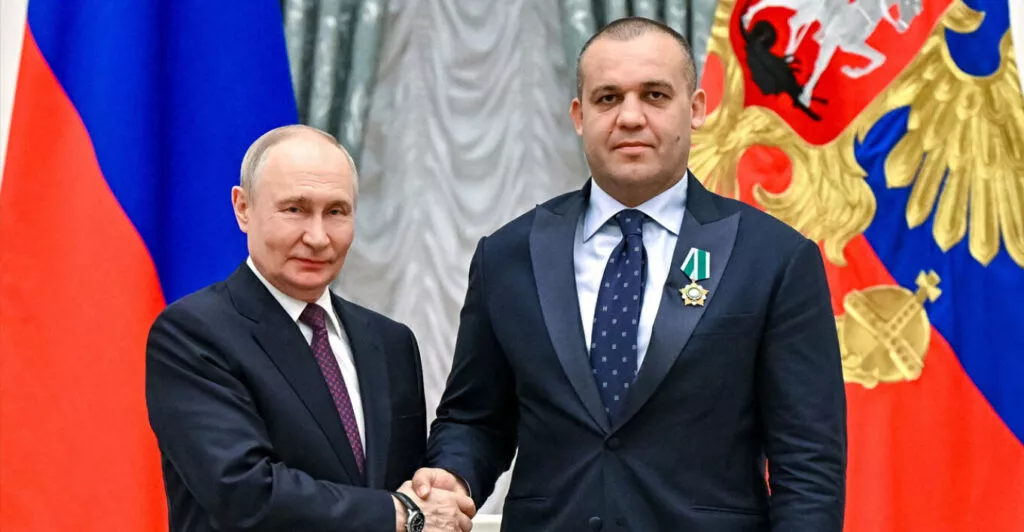
Τον Απρίλιο, ο Πούτιν απένειμε στον Κρεμλέφ το Παράσημο της Φιλίας, ενώ λίγες ημέρες πριν από τον γάμο του Τραμπ Τζούνιορ, ο Κρεμλέφ συνόδευσε τον Ρώσο πρόεδρο σε επίσκεψη στην Κίνα, επιμένοντας πάντως ότι δεν βρισκόταν εκεί με επίσημη ιδιότητα.
Τα οφέλη για την οικογένειά του
Όπως συμβαίνει συχνά με τις οικογένειες ισχυρών και εύπορων πατριαρχών, και οι συγγενείς του Κρεμλέφ φαίνεται ότι επωφελήθηκαν από την άνοδό του. Το 2024, η ρωσική Novaya Gazeta ανέφερε ότι είχε παραχωρήσει στην τότε 21χρονη σύζυγό του, Αναστάσια Λεστσίνσκαγια, ένα κουρείο και ένα καφέ στο Σερπούχοφ, καθώς και πολυτελή αυτοκίνητα. Μάλιστα, αψηφώντας πλήρως τους νόμους, οι Porsche, Lamborghini και Aston Martin που φέρεται να της ανήκαν έχουν, σύμφωνα με δημοσιεύματα, συγκεντρώσει περίπου 50 κλήσεις από την τροχαία της περιφέρειας της Μόσχας.
Η Λεστσίνσκαγια ήταν γνωστή δημιουργός στο TikTok και το ένα από τα δύο μέλη του διδύμου «twinsrussian».
Ωστόσο, η δίδυμη αδελφή της είναι εκείνη που έχει προσελκύσει ακόμη μεγαλύτερο ενδιαφέρον. Η Εκατερίνα Λεστσίνσκαγια διευθύνει τη φιλοπουτινική οργάνωση Healthy Fatherland, ένα αθλητικό και πατριωτικό κίνημα στο οποίο το Κίεβο έχει επιβάλει κυρώσεις για τον φερόμενο ρόλο του στην απαγωγή, την απέλαση και την αναγκαστική μεταφορά παιδιών από την Ουκρανία. Η ίδια έχει επίσης συναντηθεί επανειλημμένα με τον Ρώσο πρόεδρο.
Και φαίνεται πως αυτή ακριβώς η σύνδεση του Τζούνιορ με τον Κρεμλέφ ήταν που ώθησε τη Μελάνια Τραμπ – η οποία έχει μεσολαβήσει σε συμφωνίες με Ρώσους αξιωματούχους για την επιστροφή Ουκρανών παιδιών – να πάρει αποστάσεις από τον γάμο του θετού γιου της, με εκπρόσωπό της να δηλώνει: «Η κυρία Τραμπ δεν έχει και δεν είχε ποτέ καμία σχέση με τον κ. Κρεμλέφ».
Ασαφής ο τρόπος σύνδεσης του Τραμπ Τζούνιορ με τον Κρεμλέφ
Ο Τραμπ Τζούνιορ, όμως, έχει. Το πώς ακριβώς ο γιος του Αμερικανού προέδρου μπήκε στον κύκλο του Κρεμλέφ παραμένει ασαφές. Εκπρόσωπος του γιου του Αμερικανού προέδρου δήλωσε ότι οι δύο άνδρες, αμφότεροι λάτρεις του κυνηγιού, γνωρίστηκαν μέσω κοινού φίλου και «δέθηκαν χάρη στην αγάπη τους για την πυγμαχία και τις δραστηριότητες στη φύση».
Επιπλέον, ο Τραμπ Τζούνιορ είχε επαφή με την πυγμαχία από μικρή ηλικία, λόγω της δραστηριότητας του πατέρα του ως διοργανωτή αγώνων. Στα δέκα του χρόνια είχε παρακολουθήσει από κοντά τον Μάικ Τάισον να διαλύει τον Μάικλ Σπινκς μέσα σε μόλις 91 δευτερόλεπτα στο Trump Plaza Hotel του Ατλάντικ Σίτι.
Ο κοινός φίλος μέσω του οποίου γνωρίστηκαν δεν έχει κατονομαστεί, ωστόσο αμφότεροι διατηρούν στενές σχέσεις με έναν Τούρκο επιχειρηματία, τον Κάαν Καρακάγια. Ο Καρακάγια φέρεται, μάίστα, να ήταν παρών σε ένα αμφιλεγόμενο κυνηγετικό ταξίδι στη Μογγολία το 2019, κατά το οποίο ο Τραμπ Τζούνιορ πυροβόλησε και σκότωσε ένα απειλούμενο πρόβατο.
Τον Σεπτέμβριο του περασμένου έτους, σε εκδήλωση της IBA στην Κωνσταντινούπολη, στην οποία παρευρέθηκε και ο Μάνι Πακιάο, παγκόσμιος πρωταθλητής σε οκτώ διαφορετικές κατηγορίες βάρους, ο Κρεμλέφ ανακοίνωσε τον διορισμό του Καρακάγια ως εκπροσώπου της οργάνωσης στην Τουρκία.
«Ο Κάαν υπήρξε μια γέφυρα ανάμεσα σε διαφορετικούς κόσμους, ένας φίλος που φέρνει τους ανθρώπους κοντά», είχε δηλώσει ο Κρεμλέφ.
«Ηγέτης και φίλος»
Ο Τραμπ Τζούνιορ παρευρέθηκε στην ίδια εκδήλωση της IBA και κάθισε δίπλα στον Κρεμλέφ πάνω στη σκηνή. Οι δύο άνδρες φαίνεται ότι διατηρούσαν ήδη τότε φιλική σχέση, παρά τα περιορισμένα αγγλικά του Ρώσου, ενώ ο Κρεμλέφ, σε μια ιδιαίτερα θερμή αναφορά, δήλωσε ότι ήταν «υπερήφανος που βρίσκεται εδώ με τον φίλο μου» και υποσχέθηκε ότι εκείνος και ο Τραμπ Τζούνιορ θα «προστατεύσουν τη διαφάνεια στην πυγμαχία και θα ανοίξουν τον δρόμο για την επόμενη γενιά».
Από την πλευρά του, ο Τραμπ Τζούνιορ επαίνεσε τον 43χρονο για το γεγονός ότι «επανέφερε την καθαρότητα της πυγμαχίας» και «αποκατέστησε την πραγματική δικαιοσύνη» στο άθλημα – μια αναφορά, όπως φαίνεται, στην πολιτική της IBA να μην επιτρέπει σε βιολογικούς άνδρες να αγωνίζονται στη γυναικεία πυγμαχία. «Είμαι υπερήφανος που αποκαλώ τον Ούμαρ όχι μόνο ηγέτη αλλά και φίλο», είχε δηλώσει, σύμφωνα με δελτίο Τύπου της IBA που είχε τον χαρακτηριστικό τίτλο: «Ούμαρ Κρεμλέφ και Ντόναλντ Τραμπ Τζούνιορ ενώνουν τις δυνάμεις τους».
Η θέση του για την πυγμάχο Ιμάν Κελίφ
Η IBA βρέθηκε ακόμη περισσότερο στο επίκεντρο της διεθνούς προσοχής κατά τη διάρκεια των Ολυμπιακών Αγώνων του Παρισιού το 2024, γεγονός που δημιούργησε μια ευκαιρία την οποία ο Κρεμλέφ μπορούσε να αξιοποιήσει.
Στους Αγώνες, η ΔΟΕ χρησιμοποίησε δική της μονάδα πυγμαχίας για τη διοργάνωση του τουρνουά, καθώς η IBA είχε ήδη αποβληθεί. Η διοργάνωση, ωστόσο, βρέθηκε στο επίκεντρο έντονης αντιπαράθεσης όταν επετράπη στην Αλγερινή πυγμάχος Ιμάν Κελίφ να αγωνιστεί στην κατηγορία των 66 κιλών γυναικών, μολονότι είχε αποκλειστεί από το Παγκόσμιο Πρωτάθλημα της προηγούμενης χρονιάς επειδή δεν είχε περάσει εξετάσεις επαλήθευσης φύλου.
Κι ενώ η IBA του Κρεμλέφ είχε αποκλείσει την Κελίφ από τις διοργανώσεις της, η ΔΟΕ της επέτρεψε να αγωνιστεί στους Ολυμπιακούς Αγώνες με βάση το γεγονός ότι στο διαβατήριό της αναγράφεται ως γυναίκα. Ακολούθησε διεθνής αντιπαράθεση, με την Κελίφ να κερδίζει ομόφωνα όλους τους αγώνες της και να κατακτά τελικά το χρυσό μετάλλιο.
«Είναι ξεκάθαρα καθορισμένο: ο γυναικείος αθλητισμός είναι για γυναίκες, ο ανδρικός αθλητισμός για άνδρες. Ο γυναικείος αθλητισμός είναι για γυναίκες», είχε δηλώσει ο Κρεμλέφ στο TalkSPORT, μεταφέροντας, μάλιστα, το μήνυμα αυτό στο υψηλότερο δυνατό επίπεδο, στέλνοντας ανοιχτή επιστολή 1.100 λέξεων στον Ντόναλντ Τραμπ, ο οποίος είχε πρόσφατα υπογράψει εκτελεστικό διάταγμα που απαγόρευε στις τρανς γυναίκες να αγωνίζονται στις γυναικείες κατηγορίες αθλημάτων.
Στην επιστολή, ο Κρεμλέφ έγραφε: «Είναι ζωτικής σημασίας όλοι οι αθλητές να αγωνίζονται επί ίσοις όροις και η θέση σας στο ζήτημα αποτελεί σημαντικό βήμα προς την επίτευξη αυτού του στόχου», ενώ επιτέθηκε και στη ΔΟΕ, λέγοντας: «Η Διεθνής Ολυμπιακή Επιτροπή και η σημερινή ηγεσία της έχουν, δυστυχώς, οδηγήσει το Ολυμπιακό Κίνημα σε παρακμή με τις κοντόφθαλμες ενέργειές τους και την κακή διοίκηση».
Ο Κρεμλέφ έριξε επίσης στον Αμερικανό πρόεδρο άλλο ένα «τυράκι». «Το τελευταίο Παγκόσμιο Πρωτάθλημα Πυγμαχίας της IBA στις Ηνωμένες Πολιτείες πραγματοποιήθηκε το 2007 στο Σικάγο. Ενδιαφερόμαστε πολύ να επαναφέρουμε τη διοργάνωση στη χώρα σας και είμαστε περισσότερο από έτοιμοι να συνεργαστούμε προς αυτή την κατεύθυνση» έγραψε, ενώ έκλεισε την επιστολή του παραλλάσσοντας δύο από τις αγαπημένες φράσεις του Τραμπ: «Σας ευχαριστώ για την προσοχή σας σε αυτά τα σημαντικά ζητήματα. Προσβλέπουμε με μεγάλη αισιοδοξία στην πιθανότητα να συνεργαστούμε για να κάνουμε ξανά σπουδαίο το Ολυμπιακό Κίνημα, να προωθήσουμε το άθλημα της πυγμαχίας και να υπερασπιστούμε τα δικαιώματα των αθλητών σε ολόκληρο τον κόσμο».
Η αντιπαράθεση με τους Σαουδάραβες
Το 2025, η IBA ανέβασε ακόμη περισσότερο στροφές. Σύμφωνα με πληροφορίες της Telegraph, στην Κωνσταντινούπολη η ομάδα του Κρεμλέφ προσέφερε στον γνωστό Βρετανό πυγμάχο Τάισον Φιούρι αμοιβή 50 εκατ. λιρών προκειμένου να αγωνιστεί σε μία από τις διοργανώσεις της IBA. Ο Φιούρι, ωστόσο, επέλεξε να υπογράψει συμφωνία τριών αγώνων με τον Τούρκι Αλ-Σέιχ, αξιωματούχο της κυβέρνησης της Σαουδικής Αραβίας.
Ο Κρεμλέφ αποτελεί, ουσιαστικά, τον ισχυρότερο promoter του αθλήματος στην Ανατολική Ευρώπη, αποτελώντας άμεση πρόκληση για την επιρροή του Αλ-Σέιχ και των Σαουδαράβων στην πυγμαχία και για τον έλεγχό τους σε ορισμένους από τους σημαντικότερους αγώνες του αθλήματος.
Άνθρωποι από τον χώρο της πυγμαχίας περιγράφουν τον Κρεμλέφ ως «μια χαρισματική προσωπικότητα που εμφανίζεται σε εκδηλώσεις και διοργανώσεις περιστοιχισμένος από μια πολυάριθμη ομάδα συνεργατών, σχεδόν σαν αρχηγός κράτους». Οι ομιλίες του είναι συχνά φορτισμένες συναισθηματικά και δυναμικές, με επαναλαμβανόμενες αναφορές στον τρόπο με τον οποίο η πυγμαχία μπορεί να αλλάξει τις ζωές των νέων ανθρώπων.
«Συχνά δεν έχει ιδιαίτερη έκφραση στο πρόσωπό του, κι όμως αποπνέει μια ευγένεια και μια ταπεινότητα», δήλωσε άνθρωπος του χώρου.
Το περασμένο καλοκαίρι, η IBA λάνσαρε και δικό της πρωτάθλημα πυγμαχίας χωρίς γάντια. Οι πρώτοι αγώνες πραγματοποιήθηκαν στη Μόσχα, όμως ήταν το ντεμπούτο στις ΗΠΑ, στο Μαϊάμι, το φετινό καλοκαίρι που τράβηξε την προσοχή.
Συμπαρουσιαστής της εκδήλωσης ήταν ο Άντριου Τέιτ, ο Βρετανός πρώην kickboxer και αυτοαποκαλούμενος μισογύνης, ο οποίος δεν ανέβηκε ποτέ στη σκηνή, καθώς συνελήφθη έξω από τον χώρο της διοργάνωσης. Ο Τέιτ και ο αδελφός του, Τρίσταν, βρίσκονται αντιμέτωποι με έκδοση στη Βρετανία, όπου αντιμετωπίζουν συνολικά 59 κατηγορίες, μεταξύ των οποίων βιασμό, αδικήματα που συνδέονται με εμπορία ανθρώπων για σεξουαλική εκμετάλλευση και άσεμνες εικόνες παιδιού. Και οι δύο αρνούνται οποιαδήποτε παρανομία.
Γλυκάθηκε με το Παγκόσμιο Κύπελλο και το UFC Freedom στον Λευκό Οίκο
Ωστόσο, δύο άλλες διοργανώσεις του καλοκαιριού φαίνεται ότι ενέπνευσαν περισσότερο τον Κρεμλέφ: το Παγκόσμιο Κύπελλο της FIFA υπό τον Τζάνι Ινφαντίνο και το UFC Freedom 250 του Ντέινα Γουάιτ, που φιλοξενήθηκε σε κήπο του Λευκού Οίκου.
«Ο Κρεμλέφ είδε πώς ο Ντέινα και ο Ινφαντίνο κατάφεραν να πάρουν αυτό που ήθελαν», δήλωσε παράγοντας του αθλητισμού. «Θέλει κι αυτός ένα κομμάτι από αυτή την πίτα».
«Και το να έχεις πρόσβαση στον Ντον Τζούνιορ είναι μια καλή αρχή», πρόσθεσε η ίδια πηγή.
Μάλλον πέρασε τα όρια και το «πληρώνει»
Στην προσπάθειά του, όμως, να αποκτήσει κυρίαρχη θέση στον παγκόσμιο αθλητισμό, ο Κρεμλέφ ίσως να πέρασε τα όρια. Η Ομοσπονδπια της οποίας ηγείται, απέχει πολύ από το να ανακτήσει τον έλεγχο της ολυμπιακής πυγμαχίας, καθώς τι χάσμα με τη ΔΟΕ δεν γεφυρώνεται, και η ζημιά που προκάλεσε το «εξαιρετικά γενναιόδωρο γαμήλιο δώρο» του – όπως το χαρακτήρισαν ο κύριος και η κυρία Τραμπ Τζούνιορ – φαίνεται ότι βαρύνει κυρίως τον ίδιο.
Παρότι στο νησί στις Μπαχάμες βρίσκονταν μόλις περίπου 50 άνθρωποι, ο Κρεμλέφ είχε φτάσει συνοδευόμενος από μεγάλη ομάδα Ρώσων, οι οποίοι απομονώνονταν από τους υπόλοιπους και μιλούσαν μεταξύ τους, σύμφωνα με το ProPublica. Η παρουσία και η συμπεριφορά τους είχε προκαλέσει, μάλιστα, απορίες στους άλλους καλεσμένους.
Και ύστερα τραβήχτηκε μια ομαδική φωτογραφία, όπου το ξυρισμένο κεφάλι του Κρεμλέφ διακρίνεται μισοκρυμμένο στο πίσω μέρος, ενώ στο κέντρο βρίσκονται η Ιβάνκα Τραμπ, ο Τζάρεντ Κούσνερ, η Τίφανι Τραμπ και άλλοι.
«Τι σκεφτόταν;» σχολίασε στην Telegraph πρόσωπο από κύκλους Ρώσων ολιγαρχών. «Είναι ένας μπράβος που κατάφερε να βρεθεί στη σωστή πλευρά του προέδρου και ενθουσιάστηκε υπερβολικά».
Πρώτα ήταν η Μελάνια Τραμπ που πήρε αποστάσεις. Στη συνέχεια, εκπρόσωπος του Έρικ Τραμπ, αδελφού του Ντόναλντ Τραμπ Τζούνιορ, δήλωσε για τον Κρεμλέφ: «Ο Έρικ δεν έχει απολύτως καμία ιδέα ποιος είναι αυτός ο άνθρωπος και δεν έχει ακούσει ποτέ το όνομά του». Και μετά ήρθε το τελειωτικό χτύπημα από τον ίδιο τον Ντόναλντ Τραμπ: «Δεν έχω ιδέα ποιος είναι ο Ούμαρ. Δεν τον έχω ξανακούσει ποτέ».
protothema.gr


Πόλεμος συμφερόντων για το LNG – Το τουρκικό σχέδιο και η ελληνική απάντηση
Στο Direct News, ο Ανδρέας Μουντζουρούλιας παρουσιάζει τις πληροφορίες του για τον GSI, αναλύει τα τουρκικά δημοσιεύματα για την Γκίλφοϊλ...


Arolsen Archives: Το αρχείο που αναζητά τα ίχνη εκατομμυρίων θυμάτων του ναζισμού
Στη γερμανική πόλη Μπαντ Άρολσεν φυλάσσεται μία από τις σημαντικότερες συλλογές τεκμηρίων για τα θύματα των ναζιστικών διώξεων. Περισσότερα από...


Πού βρίσκεται η Ελλάδα στον σχεδιασμό του IMEC;
Η επίκληση της ελληνικής κληρονομιάς, η κριτική για τις αμερικανικές τοποθετήσεις στα ελληνοτουρκικά και η ανάγκη μιας εθνικής στρατηγικής που...

Νέα τουρκική πρόκληση νότια του Καστελλόριζου! NAVTEX της Άγκυρας στην περιοχή που θα περάσει το γαλλικό ερευνητικό για το καλώδιο Ελλάδας–Κύπρου
Η Άγκυρα εξέδωσε NAVTEX για περιοχή νότια του Καστελλόριζου, όπου έχει προγραμματιστεί η πολυεθνική άσκηση «EUNOMIA», αμφισβητώντας τη δικαιοδοσία του...


EurAsia Review: Ποιοι προστατεύουν τα κυκλώματα λαθρεμπορίου στα σύνορα Ιράν, Πακιστάν και Αφγανιστάν – Ο σκοτεινός ρόλος παραγόντων ασφαλείας
Ένα εκτεταμένο σύστημα παράνομου εμπορίου, διαφθοράς και πολιτικής προστασίας περιγράφει σε ανάλυσή του το EurAsia Review. Από τα καύσιμα και...
-
 Αναλύσεις4 εβδομάδες πριν
Το τελεσίγραφο Καλίν την ώρα που η Τουρκία προετοιμάζεται για πόλεμο!
-
 Άμυνα3 μήνες πριν
Ρωσσικό ΜΜΕ: Ελληνικό «μπλόκο» στην απαίτηση για Patriot – Πώς γνωρίζει το Κίεβο απόρρητα στοιχεία για τους πυραύλους μας;
-

 ΑΝΑΡΤΗΣΕΙΣ ΜΕ ΣΗΜΑΣΙΑ3 μήνες πριν
Πακιστανός με καναδική υπηκοότητα ο υπαίτιος της πυρκαγιάς στον Έβρο! Πιθανόν να μετέφερε μετανάστες
-

 GEOPOLITICO1 μήνα πριν
Το διέρρευσε ο Παπαχελάς! Έφεραν τον Καλίν στο Μαξίμου – Τί συζήτησε με τον Μητσοτάκη;
-
 Αναλύσεις2 μήνες πριν
Καραγκιούλ: «Αν Ελλάδα, Κύπρος και Ισραήλ επιτεθούν στην Τουρκία, ο χάρτης του Αιγαίου θα αλλάξει»
-

 ΑΝΑΡΤΗΣΕΙΣ ΜΕ ΣΗΜΑΣΙΑ2 μήνες πριν
Ξέσπασμα της μητέρας της Μυρτούς για την υπόθεση Τζαβέντ Ασλάμ: «Δεν ξεχνώ ποτέ» – «Δήμαρχος των Πακιστανών ο Δούκας»
-

 GEOPOLITICO4 εβδομάδες πριν
Τί λέει Τούρκος δημοσιογράφος για Σάββα Καλεντερίδη; «Έκανε πολύ καλά τη δουλειά του για τη χώρα του – Δεν μπορούσε να τον στριμώξει η ΜİΤ»
-

 Αναλύσεις3 μήνες πριν
Εάν η Τουρκία απορρίψει τη συμφωνία αποχώρησης από την Κύπρο θα απομακρυνθεί δια της βίας