Αναλύσεις
Interview of Professor I. Mazis to a Danish journalist on the issue of immigration
Questions pour interview avec M. Mazis
le 7janvier 2022 à 10 h 30
Eva-Marie Møller, Journalist, Editor: email: evm@dr.dk
Mads Christoffersen, Sociologist, Writer; email: mchr@mondogrande.dk
- Greece has transformed from being a country of transition to becoming a “buffer” for a large portion of migrants arriving in Europe. What are the most important challenges for human rights in this context?
- What role do NGOs play in protecting human rights?
- Are NGO activities coordinated?
- The role of government in protecting human rights and asylum rights?
- The role of the EU aqui?
- What role will the European Pact on Migration and Asylum play in the future?
- What are your visions for the migration situation in Greece in a 10-year and 20-year perspective?
Written answers
- Greece has transformed from being a country of transition to becoming a “buffer” for a large portion of migrants arriving in Europe. What are the most important challenges for human rights in this context?
First, thank you for this interview, which gives me the chance to communicate with the people, our fellow citizens, in Denmark. A country that apart of its close ties with Greece, by being both member to the EU, and NATO, and by participating to the Council of Europe, they both share common values and principles, but also common concerns for their present and mostly their future as Europeans. Let alone that during summertime, so many Danish people (and others from all across northern Europe, and particularly Scandinavians) of all ages spent their vacation time to Greece and its wonderful islands in the Aegean and in the Ionian Sea (where is my homeland), giving the chance to the Greeks to welcome them and share their hospitality with all of them.
Well, as for your question, I share considerably your assumption that “Greece has transformed from being a country of transition to becoming a “buffer” for a large portion of migrants arriving in Europe”. But we ought to have in our minds that this is a perspective, a narrative if you prefer, of the matter from the European side. We, as Europeans, mainly in the political context of EU, but also on bilateral intrastate level, as well, tend to accept, and eventually to decide politically (in formal political forums) that that’s the proper way forward. That hybrid phenomenon of large number of peoples derived from countries all over the world that, for so many years, continue with the strong intention to move towards Europe (mostly towards its mainland), that consist of mainly migrant, and some of refugee profile (hence the “hybrid”), regardless of the risk or the hardships during their long journey, is both remarkable and worrisome, at the same time. But we in Europe, for many years are sending mixed signals to them. And that is not to the benefit nor to them, or to Europe, in general. We are in a limbo between two opposing approaches: (a) the first one, is the “welcome” approach, consisting of two in principle not related arguments. The purely “humanitarian” one (Europe has to provide for them regardless of whether they are of refugee or migration, or of subsidiary, or of simply “humanitarian” legal protection status. So regardless whether there is a legal obligation to accept and permit their permanent establishment in European States’ territories), in concurrence with the … “utilitarian” one (Europe needs them, as a convenient working force and perhaps an efficient contributing solution to the problem of economic competition of many European economies (mainly the industrial ones), mostly (but not fully) for low salary demand jobs, and perhaps to resolve the demographic problem of many of them). (b) On the other hand, there is the “non-welcome” approach, where their increased presence, and most of all, the future projection of the inflow of even more of those people coming to Europe in an unregulated and uncontrolled manner causes considerable concerns with respect to sensitive issues like social coherence, culture diversity, the economic burden of provision of social services (education, social security and/or public health services, internal -but also external- security etc.)
It is clear that, for as long as there is such a major conflict of interests within Europe, we will not be able to end up to a certain approach on that matter. We will continue to invite migrants to fill the vacant low salary jobs to the industries of the European north (see German Chancellor Angela Merkel, saying that Germany needs more that 1.5 million migrants for its industry’s’ need, and at the same time (or in fact a little bit latter) Germany took the lead to the blocking of the “Balkan migratory Route” towards center – northern Europe.
Absolutely indicative of the essential controversial character of the European approach, that is been trapped among various controversial stereotypes of political correctness, economic interest, conservative inflexibilities, but also understandable cultural or social sensitivities, or reasonable security concerns, is the tremendous difficulties that are currently met on the renewal efforts of the new European Pact on Migration and Asylum[1]. A prospect that is far from optimistic, according to the subtitle posed by the EU Commission as “A fresh start on migration in Europe”. Frankly, neither “fresh”, nor really “a start” seems to me on the issue of “migration in Europe” …
Besides, if one examines the latest European Council meeting Conclusions (16 December 2021)[2] he can easily detect the agony to draft a more coherent EU policy for the returns of those peoples to their origin countries, but also the concern about the phenomenon of “instrumentalization” of the illegal migration flows for geopolitical ends.
“17. The European Council recognizes the importance of a more unified EU returns policy and calls on the Commission and the High Representative, together with Member States, to swiftly take action to ensure effective returns from the EU to countries of origin by using as leverage all relevant EU policies, instruments and tools, including development, trade and visas, to ensure the full implementation of existing readmission agreements and arrangements, as well as to conclude new ones, and report to the Council.
- The European Council reiterates its condemnation of attempts by third countries to instrumentalize migrants for political purposes. It underlines the need to develop tools to address the instrumentalization of migration. It calls for swift work on the proposal on measures against transport operators that facilitate or engage in trafficking in persons or smuggling of migrants in relation to illegal entry into the territory of the European Union.”
The worrying factor from the security aspect, is that EU is as good as silent towards Turkey and its behavior on the matter of illegal migration towards Europe. The last major official political development between EU and Turkey (on that matter) was the Statement of the EU Heads of State or Government, 07 March 2016 and previously the Meeting of the heads of state or government with Turkey – EU-Turkey Statement, 29 November 2015. The recent extremely serious developments at the Geek – Turkish land border in Evros river, in January 2019, where Turkish authorities organized and forced a massive number of migrants to forcibly cross borderline and enter in an unauthorized and uncontrolled manner to the Greek – European territory, is unprecedented, contrary to international and European law and to state practice, and thus completely unacceptable. The same methodology is taking place this winter at the borders of Belarus with EU states (Poland, Lithuania and Latvia) and with the non-EU (Ukraine). But now, the EU institutions and the Officials, along with all the European capitals have condemned that practice. But two years ago, Greece was left unsupported on that hybrid attack emerged from or coordinated by Turkey.
On that respect, countries like Turkey have to be under very serious scrutiny for their behavior with respect of the treatment of those persons, since they practically use them, by means of illegal trafficking, to guide them in practices of illegal trespassing through Schengen Area border unauthorized crossing, towards Europe.
According to data provided by FRONTEX, the numbers are extremely high. In fact, “The number of irregular migrants on the Western Balkan route rose by over three-quarters to around 27 000. The available data also indicates that male migrants accounted for a much larger share of the total number of irregular migrants arriving in Europe, with women making up fewer than one in ten detections. A year ago, women accounted for one of every four. The share of children detected last year also fell. In 2020, roughly one of every 10 migrants was younger than 18 years old compared to 23% in 2019.”[3] On that respect and given that there so many people (many of them of vulnerable status, like elders, women or children etc.) ending up dead, as victims of the circumstances, the least that one can think is that this state practice is considered as a continuing crime against humanity. For that there is a clear state’s international responsibility on behalf of Turkey, as the real perpetrator of those violations of human rights of the unfortunate victims that perish through the process.
We should be extremely serious, cautious and very thoughtful in tackling the issue of migration in Europe, especially during times where Europe is under the extreme pressure dealing with the COVID-19 pandemic. So, now, not only on public safety grounds, but also for our general public health, it is twice important that anyone that is entering unauthorized to European soil to be thoroughly registered to the European and national authorities.
- What role do NGOs play in protecting human rights?
Well, in an ideal world, in political system built and structured under the principles of western democracy, respect for the rule of law, not only in domestic/national level, but also in international law, human rights are to be respected by all, citizens, aliens and the institutions of the democratic State, while also, in parallel, they should be promoted in international level, by the international community, and its relevant institutions (organizations, judicial system/institutions, Courts etc.). That is the form that we have structured international system, especially after the World War II, where United Nations have been established, and the UN Charter, the constitutional document on which the post-World War II international system is based. Based on that, we have particularly established various international instruments and relevant institutions, in order to introduce a framework of rules in reference to Human Rights and assorted mechanism, in order to ensure their respect, during peace and even during armed conflicts. The starting reference point of all of these is of course the Universal Declaration of Human Rights, adopted by UN General Assembly in 1948. A document of universal acceptance and respect by all the participating nations.
In addition, the promotion of Human Rights is also promoted and supported in regional level. Particularly, in Europe, we enjoy perhaps the more advance (in comparison with other regions in the world) regional System of Human Rights protection (along with the trans American one). In Europe, luckily, we have at our disposal a remarkable System for the promotion and protection of Human Rights, in which at the top is located the European Convention of Human Rights – ECHR (its formal name is “The Convention for the Protection of Human Rights and Fundamental Freedoms”), which was adopted in Rome on 4 November 1950 and came into force on 3 September 1953. Its importance was still unparalleled, since it was the first international (in extended European level) instrument to give effect to certain of the Human Rights first stated in the Universal Declaration of Human Rights (1948) and turn them binding among the signatories. Since its adoption, ECHR has been amended several times by further Protocols (P) and additionally supplemented with many rights, in addition to those set forth originally. Nowadays, the ECHR promotes and provide for protection of Human Rights of no less than 830 million people in Europe, through mainly Council of Europe (CoE). A regional European Organization that was established in London, on 5 May 1949, so Europe’s oldest political body, which nowadays has 47 member states from across European continent, of which 27 are EU member states, as well. In fact, there is no EU member State without being first member of the Council of Europe. The CoE function has been based on the aim to uphold Human rights, Democracy, and the Rule of Law across the continent. And its main judicial instrument is the European Court of Human Rights, which with the Committee of Ministers of the Council of Europe, oversee the respect of the provisions of the ECHR with respect of the protection of Human Rights along the area of jurisdiction.
As it is clear, the promotion and the responsibility for the protection of Human Rights in mainly a matter for the States and for states institutions. But, since states sometimes, or in fact many times are unable or unwilling to safeguard the fullest of that protection, there should be actors, mainly state actors, but also non-state actors if necessary, that contribute on that respect. This is where NGO are getting into the equation. Normally and initially, their role was limited on providing comfort and humanitarian activism, particularly in cases where there is no State provision to undertake these services to the public domain. In the process, NGO proved to be a very effective tool in bringing problems of bad administration to the surface, and gradually that function about poor administration services was usually linked with the violation of a certain (or more) right of the citizen. So, gradually, with NGO undertaking the role of the public complainant in contributing to reporting or supporting the report of violations of certain human rights by the State. On that respect, NGO role is institutional complementary to that of the State entities in protecting Human Rights, but still valuable, if it remains at that level of public activism. Unfortunately, in certain cases, that function produced also political capital since many of the issues that was at the heart of the complains were of considerable political substance. So, NGO became essential parts of the internal or the external (intrastate – international) political game. Some of the accumulated unprecedented political capital and were exerting political influence. Let alone that they were controlling remarkable amount of economic power which was part of their function. Many of them were included to the financial programs of State or intrastate, or even private corporations or individual donors. Which is not necessarily a bad thing, if that function is also covered in terms of transparency. The point is that when the stakes are high, in terms of the NGO exerted influence in public life, their involvement should be proven to be clear and transparent from any illegitimate involvement or other dubious relation, to safeguard the widely respected contribution of the NGO to our national and international public life. And especially to the promotion and to the respect of Human Rights. Let’s not forget, that it takes only “one bad apple that can spoil all the other good ones in the basket“. Hence, transparency and respect of the law, should be of primary concern of every NGO in this field.
- Are NGO activities coordinated?
Well, it is a general question.
I’m not an expert to NGOs, let alone to the NGOs’ functions. Thus, I cannot provide an authenticated answer to this question. Based on all those that I have said previously, I guess that they might have some short of coordination among them, necessary to fulfill their role and tasks. Under my capacity as a citizen, I hope that that coordination is been taking place within and not outside the boundaries of our (domestic and international) legal system and of our democratic States’ functions.
Personally, I don’t have any additional information on that matter other than the one that is available as a public knowledge. So, I want to believe that the respect for the law and for democracy, and for the human rights of all co-citizens is primarily a major concern for those that have declare that their struggling for the protection of all of these. Otherwise, who will protect us from the self-appointed …. “protectors”, especially when they lie outside the institutional framework of a democratic society, where all actors and institutions are under the scrutiny of democratically controlled auditors.
Let us not forget that, in legal terms, equally bad to breaching a legal right is to abuse it. So, let’s all be very careful when we are in the … “business” of promoting the respect and the protection of Human Rights, because sometimes there is a very thin line between breaching, or protecting and abusing a certain right of an individual which has been established in our legal system, and in western societies. Especially when it is related with other individual or most importantly collective rights of other members of the same organized society.
- The role of government in protecting human rights and asylum rights?
As I’ve analyzed above, and according to the absolutely basics of political theory, the role of the State, and the lawfully elected Government under our “western type” democratic system, in promoting and protecting Human Rights within the area of its legal jurisdiction, is institutionally fundamental, and thus unquestionable. That is the written provision of most, if not all our Constitutions. Especially in Europe (of the 27 of the EU, or of the 47 of the CoE). So, in principle, my answer to your question, at least as you put it, is simple and clear: States, and their democratically and legally elected administrations, are fully responsible for the protection of all political and individual and collective rights providing by the legal system of a State, including of course the protection of Human Rights and fundamental freedoms within their territories (i.e. legal space of national jurisdiction. Otherwise, the area th e State exercises its national sovereignty). But by being solely responsible, they are also fully liable, as well, for various breaches of human rights against their nationals (citizens), but also for all other persons (aliens) happened to find themselves within their jurisdiction. That also goes for the migrants, the tourists, the visitors, the foreign students, the travelers of any kind etc. In particularly with the asylum seekers, and moreover those that finally acquire the status of “refugee”, which, according to international Refugee Law, they are provided with additional protection within the area or the receiving state’s jurisdiction.
In the EU legal system, and of the CoE (and to all member-States) the system of Asylum is well drafted and provided by legal provisions that have included to both legal systems. Provided by ether the agreed legal instruments, or by relevant legislation produced by the national courts, or the European Courts. Primarily that in Strasburg (ECHR) of the CoE, or secondary the one located in Luxemburg of the EU. So, if the foundational base of the legal protection is concerned, I think it is the best possible, the best in the whole world. Therefore, we must work on is its enforcement. Because, obviously, there might be cases where that States, especially of the wider Europe, i.e., of the CoE, are unable or unwilling to safeguard the necessary full enforcement of the relevant provisions concerning the asylum protection. So, we should look at these cases more closely.
First of all, we have to distinguish whether some States re able, but politically unwilling to provide reasonable care and refugee protection to asylum seekers. Moreover, some of them are taking a step further to use those people (along with migrants, in mixed group populations), for political or geopolitical aims, either for the purposes of internal political discourse, or in the context intrastate geopolitical relations. This unacceptable instrumentalization or even weaponization of these pure people in need, in completely unacceptable, contrary to our European political, social and legal culture and should meet the full condemnation by anyone in Europe and worldwide.
- The role of the EU acquis?
I follow closely the development in European institutions and European organs, on those matters, and I see the faculties that the European bureaucracy (EU Commission – EΘ External Action Service), the relevant European organs (EU FRONTEX etc.), and of course the EU States governments are facing when they are discussing in attempting to find new ways in resolving old problems concerning such issues.
- What role will the European Pact on Migration and Asylum play in the future?
I’m drawing your attention particularly to the process of an agreement on the new European Pact on Migration and Asylum. We should remember that the first one, agreed during the 2008, provide for the separate handling of the peoples that are entering to the EU borders, according to either they were legal migrants or not. Based on the provisions of that Pact, the Europe should accept and provide for the integration of legal migration in Europe, while the illegal ones should return to their country of origin. I’m waiting to see the outcome of the collective effort towards a new Pact which will manage to combine different perspectives, but also different interests, different risks and collective threats among the Europeans.
Moreover, I thank also that the ongoing dialogue for the future in Europe is very crucial and is closely linked to that issue, since it is clear that eventually we have to reaffirm some and to reposition some others of our core European values and principles. That is necessary for a viable future of a common Europe.
Now, let me complete my answer by pointing out a proposed solution to the problem. A proposed solution within the context of the legal lines that have been put by the European Court of Human Rights, recently. I’m referring to the case of N.D. & N.T. vs Spain (2020)[4]. Actually, the Grand Chamber of the ECHR, in its judgment on 13 February 2020, rejected the complaint of the migrants (ND from Mali and NT from the Ivory Coast), filed in February 2015, who had been denied entrance (enforcing immediate expulsions) to Spanish enclave of Ceuta and Melilla in Morocco by Spanish border police, because they attempted to cross forcibly the security fence of the borderline. I remind you that that ECHR Grand Chamber overturning the previous October 2017 ECHR Chamber by seven judges’ judgment that found a breach of the prohibition of collective expulsion, opted to find Spain did not violate the ECHR. In fact, in his comment in a speech, the Court’s President, Prof. L.-A. Sicilianos had underlined that the judgment would be “instrumental to the issue of push backs” in Europe, the most “burning issue in European politics today”. According to the Judgment, European States (like Spain) whose borders coincide, at least partly, with external borders of the Schengen Area, can make available genuine and effective access to means of legal entry, in particular border procedures for those who have arrived at the border, outside their territory.[5] So, in cases like Greece, or other European States, there can be established points of official registration of migratory applications of people that are interesting in entering Greece (or any other EU State, in general), at local Diplomatic Missions or even Consulate Offices, located at the neighboring State. In that matter, there can be a regulated and safe way to increase the legal migration to Europe without causing that much trouble, at the EU Schengen borderline, and avoiding the illegal passage risks for all those that are determined to reach to European States.
- What are your visions for the migration situation in Greece in a 10-year and 20-year perspective?
I’m a Professor of Economic Geography and not a foreteller. So I cannot predict without any solid scientific data available on how a phenomenon might fluctuate. But I know that all these causes producing the situational facts that drive the need for that migration of so many people, will not only continue, but will increase in the years to come. The data are overwhelming, and certainly cause considerable concern to any well-intentioned observer:
“During 2020, there were 125,100 irregular border crossings to EU. This includes 86,300 sea crossings, and 38,800 land border crossings. While during the 2021 (January-October 2021), there were 161,600 illegal border crossings (that is 72% more than in the same period of 2020). When it comes to geographical distribution, there was an Increase in crossings on the Western Mediterranean (including the Atlantic route from Western Africa to the Canary islands) (+51%, 40,300) and the Central Mediterranean (+155%, 35,700) routes.”[6]
I repeat that, to me, there is a serious link of that problem with the ongoing dialogue with the future of Europe. We the European should get involved on that issue, and need to take position on the serious issues that are as stake. What will be the European values at the 21st century? Will they continue to be the same, or should we review them??? What will be the European identity? The same? Altered, perhaps? From the northern fiords of Norway to the shores of the Greek island of Kastellorizo, located in the Southeastern corner of the Aegean Sea, we must decide, before it might be too late….
And that is the more pragmatically optimistic that I can be, during that last hour of Europe.
Thank you.
[1] https://ec.europa.eu/info/strategy/priorities-2019-2024/promoting-our-european-way-life/new-pact-migration-and-asylum_en.
[2] https://data.consilium.europa.eu/doc/document/ST-22-2021-INIT/en/pdf.
[3] https://frontex.europa.eu/media-centre/news/news-release/irregular-migration-into-eu-last-year-lowest-since-2013-due-to-covid-19-j34zp2.
[4] https://hudoc.echr.coe.int/eng#{%22itemid%22:[%22001-201353%22]}.
[5] “209. With regard to Contracting States like Spain whose borders coincide, at least partly, with external borders of the Schengen Area, the effectiveness of Convention rights requires that these States make available genuine and effective access to means of legal entry, in particular border procedures for those who have arrived at the border. Those means should allow all persons who face persecution to submit an application for protection, based in particular on Article 3 of the Convention, under conditions which ensure that the application is processed in a manner consistent with the international norms, including the Convention. In the context of the present case, the Court also refers to the approach reflected in the Schengen Borders Code. The implementation of Article 4 § 1 of the Code, which provides that external borders may be crossed only at border crossing points and during the fixed opening hours, presupposes the existence of a sufficient number of such crossing points. In the absence of appropriate arrangements, the resulting possibility for States to refuse entry to their territory is liable to render ineffective all the Convention provisions designed to protect individuals who face a genuine risk of persecution.”, N.D. and N.T. v. Spain, 8675/15 8697/15, ECHR Court (Grand Chamber), Judgment (Merits and Just Satisfaction), 13/02/2020, para. 209, available at https://hudoc.echr.coe.int/eng?i=001-201353.
[6] https://ec.europa.eu/info/strategy/priorities-2019-2024/promoting-our-european-way-life/statistics-migration-europe_en.

GEOPOLITICO
Πόλεμος συμφερόντων για το LNG – Το τουρκικό σχέδιο και η ελληνική απάντηση
Στο Direct News, ο Ανδρέας Μουντζουρούλιας παρουσιάζει τις πληροφορίες του για τον GSI, αναλύει τα τουρκικά δημοσιεύματα για την Γκίλφοϊλ και εξετάζει τη σύγκρουση συμφερόντων γύρω από το LNG και τον Κάθετο Διάδρομο.
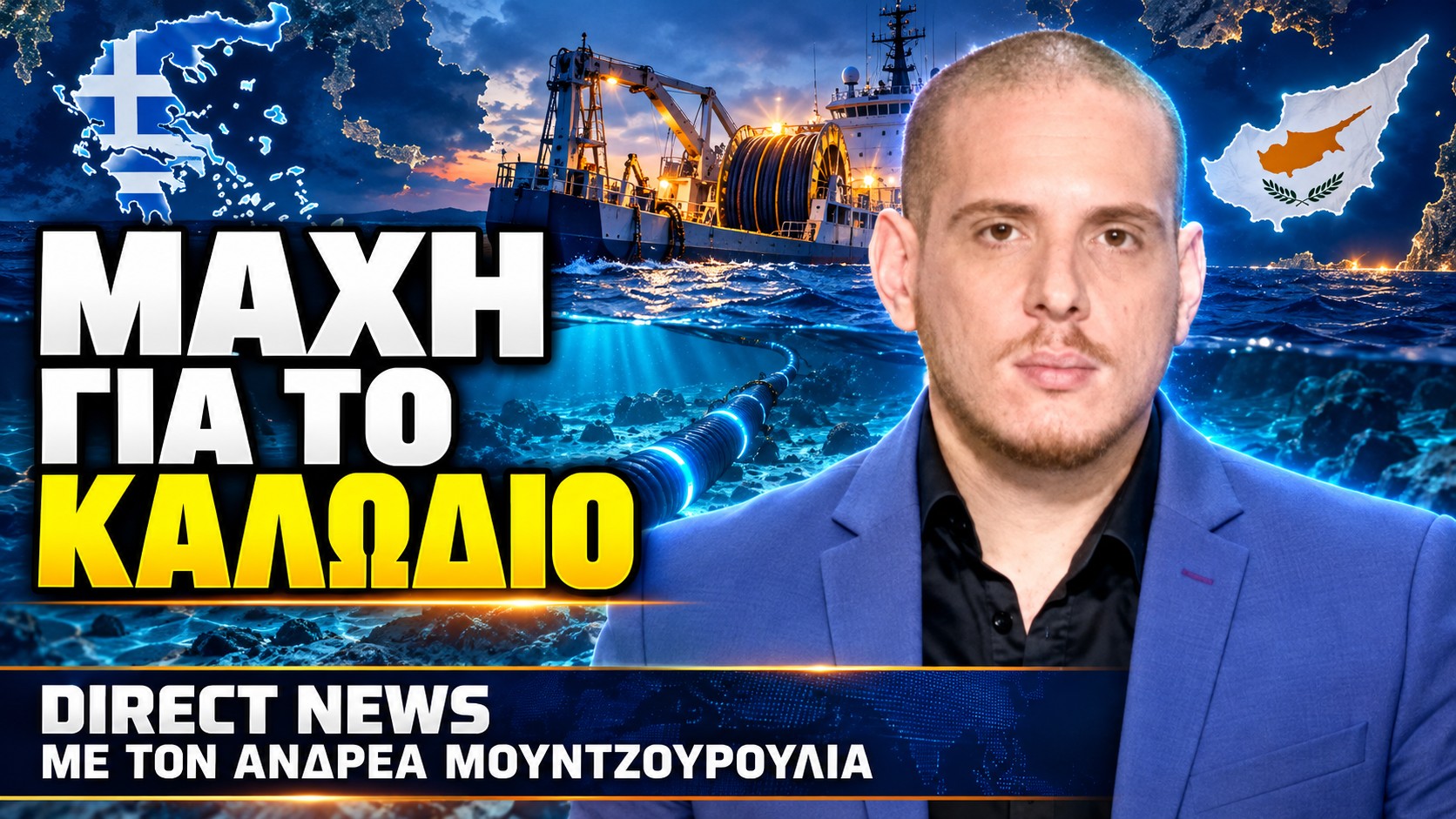
Τις εξελίξεις γύρω από την ηλεκτρική διασύνδεση Ελλάδας–Κύπρου, τον ανταγωνισμό για τη διακίνηση φυσικού αερίου προς την Ευρώπη και την ενίσχυση της συνεργασίας με την Ινδία ανέδειξε ο Ανδρέας Μουντζουρούλιας στην εκπομπή «Direct News». Στο επίκεντρο της ανάλυσής του βρέθηκε η ανάγκη η Αθήνα να προχωρήσει τους ενεργειακούς και αμυντικούς σχεδιασμούς της, απέναντι στην προσπάθεια της Άγκυρας να ενισχύσει τον περιφερειακό της ρόλο.
Κεντρικό θέμα αποτέλεσε η πληροφορία που μετέφερε ο παρουσιαστής για την υποβολή αιτήματος από τη Nexans προς τις ελληνικές αρχές, προκειμένου να κινηθεί η διαδικασία έκδοσης NAVTEX για τις εργασίες του Great Sea Interconnector.
Σύμφωνα με όσα ανέφερε, ακολουθεί η εξέταση του αιτήματος από την αρμόδια διυπουργική επιτροπή, η εισήγηση προς τον υπουργό Εξωτερικών και, μετά την έγκριση, η προώθησή του στο υπουργείο Εθνικής Άμυνας για την έκδοση της σχετικής αναγγελίας. Ο ίδιος τοποθέτησε τις πιθανές εξελίξεις στα τέλη Οκτωβρίου ή στις αρχές Νοεμβρίου, επικαλούμενος πληροφορίες από πηγές του.
Ο Ανδρέας Μουντζουρούλιας υποστήριξε επίσης ότι, βάσει της ενημέρωσης που διαθέτει, δεν έχει υποβληθεί αντίστοιχο αίτημα αδειοδότησης προς την Τουρκία. Περιέγραψε ως διαφορετικό ζήτημα την ενημέρωση των χωρών της περιοχής για τις εργασίες και κάλεσε την ελληνική κυβέρνηση να προχωρήσει στο επόμενο βήμα, χωρίς να αφήσει περιθώριο επιβολής τουρκικών απαιτήσεων.
Η ενεργειακή σύγκρουση πίσω από τη διπλωματία
Μεγάλο μέρος της εκπομπής αφιερώθηκε στην αναφερόμενη απομάκρυνση της Κίμπερλι Γκίλφοϊλ από την αμερικανική πρεσβεία στην Αθήνα και στον τρόπο με τον οποίο την παρουσίασαν τουρκικά μέσα ενημέρωσης.
Ο παρουσιαστής μετέφερε δημοσιεύματα της Hürriyet και του Haber Global, επισημαίνοντας ότι επιχειρούν να συνδέσουν την εξέλιξη με ενδεχόμενη υποβάθμιση της Ελλάδας και αλλαγή των ισορροπιών στην Ανατολική Μεσόγειο. Διευκρίνισε, ωστόσο, ότι αυτή αποτελεί τουρκική ανάγνωση και δεν αποδεικνύει από μόνη της μεταστροφή της αμερικανικής πολιτικής.
Στη δική του ανάλυση, το ουσιαστικό διακύβευμα βρίσκεται στον ανταγωνισμό για το LNG και στις υποδομές μεταφοράς φυσικού αερίου προς την ευρωπαϊκή αγορά. Συνέδεσε τον ελληνικό Κάθετο Διάδρομο με τις κινήσεις της τουρκικής BOTAŞ και τις συνεργασίες της με αμερικανικές ενεργειακές εταιρείες, εκτιμώντας ότι η Άγκυρα επιδιώκει μεγαλύτερο μερίδιο στη διακίνηση και εμπορία αερίου.
Η Τουρκία, όπως ανέφερε, επιχειρεί να αξιοποιήσει αγωγούς, εγκαταστάσεις LNG, αποθηκευτικούς χώρους και διασυνδέσεις, ώστε να εξελιχθεί σε περιφερειακό κέντρο αναδιανομής ενέργειας. Κατά τον ίδιο, αυτή η επιδίωξη δημιουργεί ανταγωνιστικές πιέσεις προς τους ελληνικούς σχεδιασμούς.
Παράλληλα, εξέφρασε ανησυχία για το ενδεχόμενο παρατεταμένης μεταβατικής περιόδου στην αμερικανική πρεσβεία. Αντιπαρέβαλε την πολιτική πρόσβαση που αποδίδει στον Τομ Μπάρακ στην Άγκυρα με την ανάγκη η Αθήνα να διαθέτει συνομιλητή με εμπειρία και επιρροή στην Ουάσιγκτον.
Στο πλαίσιο της συζήτησης για πιθανή διαδοχή, αναφέρθηκε στα ονόματα των Γκας Μπιλιράκη, Τζον Κατσιματίδη και Τζον Τζορτζ, παρουσιάζοντάς τα ως ονόματα που ακούγονται και εκφράζοντας προτίμηση για τον Μπιλιράκη.
Ελλάδα, Κύπρος και Ινδία: Από τις επαφές στη βιομηχανική συνεργασία
Ξεχωριστή θέση είχε η προσέγγιση Ελλάδας–Ινδίας, με αφορμή τις επαφές του Ινδού αξιωματούχου Ρατζές Κουμάρ Σινγκ στην Αθήνα, έπειτα από την παρουσία του στην Κύπρο.
Ο Ανδρέας Μουντζουρούλιας αναφέρθηκε στη συνάντηση με τον Θανάση Δαβάκη και στην επίσκεψη στον Ναύσταθμο Σαλαμίνας, δίνοντας έμφαση στις συζητήσεις για την αμυντική βιομηχανία και την ανάπτυξη κοινών πρωτοβουλιών. Εκτίμησε ότι η συνεργασία μπορεί να αποκτήσει συγκεκριμένο τεχνολογικό και βιομηχανικό περιεχόμενο, ακόμη και μέσα από συμπαραγωγές οπλικών συστημάτων.
Για την κυπριακή διάσταση, στάθηκε στην επίσκεψη του Ινδού αξιωματούχου στην Πράσινη Γραμμή και στην προβολή εικόνων από τη διχοτομημένη Λευκωσία σε ινδικά μέσα. Κατά την εκτίμησή του, η ανάδειξη των συνεπειών της τουρκικής εισβολής έχει ιδιαίτερη πολιτική σημασία.
Συνέδεσε, επίσης, τις αμυντικές επαφές με τον οικονομικό διάδρομο Ινδίας–Μέσης Ανατολής–Ευρώπης, τον IMEC. Υποστήριξε ότι το Νέο Δελχί αντιμετωπίζει την Ελλάδα και την Κύπρο ως κρίσιμους εταίρους για την πρόσβασή του στην ευρωπαϊκή αγορά, μέσα από ένα πλέγμα λιμενικών, εμπορικών και στρατηγικών συνεργασιών.
Ιδιαίτερη αναφορά έκανε στη Θεσσαλονίκη, την οποία παρουσίασε ως λιμάνι που διεκδικεί σημαντικό ρόλο στη μεταφορά ινδικών εμπορευμάτων προς τα Βαλκάνια. Τόνισε, πάντως, ότι ένας τέτοιος σχεδιασμός προϋποθέτει αναβάθμιση των υποδομών και αξιόπιστη εμπορευματική σιδηροδρομική σύνδεση.
Τριβές ανάμεσα σε Άγκυρα και Μπακού
Η εκπομπή εξέτασε ακόμη τις εντάσεις που, σύμφωνα με τον παρουσιαστή, καταγράφονται στις σχέσεις Τουρκίας–Αζερμπαϊτζάν, με αφορμή το ζήτημα της μαντίλας στα σχολεία.
Ο ίδιος περιέγραψε αντιδράσεις από τουρκικούς κυβερνητικούς κύκλους και απαντήσεις από την αζερική πλευρά, η οποία επικαλείται τον κοσμικό χαρακτήρα του κράτους και απορρίπτει παρεμβάσεις στα εσωτερικά της. Εκτίμησε ότι η αντιπαράθεση αναδεικνύει όρια στην τουρκική επιρροή επί του Μπακού.
Ταυτόχρονα, απέρριψε τις αναφορές περί πραξικοπήματος και καθόδου στρατού στους δρόμους, αναφέροντας ότι σχετικά βίντεο που κυκλοφόρησαν ήταν προϊόντα τεχνητής νοημοσύνης. Οι τριβές που περιέγραψε παρουσιάστηκαν ως ένδειξη πίεσης στη σχέση των δύο χωρών, χωρίς να τεκμηριώνουν από μόνες τους οριστική στρατηγική ρήξη.
Ο Καπετανίδης στην Israel Hayom και η αμυντική σχέση με το Ισραήλ
Ο Ανδρέας Μουντζουρούλιας στάθηκε ιδιαίτερα στο άρθρο του αρχισυντάκτη του Geopolitico.gr, Χρήστου Κωνσταντινίδη, στην Israel Hayom, με αναφορά στη Γενοκτονία των Ελλήνων του Πόντου και στην ιστορία του Νίκου Καπετανίδη.
Ανέδειξε τη σημασία της παρουσίασης σε ισραηλινό μέσο της δράσης του Πόντιου δημοσιογράφου, ο οποίος κατέγραφε τις διώξεις και τις σφαγές και οδηγήθηκε στην αγχόνη από το κεμαλικό καθεστώς. Αναφέρθηκε επίσης στην παρουσία του Τοπάλ Οσμάν στο άρθρο και στη σύνδεσή του με τη βία σε βάρος ελληνικών και αρμενικών πληθυσμών.
Στη συνέχεια παρουσίασε βασικά σημεία ανάλυσης του Σάι Γκαλ για την αμυντική συνεργασία Ελλάδας–Ισραήλ, δίνοντας έμφαση στην εκτίμηση ότι η Ελλάδα αποκτά ευρύτερο στρατηγικό και βιομηχανικό ρόλο, πέρα από την αγορά εξοπλισμών.
Χρήστος Κωνσταντινίδης: Η Τουρκία αρνείται να λογοδοτήσει για τα δικά της εγκλήματα
Λιβύη και «Γαλάζια Πατρίδα»
Στο κλείσιμο, ο παρουσιαστής εξέφρασε ανησυχία για τις εξελίξεις στη Λιβύη και το ενδεχόμενο περαιτέρω κινήσεων γύρω από το τουρκολιβυκό μνημόνιο. Κάλεσε την Αθήνα να αξιοποιήσει τη διπλωματική της επιρροή και τον ρόλο της στην Ευρωπαϊκή Ένωση.
Τέλος, μετέφερε πληροφορίες για χρονική μετάθεση του τουρκικού νομοσχεδίου περί «Γαλάζιας Πατρίδας», συνδέοντάς την με την αναμονή των ελληνικών αποφάσεων για τον GSI. Κατά την εκτίμησή του, η αναβολή αποτελεί τακτικό χειρισμό της Άγκυρας, η οποία παρακολουθεί τις επόμενες κινήσεις της Αθήνας.
Αναλύσεις
Πού βρίσκεται η Ελλάδα στον σχεδιασμό του IMEC;
Η επίκληση της ελληνικής κληρονομιάς, η κριτική για τις αμερικανικές τοποθετήσεις στα ελληνοτουρκικά και η ανάγκη μιας εθνικής στρατηγικής που θα συνδέει πολιτισμό, παραγωγή, υποδομές και αποτροπή βρέθηκαν στο επίκεντρο της συζήτησης.
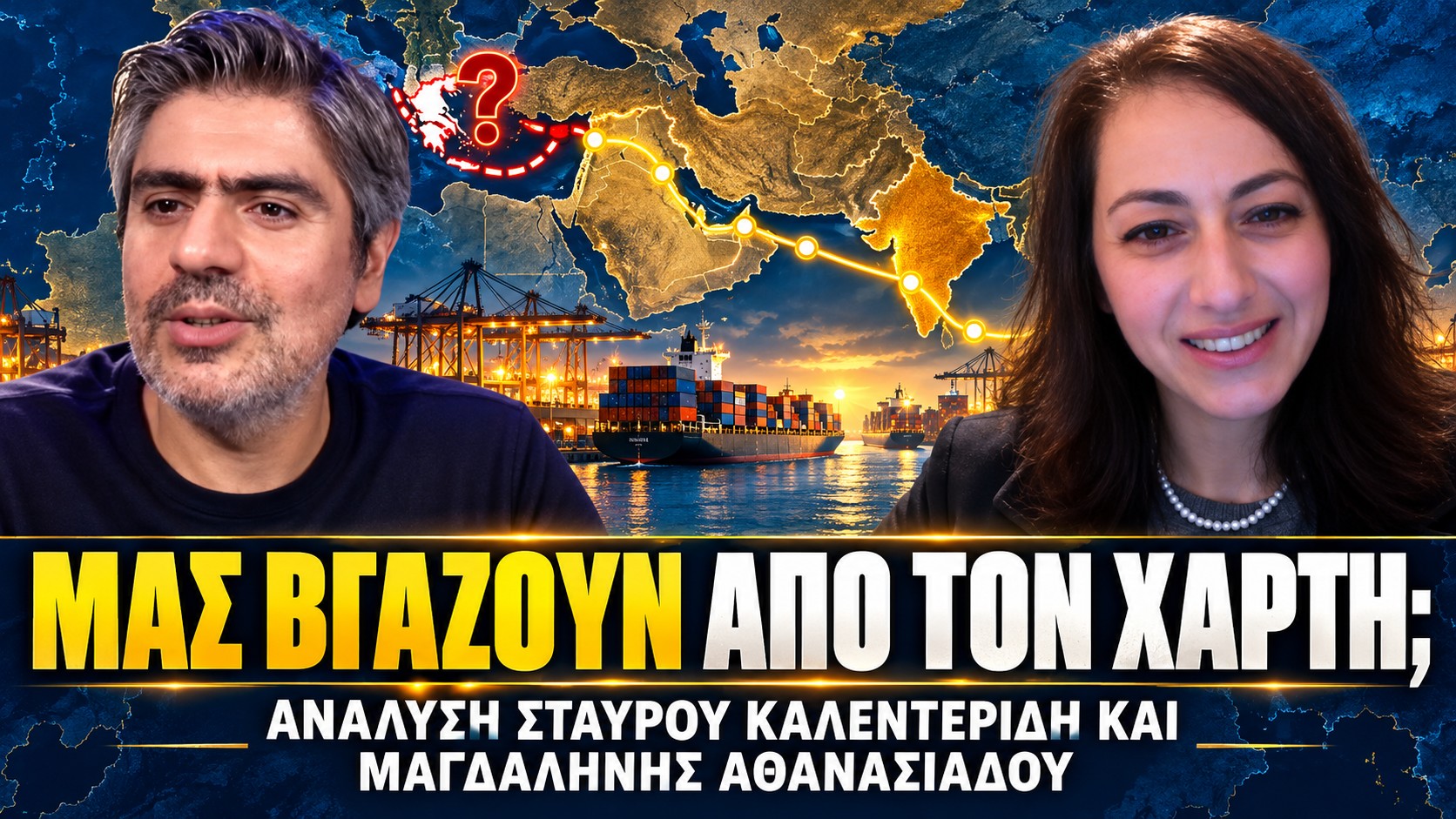
Την απόσταση ανάμεσα στους επαίνους για τον ελληνικό πολιτισμό και στην έμπρακτη υποστήριξη των ελληνικών θέσεων ανέδειξαν ο Σταύρος Καλεντερίδης και η Μάγδα Αθανασιάδου στην εκπομπή της 14ης Οκτωβρίου. Με αφετηρία την ομιλία του Μάρκο Ρούμπιο στην Πνύκα, η συζήτηση επεκτάθηκε στον ανταγωνισμό για τους εμπορικούς και ενεργειακούς διαδρόμους και στον κίνδυνο η Ελλάδα να περιοριστεί σε έναν δευτερεύοντα μεταφορικό ρόλο στον IMEC.
Η Αθανασιάδου, εκπαιδευτικός και υποψήφια διδάκτωρ του Τμήματος Ιστορίας και Αρχαιολογίας του ΑΠΘ, υποστήριξε ότι η πολιτιστική κληρονομιά αποτελεί συντελεστή εθνικής ισχύος. Η αξιοποίησή της, όμως, προϋποθέτει ένα κράτος που μπορεί να τη συνδέσει με συγκεκριμένες πολιτικές, παραγωγική οικονομία και υπεράσπιση της κυριαρχίας του.
Η ελληνική κληρονομιά ως εργαλείο πολιτικής
Αναλύοντας την ομιλία Ρούμπιο, η προσκεκλημένη επισήμανε ότι η επίκληση της αρχαίας Ελλάδας από ξένες δυνάμεις υπηρετεί συχνά σύγχρονες πολιτικές επιδιώξεις. Στη δική της ανάγνωση, ο Αμερικανός υπουργός αξιοποίησε έννοιες όπως η δημοκρατία, η αριστεία, η φιλοπατρία και η θυσία, συνδέοντάς τες με τον διεθνή ρόλο των ΗΠΑ.
Ιδιαίτερη έμφαση έδωσε στη σημασία της αριστείας στην αρχαία ελληνική πόλη. Όπως εξήγησε, οι ξεχωριστές ικανότητες ενός ανθρώπου αποκτούσαν αξία μέσα από την υπηρεσία προς την κοινότητα. Η διάκριση αυτή, κατά την ίδια, είναι απαραίτητη για να κατανοηθεί το περιεχόμενο των αρχαιοελληνικών αναφορών και να αποφεύγεται η προσαρμογή τους στις εκάστοτε πολιτικές σκοπιμότητες.
Ο Καλεντερίδης συνέδεσε τη συζήτηση με τη χρήση του όρου «αριστεία» στην ελληνική πολιτική ζωή, ασκώντας έντονη κριτική στην κυβέρνηση για την απόσταση που, όπως υποστήριξε, χωρίζει τη σχετική ρητορική από την πραγματικότητα.
Η κριτική για Κύπρο και ελληνοτουρκικά
Το βασικό σημείο της κριτικής της Αθανασιάδου ήταν ότι οι αναφορές στην εθνική ταυτότητα και στην υπεράσπιση των συμφερόντων των κρατών δεν συνοδεύτηκαν, κατά την εκτίμησή της, από αντίστοιχες σαφείς τοποθετήσεις υπέρ των ελληνικών θέσεων.
Η ίδια χαρακτήρισε τις απαντήσεις Ρούμπιο στα ελληνοτουρκικά ως τήρηση ίσων αποστάσεων και επέκρινε την απουσία σαφούς αναφοράς στη στρατιωτική κατοχή στην Κύπρο και στα θαλάσσια δικαιώματα των νησιών. Υποστήριξε ότι η γενική προτροπή για αποφυγή σύγκρουσης αφήνει εκτός συζήτησης ήδη συντελεσμένες παραβιάσεις και τις συνέπειές τους.
Ο Καλεντερίδης συμφώνησε με αυτή την αποτίμηση, τονίζοντας την αντίφαση που εντοπίζει ανάμεσα στην αξιοποίηση του ελληνικού πολιτιστικού συμβολισμού και στην αντιμετώπιση των ελληνικών ζητημάτων κυριαρχίας.
Η Αθανασιάδου έστρεψε, πάντως, το βάρος στην ελληνική ευθύνη. Η στάση των ξένων δυνάμεων πρέπει να οδηγεί τη χώρα σε καλύτερη οργάνωση της δικής της στρατηγικής. Η ιστορική κληρονομιά, όπως σημείωσε, οφείλει να λειτουργεί ως οδηγός για το παρόν και το μέλλον, αποφεύγοντας την προγονοπληξία και την αυτάρκεια των επαίνων.
IMEC: Το κρίσιμο ζήτημα είναι ποιος σχεδιάζει
Στο δεύτερο μεγάλο σκέλος της εκπομπής, οι δύο συνομιλητές συζήτησαν τον διάδρομο διασύνδεσης Ινδίας–Μέσης Ανατολής–Ευρώπης και τη θέση που μπορεί να διεκδικήσει η Ελλάδα.
Ο Καλεντερίδης εξέφρασε ανησυχία για αναλύσεις και σχεδιασμούς που, όπως ανέφερε, αναδεικνύουν την Ιταλία και την Τεργέστη, παραμερίζοντας την ελληνική διαδρομή. Συνέδεσε αυτόν τον κίνδυνο με την κατάσταση του ελληνικού σιδηροδρόμου, επιρρίπτοντας βαριές πολιτικές ευθύνες στην κυβέρνηση για τις ελλείψεις του δικτύου και την τραγωδία των Τεμπών.
Η Αθανασιάδου επικεντρώθηκε στο περιεχόμενο της ελληνικής συμμετοχής. Με βάση τις αναλύσεις που επικαλέστηκε, ο IMEC αφορά ένα σύνθετο σύστημα μεταφορών, τεχνολογίας, ψηφιακών υποδομών και ασφάλειας. Συνεπώς, το ζητούμενο για μια χώρα είναι να έχει λόγο στις υπηρεσίες, στα πρότυπα και στις τεχνολογικές συνεργασίες που θα καθορίζουν τη λειτουργία του.
«Αν γίνουμε το γαϊδουράκι του IMEC», ανέφερε χαρακτηριστικά, περιγράφοντας τον κίνδυνο μιας συμμετοχής περιορισμένης στη μεταφορά φορτίων. Στην ανάλυσή της, η γεωγραφική θέση χρειάζεται υποδομές, τεχνογνωσία και δυνατότητα προστασίας τους για να αποδώσει ουσιαστικό στρατηγικό όφελος.
Οι επιφυλάξεις για τα σενάρια γύρω από την Γκίλφοϊλ
Η συζήτηση επεκτάθηκε στον Κάθετο Διάδρομο και στα σενάρια που ο Καλεντερίδης συνέδεσε με την Κίμπερλι Γκίλφοϊλ και ανταγωνιστικά συμφέροντα στην περιοχή.
Η Αθανασιάδου διατύπωσε ρητή επιφύλαξη ως προς την εξαγωγή συμπερασμάτων για παρασκηνιακές μεθοδεύσεις. Επισήμανε ότι δεν διαθέτει πρόσβαση στα κέντρα αποφάσεων και ότι ούτε τα δημοσιεύματα που συζητούν τέτοια ενδεχόμενα επιτρέπουν βεβαιότητες. Έθεσε ως ουσιαστικό ερώτημα το πώς δρα η ίδια η Ελλάδα μέσα σε αυτόν τον ανταγωνισμό.
Πολιτισμός, παραγωγή και αποτροπή
Επικαλούμενη τη σκέψη του Παναγιώτη Κονδύλη, η προσκεκλημένη υποστήριξε ότι η οικονομία, η πολιτική και η στρατιωτική ισχύς συνδέονται στενά. Έδωσε έμφαση στην παραγωγική ανασυγκρότηση, στην αμυντική βιομηχανία, στην έρευνα και στην καινοτομία, καθώς και στην ανάγκη ενός κράτους ικανού να αποτρέπει τον πόλεμο.
Παράλληλα, ανέδειξε τη διδασκαλία της ελληνικής γλώσσας, τη συνεργασία με την ομογένεια, τα θερινά σχολεία και τις πανεπιστημιακές ανταλλαγές ως πεδία άσκησης πολιτιστικής πολιτικής. Ο Καλεντερίδης μετέφερε σχετικές εμπειρίες από τη Βοστόνη, περιγράφοντας ενδιαφέρον ακαδημαϊκών για συνεργασίες στην Ελλάδα και εμπόδια στην υλοποίησή τους.
Ξεχωριστή αναφορά έγινε στη Θεσσαλονίκη και στις δυνατότητές της ως βαλκανικού κέντρου εκπαίδευσης και συνεργασίας. Η Αθανασιάδου συνέδεσε αυτές τις προοπτικές με τη λειτουργία των μεταφορικών υποδομών και την αξιοποίηση των νέων επιστημόνων. Η θέση που διατύπωσε ήταν σαφής: ο πολιτισμός αποτελεί οργανικό μέρος της εθνικής στρατηγικής και χρειάζεται θεσμούς, ανθρώπους και υποδομές για να μετατραπεί σε ισχύ.
GEOPOLITICO
EurAsia Review: Ποιοι προστατεύουν τα κυκλώματα λαθρεμπορίου στα σύνορα Ιράν, Πακιστάν και Αφγανιστάν – Ο σκοτεινός ρόλος παραγόντων ασφαλείας
Ένα εκτεταμένο σύστημα παράνομου εμπορίου, διαφθοράς και πολιτικής προστασίας περιγράφει σε ανάλυσή του το EurAsia Review. Από τα καύσιμα και τα ναρκωτικά μέχρι τον χρυσό, τους πολύτιμους λίθους και τα όπλα, τα δίκτυα λαθρεμπορίου στις παραμεθόριες περιοχές Ιράν, Πακιστάν και Αφγανιστάν φέρονται να λειτουργούν με την ανοχή ή και τη συμμετοχή παραγόντων των κρατικών μηχανισμών. Η παράνομη οικονομία δεν αποτελεί απλώς εγκληματική δραστηριότητα, αλλά μηχανισμό επιβίωσης, πολιτικής επιρροής και ελέγχου ολόκληρων περιοχών.
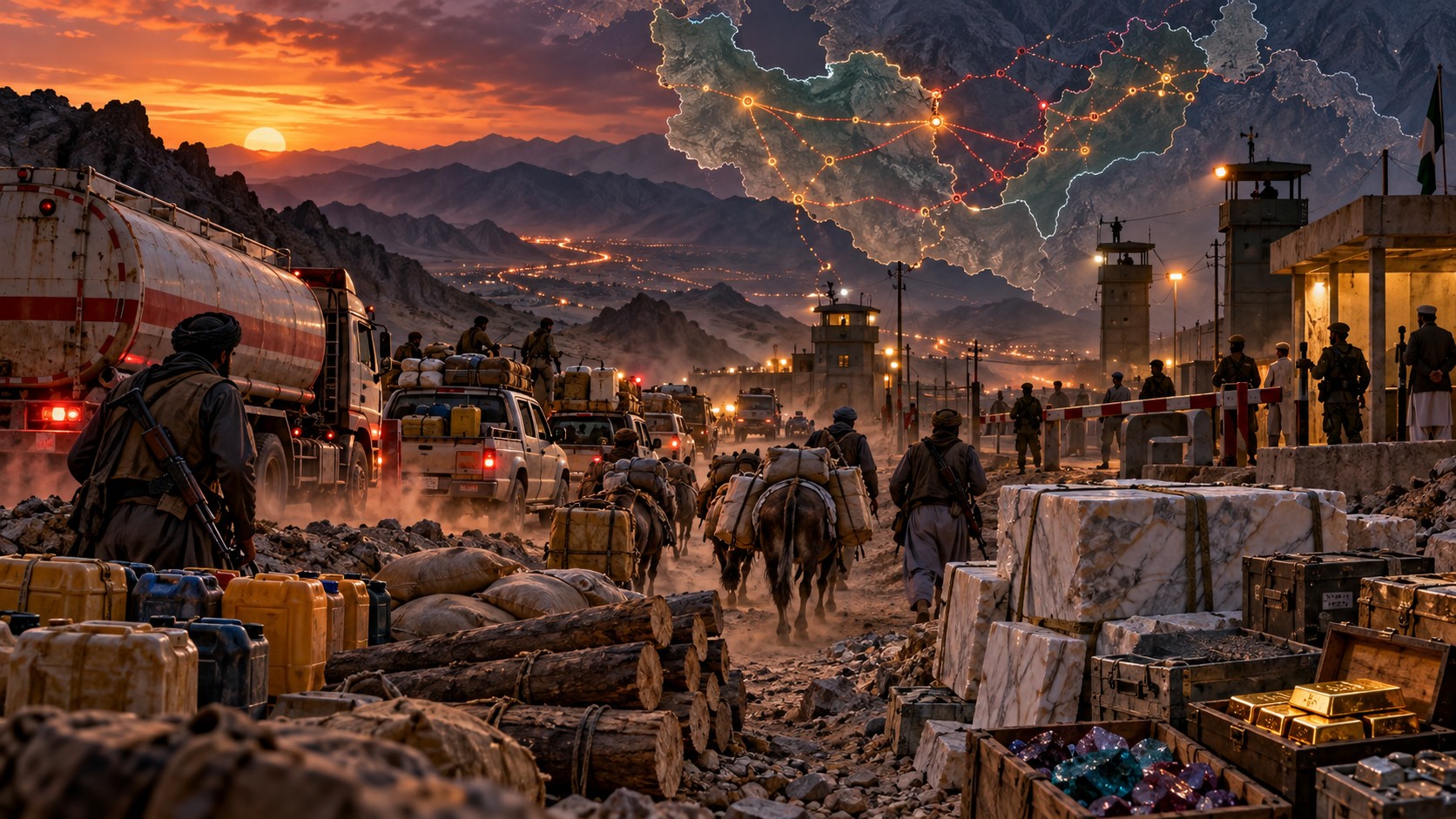
Μια διαφορετική διάσταση του λαθρεμπορίου στα σύνορα Ιράν, Πακιστάν και Αφγανιστάν αναδεικνύει ο αναλυτής πληροφοριών και ειδικός σε ζητήματα αντιτρομοκρατίας Ajmal Sohail, σε άρθρο γνώμης που δημοσιεύθηκε στις 14 Οκτωβρίου 2026 στο EurAsia Review.
Με τίτλο «Why Powerful Interests Continue To Protect Smuggling Networks Across Iran, Pakistan, And Afghanistan», ο Sohail υποστηρίζει ότι το λαθρεμπόριο στην περιοχή δεν επιβιώνει μόνο εξαιτίας της αδυναμίας των κρατών να ελέγξουν τα σύνορά τους. Αντιθέτως, σύμφωνα με την ανάλυσή του, έχει εξελιχθεί σε μια παραοικονομία που εξυπηρετεί οικονομικά, πολιτικά και στρατηγικά συμφέροντα ισχυρών παραγόντων.
Το σημαντικότερο στοιχείο της προσέγγισής του είναι ότι αμφισβητεί την παραδοσιακή αντίληψη σύμφωνα με την οποία τα κράτη επιθυμούν να καταπολεμήσουν το λαθρεμπόριο, αλλά δεν διαθέτουν τα απαραίτητα μέσα.
Όπως υποστηρίζει, σε αρκετές περιπτώσεις τμήματα της κρατικής διοίκησης, των τελωνειακών υπηρεσιών και των μηχανισμών ασφαλείας αποκομίζουν οφέλη από τη διατήρηση αυτής της κατάστασης.
Βαλουχιστάν: Η καρδιά μιας τεράστιας παράνομης οικονομίας
Στο επίκεντρο βρίσκεται το Βαλουχιστάν, η εκτεταμένη περιοχή που συνδέει γεωγραφικά το Πακιστάν με το Ιράν και το Αφγανιστάν.
Πρόκειται για έναν χώρο ιδιαίτερης στρατηγικής σημασίας, ο οποίος χαρακτηρίζεται από οικονομική υπανάπτυξη, περιορισμένη κρατική παρουσία, εθνοτικές και φυλετικές αντιπαραθέσεις και μακροχρόνια δράση ένοπλων οργανώσεων.
Σύμφωνα με το EurAsia Review, μέσα σε αυτό το περιβάλλον έχουν δημιουργηθεί δίκτυα που διακινούν καύσιμα, ναρκωτικά, όπλα, ξυλεία, πολύτιμους λίθους, χρυσό, μάρμαρο και άλλα εμπορεύματα.
Ιδιαίτερη αναφορά γίνεται στο Bahramcha, στην αφγανική επαρχία Χελμάντ, καθώς και στον διάδρομο Shin Nari, στην περιοχή Arghistan του Αφγανιστάν. Τα συγκεκριμένα σημεία περιγράφονται ως σημαντικοί κόμβοι που συνδέουν τοπικούς διακινητές με μεγαλύτερα περιφερειακά και διεθνή εμπορικά δίκτυα.
Η ιδιαιτερότητα αυτών των κυκλωμάτων είναι η δυνατότητά τους να προσαρμόζονται στις επιχειρήσεις καταστολής.
Όταν οι αρχές ενισχύουν τους ελέγχους στο λαθρεμπόριο καυσίμων, οι διακινητές μπορούν να στραφούν σε άλλες πηγές κέρδους, όπως οι πολύτιμοι λίθοι ή τα μεταλλεύματα. Όταν αυξάνεται η πίεση στη διακίνηση ναρκωτικών, ενισχύεται η δραστηριότητα σε διαφορετικούς τομείς του παράνομου εμπορίου.
Αυτή η διαφοροποίηση, επισημαίνει ο αναλυτής, καθιστά τα δίκτυα εξαιρετικά ανθεκτικά.
Οι καταγγελίες για εμπλοκή στρατιωτικών και υπηρεσιών ασφαλείας
Το πλέον αιχμηρό σημείο του δημοσιεύματος αφορά τον ρόλο κρατικών παραγόντων στην προστασία του λαθρεμπορίου.
Ο Sohail υποστηρίζει ότι η διακίνηση μεγάλων φορτίων καυσίμων, ξυλείας, χρυσού και άλλων εμπορευμάτων μέσα από αυστηρά επιτηρούμενες παραμεθόριες ζώνες δύσκολα θα μπορούσε να πραγματοποιείται σε τέτοια κλίμακα χωρίς κάποιο επίπεδο θεσμικής ανοχής.
Κατά την εκτίμησή του, τμήματα τοπικών διοικήσεων, συνοριακών δυνάμεων, τελωνείων, υπηρεσιών πληροφοριών και παραγόντων που συνδέονται με στρατιωτικούς μηχανισμούς ενδέχεται να αποκομίζουν οφέλη από τη συγκεκριμένη οικονομική δραστηριότητα.
Οι μηχανισμοί που περιγράφει περιλαμβάνουν τη διαφθορά, την επιλεκτική εφαρμογή της νομοθεσίας, την άτυπη φορολόγηση παράνομων φορτίων και την πολιτική προστασία συγκεκριμένων δικτύων.
Ιδιαίτερα στο πακιστανικό Βαλουχιστάν, ο αναλυτής υποστηρίζει ότι ορισμένοι παράγοντες ασφαλείας μπορεί να αντιμετωπίζουν το λαθρεμπόριο όχι μόνο ως πηγή οικονομικού κέρδους, αλλά και ως εργαλείο διαχείρισης των σχέσεων με τοπικές φυλές και ομάδες επιρροής.
Με αυτόν τον τρόπο διαμορφώνεται μια αντίφαση: ενώ επισήμως το πακιστανικό κράτος χαρακτηρίζει το λαθρεμπόριο απειλή για την εθνική ασφάλεια, ορισμένοι παράγοντες φέρονται να θεωρούν ότι η παράνομη οικονομία συμβάλλει στη διατήρηση τοπικών ισορροπιών.
Πρέπει να σημειωθεί ότι το άρθρο αποτελεί ανάλυση γνώμης και δεν παραθέτει συγκεκριμένες δικαστικές αποφάσεις ή ονομαστικά στοιχεία αξιωματούχων που να αποδεικνύουν κάθε επιμέρους ισχυρισμό περί εμπλοκής κρατικών υπηρεσιών.
Γιατί οι επιχειρήσεις καταστολής δεν έχουν μόνιμο αποτέλεσμα
Σύμφωνα με τον Sohail, η διατήρηση αυτών των συμφερόντων εξηγεί γιατί πολλές επιχειρήσεις κατά του λαθρεμπορίου αποδεικνύονται προσωρινές.
Οι αρχές ανακοινώνουν συλλήψεις, κατασχέσεις και εντατικοποίηση των συνοριακών ελέγχων, ωστόσο οι υποδομές και οι σχέσεις που επιτρέπουν στο παράνομο εμπόριο να λειτουργεί συχνά παραμένουν άθικτες.
Οι διακινητές αλλάζουν διαδρομές, χρησιμοποιούν νέους μεσάζοντες και μεταφέρουν τις δραστηριότητές τους σε γειτονικές περιοχές.
Κατά τον αναλυτή, αυτό το φαινόμενο μπορεί να υποδηλώνει ότι σε ορισμένες περιπτώσεις ο πραγματικός στόχος δεν είναι η πλήρης εξάλειψη του λαθρεμπορίου, αλλά ο έλεγχος και η ρύθμισή του από όσους διαθέτουν ισχύ στο τοπικό σύστημα.
Ιρανικά καύσιμα, χρυσός και πολύτιμοι λίθοι
Σημαντικό οικονομικό σκέλος της παράνομης δραστηριότητας αποτελεί η διακίνηση ιρανικών καυσίμων προς το Πακιστάν.
Η διαφορά στις τιμές και οι ιδιαίτερες συνθήκες της περιφερειακής αγοράς δημιουργούν κίνητρα για τη μεταφορά καυσίμων εκτός των νόμιμων εμπορικών μηχανισμών.
Ο Sohail επισημαίνει ότι η δραστηριότητα αυτή υπονομεύει την επίσημη αγορά ενέργειας του Πακιστάν, ενώ δημιουργεί σημαντικά έσοδα για τα δίκτυα των διακινητών.
Παράλληλα, ο χρυσός και οι πολύτιμοι λίθοι προσφέρουν δυνατότητες αποθήκευσης πλούτου και μεταφοράς αξίας έξω από το τραπεζικό σύστημα.
Αυτή η πρακτική έχει ιδιαίτερη σημασία για οικονομικούς παράγοντες που επιδιώκουν να παρακάμψουν χρηματοπιστωτικούς περιορισμούς ή κυρώσεις.
Το παράνομο εμπόριο ξυλείας, μαρμάρου και όνυχα συμπληρώνει την εικόνα μιας οικονομίας που λειτουργεί σε μεγάλο βαθμό εκτός των επίσημων φορολογικών και ρυθμιστικών μηχανισμών.
Η σύνδεση του λαθρεμπορίου με τις ένοπλες οργανώσεις
Η ανάλυση προχωρά πέρα από το οικονομικό επίπεδο και εξετάζει τις επιπτώσεις στην περιφερειακή ασφάλεια.
Οι ίδιοι διάδρομοι που χρησιμοποιούνται για τη μεταφορά εμπορευμάτων μπορούν να αξιοποιηθούν για τη διακίνηση όπλων, χρημάτων και προσώπων που σχετίζονται με ένοπλες ή εξτρεμιστικές οργανώσεις.
Σύμφωνα με τον Sohail, τα εγκληματικά κυκλώματα και οι βίαιοι μη κρατικοί δρώντες δεν λειτουργούν πάντοτε ανεξάρτητα μεταξύ τους.
Μπορούν να χρησιμοποιούν κοινές υποδομές μεταφορών, άτυπα χρηματοπιστωτικά συστήματα, μεσάζοντες και διεφθαρμένους κρατικούς παράγοντες.
Αυτό σημαίνει ότι η παράνομη οικονομία μπορεί να δημιουργεί ένα περιβάλλον από το οποίο επωφελούνται οργανώσεις που επιδιώκουν την αποσταθεροποίηση της περιοχής.
Δεν συνεπάγεται, πάντως, ότι κάθε διακινητής ή κάθε τοπική κοινότητα που εξαρτάται από το άτυπο εμπόριο συνδέεται με την τρομοκρατία. Η ανάλυση αναδεικνύει κυρίως την ύπαρξη κοινών διαδρομών και μηχανισμών που μπορούν να αξιοποιηθούν από διαφορετικούς παράνομους δρώντες.
Το μεγάλο παράδοξο: Το λαθρεμπόριο ως μέσο επιβίωσης
Μία από τις σημαντικότερες επισημάνσεις του άρθρου αφορά την κοινωνική διάσταση του φαινομένου.
Σε πολλές παραμεθόριες περιοχές, η επίσημη οικονομία δεν μπορεί να προσφέρει επαρκείς θέσεις εργασίας ή σταθερά εισοδήματα.
Ως αποτέλεσμα, χιλιάδες οικογένειες εξαρτώνται άμεσα ή έμμεσα από το διασυνοριακό εμπόριο, τις μεταφορές, τις αποθήκες, τις υπηρεσίες προστασίας και τα άτυπα χρηματοπιστωτικά δίκτυα.
Η ξαφνική εξάλειψη αυτών των δραστηριοτήτων, χωρίς τη δημιουργία νόμιμων οικονομικών εναλλακτικών, θα μπορούσε να προκαλέσει σοβαρές κοινωνικές αντιδράσεις.
Κατά τον Sohail, αυτή η εξάρτηση αποτελεί ακόμη έναν λόγο για τον οποίο κρατικοί και τοπικοί παράγοντες αποφεύγουν την πλήρη σύγκρουση με το παράνομο οικονομικό σύστημα.
Μία εκτεταμένη καταστολή θα μπορούσε να στερήσει το εισόδημα από ολόκληρες κοινότητες και να ενισχύσει τις δυνατότητες στρατολόγησης εγκληματικών ή ένοπλων οργανώσεων.
Το πρόβλημα δεν είναι μόνο τα σύνορα, αλλά η διακυβέρνηση
Το βασικό συμπέρασμα της ανάλυσης είναι ότι το λαθρεμπόριο στη μεθόριο Ιράν, Πακιστάν και Αφγανιστάν δεν μπορεί να αντιμετωπιστεί αποκλειστικά με περισσότερες περιπολίες, συνοριακούς φράχτες και συλλήψεις.
Ο αναλυτής θεωρεί αναγκαία τη δημιουργία πραγματικών μηχανισμών λογοδοσίας, την αντιμετώπιση των σχέσεων διαφθοράς και πολιτικής προστασίας, καθώς και την ανάπτυξη νόμιμων οικονομικών δραστηριοτήτων στις παραμεθόριες περιοχές.
Η γεωπολιτική σημασία αυτής της προσέγγισης είναι ιδιαίτερη.
Σε μια περιοχή όπου συνυπάρχουν μακροχρόνιες συγκρούσεις, αδύναμοι διοικητικοί μηχανισμοί, ισχυρές τοπικές δομές εξουσίας και διεθνή οικονομικά συμφέροντα, το λαθρεμπόριο μπορεί να λειτουργεί ως παράλληλο σύστημα διακυβέρνησης.
Δεν αποτελεί απλώς μια παρανομία που διαπράττεται εναντίον του κράτους. Σύμφωνα με τον Sohail, σε ορισμένες περιπτώσεις συντηρείται ακριβώς επειδή εξυπηρετεί συμφέροντα ανθρώπων που βρίσκονται κοντά στους μηχανισμούς κρατικής εξουσίας.
Το κεντρικό ερώτημα που θέτει το δημοσίευμα δεν είναι γιατί οι κυβερνήσεις αδυνατούν να σταματήσουν τα κυκλώματα, αλλά ποιοι ωφελούνται από τη διατήρησή τους.
Και όσο οι οικονομικές και πολιτικές συνθήκες που τα προστατεύουν παραμένουν αναλλοίωτες, το τρίγωνο Ιράν–Πακιστάν–Αφγανιστάν θα εξακολουθεί, κατά την εκτίμηση του αναλυτή, να αποτελεί χώρο όπου το οργανωμένο έγκλημα, η τοπική εξουσία και οι ανάγκες επιβίωσης των πληθυσμών διαπλέκονται.


Πόλεμος συμφερόντων για το LNG – Το τουρκικό σχέδιο και η ελληνική απάντηση
Στο Direct News, ο Ανδρέας Μουντζουρούλιας παρουσιάζει τις πληροφορίες του για τον GSI, αναλύει τα τουρκικά δημοσιεύματα για την Γκίλφοϊλ...


Arolsen Archives: Το αρχείο που αναζητά τα ίχνη εκατομμυρίων θυμάτων του ναζισμού
Στη γερμανική πόλη Μπαντ Άρολσεν φυλάσσεται μία από τις σημαντικότερες συλλογές τεκμηρίων για τα θύματα των ναζιστικών διώξεων. Περισσότερα από...


Πού βρίσκεται η Ελλάδα στον σχεδιασμό του IMEC;
Η επίκληση της ελληνικής κληρονομιάς, η κριτική για τις αμερικανικές τοποθετήσεις στα ελληνοτουρκικά και η ανάγκη μιας εθνικής στρατηγικής που...

Νέα τουρκική πρόκληση νότια του Καστελλόριζου! NAVTEX της Άγκυρας στην περιοχή που θα περάσει το γαλλικό ερευνητικό για το καλώδιο Ελλάδας–Κύπρου
Η Άγκυρα εξέδωσε NAVTEX για περιοχή νότια του Καστελλόριζου, όπου έχει προγραμματιστεί η πολυεθνική άσκηση «EUNOMIA», αμφισβητώντας τη δικαιοδοσία του...


EurAsia Review: Ποιοι προστατεύουν τα κυκλώματα λαθρεμπορίου στα σύνορα Ιράν, Πακιστάν και Αφγανιστάν – Ο σκοτεινός ρόλος παραγόντων ασφαλείας
Ένα εκτεταμένο σύστημα παράνομου εμπορίου, διαφθοράς και πολιτικής προστασίας περιγράφει σε ανάλυσή του το EurAsia Review. Από τα καύσιμα και...
-
 Αναλύσεις4 εβδομάδες πριν
Το τελεσίγραφο Καλίν την ώρα που η Τουρκία προετοιμάζεται για πόλεμο!
-
 Άμυνα3 μήνες πριν
Ρωσσικό ΜΜΕ: Ελληνικό «μπλόκο» στην απαίτηση για Patriot – Πώς γνωρίζει το Κίεβο απόρρητα στοιχεία για τους πυραύλους μας;
-

 ΑΝΑΡΤΗΣΕΙΣ ΜΕ ΣΗΜΑΣΙΑ3 μήνες πριν
Πακιστανός με καναδική υπηκοότητα ο υπαίτιος της πυρκαγιάς στον Έβρο! Πιθανόν να μετέφερε μετανάστες
-

 GEOPOLITICO1 μήνα πριν
Το διέρρευσε ο Παπαχελάς! Έφεραν τον Καλίν στο Μαξίμου – Τί συζήτησε με τον Μητσοτάκη;
-
 Αναλύσεις2 μήνες πριν
Καραγκιούλ: «Αν Ελλάδα, Κύπρος και Ισραήλ επιτεθούν στην Τουρκία, ο χάρτης του Αιγαίου θα αλλάξει»
-

 ΑΝΑΡΤΗΣΕΙΣ ΜΕ ΣΗΜΑΣΙΑ2 μήνες πριν
Ξέσπασμα της μητέρας της Μυρτούς για την υπόθεση Τζαβέντ Ασλάμ: «Δεν ξεχνώ ποτέ» – «Δήμαρχος των Πακιστανών ο Δούκας»
-

 GEOPOLITICO4 εβδομάδες πριν
Τί λέει Τούρκος δημοσιογράφος για Σάββα Καλεντερίδη; «Έκανε πολύ καλά τη δουλειά του για τη χώρα του – Δεν μπορούσε να τον στριμώξει η ΜİΤ»
-

 Αναλύσεις3 μήνες πριν
Εάν η Τουρκία απορρίψει τη συμφωνία αποχώρησης από την Κύπρο θα απομακρυνθεί δια της βίας