Ακολουθήστε μας

Γενικά θέματα

Turkey and Russia on Edge, Russo-Turkish Divergence: the Security Dimension
Δημοσιεύτηκε στις

By Younkyoo Kim* and Stephen Blank* 

Russo-Turkish relations encompass a multi-regional agenda from the Balkans to Central Asia, including the Caucasus and the Middle East and their bilateral energy relations. Much has been written about the strategic convergence of Russo-Turkish relations and contributing factors behind it. In contrast to Turkey’s strained relations with its traditional Western partners, Ankara’s ties with Moscow have noticeably strengthened in recent years. Turkey’s reorientation eastward in the past decade is attributable to three factors: the U.S. invasion of Iraq, the derailment of Turkish accession talks to join the EU, and Turkey’s dependence on Russia for its natural gas imports.

Turkish and Russian interests in Central Asia and the Caucasus during 1992–2008 converged more than they differed. In 2009 and 2010, Turkish officials and experts described their relations with Russia as being the best ever and said that bilateral harmony featured prominently in the past decade’s international relations. Yet Russia and Turkey had already begun to diverge after the Georgian war in August 2008. The fighting between Russia and Georgia disrupted transportation, energy, and other infrastructure networks in the region, adversely affecting the interests of Turkey. In regard to Turkey’s relations with Russia, 2011 was a difficult year, and 2012 has not been much better.
Developments since then across a host of issues give many reasons for suggesting the rapid but uneven erosion of those ties. Because this erosion is occurring unevenly, enmity will not replace amity overnight. Previously, the only major questions that divided them seemed to be Moscow’s reluctance to brand the PKK (Kurdistan Workers’ Party) a terrorist organization and Russia’s support for the Greek Cypriots in their conflict with the Turkish-dominated state of the Turkish Republic of Northern Cyprus (TRNC). Yet signs have multiplied suggesting that this partnership is declining and that there are mounting tensions over the Kurdish issue, Middle East, missile defenses, Cyprus, and the Balkans. Furthermore, those difficulties will likely increase.
Divergence
Russo-Turkish divergence reflects the renewed assertiveness of both Russia and Turkey in precisely those areas of regional contestation that had hitherto seemed to be in abeyance between them. Turkish assertiveness, most notably in regard to Syria, Cyprus, and Israel, has been very public and strong, even high-handed in some cases. Arguably Ankara’s assertiveness owes much to the perception that its former policy of “zero problems with neighbors” policy is encountering difficulties wherever one looks. This includes Russia, because the neighbors are asserting their own prerogatives and interests regarding democracy—or the lack of it—in Syria, energy in Cyprus, and a closed CIS (Confederation of Independent States) bloc in Russia’s case. Yet this rising friction also has deeper roots stemming from the self-confidence of both states’ elites. Turkish leaders claim that Turkey is now a major independent actor in its own right in all of its various neighborhoods, and it should therefore assert its interests in new ways—a view that strikingly resembles Moscow’s similar assertiveness, which has led to confrontations with Russia’s neighbors.
Indeed, in 2009, Foreign Minister Ahmet Davutoğlu, the architect of Turkish policy, observed that neither Washington nor Moscow could establish order in the regions adjoining Turkey, therefore a new order must be established in the Middle East, Balkans, and the Caucasus; that Turkey wanted to play an active role in creating that order; that foreign actors agree to this role; but that “not even half a status quo had been established around Turkey so far.” Highlighting Turkey’s ambitions he even said that Turkey was the most influential country in the Caucasus in every respect and that “we will move ahead by solving any crisis that exists in our relations. Our mission is to establish order.” He subsequently observed that “Istanbul will be a financial center, positioning it as the main station for the global economic network and transportation routes.” Still more recently, Davutoğlu launched a campaign by which anyone migrating abroad from Anatolia would be considered part of the Turkish diaspora. Given Russia’s pretensions to these selfsame roles and tasks—even to the right of intervening on behalf of its Russian diaspora and to the same status claimed by Turkey as a “system-forming” power—and its overt efforts to dominate the Caucasus, a clash with Turkey along several lines was probably inevitable.
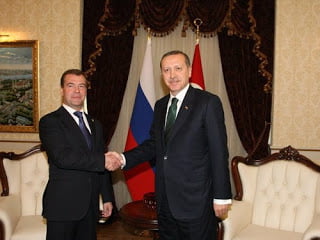
Thus this deterioration in Russo-Turkish relations owes as much to Russia’s assertiveness and willingness to make threats against the West, including Turkey, as it does to Turkish assertiveness. Moscow has threatened NATO members regarding missile defense and has displayed several cases of gunboat diplomacy in the Mediterranean (discussed below). It has also continually displayed its determination to make the CIS into a closed Russian bloc—a trend that would put Turkish and European energy supplies at the risk of excessive dependence upon Moscow and thwart Ankara’s ambitions in the Caucasus, if not Central Asia. These recent moves not only suggest the dominance of Vladimir Putin’s more anti-Western attitude compared to that of outgoing President Dmitry Medvedev, but they also show a decided continuity in priorities regarding the insistence on a closed bloc in the CIS, and a heightened willingness to resort to shows of force if not its actual use to achieve its goals.
The creation of a Russian sphere of influence in the CIS has been Moscow’s priority policy since 1993 long before Putin. Medvedev quickly reaffirmed it in 2008, when in the wake of the Russo-Georgian war he announced that he would henceforth base his foreign policy on five principles. These included among them that Russia has the right to intervene in neighboring states to defend the honor and dignity of its citizens and that it has privileged but undefined interests with countries in its neighborhood. This then demonstrated that Russia not only wants to revise borders or intervene in other countries, it also demands a sphere of influence in Eurasia as a whole. Even without Davutoğlu’s extravagant rhetoric and ambitions, Russian policy, in and of itself, would have clashed sooner or later with Turkish interests. Thus Russia too has much to answer for here.
Moscow’s moves also suggest that the reset policy is coming to an end. If this is indeed the case, it will likely lead to more East-West tension in general, which Turkey will not be able to escape. Moscow professes a continuing desire to negotiate disputed issues with the United States and NATO, and will probably not attack President Obama during a difficult election campaign (since Moscow believes a Republican victory would lead to still worse outcomes). However, its determination to counter the United States and NATO in the Middle East and Eurasia and attacks on missile defenses show that once again efforts at East-West rapprochement have foundered on regional security issues in Eurasia, perhaps the most intractable item on the East-West agenda.
The Middle East
Moscow and Ankara hold different opinions on the Kurdish issue. Moscow continues to stall on recognizing the PKK as a terrorist group as Turkey desires, while both the United States and EU recognize it as such. Turkish intelligence reports that 80 percent of PKK weapons are made in Russia, including sniper rifles, anti-tank mines, and rocket launchers. Eighty-eight percent of mines and 85 percent of launchers used by the PKK originate in Russia. This does not necessarily mean that the PKK is buying weapons from Russia. Instead it could be obtaining them through gray or black markets. Yet these facts still put Moscow in an embarrassing position given Moscow’s refusal to recognize the PKK as a terrorist group.
From Turkey’s standpoint, Moscow’s position compares unfavorably with that of Washington and Brussels on recognizing the PKK as terrorists and in assisting Turkey to deal with it. Indeed, the United States has pledged its support for Turkey’s stance on the PKK. Washington has also provided some technological assistance to Turkey in dealing with it, consisting of intelligence, surveillance, and reconnaissance data—using assets like the Predator UAV, fixed-wing spy planes, and satellites. Turkey has sought to buy six Predator and four armed Reaper UAVs from the United States, but Congress has not authorized the deal. Instead the U.S. announced in October 2011 its intention to sell Turkey three new Super Cobra attack helicopters. Moreover, Turkish commentators believe that absent some major crisis in U.S.-Turkish relations in 2012, American support for Turkey on this issue will continue.
Differences regarding the PKK, however, are a relatively small issue in the Russo-Turkish agenda. Much more important are the issues pertaining to Syria and missile defense against Iran. In the 1990s, Turkey viewed the Russian-Iranian partnership as a counterweight to Turkish influence in the Caucasus and Central Asia; in the early 2000s, Moscow showed signs of anxiety over the rapid improvement in Turkish-Iranian contacts. Turkey was left a bitter impression that an old friend of the West was turning away. It certainly looked as though Turkey considered Iran a friend and Israel an enemy, although Turkish officials vehemently denied these allegations.
Turkish-Iranian relations are changing. Here too one sees an erosion of the congruence of outlooks that previously characterized Russo-Turkish relations. Turkey’s demands that Syrian President Bashar al-Asad step down due to his violent repression of political protests clashes with Russia’s support for him and staunch opposition to any foreign intervention in Syria. Arguably, the longer civil strife there continues, the more pressures will build for overt Turkish intervention. Indeed, by the end of 2011, not only was Turkey providing sanctuary and material assistance to insurgents, but Davutoğlu was publicly discussing the possibility of intervention by either the Arab League or Turkey—which he considers “members of the family” and thus not really intervening external actors. Turkey had also imposed its own sanctions on Syria.
If an intervention occurs, it is as likely as not to be associated with or to be in the name of Europe and trigger further Russian ire. Secretary of the Russian Security Council Nikolai Patrushev already accuses NATO of planning such an intervention from Turkey and using Turkish forces either to intervene directly in Syria or at least to establish a buffer zone within it. They also claim that NATO, which denies it, is discussing setting up a no fly zone in Syria that recalls the pretext for intervention in Libya. In the larger context, Turkey’s converging posture with the West toward the Arab revolutions is an important factor drawing Turkey, Europe, and the United States closer together while distancing Turkey from Russia and Iran.
Moscow has reacted sharply to the perceived threat of NATO intervention despite NATO’s denials of that intention. Apart from sending warships in November 2011 to defend Syrian waters against some expected NATO “intervention,” Russia’s military has also added to the hysteria in Moscow about NATO intentions. In October 2011, Chief of the General Staff General Nikolai Makarov told the army that the events in North Africa and the Middle East were so unpredictable and rapid in their development that nobody could foretell their future impact upon states. Therefore the army must be prepared for a Libyan or similar scenario. Escalating his rhetoric, Makarov then warned in November 2011 that tensions in Russia’s neighborhood were rising and could even escalate to nuclear use: “The possibility of local armed conflicts virtually along the entire perimeter of the border has grown dramatically. I cannot rule out that, in certain circumstances, local and regional armed conflicts cold grow into a large-scale war, possibly even with nuclear weapons.”
Makarov further warned, “We have it all in the doctrine, all the circumstances when the use of nuclear weapons is warranted.” For Makarov, the cause for such wars in the CIS lies in NATO’s advancement to the CIS and Russia’s borders. This is not a new position. As his predecessor General Yuri Baluyevsky said in 2005, while Russia faced no direct threat of aggression, “[given] the existence of nuclear weapons, any localized armed conflict—let alone a regional conflict—could lead the international community to the brink of a global war.”
In January 2012, Moscow sent an armed ship through the NATO blockade to Syria to show its defiance of NATO and provide ammunition to the Syrian regime, if not also to the terrorists of Hizballah and Hamas, which it regularly supports with Russian weapons through Syria. Besides these forceful moves to deter NATO, Moscow has blocked UN resolutions against Syria and attacked NATO for staging a “political provocation” there. These actions, taken together, suggest that it sees Washington and NATO—now visibly including Turkey—as particularly prone to such interventionist unilateralism on behalf of democracy. Therefore they must be strongly deterred by even unilateral and forceful Russian action if necessary.
Thus to the degree that Turkey becomes a consistent advocate of democracy in its neighborhood, its relations with Russia will suffer. As one Turkish official put it:
Ankara came to a conclusion that as democracy is spreading around its neighborhood, Turkey only benefits from it. Countries like Bulgaria, Romania, and Georgia are testament(s) to this reality when we look at the great relations Turkey is having with these countries compared with the past. Just like the domino theory, we see democracy as an unstoppable force of history and we arrived at its doorstep.
Meanwhile, Turkey is also contending with Iran, Syria’s main regional protector and ally in the Middle East, and Russia’s partner there as well. Just as Irano-Russian relations have improved due to their congruent stands regarding Syria and the threat of NATO intervention, Turkey’s relations with Tehran and Moscow have worsened, and not only over Syria. This erosion has occurred despite the fact that Turkey opposes sanctions on Iranian oil and gas, which it buys. Turkey also attempted in 2010 to propose an alternative UN draft resolution with Brazil to mitigate the threat of sanctions on Iran and is proposing the resumption of talks on Iran’s nuclear program, which should be held in Turkey.
Indeed, 30 percent of Turkey’s oil comes from Iran and is among Iran’s top consumers of crude oil, obtaining just over 200,000 BPD. Not surprisingly, then, Turkey has indicated that it will not be bound by the newly proposed U.S. and European sanctions against Iranian oil. Therefore, and also to avoid a Sunni-Shi’i split over Syria and Iraq in the Middle East, Turkey has ample reasons to try to maintain its relationship with Iran. Although ties with Tehran may have weakened, Turkey still has enough credibility there to propose its territory as the site of a new attempt to negotiate a peaceful resolution of the issues surrounding Iranian nuclearization in talks with the United States, Russia, the UK, France, Germany, and Iran. This initiative again indicates its desire to stabilize its neighborhood and advance Turkey’s international standing as an “order creating” power.
Nevertheless the signs of decreasing amity with Tehran are visible and increasing. Turkey already competes strongly with Iran over Azerbaijan, which Iran is now openly threatening. Iran’s ambassador to Russia, Ali Akbar Salehi, recently expressed Iran’s desire to be Russia’s dependable ally. A leading pro-Iranian Russian analyst, Radzhab Safarov, Director of the Center for the Study of Modern Iran, followed up by saying that “the rapprochement of Tehran and Moscow will make it possible to hinder the shortsighted policy of Turkey, which is installing American missile defenses.” This issue of missile defenses, just like Syria, is already estranging Turkey from both Russia and Iran.
Turkish officials and pundits have long worried about the threat of proliferation in the Middle East and the threat posed by long-range missiles in the hands of Turkey’s neighbors. Turkish pundits like Duygu Bazoglu Sezer were warning about the threat posed by proliferation from Iran and Iraq by 1995. By 1998 she was writing that:
In July 1998, Iran successfully tested the Shahab-3 medium-range missile. Iranian officials described the test firing as a defensive move aimed at creating a balance in the region, meaning specifically a balance that would neutralize the American presence in the Gulf. The demonstration of Iran’s medium-range missile capability is certainly not a welcome development from the perspective of Turkey, especially in view of the fact that Iran is strongly suspected—despite strong denials—of pursuing nuclear weapons capability. It is interesting that, following the firing, Iran took pains to send a message virtually to the whole world that none of its neighbors seemed troubled by the successful testing of the missile.
The situation has worsened as Iran’s arsenal has grown and the presumption of its ambition to field nuclear weapons has grown along with that arsenal. As Ian Lesser has observed, Iran’s missile capability makes it in an operational sense, if not necessarily a political one, a Black Sea power. Indeed, Russian Foreign Minister Sergei Lavrov has repeatedly argued, “Iran deserves to be an equal partner of all regional countries in the resolution of the problems of the Near and Middle East.” He has also proposed a similar involvement of Iran in Black Sea security issues.
Accordingly, the strategic consequences of Iran’s missiles could easily affect not just regional defense agendas but also energy flows through and in the Black Sea littoral (particularly if someone strikes at Iran to forestall its proliferation and Iran retaliates by playing the energy card). Consequently, Turkish defense planners are highly sensitive to the threat. In 2008, Turkey apparently decided to buy Russian-made S-300 surface-to-air missiles from Ukraine and Belarus for testing and training purposes “to simulate threats that may come from countries with ex-Soviet systems in their inventories,” i.e., Iran and Syria. At that time, Turkey also announced plans to buy up to $4 billion of long-range air and missile defense systems.
Last, in September 2011, Turkey agreed to host a U.S. radar as part of the developing missile defense system in Europe. This decision will clearly aggravate relations with Iran since Turkey formally feels that Iran’s nuclear weapons and missile programs are a threat and that Ankara is willing to join with NATO, the United States, and even Israel to counter it. Indeed, in November 2011, General Amir Ali Hajizadeh, a senior commander in Iran’s Revolutionary Guard, declared that if Iran were attacked by the United States or Israel, its first response would be to target elements of the NATO missile shield in Turkey. Similarly, in December 2011, the Iranian media attacked Turkey’s secular Islamic system as an unsuitable example for countries now engulfed in the Arab Spring.
Turkey may have made this decision because NATO warned that if it bought Russian or Chinese air and missile defense systems that were incompatible with NATO’s systems, it would then operate without NATO’s intelligence on incoming ballistic missiles. Ankara also agreed that the United States would share this system’s data and intelligence assessments with all allies, including Israel. According to U.S. officials, this is “probably the biggest strategic decision between the United States and Turkey in the past 15 or 20 years.” Yet it also implicates Turkey in Russia’s hostile response to these missile defenses as announced by President Medvedev on November 23, 2011. Medvedev announced the following decisions:
First, I am instructing the Defence Ministry to immediately put the missile attack early warning radar station in Kaliningrad on combat alert. Second, protective cover of Russia’s strategic nuclear weapons will be reinforced as a priority measure under the program to develop our air and space defenses. Third, the new strategic ballistic missiles commissioned by the Strategic Missile Forces and the Navy will be equipped with advanced missile defense penetration systems and new highly effective warheads. Fourth, I have instructed the Armed Forces to draw up measures for disabling missile defense system data and guidance systems if need be. These measures will be adequate, effective, and low-cost. Fifth, if the above measures prove insufficient, the Russian Federation will deploy modern offensive weapon systems in the west and south of the country, ensuring our ability to take out any part of the U.S. missile defense system in Europe. One step in this process will be to deploy Iskander missiles in Kaliningrad Region. Other measures to counter the European missile defense system will be drawn up and implemented as necessary. Furthermore, if the situation continues to develop not to Russia’s favor, we reserve the right to discontinue further disarmament and arms control measures. Besides, given the intrinsic link between strategic offensive and defensive arms, conditions for our withdrawal from the New START Treaty could also arise, and this option is enshrined in the treaty.
Thus Turkey and its allies will become targets of Russia’s nuclear and conventional missiles. Further, should a new European arms race develop—though Russia sells military technology to Turkey and has a substantial economic trade and reciprocal investment process with it—Turkey will be targeted. Indeed, one of the Iskander-E missiles to be deployed by Russia against the NATO missile shield will be deployed in Krasnodar on the Black Sea coast. They can reach Turkey in four minutes from launch. This will eliminate a major basis for the rapprochement between Moscow and Ankara during the past decade. The Russian Foreign Ministry even stated publicly that Medvedev’s countermeasures, cited above, were justified because of the placement of a NATO missile defense radar in Turkey.
Insofar as Russian officials, and not only analysts, see Turkey as striving to dominate the Middle East and Syria, which Moscow regards as an ally, and to the extent that such an outcome jeopardizes Moscow’s naval base at Tartus, Russia, might come to see Turkey as a rival in the Middle East. Turkey will also become—if it is not already—the target of Iranian and Syrian missiles. This fact should enhance the value of the missile defense system and continue to bind Turkey to NATO and the United States.
Russia will now mount a threat against Turkey and its NATO allies, thus undermining a major basis for the previous decade of partnership. In the context of mounting frictions over all the issues outlined here, Russia’s reply on missile defenses, along with other manifestations of Russian policy, almost inevitably means that a cycle of recriminations and tension in Russo-Turkish relations will intensify. This will lead Turkey to draw closer to its NATO allies and to the United States than has been the case for many years. Indeed, in December 2011, Turkey authorized the purchase of two F-35 Lightning II Fighter aircrafts from the United States.
The Caucasus
Indeed, the Caucasus exemplifies those not so hidden antagonisms, and bilateral tensions are now visible there too. The Azeri-Turkish reconciliation, of which the energy deal is a part, precludes normalization with Armenia, which still receives Russian military assistance against the possibility of renewed fighting in Nagorno-Karabakh. Armenian President Serzh Sargsyan told students in July 2011, that future generations would and should undertake the task of reclaiming what was once Western Armenia, historically part of the medieval Armenian kingdom, but part of Turkey since the time of the Ottoman Empire. Ankara’s response was predictable. Prime Minister Recep Tayyip Erdoğan immediately demanded an apology. Yet no such response came nor is any forthcoming. Worse, Sargsyan admitted that Armeno-Turkish relations were deadlocked and that clearly, no progress was to be expected in that regard. Meanwhile, he still apparently expects Turkey to “repent” without any preconditions, so relations remain deadlocked.
This means that until Turkey delinks normalization with Armenia from the resolution of Nagorno-Karabakh, no progress will be possible. Yet such delinking is ever more unlikely, especially in view of the evidence presented here. Given Russian imperial designs on the Caucasus as outlined here and in many other works, the U.S. position that these issues should be delinked appears quixotic and unrealistic. This is the case even if Washington correctly argues that the status quo in Nagorno-Karabakh cannot last long and that this is an urgent issue. Certainly the U.S. position will not bring about a negotiated settlement given local realities.
For example, Armenian political scientist Arman Melikyan claims that in earlier tripartite negotiations in 2011, Russia ostensibly “brokered” Moscow to arrange for the surrender of liberated territories, thereby ensuring its military presence in return and establishing a network of military bases in Azerbaijan to prevent any further cooperation between Azerbaijan and NATO. While Armenian authorities reportedly accepted this plan, Baku refused to do so and saved Armenia (which clearly wants to incorporate Nagorno-Karabakh) from relinquishing the territory to it. Since recentWikileaks revelations show that Azerbaijan desires NATO’s full cooperation and says it would even consider membership in NATO if not for implied Russian and Iranian opposition, its rejection of this transparent neo-imperialist Russian ploy is hardly surprising.
Moreover, these revelations show the danger in leaving the initiative in negotiating an end to the conflict in Russia’s hands alone. Azeri officials, such as Elchin Gusseynli of the Ministry of International Affairs, have accused the OSCE of passivity and support for Armenia rather than Azerbaijan’s just position. Gusseynli rightly cited the Armeno-Russian military collaboration, which underscores the conflict and reflects Moscow’s unrelenting desire to recover some of its lost imperial heritage in the Caucasus. In response to Moscow and Yerevan, Turkish Defense Minister Ismet Yilmaz said in Baku that Turkey was ready to support and join with the Azeri army in defense production. Both states have also signed an agreement on strategic cooperation and formed a high advisory council. Thus, Azerbaijan decided to reject Moscow’s demand that it subordinate its defense and security policy to Moscow.
Adding to Russia’s discomfiture on this issue is the fact that the EU has now registered its unhappiness with the stagnation of the Nagorno-Karabakh conflict. European Parliament member Kristian Vigenin, upon returning from Yerevan, stated openly the parliament’s dissatisfaction with the failure of the OSCE Minsk Group process to get anywhere and added that the parliament suggested replacing France’s delegate to the Minsk process with an EU representative, even possibly the EU Commissioner for External Relations and Security Policy, Catherine Ashton.
Although there has been no sign of this previously, Moscow also apparently believes that Washington is trying to revive the Bush administration’s “Big Caucasus Project” to pull the Transcaucasus out of Russia’s orbit and somehow supplant Russia in the Karabakh process. Turkey’s realignment with Azerbaijan clearly ranges it opposite Armenia and Russia, and if there are EU moves to join the process and weaken Russia’s position there, it is not unlikely that Turkey will be on Baku’s side against Yerevan and Moscow. In another irritation, a Russian strike team of eight agents killed three Chechens in Istanbul on September 16 execution-style in broad daylight. This obviously irritated Turkish officials, not only because there are many sympathizers with the Chechens and other North Caucasus insurgents in Turkey but also because of the blatant disregard for Turkish sovereignty.
Yet beyond these currents, there are even more tensions rising in the Caucasus, mainly due to the increasingly strong Russian anxiety that a U.S. or Israeli strike against Iran might spill over into this region, if not Central Asia. According to Sergei Konovalov, Moscow is receiving reports of a U.S.-backed Israeli (if not U.S. too) surprise strike on Iran. When added to the civil war now germinating in Syria, these reports have generated great concern in Moscow for the fate of Russian troops in the Caucasus and Caspian basin. Thus Moscow has launched military and diplomatic moves to forestall such a strike or if that fails to be prepared to respond credibly to any threats arising out of them. Indeed, these preparations began in 2010. During October-November 2011, Moscow optimized the 102nd Military Base in Armenia. Dependents were withdrawn to Russia, the garrison near Yerevan was reduced, and subunits stationed there redeployed to Gyumri nearer to the Turkish border. On December 1, 2011, Russian forces at their bases in South Ossetia and Abkhazia were put on full combat readiness. Russian land forces in Armenia are now essentially isolated because Georgia has broken off the treaty allowing military transit through its territory to this base in Armenia. This has led some former commanders of this force to opine about having to launch breakthrough operations to support this force in the event of a conflict in Iran.
Meanwhile, the Black Sea Fleet is patrolling near Georgia, which could side with the anti-Iran forces. A separate coastal missile division with Bal-E (Bastion) coastal anti-ship missiles that have a range of 130 km was placed on permanent combat readiness. The missile launchers of the Caspian Flotilla were redeployed from Astrakhan southwards to Makhachkala and Kaspiysk to form a single ship grouping there. The small artillery ship Volgodonsk will join the missile patrol ship Tatarstan, the Flotilla’s flagship, and the Dagestan missile ship. The Tatarstan’s missiles have a range of up to 200 km. An aircraft carrier group of the Northern Fleet has departed for the Mediterranean led by the aircraft cruiser Admiral Kuznetsov to call at Tartus. Given the possibility of a war in Nagorno-Karabakh, which could break out in conjunction with a conflict of Iran, the military commentator Col. Vladimir Popov raised the possibility of a Russian operation to defend Armenia against Turkey, a NATO member, a threat that led Russia in 1993 to warn Turkey that such an operation risked nuclear war.
Whatever else these military moves suggest, they certainly do not suggest deepening amity with Turkey. Quite the opposite, they clearly show continued suspicion of Turkish aims here, particularly in conjunction with U.S./NATO intentions, which Moscow views so negatively. Perhaps this is why Moscow arranged another summit with Armenia and Azerbaijan on January 23-24, 2012. Finally these moves are another example of the increasing resort to military threats in Russia’s relations with its neighbors, interlocutors, and partners. Nor do such threats end at the former Soviet border. They have been seen in Syria, and they also appeared directly in response to Turkish actions in Cyprus.
The Cyprus Gas Conflict
New tension brewed between Turkey and Cyprus after Cyprus’s and Israel’s enormous gas discoveries in the Eastern Mediterranean in 2010-2011. Turkey’s reaction to those finds was extremely negative. Turkey was embroiled with a conflict, not only with Cyprus, its European backers and Israel, but with Russia as well. During 2009 and 2010, Cyprus and Israel discovered enormous natural gas deposits off their shores in the Mediterranean Sea. Then, in late 2011, Noble Energy, the firm contracted by Cyprus to explore its waters for gas, announced a discovery estimated at 5-8 trillion cubic feet of natural gas there. This discovery could not have come at a better time for Cyprus, which in 2011 endured a slippage in its fiscal ratings, was shut out of international capital markets, was hit by a large munitions blast, and was finally forced to accept a Russian bailout. All told, the discoveries by both countries amount to 33 TCF of gas. The U.S. Geological Survey estimates that the Levant Basin, where most of these discoveries have occurred, may hold 122 TCF.
Yet these discoveries have also had some negative repercussions. They have heightened tensions between the TRNC and the Greek-led Republic of Cyprus. The discoveries offer Cyprus the prospect of becoming a local economic powerhouse in contrast to the near disasters of 2011, and of thus reducing Turkish leverage upon Cyprus’s policies regarding the Cypriot Turks and Cyprus’s policies in general. Indeed, the gas finds to date give Cyprus enough gas to meet its needs for an estimated 150 years, fully satisfy its electricity generating needs for 210 years, and provide it with billions of dollars of revenues that will allow it to become a major exporter to Europe once pipelines or tankers carrying LNG can be built. So it can also expect an influx of much more foreign European capital to build those facilities and to strengthen and diversify its sources of foreign investment. It is likely that any pipeline will have to be built to connect with those that now or soon will cross Turkey or that a liquefaction plant will need to be built to process Cypriot and Israeli gas finds.
Not surprisingly, the TRNC government reacted coolly to the gas discovery, and Turkey, which does not recognize the government of Cyprus, even sent an exploration ship accompanied by warships and fighter jets to the area after Noble started drilling. Turkey’s threats against Cyprus and Israel to their exploration and drilling for gas in the Eastern Mediterranean also caused concern in Russia. Moscow recently organrized a large loan to Cyprus to sustain it against a crisis should Greece default, since so many Russian accounts are held in Cyprus’s banks. Cyprus then reinvested in Russia or laundered the elite’s money by cycling it out of Russia into the global banking system.
Clearly Moscow cannot allow Cyprus to go under without incurring serious domestic losses. Turkish threats therefore deeply disturb both Cyprus and Russia. Once Turkey’s navy openly threatened Cyprus for signing an agreement with the Texas-based firm Noble Energy, which is a partner with Israel in developing Israel’s maritime gas fields, Russia’s Ministry of Foreign Affairs publicly backed Cyprus’s right to develop its Mediterranean gas. Cyprus in turn labeled Moscow “a shield against any threats by Turkey.” Furthermore, Russia dispatched an aircraft carrier with fighter planes, and at last one submarine to Cyprus as a show of support in another open example of gunboat diplomacy.
Russia has already demonstrated its will and ability to check Turkey in regard to Cyprus. That interest will only grow in the future, because it is inconceivable that Moscow, which sees itself as Europe’s main gas supplier, will simply let Israel and Cyprus cut into its sales with such massive impact and compete with it at no cost. This does not mean the use of military force, but it does suggest that Moscow will bring substantial pressure to bear on Cyprus, if not Israel, to demand entrée into the gas business from their recent discoveries. Not only does this make it harder for Turkey to coerce Cyprus, it also has two negative implications for Turkey.
First, Russia’s presence in this sector of the gas market would enhance its leverage vis-à-vis Turkey in their bilateral energy dealings and would limit Turkey’s ability to posture as an energy hub with the attendant benefits thereof. Second, geopoliticians and geographers of all stripes have known that whoever controls Cyprus possesses the means to threaten with serious damage Turkey’s Mediterranean ports. Given Russia’s proclivities and that of its naval commanders, who seek permanent anchorages and bases in the Mediterranean and may be in trouble in Syria due to its civil war, to seek such a facility at Cyprus may be tempting. This challenges Turkish security and NATO planning as well. However, in conjunction with the Turkish threats to Cyprus and Moscow’s expected demand for a major place in Cyprus’s energy trade, it is a highly probable outcome based on existing trends.
The Cyprus issue, considered in all its many dimensions, highlights the fact that Turkey’s zero problems with neighbors has run aground on the shoals of these neighbors’ competitive interests with those of Turkey and with great power politics in the overall Mediterranean basin. The Cyprus issue also shows the limits of Turkish power despite the ambitious and even aggressive rhetoric emanating from Ankara. It suggests the need for Turkey to find a modus vivendi with Cyprus, if not Israel, as it did earlier with Russia. Some will say that it also shows the need for arriving at such an outcome as well or continuing to abide by the existing one with Moscow. Yet here, in fact, there was such an agreement. Despite the recent energy agreements signed on December 30, 2011, with Russia, Cyprus is merely one of many signs of what is arguably a worsening trend in Turkey’s relations with a Russia that is as ambitious as Turkey and even more aggressive insofar as its vital interests are involved.
The Cyprus energy conflict also serves as another reminder that energy politics are inseparable from larger security considerations and produce new issues and combinations that undermine the status quo. It also shows the urgency of making progress on the tangled issue of Cyprus’s future and the relationships among its two ethno-religious groups and of fully integrating Turkey into Europe. Turkey’s exclusion from the EU, in part a direct result of the Cyprus question, limits the ability of both sides to live up to and maximize their potential for enhancing security, democracy, and prosperity. As these events show, the failure to overcome these obstacles always leaves open the possibility of regression to heightened interstate conflict on Cyprus and international strife in the Mediterranean.
These developments are part of a larger theme. For Turkey, the idea of zero problems with neighbors while it serenely navigates along the complex shoals of Mediterranean Europe, the Middle East, and the Caucasus and gains leverage throughout these zones has proven unsustainable. There are too many issues that preclude upholding this posture while everyone else is pursuing their own national interests, and Turkey cannot stop them. The failure of neighboring governments like Syria, Russia, and Iran to heed Turkish interests or refrain from threatening them clearly betokens the failure of Turkey’s policy to increase Turkey’s standing and leverage among its neighbors. This is especially the case when the issues involved are central to those governments’ economic and political objectives. This failure could then translate as well into domestic opposition to a failed foreign policy.
Therefore the failure of the “zero problems with neighbors” policy could eventually lead to serious domestic political costs. Turkey’s recent foreign policy moves have estranged Israel, Syria, Cyprus, Greece, Russia, and Iran, and have certainly caused major headaches for U.S. policymakers trying to tamp down the angry rhetoric against Israel, Turkey’s erstwhile ally. Although Russian threats in the Caucasus and bullying tactics regarding energy in Southeastern Europe demonstrate Moscow’s unregenerate neo-imperialism and traditional outlook toward these areas, the fundamental concept of Turkish foreign policy has also been weighed in the balance and been found wanting. Not surprisingly Turkey is now in many cases, notably Cyprus and Israel, lashing out and trying to assert itself in forceful rhetoric, which, however, cannot be sustained by equally forceful deeds.
It remains to be seen how Ankara will extricate itself from its largely self-made difficulties. Turkey possesses considerable assets and strategic importance. Nonetheless, it has clearly overreached and based its foreign policy on unwarranted and unsustainable presuppositions. Since greater powers than Turkey have failed to secure lasting influence in their Southeastern European and Middle Eastern policies, Ankara should have realized that it could not supplant them and thus should have aimed for more modest objectives. Certainly Turkey alone cannot resist Russian encroachments in the Caucasus and Europe, resolve the Israeli-Arab conflict, ensure good governance in Syria, become a Eurasian energy hub, and uphold its security against Iran all by itself.
Hopefully upon sober reflection Ankara will realize its need for democratic friends and partners if not allies, as in the case of missile defense. This might even mean a return in the direction of the historic Kemalist orientation toward Europe, which has been so antithetical to the AKP Party’s ideology (though not necessarily all of its practice). Indeed, by all accounts, despite the rupture with Israel and its missteps in Cyprus, Turkey’s relations with Washington have been at a recent high. This is no doubt due to the Syria and Iran issues. Although the quest for partnership within Europe has run aground in the past, a carefully prepared and more targeted, even modest, objective may be within reach. This would apply to energy policy in particular as well as to missile defenses, and to Syria if Ankara can draw the appropriate lessons from its current predicament. One can only hope that Ankara will learn from these sobering and disappointing experiences, lest it experience even more and possibly greater rebuffs in the future.
Yet these events also have significant implications for Russia. One sees an unremitting determination to extinguish the sovereignty of Central Asian and European members of the CIS. Not only have Putin and Medvedev pursued these policies against Turkmenistan, but Russia is also shutting down Belarus’ sovereignty by taking over its energy and key economic sectors and attempting to do the same with Ukraine. It is quite clear that it does not regard these states, or for that matter the former members of the Warsaw Pact and Serbia, as truly sovereign. Moreover, its representatives lose no opportunity to remind them of their vulnerability and make demands that Moscow have an unlimited right to intervene in their affairs. Indeed, Russian legislation enacted under Medvedev gives the President the right to intervene militarily in their affairs without any accountability to the Duma or anyone else whatsoever.
In addition, Russia continues to see NATO and the United States as powers that are intent on dismantling its pretensions to a neo-imperial domination of Eurasia in the name of democracy and as attempting to intimidate it by depriving it of its main military trump, i.e., its ability to intimidate Europe with its nuclear and conventional missiles. Thus it has demanded legally binding guarantees that missile defenses will not threaten its nuclear arsenal, despite scores of briefings and acceptance of the fact that these systems cannot threaten Russia’s nuclear weapons by Russian experts, but refuses to suggest giving Europe such guarantees. It also clearly sees itself under threat from these NATO policies. It believes these policies will inevitably lead to a coercive NATO operation in the CIS or Russia itself—either by actual force majeure or “information warfare” to undermine Russia’s imperial pretensions and political system, without which it believes Russia would cease to exist as a state or independent great power. Thus operations like those in Libya or those it believes will take place in Syria potentially have direct consequences for Russia. It will reply in the only language it knows, i.e., military and other threats.
Russia’s position, its insistence on a free hand at the expense of every other state east of the Elbe, and its presupposition of conflict with NATO all but ensure that the reset policy will run aground over the issues of regional security in Eurasia. That denouement is clearly in the wind as Moscow’s statements on missile defense all but rule out an improvement in relations with NATO at the May 2012 Chicago summit. Turkey cannot escape the inevitable consequences of this outcome, because so many of its vital interests are now threatened by Russia’s resort to gunboat diplomacy, military threats, and coercive energy diplomacy. Here too, as in the Middle East, zero problems with neighbors has foundered on the inevitable rocks of competing national interests, including Russia. Yet Russia has also succumbed to the temptation to define its interests as being a priori hostile to those of its principal interlocutors. Turkey’s democracy allows it the opportunity to rethink its policy, liquidate over-extended positions, and regain strength in what will hopefully be a revived Atlantic alliance, concomitant advance in European integration and democracy in the Middle East. Yet Russia has clearly opted—or is now opting for—another round of self-imposed neo-imperial isolation that it cannot sustain and which it can only defend by threats of force. While it may not be too late for Turkey to repair its position with Israel, Cyprus, and NATO, it appears that for Russia the die has already been cast and not in favor of international reconciliation.
*Younkyoo Kim, PhD (Purdue University) is an associate professor in the Division of International Studies, Hanyang University, Seoul.
*Stephen Blank, PhD (University of Chicago) is Professor of Russian National Security Studies at the Strategic Studies Institute of the U.S. Army War College.
They wrote this article for the MERIA Journal, a publication of the GLORIA Center, from where it is adapted.

var _wau = _wau || []; _wau.push([“small”, “wvg1ie6mi5ta”, “m3y”]);
(function() {var s=document.createElement(“script”); s.async=true;
s.src=”http://widgets.amung.us/small.js”;
document.getElementsByTagName(“head”)[0].appendChild(s);
})();

Γενικά θέματα

Η πετρελαϊκή «μάχη» που ενώνει Τραμπ-Πούτιν και δισεκατομμυριούχους του Κόλπου

Οι συνομιλίες της κυβέρνησης του Ντόναλντ Τραμπ με τη Ρωσία για τον τερματισμό του πολέμου στην Ουκρανία έχουν διευρυνθεί και περιλαμβάνουν πλέον μια υπό διαπραγμάτευση συμφωνία δισεκατομμυρίων δολαρίων για την εξαγορά διεθνών περιουσιακών στοιχείων της ρωσικής πετρελαϊκής εταιρείας Lukoil, σύμφωνα με δημοσίευμα των «New York Times».
Δημοσιεύτηκε

στις

από τον

Οι συνομιλίες της κυβέρνησης του Ντόναλντ Τραμπ με τη Ρωσία για τον τερματισμό του πολέμου στην Ουκρανία έχουν διευρυνθεί και περιλαμβάνουν πλέον μια υπό διαπραγμάτευση συμφωνία δισεκατομμυρίων δολαρίων για την εξαγορά διεθνών περιουσιακών στοιχείων της ρωσικής πετρελαϊκής εταιρείας Lukoil, σύμφωνα με δημοσίευμα των «New York Times».

Η συμφωνία, η οποία δεν έχει ακόμη οριστικοποιηθεί και τελεί υπό την αίρεση της έγκρισης της αμερικανικής κυβέρνησης και του Κρεμλίνου, αφορά ένα εκτεταμένο χαρτοφυλάκιο πετρελαιοπηγών, διυλιστηρίων και πρατηρίων καυσίμων της Lukoil σε διάφορες χώρες.

Σύμφωνα με τους «New York Times», στο επίκεντρο της υπόθεσης βρίσκεται κοινοπραξία με επικεφαλής τον Αμερικανό επενδυτή Τοντ Μπόελι, στην οποία συμμετέχουν επίσης επενδυτικοί όμιλοι από τη Μέση Ανατολή. Στην προτεινόμενη συμφωνία συμμετέχει και η αμερικανική κυβέρνηση, μέσω της U.S. International Development Finance Corporation (DFC).

 Στο τραπέζι των συνομιλιών Τραμπ-Πούτιν

Οι πολύμηνες διαπραγματεύσεις, σύμφωνα με οκτώ πρόσωπα με γνώση της υπόθεσης που επικαλούνται οι «New York Times», συνδέονται με την ευρύτερη προσπάθεια της κυβέρνησης Τραμπ να αποκαταστήσει οικονομικούς δεσμούς με τη Ρωσία στο πλαίσιο των συνομιλιών για τον τερματισμό του πολέμου στην Ουκρανία.

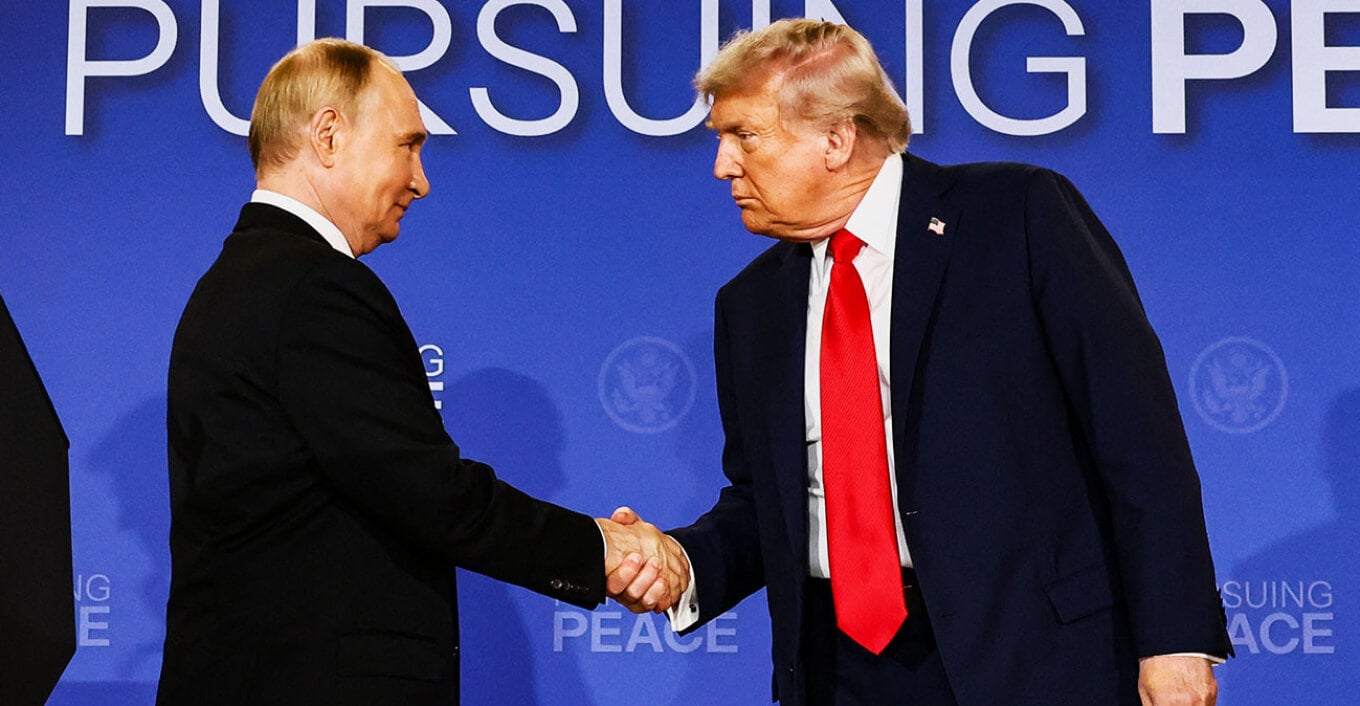
Το ζήτημα της Lukoil φέρεται να τέθηκε από τον Βλαντιμίρ Πούτιν κατά τη συνάντησή του με τους Αμερικανούς διαπραγματευτές Στιβ Γουίτκοφ και Τζάρεντ Κούσνερ στο Κρεμλίνο, στις 5 Σεπτεμβρίου. Σύμφωνα με πηγή που επικαλείται η αμερικανική εφημερίδα, ο Ρώσος πρόεδρος πρότεινε την προώθηση της συμφωνίας ως ένδειξη ότι η Ρωσία και οι Ηνωμένες Πολιτείες μπορούν να συνεργαστούν επιχειρηματικά.

Οι Αμερικανοί διαπραγματευτές φέρεται να απάντησαν ότι θα εργαστούν για την προώθηση της συμφωνίας, τόσο ως ένδειξη «καλής θέλησης» προς το Κρεμλίνο όσο και με στόχο τη μείωση των διεθνών τιμών ενέργειας.

Η ενδεχόμενη συμφωνία παρουσιάζει ιδιαίτερο οικονομικό ενδιαφέρον για τους υποψήφιους αγοραστές. Η έγκρισή της από τις Ηνωμένες Πολιτείες θα μπορούσε να οδηγήσει στην απελευθέρωση των ρωσικών περιουσιακών στοιχείων από τις αμερικανικές κυρώσεις, αυξάνοντας παράλληλα την αξία τους.

 Οι διασυνδέσεις των επενδυτών

Στην κορυφή της κοινοπραξίας βρίσκεται ο Αμερικανός επενδυτής Τοντ Μπόελι, συνιδιοκτήτης των Los Angeles Dodgers και γνωστός υποστηρικτής του Τραμπ. Στο επενδυτικό σχήμα συμμετέχουν επίσης επιχειρηματικοί όμιλοι από το Κατάρ και τα Ηνωμένα Αραβικά Εμιράτα.

Οι «New York Times» επισημαίνουν ότι ορισμένοι από τους επενδυτές διατηρούν επιχειρηματικές σχέσεις με πρόσωπα που βρίσκονται κοντά στην κυβέρνηση Τραμπ.

Μεταξύ αυτών είναι οι αδελφοί Μουτάζ και Ράμεζ αλ-Χαγιάτ από το Κατάρ, οι οποίοι έχουν συνεργαστεί με τον Τζάρεντ Κούσνερ και την Ιβάνκα Τραμπ για τη χρηματοδότηση επενδυτικού σχεδίου στην Αλβανία.

Στην κοινοπραξία συμμετέχει επίσης επενδυτικό ταμείο με έδρα το Αμπού Ντάμπι, το οποίο ελέγχεται από τον σεΐχη Ταχνούν μπιν Ζαγιέντ Αλ Ναχιάν, σύμβουλο εθνικής ασφάλειας των Ηνωμένων Αραβικών Εμιράτων. Ο ίδιος συνδέεται με επενδύσεις στην World Liberty Financial, την εταιρεία κρυπτονομισμάτων της οικογένειας Τραμπ.

Παράλληλα, επενδυτικό ταμείο που συνδέεται με τον σεΐχη Ταχνούν αποτελεί σημαντικό μέτοχο της εταιρείας private equity που ίδρυσε ο Κούσνερ μετά την αποχώρησή του από τον Λευκό Οίκο.

 Τα ερωτήματα για πιθανές συγκρούσεις συμφερόντων

Οι διασυνδέσεις αυτές έχουν προκαλέσει ερωτήματα σχετικά με το κατά πόσο προσωπικές επιχειρηματικές σχέσεις μπορεί να διασταυρώνονται με τη διαδικασία λήψης αποφάσεων για μια συμφωνία που συνδέεται με την αμερικανική εξωτερική πολιτική.

Οι «New York Times» αναφέρουν ότι δεν υπάρχει ένδειξη πως ο Γουίτκοφ ή ο Κούσνερ πρόκειται να αποκομίσουν προσωπικό οικονομικό όφελος από τη συμφωνία. Ωστόσο, η υπόθεση έχει εγείρει ζητήματα σχετικά με τις σχέσεις μεταξύ των εμπλεκόμενων επιχειρηματιών και προσώπων του στενού περιβάλλοντος του Τραμπ.

Η Χούι Τσεν, πρώην εισαγγελέας και σύμβουλος σε θέματα οικονομικού εγκλήματος και δεοντολογίας, χαρακτήρισε τις διασυνδέσεις «ανησυχητικές» και έθεσε το ερώτημα κατά πόσο προσωπικά συμφέροντα θα μπορούσαν να επηρεάσουν την αξιολόγηση των υποψήφιων αγοραστών.

Από την πλευρά του, εκπρόσωπος του Γουίτκοφ απέρριψε οποιοδήποτε ζήτημα σύγκρουσης συμφερόντων, υποστηρίζοντας ότι ο Αμερικανός διαπραγματευτής δεν λαμβάνει μισθό και καλύπτει ο ίδιος τα έξοδα των ταξιδιών του στο πλαίσιο της αποστολής του για λογαριασμό του Τραμπ.

Η κούρσα για τα περιουσιακά στοιχεία της Lukoil

Η Lukoil είχε θέσει προς πώληση τα διεθνή περιουσιακά της στοιχεία μετά την επιβολή αμερικανικών κυρώσεων. Αρκετοί υποψήφιοι αγοραστές είχαν εκδηλώσει ενδιαφέρον, μεταξύ των οποίων και μεγάλοι αμερικανικοί ενεργειακοί όμιλοι.

Τον Ιανουάριο, η επενδυτική εταιρεία Carlyle είχε καταλήξει σε προκαταρκτική συμφωνία για την εξαγορά σημαντικού μέρους του διεθνούς χαρτοφυλακίου της Lukoil. Η συμφωνία, ωστόσο, δεν ολοκληρώθηκε, καθώς απαιτούσε την έγκριση της αμερικανικής κυβέρνησης.

Στη συνέχεια, ο όμιλος υπό τον Μπόελι εμφανίστηκε ως ένας από τους βασικούς διεκδικητές των περιουσιακών στοιχείων.

Η αξία των διεθνών περιουσιακών στοιχείων της Lukoil είχε υπολογιστεί από την ίδια την εταιρεία σε περίπου 20 δισ. δολάρια στις αρχές του έτους. Ωστόσο, οι οικονομικοί όροι της υπό διαπραγμάτευση συμφωνίας δεν έχουν γίνει γνωστοί.

 Ο ρόλος της αμερικανικής κυβέρνησης

Η αμερικανική κυβέρνηση συμμετέχει στην προτεινόμενη συμφωνία μέσω της U.S. International Development Finance Corporation, η οποία επενδύει και παρέχει χρηματοδότηση για έργα στο εξωτερικό.

Αμερικανός αξιωματούχος δήλωσε ότι μια ενδεχόμενη συμφωνία για τη Lukoil θα μπορούσε να ενισχύσει την οικονομική ασφάλεια των ΗΠΑ, να εξυπηρετήσει στόχους της αμερικανικής εξωτερικής πολιτικής και να συμβάλει στη μείωση του ενεργειακού κόστους για τους Αμερικανούς.

Η συμφωνία, ωστόσο, χρειάζεται την έγκριση του αμερικανικού υπουργείου Οικονομικών, το οποίο είναι αρμόδιο για την εφαρμογή των κυρώσεων κατά της Ρωσίας.

 Η ενεργειακή διάσταση

Στο υπό διαπραγμάτευση χαρτοφυλάκιο περιλαμβάνονται διυλιστήρια της Lukoil στην Ολλανδία, τη Βουλγαρία και τη Ρουμανία, καθώς και άλλες ενεργειακές υποδομές και πρατήρια καυσίμων σε διάφορες χώρες.

Η ενεργειακή διάσταση αποκτά ιδιαίτερη σημασία καθώς η κυβέρνηση Τραμπ έχει επανειλημμένα υποστηρίξει ότι η αποκατάσταση οικονομικών σχέσεων με τη Ρωσία θα μπορούσε να λειτουργήσει ως κίνητρο για τη Μόσχα ώστε να προχωρήσει σε συμβιβασμούς για τον τερματισμό του πολέμου στην Ουκρανία.

Ο Ρώσος οικονομικός απεσταλμένος Κίριλ Ντμίτριεφ έχει επίσης εμπλακεί στη διαδικασία, ενώ, σύμφωνα με τους «New York Times», έχει δηλώσει ότι ο διάλογος ΗΠΑ-Ρωσίας συνεχίζεται σε πολλούς τομείς, μεταξύ των οποίων και η ενέργεια.

Η συμφωνία για τη Lukoil παραμένει, πάντως, ανοικτή και δεν έχει οριστικοποιηθεί. Η τελική απόφαση θα εξαρτηθεί από τις απαιτούμενες εγκρίσεις των αμερικανικών αρχών και της ρωσικής πλευράς.

skpress.gr

Συνέχεια ανάγνωσης

Γενικά θέματα

Πώς μια «Ελληνίδα» έγινε το «θεμέλιο» της Εθνικής Πινακοθήκης της Ουγγαρίας

Στον πρώτο όροφο της Πινακοθήκης συναντήσαμε την «Ελληνίδα». Πρόκειται για ένα έργο του Jakob Marastoni (1804-1860), ενός ζωγράφου ιταλικής καταγωγής που εγκαταστάθηκε και εργάστηκε στην Πέστη και έγινε μία από τις σημαντικότερες μορφές στην ιστορία της ουγγρικής τέχνης.
Δημοσιεύτηκε

στις

από τον

Πριν λίγο καιρό επισκεφθήκαμε την Εθνική Πινακοθήκη της Ουγγαρίας στη Βουδαπέστη, ένα από τα πλέον σημαντικά μουσεία της χώρας, στο οποίο παρουσιάζεται με μοναδικό τρόπο η εξέλιξη της ουγγρικής εικαστικής τέχνης από τον 11ο αιώνα μέχρι σήμερα. Βρίσκεται στο Βασιλικό Ανάκτορο του Κάστρου της Βούδας και ιδρύθηκε το 1957 με βάση κυρίως τις ουγγρικές συλλογές του Μουσείου Καλών Τεχνών. Η συλλογή της περιλαμβάνει περίπου 110.00 έργα.

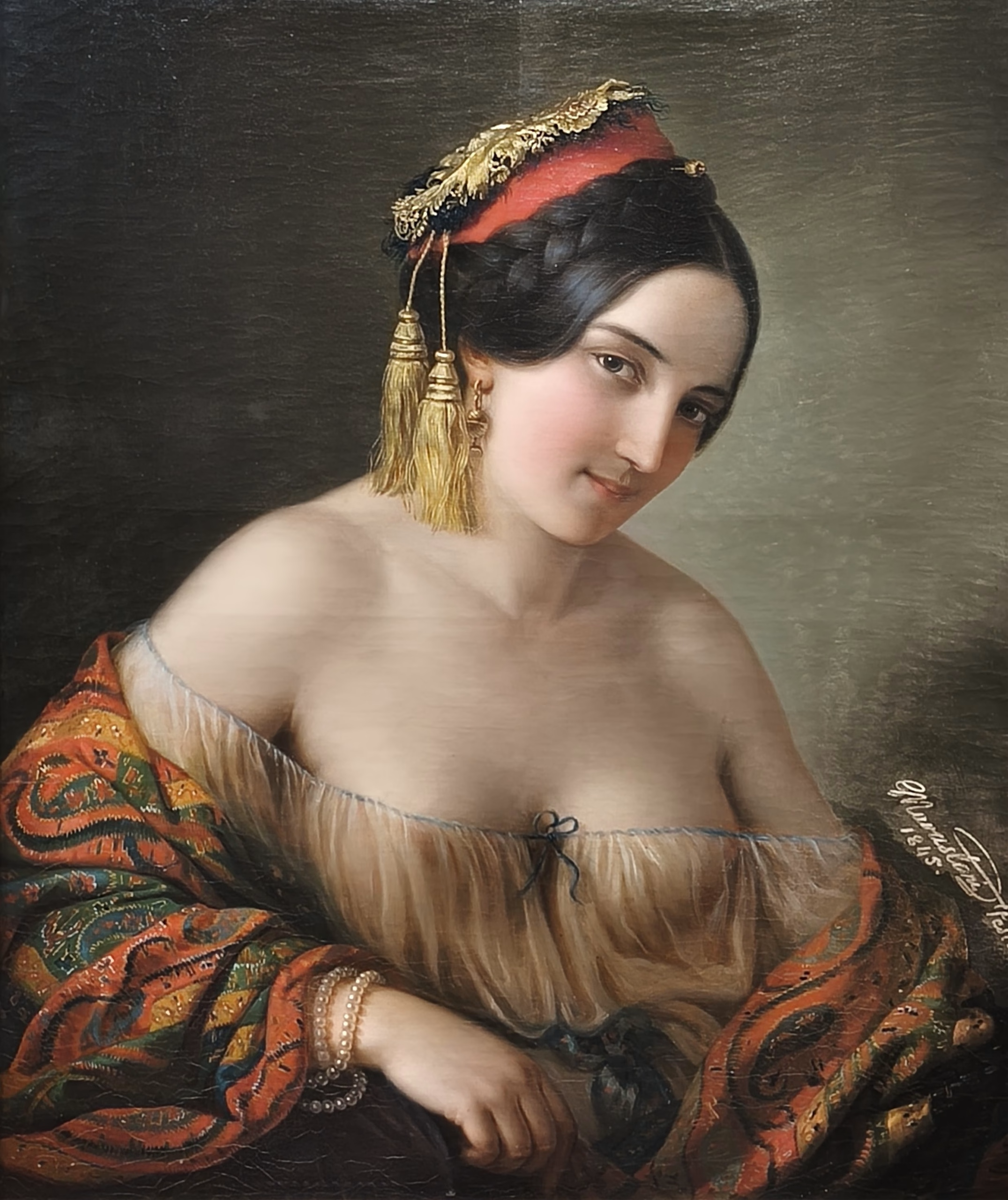
Στον πρώτο όροφο της Πινακοθήκης συναντήσαμε την «Ελληνίδα». Πρόκειται για ένα έργο του Jakob Marastoni (1804-1860), ενός ζωγράφου ιταλικής καταγωγής που εγκαταστάθηκε και εργάστηκε στην Πέστη και έγινε μία από τις σημαντικότερες μορφές στην ιστορία της ουγγρικής τέχνης.

Το έργο του με τίτλο «Ελληνίδα», φιλοτεχνημένο το 1845, θεωρείται εξαιρετικά σημαντικό για τη δημιουργία της συλλογής της Ουγγρικής Εθνικής Πινακοθήκης. Είναι το πρώτο έργο που σηματοδότησε την έναρξη της συστηματικής συλλογής ουγγρικής ζωγραφικής στα εθνικά ιδρύματα.⁠ Είναι επίσης το πιο γνωστό και εμβληματικό έργο του ζωγράφου.

Οι διαστάσεις του είναι 77Χ61,5 cm περίπου. Το μοντέλο δεν είναι Ελληνίδα, αλλά η σύζυγος του Marastoni, η Giovanna Bianchi, με καταγωγή από τη Βενετία. Ο ζωγράφος την απεικόνισε με παραδοσιακή (ή φανταστική) ελληνική φορεσιά της εποχής, σύμφωνα με τη μόδα του ρομαντισμού. Η εικόνα συνδυάζει εξωτισμό, ελαφρύ ερωτισμό και ιδανική ομορφιά.

Η ιστορία

Το 1845 η Pest Art Society — η πρώτη καλλιτεχνική εταιρεία στην Ουγγαρία — αγόραζε κάθε χρόνο ένα έργο από την ετήσια έκθεσή της για να το δωρίσει στο Ουγγρικό Εθνικό Μουσείο, το οποίο τότε περιλάμβανε και την πινακοθήκη.

Η «Ελληνίδα» του Marastoni ήταν αυτό που επέλεξαν και δώρισαν τον Νοέμβριο του 1845. Έτσι, καταγράφηκε ως το πρώτο έργο στη συλλογή ζωγραφικής του μουσείου.⁠ Το Εθνικό Μουσείο είχε ήδη κάποιες δωρεές, αλλά η συστηματική συλλογή ουγγρικής τέχνης ξεκινάει ουσιαστικά με αυτό το έργο. Η Εθνική Πινακοθήκη κληρονόμησε αυτή τη συλλογή από το Εθνικό Μουσείο.

Η επιλογή του προκάλεσε έντονες συζητήσεις και αποτέλεσε το «πρώτο καλλιτεχνικό σκάνδαλο» της εποχής, λόγω του ερωτισμού που απέπνεε το μοντέλο. Ωστόσο ο πίνακας αυτός ήταν και ιδιαίτερα δημοφιλής, κάτι που ενίσχυσε την εθνική συζήτηση για την τέχνη.⁠

Σήμερα, το έργο παραμένει εμβληματικό και εκτίθεται συχνά ως αφετηρία της συλλογής ζωγραφικής του 19ου αιώνα στην Πινακοθήκη. Συμβολίζει το πώς η ουγγρική τέχνη χτίστηκε με συνεισφορές από ξένους καλλιτέχνες που ενσωματώθηκαν στη χώρα, όπως ο Marastoni.

Η δημιουργία της Πινακοθήκης

Αν κάνετε περίπατο στην οδό Deák Ferenc στο κέντρο της πόλης ίσως αξίζει κάποιες φορές να σηκώσετε το βλέμμα πάνω από τις βιτρίνες των καταστημάτων. Το βλέμμα σας θα συναντήσει όχι μόνο κλασικές προσόψεις, αλλά και αναμνηστικές πλάκες, όπως για παράδειγμα εκείνη στον αριθμό 21, όπου αναγράφεται: «Η Πρώτη Ουγγρική Ακαδημία Ζωγραφικής – ιδρυθείσα από τον Jakab Marastoni».

Η Πέστη του 19ου αιώνα ήταν μια πραγματικά πολυπολιτισμική πόλη. Γερμανοί, Ούγγροι, Έλληνες, Ιταλοί, Σέρβοι και πολλές άλλες μικρότερες εθνότητες ζούσαν εδώ δίπλα-δίπλα ειρηνικά. Ο καθένας καλλιεργούσε τον δικό του πολιτισμό, αλλά ένα πράγμα τους ένωνε: όλοι ήθελαν να είναι και Ούγγροι και επιδίωκαν να υπηρετήσουν τον ουγγρικό πολιτισμό με τις δραστηριότητές τους.

Εκείνη την εποχή ο Marastoni υπέβαλε την αίτησή του για την ακαδημία ζωγραφικής στο Βασιλικό Συμβούλιο των Κυβερνητών, όταν ιδρύθηκε εντός του Ουγγρικού Εθνικού Μουσείου ο Σύλλογος Εθνικής Πινακοθήκης, ένα «τμήμα που συνέλεγε αποκλειστικά ουγγρική ζωγραφική».

Όλα αυτά συνέβησαν το 1845 και αυτή η μεγάλη πολιτιστική δραστηριότητα μπορεί να ήταν αποτέλεσμα του γεγονότος ότι εκείνη τη χρονιά το Εθνικό Μουσείο ήθελε να τιμήσει δεόντως την πεντηκοστή επέτειο της ανάληψης καθηκόντων του αρχιδούκα Ιωσήφ της Αυστρίας.

Ο σύλλογος που έφερε το όνομα του αρχιδούκα εγκρίθηκε τελικά από το Βασιλικό Συμβούλιο των Κυβερνητών τον Σεπτέμβριο του 1845. Η Εθνική Πινακοθήκη του αρχιδούκα Ιωσήφ μπορεί, επομένως, να θεωρηθεί ως το πρώτο εθνικό ίδρυμα που συνέλεγε ουγγρικούς πίνακες.

Η πινακοθήκη δέχθηκε δωρεές έργων τόσο από συλλόγους, όσο και από ιδιώτες, και ανάμεσά τους το σημαντικότερο ήταν το έργο του Jakab Marastoni «H Ελληνίδα», το οποίο δωρήθηκε στην πινακοθήκη τον Νοέμβριο του 1845 από την Καλλιτεχνική Εταιρεία της Πέστης. Έτσι, μπορεί να πει κανείς ότι η ιστορία της μουσειακής συλλογής ουγγρικής ζωγραφικής ξεκίνησε με την «Ελληνίδα».

Αλλά γιατί μια Ελληνίδα; Το σύγχρονο (όχι αρχαίο) ελληνικό θέμα εμφανίστηκε στην ευρωπαϊκή ζωγραφική με την Ελληνική Επανάσταση ενάντια στην Οθωμανική Αυτοκρατορία τη δεκαετία του 1820. Φυσικά, οι συμπάθειες του ευρωπαϊκού ρομαντισμού προς τους Έλληνες άσκησαν επιρροή και στην ουγγρική τέχνη.

Οι Έλληνες, και ιδιαίτερα οι Ελληνίδες, αποτελούσαν συχνά θέμα στην ουγγρική ζωγραφική του 19ου αιώνα, και κατά μία έννοια η «Ελληνίδα» κατέληξε να αντιπροσωπεύει ένα εξωτικό θέμα αρωματισμένο με ερωτισμό.

Και αν σήμερα βρίσκουμε την «Ελληνίδα» να αποκαλύπτει ανοιχτά την ομορφιά και τη γοητεία της, δεν πρέπει να ξεχνάμε ότι επρόκειτο για θέμα μόδας. Και όσο κι αν μας γνέφει σαγηνευτικά αυτή η όμορφη γυναίκα, με την ιστορική έννοια το έργο αυτό είναι ένα από τα σημαντικότερα της ουγγρικής μουσειολογίας.

Ο ζωγράφος

Ο Jakab Marastoni (Giacomo Marastoni) γεννήθηκε το 1804 στη Βενετία και σπούδασε στην περίφημη Ακαδημία Καλών Τεχνών.

Ταξίδεψε στη Βιέννη στις αρχές της δεκαετίας του 1830, πέρασε από τη σημερινή Μπρατισλάβα το 1833 και εγκαταστάθηκε οριστικά στην Πέστη το 1836. Έγινε περιζήτητος πορτρετίστας μεταξύ αριστοκρατικών και αστικών οικογενειών, αλλά και κατά τη διάρκεια κοινοβουλευτικών συνεδριάσεων.⁠

Το 1846 ίδρυσε την Πρώτη Ουγγρική Ακαδημία Ζωγραφικής στην Πέστη – την πρώτη ιδιωτική σχολή αποκλειστικά για ζωγραφική στην Ουγγαρία. Ανάμεσα στους μαθητές του περιλαμβάνονται σημαντικοί Ούγγροι καλλιτέχνες όπως ο Károly Lotz, ο Mihály Zichy, ο Soma Orlai Petrich κ.ά. Το 1846 έγινε Επίτιμος Πολίτης της Πέστης.

Στα τελευταία χρόνια της ζωής του ασχολήθηκε με την δαγκεροτυπία ήταν ο πρώτος επαγγελματίας αυτής της τεχνικής στην Ουγγαρία. Πέθανε σε ψυχιατρική κλινική και η σχολή του έκλεισε λίγο μετά.

tovima.gr

Συνέχεια ανάγνωσης

Γενικά θέματα

Ούμαρ Κρέμλεφ: Ο άνθρωπος του Πούτιν που «εισέβαλε» στον αμερικανικό αθλητισμό

Πριν γίνει γνωστός ως Ούμαρ Κρέμλεφ, ο 43χρονος που χρόνια αργότερα θα συνδεόταν ακόμη και με το πολυτελές πάρτι του Ντόναλντ Τραμπ Τζούνιορ στις Μπαχάμες, ήταν γνωστός με το όνομα Ούμαρ Λουτφουλόεφ. Μέχρι τον Μάρτιο του 2010, το όνομα Κρέμλεφ παρέμενε ουσιαστικά άγνωστο
Δημοσιεύτηκε

στις

από τον

Πριν γίνει γνωστός ως Ούμαρ Κρέμλεφ, ο 43χρονος που χρόνια αργότερα θα συνδεόταν ακόμη και με το πολυτελές πάρτι του Ντόναλντ Τραμπ Τζούνιορ στις Μπαχάμες, ήταν γνωστός με το όνομα Ούμαρ Λουτφουλόεφ. Μέχρι τον Μάρτιο του 2010, το όνομα Κρέμλεφ παρέμενε ουσιαστικά άγνωστο.

Όταν «πάτησε» τα 28 κι έχοντας, σύμφωνα με δημοσιεύματα της εποχής, καταδίκες για εκβιασμό και ξυλοδαρμό, είδε τις φιλοδοξίες του για καριέρα στην πυγμαχία να σβήνουν εξαιτίας της έλλειψης πειθαρχίας και θέλησε να κάνει μια νέα αρχή για να ανεβεί τα σκαλοπάτια της ρωσικής κοινωνίας.

Και για να πετύχει αυτή του την επιδίωξη, δεν θα μπορούσε να διαλέξει καταλληλότερο επώνυμο από το Κρεμλέφ – ουσιαστικά, «ο άνθρωπος του Κρεμλίνου». Όπως και στην περίπτωση του Ντόναλντ Τραμπ Τζούνιορ, αυτό ήταν ένα όνομα που έμελλε να συνδεθεί με φήμη, πλούτο και αντιπαραθέσεις.
Ο Ρόμπερτ Γκαρσία, ο κορυφαίος Δημοκρατικός στην Επιτροπή Εποπτείας της Βουλής των Αντιπροσώπων, έθεσε το εύλογο ερώτημα: «Τι πήρε ως αντάλλαγμα; Χρειαζόμαστε απαντήσεις» και το ζευγάρι των νεόνυμφων έσπευσε να απαντήσει: «Η φιλία δεν προϋποθέτει πολιτικά κίνητρα. Η γενναιοδωρία δεν συνοδεύεται αυτομάτως από κάποια ατζέντα. Και μερικές φορές ένα γαμήλιο δώρο είναι απλώς ένα γαμήλιο δώρο», προσφέροντας στη συνέχεια να επιστρέψει τα χρήματα.

Ο 43χρονος μεγάλωσε στο Σερπούχοφ, μια πόλη περίπου 120.000 κατοίκων, 60 μίλια νότια της Μόσχας και 5.729 μίλια ανατολικά του Little Pipe Cay, του νησιού στις Μπαχάμες που νοίκιασε για τον γιο του Αμερικανού προέδρου. Γεννημένος από μητέρα Τατζίκα σε μουσουλμανική οικογένεια, «παντρεύτηκε» αρχή τον ρόλο του αουτσάιντερ.

Στράφηκε από μικρός στην πυγμαχία, όμως έχει παραδεχτεί σε συνέντευξή του ότι σταμάτησε στα 19 του, επειδή δεν διέθετε την απαιτούμενη πειθαρχία. Ακόμη και την ημέρα ενός αγώνα μπορούσε να βρεθεί σε νυχτερινό κέντρο ως τις τέσσερις τα ξημερώματα. Με μεγάλα χέρια και τη σωματική διάπλαση πυγμάχου βαρέων βαρών, ο Κρεμλέφ πέρασε τα επόμενα χρόνια αναζητώντας τον δρόμο που του ταίριαζε. Παρέμεινε, πάντως, στον κόσμο της πυγμαχίας, εργαζόμενος ως διοργανωτής αγώνων.

Σύμφωνα με το ρωσικό ερευνητικό μέσο Proekt, καταδικάστηκε για εκβιασμό το 2004 και για ξυλοδαρμό το 2007, αν και οι ακριβείς συνθήκες των υποθέσεων παραμένουν ασαφείς. Ο ίδιος δεν έχει αρνηθεί τις καταδίκες.

Οι Night Wolves εμφανίστηκαν την περίοδο της Περεστρόικα, της οικονομικής αναδιάρθρωσης της δεκαετίας του 1980, ως μια ομάδα μοτοσικλετιστών και φίλων της ροκ μουσικής. Επικεφαλής τους ήταν ο Αλεξάντερ Ζαλντοστάνοφ, γνωστός ως «Χειρουργός», στενός φίλος του Βλαντίμιρ Πούτιν.

Μέσα σε αυτόν τον ετερόκλητο κόσμο που ο Κρεμλέφ άρχισε να καλλιεργεί τις σχέσεις που θα τον μετέτρεπαν από πυγμάχο σε ισχυρό παράγοντα της ρωσικής κοινωνίας. Η σημαντικότερη από αυτές ήταν με τον Αλεξέι Ρουμπέζνι, υποστράτηγο της Ομοσπονδιακής Υπηρεσίας Προστασίας (FSO) ψηλόβαθμων κρατικών αξιωματούχων, με τον οποίο έγιναν αχώριστοι.

Το 2016, ο Ρουμπέζνι ήταν πλέον επικεφαλής της Υπηρεσίας Ασφαλείας του Προέδρου και ο Κρεμλέφ είχε αποκτήσει, με αυτό τον τρόπο, πρόσβαση στον Πούτιν. Έκτοτε, η καριέρα του απογειώθηκε.

Ανέβηκε γρήγορα στην ιεραρχία και το 2017 ανέλαβε την ηγεσία της Ρωσικής Ομοσπονδίας Πυγμαχίας. Όμως η ορεξη του Κρεμλέφ είχε ανοίξει και δεν χόρταινε. Η Association Internationale de Boxe Amateur (AIBA – Διεθνής Ομοσπονδία Ερασιτεχνικής Πυγμαχίας) βρισκόταν τότε σε βαθιά κρίση, αντιμέτωπη με καταγγελίες διαφθοράς που οδήγησαν το 2019 στην αρχική αναστολή της από τους Ολυμπιακούς Αγώνες ως φορέα που είχε την ευθύνη της ολυμπιακής πυγμαχίας.

Ο Κρεμλέφ υποσχέθηκε σαρωτικές μεταρρυθμίσεις και την εξόφληση χρέους που υπολογιζόταν στα 16 εκατ. δολάρια, με στόχο ο οργανισμός να ανακτήσει τον έλεγχο της ολυμπιακής πυγμαχίας. Έτσι, το 2020 κέρδισε με άνεση την ψηφοφορία για την προεδρία, ενώ το γεγονός ότι μιλούσε από ελάχιστα έως καθόλου αγγλικά δεν αποτέλεσε εμπόδιο. Και όπως έκανε με τον ίδιο του τον εαυτό, και σε αυτή την περίπτωση έκανε το restart με τον ίδιο τρόπο: άλλαξε το όνομα του οργανισμού σε International Boxing Association (IBA).

Ακολούθησε συνεργασία της IBA με την Gazprom, τον ρωσικό κρατικό ενεργειακό κολοσσό, με συνέπεια το χρέος να μηδενιστεί και τα χρηματικά έπαθλα να αυξηθούν. «Γιατί να μην μπορούν οι ερασιτέχνες πυγμάχοι να πληρώνουν τα στεγαστικά τους δάνεια και να στηρίζουν τις οικογένειές τους;» είχε δηλώσει τότε ο Κρεμλέφ.

Το 2022, η IBA ήρε περιορισμούς που είχαν επιβληθεί νωρίτερα την ίδια χρονιά και επέτρεψε σε Ρώσους και Λευκορώσους πυγμάχους να αγωνίζονται με τις εθνικές σημαίες και τους ύμνους τους, ενώ απέκλεισε από τις τάξεις της την Ουκρανική Ομοσπονδία Πυγμαχίας. Την επόμενη χρονιά, ωστόσο, η Διεθνής Ολυμπιακή Επιτροπή (ΔΟΕ) ψήφισε – με αφορμή τον πόλεμο της Ρωσίας στην Ουκρανία – υπέρ της αφαίρεσης από την IBA της ιδιότητας της παγκόσμιας ομοσπονδίας του αθλήματος.

Ο Κρεμλέφ γίνεται ο «σκιώδης δήμαρχος»

Ωστόσο, δεν ήταν μόνο οι πυγμάχοι του Κρεμλέφ που πληρώνονταν καλά. Το 2019, μια εταιρεία του απέκτησε το δικαίωμα να γίνει ο μοναδικός διαχειριστής της εθνικής λοταρίας της Ρωσίας. Σε ένα μοτίβο που θα επαναλαμβανόταν αρκετές φορές, η λοταρία έγινε σύντομα χορηγός της IBA.

Τα επόμενα χρόνια, ο Κρεμλέφ απέκτησε μερίδια σε τρεις από τις μεγαλύτερες στοιχηματικές εταιρείες της Ρωσίας, τις Fonbet, Liga Stavok και Pari. Ρωσικά μέσα ενημέρωσης έχουν αναφέρει ότι οι συμφωνίες αυτές είχαν την υποστήριξη του Αντρέι Κόστιν, του υπό κυρώσεις χρηματοδότη και προέδρου της συνδεδεμένης με το Κρεμλίνο τράπεζας VTB, ο οποίος έχει χαρακτηριστεί «τραπεζίτης-κουμπαράς του Πούτιν».

Οι εταιρείες αυτές φαίνεται ότι είχαν συνολικά έσοδα περίπου 625 δισ. ρούβλια (5,5 δισ. λίρες) το 2023, ενώ η Liga Stavok αποτελεί πλέον βασικό εταίρο της IBA.

Ο Κρεμλέφ είχε επίσης αποκτήσει σταδιακά τον έλεγχο της Tsupis, μιας εταιρείας πληρωμών που συνδέει τους παίκτες με τις στοιχηματικές εταιρείες και εισπράττει προμήθεια από κάθε ποντάρισμα. Το 2021, ο Πούτιν εξέδωσε διάταγμα κατά της απάτης, το οποίο παραχώρησε στην Tsupis μονοπώλιο σε αυτή την εξαιρετικά επικερδή δραστηριότητα. Την ίδια περίοδο, οι φορείς που ρύθμιζαν την αγορά στοιχημάτων πέρασαν επίσης υπό τον έλεγχο του Κρεμλέφ και ενοποιήθηκαν σε έναν κοινό εποπτικό οργανισμό, με αρκετά μέλη του διοικητικού συμβουλίου να προέρχονται, σύμφωνα με δημοσιεύματα, από το δίκτυό του στον χώρο της πυγμαχίας.

Στη γενέτειρά του, το Σερπούχοφ, καθώς εξελισσόταν σε ολιγάρχη, ο Κρεμλέφ απέκτησε το προσωνύμιο «σκιώδης δήμαρχος», έχοντας συγκεντρώσει ένα εντυπωσιακό χαρτοφυλάκιο ακινήτων. Κάποια από αυτά φέρεται να περιήλθαν στην κατοχή του μετά την αναδιανομή περιουσιακών στοιχείων του φυλακισμένου πρώην δημάρχου Αλεξάντερ Σεστούν.

Πηγές αναφέρουν ότι απέκτησε γεωργικές εκτάσεις, βιομηχανικές εγκαταστάσεις, ένα λιμάνι, ένα εμπορικό κέντρο και ένα ξενοδοχείο, ενώ το 2024, ο Κρεμλέφ φέρεται να επωφελήθηκε και από απαλλοτρίωση. Τον Φεβρουάριο, το Κρεμλίνο κατέσχεσε τη Rolf, τη μεγαλύτερη αντιπροσωπεία αυτοκινήτων της Ρωσίας, από τον Σεργκέι Πετρόφ, τον εξόριστο ιδιοκτήτη της και πρώην βουλευτή της αντιπολίτευσης και μέχρι τον Σεπτέμβριο, η εταιρεία είχε περάσει στον Κρεμλέφ μέσω συμφωνίας ύψους 35 δισ. ρουβλίων.

Σε ανακοίνωσή της, η Rolf παρουσίασε τον Κρεμλέφ ως νέο ιδιοκτήτη της, χαρακτηρίζοντάς τον «στρατηγικό επενδυτή, ο οποίος θα επιτρέψει στην εταιρεία να διατηρήσει τη μοναδική εταιρική κουλτούρα της και να διευρύνει το φάσμα των δραστηριοτήτων της, με έμφαση στην αύξηση της αποτελεσματικότητας και την προσέλκυση νέων συνεργατών και πελατών».

Ένας από αυτούς τους νέους συνεργάτες, σύμφωνα με μεταγενέστερα δημοσιεύματα του Proekt, ήταν η IBA.

Η πίστη στον Πούτιν

Έχοντας συγκεντρώσει προσωπική περιουσία που υπολογίζεται έως και σε 300 εκατ. λίρες και αναλαμβάνοντας παράλληλα και άλλα αξιώματα – μεταξύ αυτών την προεδρία της Διεθνούς Ομοσπονδίας Ταβλιού – ο Κρεμλέφ δεν έκρυβε ποτέ τις πολιτικές του συμπάθειες.

«Χάρη σε έναν άνθρωπο, σήμερα υπάρχουν πραγματικά κάθε είδους ευκαιρίες να κερδίσεις χρήματα και να επιδιώξεις περισσότερα», είχε δηλώσει σε βιντεοσκοπημένη συνέντευξη το 2024, την οποία εντόπισε ο Guardian. «Αυτός ο άνθρωπος, φυσικά, είναι ο πρόεδρός μας, Βλαντίμιρ Βλαντιμίροβιτς Πούτιν».

Λίγους μήνες αργότερα, η Ουκρανία του επέβαλε κυρώσεις, χωρίς να βρίσκεται, ωστόσο, υπό κυρώσεις από τη Βρετανία, τις ΗΠΑ ή την Ευρωπαϊκή Ένωση.

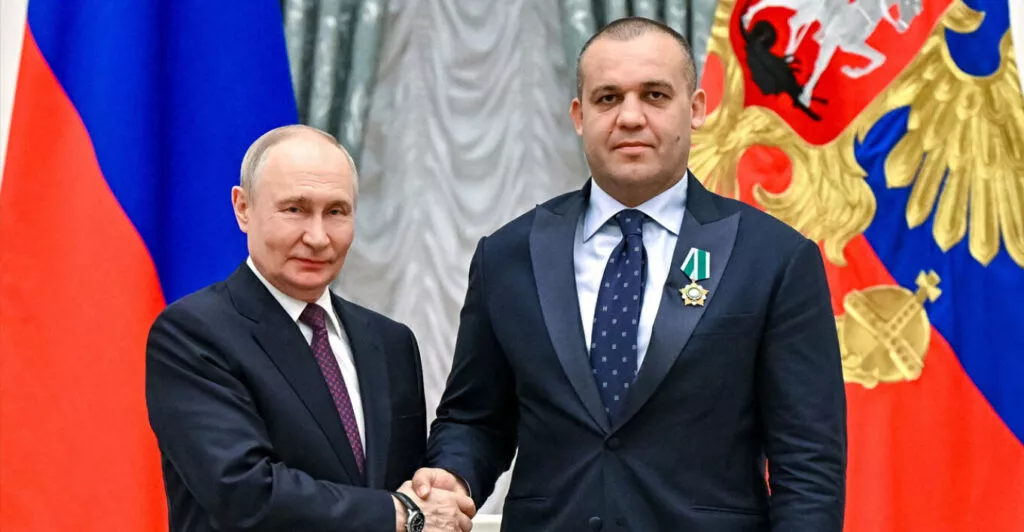
Τον Απρίλιο, ο Πούτιν απένειμε στον Κρεμλέφ το Παράσημο της Φιλίας, ενώ λίγες ημέρες πριν από τον γάμο του Τραμπ Τζούνιορ, ο Κρεμλέφ συνόδευσε τον Ρώσο πρόεδρο σε επίσκεψη στην Κίνα, επιμένοντας πάντως ότι δεν βρισκόταν εκεί με επίσημη ιδιότητα.

Τα οφέλη για την οικογένειά του

Όπως συμβαίνει συχνά με τις οικογένειες ισχυρών και εύπορων πατριαρχών, και οι συγγενείς του Κρεμλέφ φαίνεται ότι επωφελήθηκαν από την άνοδό του. Το 2024, η ρωσική Novaya Gazeta ανέφερε ότι είχε παραχωρήσει στην τότε 21χρονη σύζυγό του, Αναστάσια Λεστσίνσκαγια, ένα κουρείο και ένα καφέ στο Σερπούχοφ, καθώς και πολυτελή αυτοκίνητα. Μάλιστα, αψηφώντας πλήρως τους νόμους, οι Porsche, Lamborghini και Aston Martin που φέρεται να της ανήκαν έχουν, σύμφωνα με δημοσιεύματα, συγκεντρώσει περίπου 50 κλήσεις από την τροχαία της περιφέρειας της Μόσχας.

Η Λεστσίνσκαγια ήταν γνωστή δημιουργός στο TikTok και το ένα από τα δύο μέλη του διδύμου «twinsrussian».

Ωστόσο, η δίδυμη αδελφή της είναι εκείνη που έχει προσελκύσει ακόμη μεγαλύτερο ενδιαφέρον. Η Εκατερίνα Λεστσίνσκαγια διευθύνει τη φιλοπουτινική οργάνωση Healthy Fatherland, ένα αθλητικό και πατριωτικό κίνημα στο οποίο το Κίεβο έχει επιβάλει κυρώσεις για τον φερόμενο ρόλο του στην απαγωγή, την απέλαση και την αναγκαστική μεταφορά παιδιών από την Ουκρανία. Η ίδια έχει επίσης συναντηθεί επανειλημμένα με τον Ρώσο πρόεδρο.

Και φαίνεται πως αυτή ακριβώς η σύνδεση του Τζούνιορ με τον Κρεμλέφ ήταν που ώθησε τη Μελάνια Τραμπ – η οποία έχει μεσολαβήσει σε συμφωνίες με Ρώσους αξιωματούχους για την επιστροφή Ουκρανών παιδιών – να πάρει αποστάσεις από τον γάμο του θετού γιου της, με εκπρόσωπό της να δηλώνει: «Η κυρία Τραμπ δεν έχει και δεν είχε ποτέ καμία σχέση με τον κ. Κρεμλέφ».

Ασαφής ο τρόπος σύνδεσης του Τραμπ Τζούνιορ με τον Κρεμλέφ
Ο Τραμπ Τζούνιορ, όμως, έχει. Το πώς ακριβώς ο γιος του Αμερικανού προέδρου μπήκε στον κύκλο του Κρεμλέφ παραμένει ασαφές. Εκπρόσωπος του γιου του Αμερικανού προέδρου δήλωσε ότι οι δύο άνδρες, αμφότεροι λάτρεις του κυνηγιού, γνωρίστηκαν μέσω κοινού φίλου και «δέθηκαν χάρη στην αγάπη τους για την πυγμαχία και τις δραστηριότητες στη φύση».

Επιπλέον, ο Τραμπ Τζούνιορ είχε επαφή με την πυγμαχία από μικρή ηλικία, λόγω της δραστηριότητας του πατέρα του ως διοργανωτή αγώνων. Στα δέκα του χρόνια είχε παρακολουθήσει από κοντά τον Μάικ Τάισον να διαλύει τον Μάικλ Σπινκς μέσα σε μόλις 91 δευτερόλεπτα στο Trump Plaza Hotel του Ατλάντικ Σίτι.

Ο κοινός φίλος μέσω του οποίου γνωρίστηκαν δεν έχει κατονομαστεί, ωστόσο αμφότεροι διατηρούν στενές σχέσεις με έναν Τούρκο επιχειρηματία, τον Κάαν Καρακάγια. Ο Καρακάγια φέρεται, μάίστα, να ήταν παρών σε ένα αμφιλεγόμενο κυνηγετικό ταξίδι στη Μογγολία το 2019, κατά το οποίο ο Τραμπ Τζούνιορ πυροβόλησε και σκότωσε ένα απειλούμενο πρόβατο.

Τον Σεπτέμβριο του περασμένου έτους, σε εκδήλωση της IBA στην Κωνσταντινούπολη, στην οποία παρευρέθηκε και ο Μάνι Πακιάο, παγκόσμιος πρωταθλητής σε οκτώ διαφορετικές κατηγορίες βάρους, ο Κρεμλέφ ανακοίνωσε τον διορισμό του Καρακάγια ως εκπροσώπου της οργάνωσης στην Τουρκία.

«Ο Κάαν υπήρξε μια γέφυρα ανάμεσα σε διαφορετικούς κόσμους, ένας φίλος που φέρνει τους ανθρώπους κοντά», είχε δηλώσει ο Κρεμλέφ.

«Ηγέτης και φίλος»

Ο Τραμπ Τζούνιορ παρευρέθηκε στην ίδια εκδήλωση της IBA και κάθισε δίπλα στον Κρεμλέφ πάνω στη σκηνή. Οι δύο άνδρες φαίνεται ότι διατηρούσαν ήδη τότε φιλική σχέση, παρά τα περιορισμένα αγγλικά του Ρώσου, ενώ ο Κρεμλέφ, σε μια ιδιαίτερα θερμή αναφορά, δήλωσε ότι ήταν «υπερήφανος που βρίσκεται εδώ με τον φίλο μου» και υποσχέθηκε ότι εκείνος και ο Τραμπ Τζούνιορ θα «προστατεύσουν τη διαφάνεια στην πυγμαχία και θα ανοίξουν τον δρόμο για την επόμενη γενιά».

Από την πλευρά του, ο Τραμπ Τζούνιορ επαίνεσε τον 43χρονο για το γεγονός ότι «επανέφερε την καθαρότητα της πυγμαχίας» και «αποκατέστησε την πραγματική δικαιοσύνη» στο άθλημα – μια αναφορά, όπως φαίνεται, στην πολιτική της IBA να μην επιτρέπει σε βιολογικούς άνδρες να αγωνίζονται στη γυναικεία πυγμαχία. «Είμαι υπερήφανος που αποκαλώ τον Ούμαρ όχι μόνο ηγέτη αλλά και φίλο», είχε δηλώσει, σύμφωνα με δελτίο Τύπου της IBA που είχε τον χαρακτηριστικό τίτλο: «Ούμαρ Κρεμλέφ και Ντόναλντ Τραμπ Τζούνιορ ενώνουν τις δυνάμεις τους».

Η θέση του για την πυγμάχο Ιμάν Κελίφ

Η IBA βρέθηκε ακόμη περισσότερο στο επίκεντρο της διεθνούς προσοχής κατά τη διάρκεια των Ολυμπιακών Αγώνων του Παρισιού το 2024, γεγονός που δημιούργησε μια ευκαιρία την οποία ο Κρεμλέφ μπορούσε να αξιοποιήσει.

Στους Αγώνες, η ΔΟΕ χρησιμοποίησε δική της μονάδα πυγμαχίας για τη διοργάνωση του τουρνουά, καθώς η IBA είχε ήδη αποβληθεί. Η διοργάνωση, ωστόσο, βρέθηκε στο επίκεντρο έντονης αντιπαράθεσης όταν επετράπη στην Αλγερινή πυγμάχος Ιμάν Κελίφ να αγωνιστεί στην κατηγορία των 66 κιλών γυναικών, μολονότι είχε αποκλειστεί από το Παγκόσμιο Πρωτάθλημα της προηγούμενης χρονιάς επειδή δεν είχε περάσει εξετάσεις επαλήθευσης φύλου.

Κι ενώ η IBA του Κρεμλέφ είχε αποκλείσει την Κελίφ από τις διοργανώσεις της, η ΔΟΕ της επέτρεψε να αγωνιστεί στους Ολυμπιακούς Αγώνες με βάση το γεγονός ότι στο διαβατήριό της αναγράφεται ως γυναίκα. Ακολούθησε διεθνής αντιπαράθεση, με την Κελίφ να κερδίζει ομόφωνα όλους τους αγώνες της και να κατακτά τελικά το χρυσό μετάλλιο.

«Είναι ξεκάθαρα καθορισμένο: ο γυναικείος αθλητισμός είναι για γυναίκες, ο ανδρικός αθλητισμός για άνδρες. Ο γυναικείος αθλητισμός είναι για γυναίκες», είχε δηλώσει ο Κρεμλέφ στο TalkSPORT, μεταφέροντας, μάλιστα, το μήνυμα αυτό στο υψηλότερο δυνατό επίπεδο, στέλνοντας ανοιχτή επιστολή 1.100 λέξεων στον Ντόναλντ Τραμπ, ο οποίος είχε πρόσφατα υπογράψει εκτελεστικό διάταγμα που απαγόρευε στις τρανς γυναίκες να αγωνίζονται στις γυναικείες κατηγορίες αθλημάτων.

Στην επιστολή, ο Κρεμλέφ έγραφε: «Είναι ζωτικής σημασίας όλοι οι αθλητές να αγωνίζονται επί ίσοις όροις και η θέση σας στο ζήτημα αποτελεί σημαντικό βήμα προς την επίτευξη αυτού του στόχου», ενώ επιτέθηκε και στη ΔΟΕ, λέγοντας: «Η Διεθνής Ολυμπιακή Επιτροπή και η σημερινή ηγεσία της έχουν, δυστυχώς, οδηγήσει το Ολυμπιακό Κίνημα σε παρακμή με τις κοντόφθαλμες ενέργειές τους και την κακή διοίκηση».

Ο Κρεμλέφ έριξε επίσης στον Αμερικανό πρόεδρο άλλο ένα «τυράκι». «Το τελευταίο Παγκόσμιο Πρωτάθλημα Πυγμαχίας της IBA στις Ηνωμένες Πολιτείες πραγματοποιήθηκε το 2007 στο Σικάγο. Ενδιαφερόμαστε πολύ να επαναφέρουμε τη διοργάνωση στη χώρα σας και είμαστε περισσότερο από έτοιμοι να συνεργαστούμε προς αυτή την κατεύθυνση» έγραψε, ενώ έκλεισε την επιστολή του παραλλάσσοντας δύο από τις αγαπημένες φράσεις του Τραμπ: «Σας ευχαριστώ για την προσοχή σας σε αυτά τα σημαντικά ζητήματα. Προσβλέπουμε με μεγάλη αισιοδοξία στην πιθανότητα να συνεργαστούμε για να κάνουμε ξανά σπουδαίο το Ολυμπιακό Κίνημα, να προωθήσουμε το άθλημα της πυγμαχίας και να υπερασπιστούμε τα δικαιώματα των αθλητών σε ολόκληρο τον κόσμο».

Η αντιπαράθεση με τους Σαουδάραβες

Το 2025, η IBA ανέβασε ακόμη περισσότερο στροφές. Σύμφωνα με πληροφορίες της Telegraph, στην Κωνσταντινούπολη η ομάδα του Κρεμλέφ προσέφερε στον γνωστό Βρετανό πυγμάχο Τάισον Φιούρι αμοιβή 50 εκατ. λιρών προκειμένου να αγωνιστεί σε μία από τις διοργανώσεις της IBA. Ο Φιούρι, ωστόσο, επέλεξε να υπογράψει συμφωνία τριών αγώνων με τον Τούρκι Αλ-Σέιχ, αξιωματούχο της κυβέρνησης της Σαουδικής Αραβίας.

Ο Κρεμλέφ αποτελεί, ουσιαστικά, τον ισχυρότερο promoter του αθλήματος στην Ανατολική Ευρώπη, αποτελώντας άμεση πρόκληση για την επιρροή του Αλ-Σέιχ και των Σαουδαράβων στην πυγμαχία και για τον έλεγχό τους σε ορισμένους από τους σημαντικότερους αγώνες του αθλήματος.

Άνθρωποι από τον χώρο της πυγμαχίας περιγράφουν τον Κρεμλέφ ως «μια χαρισματική προσωπικότητα που εμφανίζεται σε εκδηλώσεις και διοργανώσεις περιστοιχισμένος από μια πολυάριθμη ομάδα συνεργατών, σχεδόν σαν αρχηγός κράτους». Οι ομιλίες του είναι συχνά φορτισμένες συναισθηματικά και δυναμικές, με επαναλαμβανόμενες αναφορές στον τρόπο με τον οποίο η πυγμαχία μπορεί να αλλάξει τις ζωές των νέων ανθρώπων.

«Συχνά δεν έχει ιδιαίτερη έκφραση στο πρόσωπό του, κι όμως αποπνέει μια ευγένεια και μια ταπεινότητα», δήλωσε άνθρωπος του χώρου.

Το περασμένο καλοκαίρι, η IBA λάνσαρε και δικό της πρωτάθλημα πυγμαχίας χωρίς γάντια. Οι πρώτοι αγώνες πραγματοποιήθηκαν στη Μόσχα, όμως ήταν το ντεμπούτο στις ΗΠΑ, στο Μαϊάμι, το φετινό καλοκαίρι που τράβηξε την προσοχή.

Συμπαρουσιαστής της εκδήλωσης ήταν ο Άντριου Τέιτ, ο Βρετανός πρώην kickboxer και αυτοαποκαλούμενος μισογύνης, ο οποίος δεν ανέβηκε ποτέ στη σκηνή, καθώς συνελήφθη έξω από τον χώρο της διοργάνωσης. Ο Τέιτ και ο αδελφός του, Τρίσταν, βρίσκονται αντιμέτωποι με έκδοση στη Βρετανία, όπου αντιμετωπίζουν συνολικά 59 κατηγορίες, μεταξύ των οποίων βιασμό, αδικήματα που συνδέονται με εμπορία ανθρώπων για σεξουαλική εκμετάλλευση και άσεμνες εικόνες παιδιού. Και οι δύο αρνούνται οποιαδήποτε παρανομία.

Γλυκάθηκε με το Παγκόσμιο Κύπελλο και το UFC Freedom στον Λευκό Οίκο

Ωστόσο, δύο άλλες διοργανώσεις του καλοκαιριού φαίνεται ότι ενέπνευσαν περισσότερο τον Κρεμλέφ: το Παγκόσμιο Κύπελλο της FIFA υπό τον Τζάνι Ινφαντίνο και το UFC Freedom 250 του Ντέινα Γουάιτ, που φιλοξενήθηκε σε κήπο του Λευκού Οίκου.

«Ο Κρεμλέφ είδε πώς ο Ντέινα και ο Ινφαντίνο κατάφεραν να πάρουν αυτό που ήθελαν», δήλωσε παράγοντας του αθλητισμού. «Θέλει κι αυτός ένα κομμάτι από αυτή την πίτα».

«Και το να έχεις πρόσβαση στον Ντον Τζούνιορ είναι μια καλή αρχή», πρόσθεσε η ίδια πηγή.

Μάλλον πέρασε τα όρια και το «πληρώνει»

Στην προσπάθειά του, όμως, να αποκτήσει κυρίαρχη θέση στον παγκόσμιο αθλητισμό, ο Κρεμλέφ ίσως να πέρασε τα όρια. Η Ομοσπονδπια της οποίας ηγείται, απέχει πολύ από το να ανακτήσει τον έλεγχο της ολυμπιακής πυγμαχίας, καθώς τι χάσμα με τη ΔΟΕ δεν γεφυρώνεται, και η ζημιά που προκάλεσε το «εξαιρετικά γενναιόδωρο γαμήλιο δώρο» του – όπως το χαρακτήρισαν ο κύριος και η κυρία Τραμπ Τζούνιορ – φαίνεται ότι βαρύνει κυρίως τον ίδιο.

Παρότι στο νησί στις Μπαχάμες βρίσκονταν μόλις περίπου 50 άνθρωποι, ο Κρεμλέφ είχε φτάσει συνοδευόμενος από μεγάλη ομάδα Ρώσων, οι οποίοι απομονώνονταν από τους υπόλοιπους και μιλούσαν μεταξύ τους, σύμφωνα με το ProPublica. Η παρουσία και η συμπεριφορά τους είχε προκαλέσει, μάλιστα, απορίες στους άλλους καλεσμένους.

Και ύστερα τραβήχτηκε μια ομαδική φωτογραφία, όπου το ξυρισμένο κεφάλι του Κρεμλέφ διακρίνεται μισοκρυμμένο στο πίσω μέρος, ενώ στο κέντρο βρίσκονται η Ιβάνκα Τραμπ, ο Τζάρεντ Κούσνερ, η Τίφανι Τραμπ και άλλοι.

«Τι σκεφτόταν;» σχολίασε στην Telegraph πρόσωπο από κύκλους Ρώσων ολιγαρχών. «Είναι ένας μπράβος που κατάφερε να βρεθεί στη σωστή πλευρά του προέδρου και ενθουσιάστηκε υπερβολικά».

Πρώτα ήταν η Μελάνια Τραμπ που πήρε αποστάσεις. Στη συνέχεια, εκπρόσωπος του Έρικ Τραμπ, αδελφού του Ντόναλντ Τραμπ Τζούνιορ, δήλωσε για τον Κρεμλέφ: «Ο Έρικ δεν έχει απολύτως καμία ιδέα ποιος είναι αυτός ο άνθρωπος και δεν έχει ακούσει ποτέ το όνομά του». Και μετά ήρθε το τελειωτικό χτύπημα από τον ίδιο τον Ντόναλντ Τραμπ: «Δεν έχω ιδέα ποιος είναι ο Ούμαρ. Δεν τον έχω ξανακούσει ποτέ».

protothema.gr
Συνέχεια ανάγνωσης

ΡΟΗ ΕΙΔΗΣΕΩΝ

GEOPOLITICO3 ώρες πριν

Συμπτώματα Παρακμής…

Η Τουρκία διεκδικεί ξανά πρόσβαση στη δυτική αμυντική αγορά, ενώ η Ελλάδα καλείται να μετατρέψει τους εξοπλισμούς και τις συμμαχίες...
Αναλύσεις4 ώρες πριν

Επιπτώσεις συνεχών παρατάσεων επαναφοράς ελέγχου εσωτερικών συνόρων στη λειτουργία του Σένγκεν

Οι διαδοχικές παρατάσεις των γερμανικών συνοριακών ελέγχων δοκιμάζουν στην πράξη την ελεύθερη κυκλοφορία στον χώρο Σένγκεν. Με το Βερολίνο να...
GEOPOLITICO8 ώρες πριν

Παρουσίαση του βιβλίου «Στέλιος Καζαντζίδης: Δεν με σβήνει κανένας» στη Βέροια την Παρασκευή 9 Οκτωβρίου

Η παρουσίαση θα πραγματοποιηθεί στην Αντωνιάδειο Στέγη Γραμμάτων και Τεχνών, στη Σκηνή «Οδυσσέας Γωνιάδης», με ελεύθερη είσοδο για το κοινό.
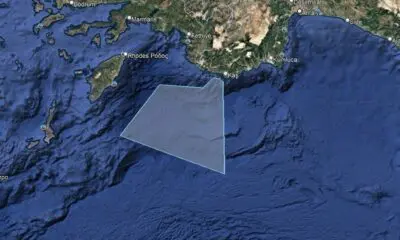
GEOPOLITICO9 ώρες πριν

Ελληνική NAVTEX για αεροναυτική άσκηση στη θάλασσα του Καστελλόριζου

Αεροναυτική άσκηση χωρίς πυρά, νοτιοανατολικά της Ρόδου και στις θαλάσσιες προσβάσεις του συμπλέγματος του Καστελλόριζου
Πολιτική10 ώρες πριν

Η αναφορά του Γεραπετρίτη στην Κύπρο μπροστά στον Ρούμπιο! “Αναγκαία η λύση επανένωσης”

Ο κ. Γεραπετρίτης υπογράμμισε ιδιαίτερα τη σημασία της Κύπρου για την περιφερειακή ασφάλεια, τονίζοντας την ανάγκη επανένωσης της νήσου με...

Δημοφιλή