Γενικά θέματα
Julian Assange: The Rolling Stone Interview
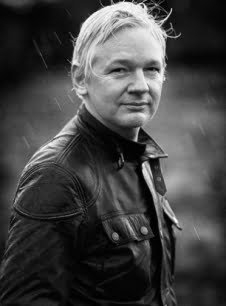

Under house arrest in England, the WikiLeaks founder opens up about his battle with the ‘Times,’ his stint in solitary and the future of journalism
by: Michael Hastings
It’s a few days before Christmas, and Julian Assange has just finished moving to a new hide-out deep in the English countryside. The two-bedroom house, on loan from a WikiLeaks supporter, is comfortable enough, with a big stone fireplace and a porch out back, but it’s not as grand as the country estate where he spent the past 363 days under house arrest, waiting for a British court to decide whether he will be extradited to Sweden to face allegations that he sexually molested two women he was briefly involved with in August 2010.
Assange sits on a tattered couch, wearing a wool sweater, dark pants and an electronic manacle around his right ankle, visible only when he crosses his legs. At 40, the WikiLeaks founder comes across more like an embattled rebel commander than a hacker or journalist. He’s become better at handling the media – more willing to answer questions than he used to be, less likely to storm off during interviews – but the protracted legal battle has left him isolated, broke and vulnerable. Assange recently spoke to someone he calls a Western “intelligence source,” and he asked the official about his fate. Will he ever be a free man again, allowed to return to his native Australia, to come and go as he pleases? “He told me I was fucked,” Assange says.
“Are you fucked?” I ask.
Assange pauses and looks out the window. The house is surrounded by rolling fields and quiet woods, but they offer him little in the way of escape. The British Supreme Court will hear his extradition appeal on February 1st – but even if he wins, he will likely still remain a wanted man. Interpol has issued a so-called “red notice” for his arrest on behalf of Swedish authorities for questioning in “connection with a number of sexual offenses” – Qaddafi, accused of war crimes, earned only an “orange notice” – and the U.S. government has branded him a “high-tech terrorist,” unleashing a massive and unprecedented investigation designed to depict Assange’s journalism as a form of international espionage. Ever since November 2010, when WikiLeaks embarrassed and infuriated the world’s governments with the release of what became known as Cablegate, some 250,000 classified diplomatic cables from more than 150 countries, the group’s supporters have found themselves detained at airports, subpoenaed to testify before a grand jury, and ordered to turn over their Twitter accounts and e-mails to authorities.
Assange was always deeply engaged with the world – and always getting into trouble. Born in a small town in Queensland, he spent much of his youth traveling around Australia with his mother and stepfather, who ran a theater company. As a teenager, he discovered computers – his first was a Commodore 64 – and became one of the world’s foremost hackers, going by the name Mendax, Latin for “nobly untruthful.” After breaking into systems at NASA and the Pentagon when he was 16, he was busted on 25 counts of hacking, which prodded him to go straight. But as he traveled the world, working as a tech consultant through much of the 1990s, he continued putting his computer skills to use ensuring freedom of information – a necessary condition, he believes, for democratic self-rule.
“From the glory days of American radicalism, which was the American Revolution, I think that Madison’s view on government is still unequaled,” he tells me during the three days I spend with him as he settles into his new location in England. “That people determined to be in a democracy, to be their own governments, must have the power that knowledge will bring – because knowledge will always rule ignorance. You can either be informed and your own rulers, or you can be ignorant and have someone else, who is not ignorant, rule over you. The question is, where has the United States betrayed Madison and Jefferson, betrayed these basic values on how you keep a democracy? I think that the U.S. military-industrial complex and the majority of politicians in Congress have betrayed those values.”
In 2006, Assange founded WikiLeaks, a group of hackers and activists that has been dubbed the first “stateless news organization.” The goal, from the start, was to operate beyond the reach of the law, get their hands on vital documents being censored by governments and corporations, and make them available to the public. After a series of initial successes – publishing leaks about Iceland, Kenya and even a Pentagon document warning of WikiLeaks – Assange rocked the U.S. military in April 2010 with the release of “Collateral Murder,” a video that revealed an American helicopter in Iraq opening fire on unarmed civilians, killing two journalists and several others. He quickly followed up with the release of hundreds of thousands of classified files related to the wars in Iraq and Afghanistan, creating an international firestorm. But soon after he began releasing the diplomatic cables, which were widely credited with helping to spark the Arab Spring, he was detained and imprisoned after spending a week with two female supporters in Stockholm, entangling him in a yearlong legal battle to win his own freedom.
Assange agreed to a lengthy interview at his new home, on the condition that the location be kept secret, along with the identities of the core WikiLeaks staffers who have stuck by him since he ran into trouble in Sweden. Though he continues to run the group from captivity, working on what he calls a new set of scoops concerning the private-surveillance industry, the media furor over his personal life has turned him into a pariah among many former supporters, making it difficult for WikiLeaks to raise money. He’s been called a rapist, an enemy combatant, and an agent of both Mossad and the CIA. His two most prominent collaborators – The New York Times and The Guardian – have repeatedly tarred him as a sexual deviant with bad personal hygiene, while continuing to happily sell books and movie rights about his exploits. His own personality has also proved divisive: He’s charming, brilliant and uncompromising, but he has inspired intense hatred among former colleagues, who portray him as a megalomaniac whose ego has undermined the cause.
When I arrive for my last day with Assange, I’m 45 minutes early. Most of his staff have gone home for the holidays, and he’s alone in the house with only his personal assistant to keep him company. Assange is huddled over a laptop in the dining room he has turned into his office, monitoring what has become his sole focus over the past few days: the trial of Bradley Manning, the 24-year-old Army private alleged to have provided the diplomatic cables to WikiLeaks. Assange has two lawyers representing him in the Maryland courtroom, and his name has been mentioned virtually every day during the initial hearing. The government’s strategy, it has become clear, is to pressure Manning to implicate Assange in espionage – to present his work at WikiLeaks as the act of a spy, not a journalist.
When Assange comes into the living room and sits on the couch, a small Jack Russell terrier jumps up onto his lap and remains there for most of the next five hours. “You use two recorders,” Assange says, looking at the digital recorders I’ve put down on the small coffee table. “I usually use three.” But as soon as we start the interview, the phone rings. It’s Daniel Ellsberg, the man who leaked the Pentagon Papers, who had attended the Manning trial with Assange’s lawyers. Ellsberg is in a car driving back to Washington, D.C. “I can hear you,” Assange shouts, ducking into the dining room. “Can you hear me?”
Five minutes later he returns, energized by his talk with America’s most famous whistle-blower. “Where were we?” he says. His assistant brings in two cups of coffee, and the interview begins.
Why is WikiLeaks so focused on defending Bradley Manning?
Manning is alleged to be one of our sources, regardless of whether those allegations are true or not. He has now sat in various U.S. military prisons for the past 600 days as a result of what we published. So we feel that we owe him a duty of care. I have heard from people close to his defense that it is their view that the abuse of him was in order to get him to testify against us.
I understand that you believe the Justice Department has been attending the hearing, to see how it impacts their investigation into WikiLeaks.
There are three gray-faced men who always show up. They’re so furtive: They refuse to identify themselves, or to even make eye contact with our lawyers. They go into the classified hearings when everyone else is kicked out. One of them, we have discovered, is a prosecutor for the Department of Justice on the WikiLeaks investigation. I believe they are there to make sure that the government, in presenting its case against Manning, did not reveal information that was critical to its investigation into us.
In diplomatic cables, the investigation into WikiLeaks by the U.S. government has been called “unprecedented both in its scale and nature.” How much do you know about it? Since last September, a secret grand jury was empaneled in Alexandria, Virginia. There is no defense counsel. There are four prosecutors, according to witnesses who have been forced to testify before the grand jury. The jury itself is taken from the local area, and Alexandria has the highest density of government and military contractors anywhere in the United States. It is a place where the U.S. government chooses to conduct all national-security grand juries and trials because of that makeup of the jury pool.
The investigation has involved most of the U.S. intelligence apparatus, the FBI, the State Department, the United States Army. It has subpoenaed the records of most of my U.S. friends or acquaintances. Under what are called Patriot Act production orders, the government has also asked for their Twitter records, Google accounts and individual ISPs. The laws which they’re working toward an indictment on are the Espionage Act of 1917 and the Computer Fraud and Abuse Act of 1986.
And they’re going after Manning, who is facing a life sentence, to get him to say that you’re a spy?
To be another chess piece on the board in the attack on us. The U.S. government is trying to redefine what have been long-accepted journalistic methods. If the Pentagon is to have its way, it will be the end of national-security journalism in the United States.
How so?
They’re trying to interpret the Espionage Act to say that any two-way communication with a source is a collaboration with a source, and is therefore a conspiracy to commit espionage where classified information is involved. The Pentagon, in fact, issued a public demand to us that we not only destroy everything we had ever published or were ever going to publish in relation to the U.S. government, but that we also stop “soliciting” information from U.S. government employees. The Espionage Act itself does not mention solicitation, but they’re trying to create a new legal precedent that includes a journalist simply asking a source to communicate information. A few years ago, for example, the CIA destroyed its waterboarding interrogation videos. In the Manning hearing, prosecutors described how we had a most-wanted list, which included those interrogation videos if they still existed.
The WikiLeaks site had a “most-wanted” list of stories you were eager to get?
This list was not put together by us. We asked for nominations from human rights activists and journalists from around the world of the information they most wanted, and we put that on a list. The prosecution in the Manning hearing has been attempting to use that list as evidence of our solicitation of information that is likely to be classified, and therefore our complicity in espionage, if we received such information.
From a journalist’s perspective, a list like that would be the equivalent of a normal editorial meeting where you list the crown jewels of stories you’d love to get.
Exactly.
So if you’re going to jail, then Bob Woodward’s going to jail.
Individuals like Sy Hersh and Dana Priest and Bob Woodward constantly say to their sources, “Hey, what about this, have you heard anything about it? I heard that there’s been an airstrike in Afghanistan that’s killed a bunch of civilians – do you have any more details, and can you prove them with paper?” And all those would be defined as conspiracy to commit espionage under the Pentagon’s interpretation.
Given the broader implications, it’s surprising that you haven’t received much support from what you call the “Anglo-American press.” In fact, The New York Times and The Guardian, both of which collaborated with you on releasing some of the documents, have done their best to distance themselves from you.
The Times ran in the face of fire; it abandoned us once the heat started from the U.S. administration. In doing so, it also abandoned itself, and it abandoned all journalists working on national-security journalism in the United States.
What the Times was concerned about is being swept up in the government’s investigation. If Bradley Manning or another U.S. government employee had collaborated with us to provide us with classified information, and we, in turn, collaborated with the Times to provide it to the world, then the argument would run that the Times had been involved in a conspiracy with us to commit espionage. This is something that the Times was deeply concerned about. It said to us that we should never refer to the Times as a partner – that was their legal advice.
Bill Keller, the former editor of the Times, wrote a widely read and lengthy piece that attacked you personally. In it, he says four or five times that “WikiLeaks is a source, they are not a partner.”
Keller was trying to save his own skin from the espionage investigation in two ways. First, on a legal technicality, by claiming that there was no collaboration, only a passive relationship between journalist and source. And second, by distancing themselves from us by attacking me personally, using all the standard tabloid character-assassination attacks. Many journalists at the Times have approached me to say how embarrassed they were at the lowering of the tone by doing that. Keller also came out and said how pleased the White House was with them that they had not run WikiLeaks material the White House had asked them not to. It is one thing to do that, and it’s another thing to proudly proclaim it. Why did Keller feel the need to tell the world how pleased the White House was with him? For the same reason he felt the need to describe how dirty my socks were. It is not to convey the facts – rather, it is to convey a political alignment. You heard this explicitly: Keller said, “Julian Assange may or may not be a journalist, but he’s not my kind of journalist.” My immediate reaction is, “Thank God I’m not Bill Keller’s type of journalist.”
The publishing mindset at WikiLeaks, it’s fair to say, is radically different than that of the mainstream press. Where a newspaper that received 500,000 documents might release 20, you released all of them.
Cablegate is 3,000 volumes of material. It is the greatest intellectual treasure to have entered into the public record in modern times. The Times released just over 100 cables. There are over 251,000 cables in Cablegate. So our approach is quite different to that of the Times. The Times in its security arrangements was only concerned with preventing The Washington Post from finding out what it was doing. But it told the U.S. government every single cable that it wanted to publish.
And in return, the Times has basically portrayed you as a pariah, despite being responsible for getting them all this incredible material, as well as setting up an innovative organization to gather and process all the leaked data.
Absolutely no honor or gratitude. I don’t wish to make light of the difficulties the Times faces in working in the United States, but I do think it could have managed those difficulties in a more honorable way.
After the Afghan war diaries came out, the Times ran a hostile profile of Bradley Manning that psychologized him into being a sad, mad fag, and can only be described as a tabloid piece. Then, when we published the Iraq War logs, we discovered details about the deaths of more than 100,000 civilians, and details of the torture of more than 1,000 people. Every other paper ran the story. The United Nations and a number of countries investigated the allegations, and even the U.S. military’s own internal documents referred to the abuses as torture. Yet the Times refused to use the word “torture” at all. Instead, they ran a sleazy hit piece against me on the front page that was factually inaccurate. It said, for instance, that I had been charged with sexual abuse when I had not, and that 12 people had defected from our organization when we had suspended one. I don’t mind taking a hit, but it must be factually accurate. For the Times to descend into a tabloid hit piece on the front page when we had just exposed the deaths of more than 100,000 civilians was not commensurate.
“Collateral Murder” – the video you released in April 2010 showing a U.S. helicopter gunship firing on a group of Iraqi civilians, including two Reuters journalists and two children – was the first scoop that got you major media attention. You learned that The Washington Post actually had the video and had been sitting on it.
A Post reporter named David Finkel had the video. We had sources who explained that he had even shown them the video in his home. Yet he concealed it.
Finkel’s response was, “There were a lot of bad days in Iraq.”
He had been embedded with ground troops in that area for some nine months on the ground. He had clearly developed too close an affinity for the people he was embedded with and came out essentially campaigning on their behalf after the release of the video.
Were those kinds of failings by the mainstream media what inspired you to start WikiLeaks?
The things that informed me most were my experiences in fighting for freedom of the press, freedom to communicate knowledge – which, in the end, is freedom from ignorance. Secondly, my experiences in understanding how the military-intelligence complex works at a practical level. I saw that publishing all over the world was deeply constrained by self-censorship, economics and political censorship, while the military-industrial complex was growing at a tremendous rate, and the amount of information that it was collecting about all of us vastly exceeded the public imagination.
You first registered the domain name for leaks.org back in 1999, when you were working on encryption technology for dissidents and human rights workers. That was before the attacks on the World Trade Center and the Pentagon enabled the government to dramatically expand its power to keep information secret and spy on its own citizens.
Yes. On September 11th, I was on the phone with a friend, discussing encryption algorithms. Very quickly, within an hour, I saw what the counter-reaction would be, and that all the proposals that the military-industrial complex had to spy on everyone, to remove probable cause, to increase its funding, would be rushed forward again. That’s precisely what happened.
Then, two years later, the U.S. invaded Iraq.
The creation of WikiLeaks was, in part, a response to Iraq. There were a number of whistle-blowers who came out in relation to Iraq, and it was clear to me that what the world was missing in the days of Iraq propaganda was a way for inside sources who knew what was really going on to communicate that information to the public. Quite a few who did ended up in very dire circumstances, including David Kelly, the British scientist who either committed suicide or was murdered over his revelations about weapons of mass destruction. The Iraq War was the biggest issue for people of my generation in the West. It was also the clearest case, in my living memory, of media manipulation and the creation of a war through ignorance.
Before the scoops that centered on the U.S. government – the logs and cables regarding Afghanistan and Iraq – your focus was on other countries.
Initially we thought that our greatest role would be in China and some former Soviet states and in Africa. We did have early successes in Africa. I lived in Kenya in 2007, and we were able to source a document that exposed billions of dollars of corruption by the former president Daniel arap Moi and his cronies. The evidence ended up swinging the vote by 10 percent and changing the Kenyan election. But Moi’s corruption didn’t exist in Kenya alone. The money looted from Kenya was deposited into London banks, properties and businesses, into New York properties. There is no large-scale corruption in the developing world without Western corruption. That was an important lesson to me.
Another important lesson was that, very quickly, we started receiving information from what we presumed to be disaffected U.S. government employees about the actions of the U.S. military. The United States has historically been a relatively open society. But within the United States, there is a shadow state, and that is the U.S. military, which, as of September, held 4.3 million security clearances. That is equal to the population of New Zealand. That is a closed, totalitarian society that gathers and stores more information than any other society in the world.
WikiLeaks has been credited, even by its critics, with fueling the Arab Spring, and even Occupy Wall Street. Was this your plan? Did you imagine you could have this kind of impact?
We planned for most of what has occurred over the past 12 months. It is fair to say we’re unexpectedly delighted that those plans came to fruition.
In relation to the Arab Spring, the way I looked at this back in October of 2010 is that the power structures in the Middle East are interdependent, they support each other. If we could release enough information fast enough about many of these powerful individuals and organizations, their ability to support each other would be diminished. They’d have to fight their own local battles – they’d have to turn inward to deal with the domestic political fallout from the information. And therefore they would not have the resources to prop up surrounding countries.
Would you like to see those regimes fall? What’s the end result you’re looking for?
When you shake something up, you have a chance to rebuild. But we’re not interested in shaking something up just for the hell of it. I believe that if we look at what makes a civilization civilized, it is people understanding what is really going on. When Gutenberg invented the printing press, the end result was that people who knew something of what was going on could convey that information to others. And as a result of the Internet, we are now living in a time where it’s a lot easier to convey what we know about our corner of the world and share it with others.
Do you think governments should be allowed to keep some secrets?
This is a question that is much more interesting than the answer. In some cases – tracking down organized crime, say – government officials have an obligation to keep their investigations secret at the moment that they are performing them. Similarly, a doctor has an obligation to keep information about your medical records secret under most circumstances. This is a question about obligations. It is absurd to suggest that simply because a police officer may have the obligation to keep secret certain information relating to an investigation, that the entire world also must be subject to a coercive force.
When people talk about your childhood, the two main words used to describe you are “nomadic” and “hacker.” You first got into trouble when you were 17 for hacking into Pentagon networks, as well as several Australian sites. It seems in some ways that you’ve been engaged in a lifelong campaign against authority.
I haven’t had a lifelong campaign against authority. Legitimate authority is important. All human systems require authority, but authority must be granted as a result of the informed consent of the governed. Presently, the consent, if there is any, is not informed, and therefore it’s not legitimate. To communicate knowledge, we must protect people’s privacy – and so I have been, for 20 years, developing systems and policy and ideals to protect people’s rights to communicate privately without government interference, without government surveillance. The right to communicate without government surveillance is important, because surveillance is another form of censorship. When people are frightened that what they are saying may be overheard by a power that has the ability to lock people up, then they adjust what they’re saying. They start to self-censor.
Growing up in Australia, what were the experiences that made you who you are? Was it getting into trouble as a hacker?
I lived a Tom Sawyer boyhood, which I think is a good childhood. Very physically adventurous on different islands and in the Outback and tropical regions, having small gangs of other boys, riding my horse, going into bat caves, exploring drainage systems and forests, hunting tropical fish.
I suppose the distinctive moments you have growing up, other than physical moments, are moral moments, so I designed and built a complex raft once. My plan at age 12 was to spend the night on the raft on the Richmond River, which is known to have bronze whaler sharks in it. All my friends said it was a great idea. So we went to do it, but all but one of them chickened out when it actually came to spending the night in the dark on the river.
A week later, the raft was stolen, and I managed to track down the people who took it. They were boys a couple of years older. We ran a mission at night to hijack it back, cut it loose, and let it drift downstream. The raft drifted out into the middle of the river. We paced along and the river got wider and wider, and I realized I’d have to dive in to get it, there in the middle of the night, with no one else. Thoughts of bronze whaler sharks started entering my head. I instructed my body to jump, but it refused to do so under those conditions. So even I have had that moment where I was a coward, but I think the situation called for it.
Did you like high school?
I went to many schools because I was touring with my parents’ theater company. Some I did like, some I did not. I experienced a great variety of different types of people and educational systems, and it was hard to preserve some long-term childhood friendships, although I did develop some. It gave me a sense of perspective, which I think ultimately became important.
Did you go through a drug phase at university? Pot, or anything like that?
I was a bit of a stereotyped intellectual, other than being physically adventurous as a teenager. I’d do experiments on all my friends and write up the results, but I’d never take any myself.
So you never tried…
As for what happened subsequently, I think under the circumstances I’ll just be quiet about my adult private life. There is something, actually. While not being a Calvinist, if you’re striving to change the world in an important way, then it is beholden on you to, if you’re opposing the actions of companies like Philip Morris, to not actually buy their products.
Let’s talk about some of the attacks on you. Even many of those closest to you say you’re difficult to work with. Are you?
I think the question is very interesting.
Spoken like someone who’s difficult to work with.
I think your question is very interesting, and where does it come from? Well, when The Guardian broke their Cablegate contract with us, when we told The New York Times to piss off because of them sucking up to the White House, then these two groups tried to say that the reason we told them to piss off is simply a matter of my character as opposed to a fundamental institutional incompatibility. We sayThe Guardian broke its contract, the Times engaged in shoddy, tabloid journalism, fearful, uncourageous journalism, and so to defend themselves against that, they say, “Oh, no, it’s because Mr. Assange’s socks were dirty,” or, “He’s an extremely difficult person to work with.”
But some who have worked with you over the years also paint you in an unfavorable light. You wouldn’t be the only person in the media to suffer from a massive ego.
I don’t think I have a massive ego. I just am firm at saying no. No, we will not destroy everything we’ve already published. No, we will continue to publish what we have promised to publish. No, we will not stop dealing with U.S. military leaks. For some people, that comes across as a big ego, when it’s just sticking to your ideals.
There has been something of a mini boom industry attacking WikiLeaks and Julian Assange.
There are actually about 100 books so far, but a good 80 of those are opportunistic books that have absolutely no real writing – they’re just sort of collations of things. If you’re talking proper books, books someone has actually written every word from scratch, there’s over a dozen. One of the funniest is a Russian book, which accuses us of being in league to defame Putin.
One of the more interesting books is from Heather Brooke, a writer for The Guardian. She sounds almost like a scorned lover – she says she “swooned madly” when you first looked at her, then later concluded that you’re an asshole. That seems to be a recurring narrative of these stories about you.
[Long pause] I don’t think Heather Brooke is particularly interesting. The general phenomenon is interesting. Someone has an involvement to some extent in our work, which they then overstate tremendously to gain authority. They get something from the involvement – a reputation by proximity, information we’ve collected or some other item of value. Then we’re not able to continue the relationship with them at the same degree of involvement, so they feel rejected. When you become a celebrity – at various times, within the English language, I have been the most famous person being discussed in the news – people’s behavior shifts. What they lose through the lack of an ongoing relationship seems to be so incredibly valuable to them, so their desire to keep it, or their feeling of loss when they are not able to preserve the interaction, is so extreme that it drives them to do things you would not normally expect people to do. I always thought that A-level celebrities and their complaints about the difficulties of being a celebrity were rather self-indulgent.
But now, being a celebrity yourself, you feel differently?
I’ve subsequently changed my opinion. Brad Pitt doesn’t have a superpower at his back. He just has some crazed fans and paparazzi. But now, having had all three, I must say, I’m not terribly impressed with the experience.
There were stalkers at your previous location. That must have frightened you.
Yes, despite the remoteness of the location – being three hours out of London by fast train, plus another 40 minutes in a car through country roads, and then through a long private driveway into the country house. We had many people try to turn up at the front door or to ambush me at the police station. It coincided with many U.S. politicians, such as Sarah Palin and Newt Gingrich, calling for my assassination or kidnapping. Fortunately, nearly everyone who attempted to ambush me was supportive in one way or another. They were mostly women who thought they were my fiancee.
Women wanting to marry you? How many over the past year?
Hundreds.
Hundreds of women would show up?
Sometimes also men. We had one, Captain Morgan, who claimed to work for Intel, and was a sea captain. He sold his boat to turn up at the front door, saying we were the only organization on Earth worth working for. One woman from Catalonia took a black cab from London and turned up at our house on the edge of the estate with a £450 taxi bill, which she’d convinced the driver I would pay once our romantic dispute was sorted out. She and the taxi driver convinced one of the neighbors to let them stay the night – the taxi driver refused to leave until he got his money.
There have been groupies. No, I won’t call them groupies. Young women who have flown from Norway and Sweden and turned up at the front door. When I was in prison, absurdly, the only people to get any mail through in the first week were six women who wanted to give me cakes and blankets, which I rejected. But apparently there are women who try and visit any famous prisoner of a certain age, and know how to get through the system. Whereas not a single journalist from around the world was able to do so.
Have you been in any serious or significant relationships over the past year?
For security reasons, I can’t talk about my intimate private life. I want to make that clear. My children have received death threats and are in hiding. Many people I am close to in a familial way, I have to be extremely cautious about exposing.
What happened in Sweden with the two women who have accused you?
It’s before the court, so I can’t discuss the case. It is very difficult, being in the position where you can’t tell your version of events. It’s clear that the matter is absurd, and you can read all about what the prosecution says its case is on the Internet.
By calling it absurd, aren’t you implying that these women are making it up?
That’s not what I said. I’ve never criticized the women. I’m saying the allegations are absurd. People can read the allegations for themselves. They’re not correct, but even as stated, they are absurd. What the prosecution successfully managed to do is use the word “rape.” Although I’ve not been charged – and technically what they are investigating is called “minor rape,” a Swedish concept – that hasn’t stopped our opponents from constantly referring to “rape charges,” which is false. Back when we last did a survey, in February, there were a total of 33 million references on the Internet to the word “rape” in any context, from Helen of Troy to the Congo. If you search for “rape” and my name, there were just over 20 million. In other words, perceptively, two-thirds of all rapes that have ever happened anywhere in the world, ever, have something to do with me.
So why not say, “Look, I did nothing wrong, but I’m sorry if I upset these people. These are very serious things, and I’m taking it seriously, and I’ll come to Sweden and face these allegations.” People who support you wonder why you haven’t done that.
I have no faith in the Swedish justice system being just. The International Prison Chaplains Association says that Swedish prisons are the worst prisons in Europe. That covers even Romania, Estonia and so on. That’s because in 47 percent of cases, prisoners in Sweden are held incommunicado. So to the degree that my ability to act would be severely if not completely eliminated by entering into a Swedish prison, I am concerned about it. In addition, if you criticize matters, such as that Swedes have the worst prison system in all of Europe, then it would be the worse for you, because the Swedish justice system will take its revenge.
If you knew that governments were looking to find a way to pull dirty tricks on you, didn’t you feel like you were putting yourself at risk in Sweden when you were with the women? Weren’t you pushing the envelope?
It’s been falsely reported that I have said that the Swedish allegations are a result of a CIA trap. That’s false. What I have said is that the case was instantly politicized by opportunists – instantly, within hours. That day, we did receive, from an intelligence source, a list of priorities that the U.S. government had in relation to me. Those included finding out what information we had, what we were going to publish, evidence in relation to the prosecution of Bradley Manning. It also included a view that the U.S. would find the legal case against me very difficult, and that therefore I should be very cautious about extralegal means. Those extralegal means not being assassination, but rather the planting of drugs, child pornography or being otherwise embroiled in disgraceful conduct. So it was on my mind and everyone else’s mind when the allegations arose.
Do you wish you’d done anything different?
In general? Of course. Many. I can’t stand these people who say they would never do anything different. That simply means that they have not learned a single thing from their experiences.
I mean specifically, in terms of dealing with the two women.
I had never gone through a sex scandal before. There are certain ways, depending on culture, which one should handle a politicized sex scandal. I also didn’t take it very seriously to begin with. I thought that it would disappear immediately.
Why didn’t you hire a PR guy?
We tried. We hired someone in the U.K. to cope with the volume of media inquiries. He accepted at a very substantially reduced rate because we’re activists, a cause célèbre. His largest clients were Virgin and Sony. After one week, it was clear that it was either us or them. His board, according to him, insisted that we be dropped, so we were. There have been about a dozen similar instances of pressure being applied to companies who we’ve been working with. When people say, “Why didn’t Julian do this, why didn’t Julian do that, why didn’t WikiLeaks do this,” in many cases we have actually tried. It’s not so easy when you’re fighting a superpower.
What forms has the pressure taken?
My personal bank account was shut down, and some of our people have also had their personal bank accounts closed. Many people have lost their jobs – even those who were quite indirectly connected. The person who registered our Swiss domain name lost their job when Bloomberg reported their name on the record. One of the board members of the German charity that collects donations for us lost their security contract with the Swiss stock exchange. The stock exchange even put in writing that the cause was his affiliation with us. The Tor Project, which protects people around the world from being spied on or censored, lost some $600,000 to the U.S. government, as a result of one of their people, Jacob Appelbaum, having filled in for me once at a conference in New York. This type of indirect pressure has been applied to a great many people.
What happened when you were thrown in jail in England?
I had 10 days in solitary. I think everyone should have 10 days in solitary, especially politicians. I broke the back of solitary. It is a sensory-deprivation experience. So I have a lot of sympathy with Bradley Manning and other prisoners who are similarly contained.
When you heard that door shut, were you worried that it might be 10 months or 10 years? I had no idea how long it was going to be.
Was it terrifying?
No, I was rather excited and looking forward to the challenge of adapting to the new environment. I knew it would be helpful to our cause, politically, and it was. I told my lawyers, “Don’t get me out too quickly.” They disagreed.
So you saw yourself as a martyr to the cause.
There’s been an observation of how the rest of the world was choosing to make my myth, positively and negatively. That process has been fascinating, horrifying and comical all at the same time. It’s caused many laughs from the people who know me well, a subject of great mirth in the team. We’re dealing with a situation where we’re engaged in a historic endeavor that has very serious consequences for people’s lives and political systems. It’s extremely important, the consequences for everything from revolutions to individuals’ jobs, and the gravity of that task is so great that I don’t have time to consider how this celebritization affects me personally. The concern is always simply, is it helpful or harmful in being able to survive as an institution? Or will the character assassination wipe a million dollars off our budget or change political moods enough to cause us to lose a court case? Or will lionization mean that we have enough political support to survive?
How expensive has the legal battle been?
We have many legal cases. This personal case, the Swedish extradition case, I have to pay for myself. I don’t think that is right. Actually, I think the organization should pay for it.
Why?
It is unquestionable that the case has been politicized as a result of my role in the organization. However, to avoid the attack that the funding would be spent on this case, which is effectively used by our opponents to assassinate my character, it’s completely separate. Which means that I’m now completely bankrupt as a result.
Completely bankrupt?
Yeah. There have been all sorts of strange complications, such as that the previous lawyers managed to get hold of all my book advances and keep them. So I have not received a cent from any publicity that I’ve done.
There’s a rumor that you have £3.3 million in your bank account that you’re keeping.
Yeah, sure. Our opponents like to spread these rumors to deny us our donations.
So that’s not true?
It’s absolute nonsense. They spread rumors that I’m living in a mansion, they spread rumors that I’m homeless. Two years ago, fabricated documents were spread saying that I traveled first class and lived in a castle in South Africa, and I’ve never even been to South Africa. If you want to attack an organization, how do you attack it? You attack the cash flow and leadership. The character assassinations are dangerous, but taken as a whole, they’re absurdly comical. We have, on the one hand, some 700,000 references to me being an anti-Semite, and on the other hand, some 2.5 million references to me being a member of the Mossad. I’m accused of everything from being a cat torturer to being a rapist to being overly concerned about my hair to being too rich to being so poor that my socks are dirty. The only ones I have left now to look forward to are some kind of combination of bestiality and pedophilia.
From a legal standpoint, it seems that you’re in a no-win situation. If you lose your appeal on February 1st, you will be extradited to Sweden to face questioning, and the United States can ask to extradite you from there. But even if you win your appeal, there’s the possibility that the U.S. could just come in and extradite you from England.
Yeah. And the ability to resist extradition here in England is not good.
The conventional wisdom – both in Sweden and the U.S. – is that you won’t be extradited. Why are you convinced you will?
Extradition is a political matter. The extradition treaties – those from the U.K. to the U.S. and from Sweden to the U.S. – are both very dangerous for me. Every day that I remain in England, it is dangerous, and if I am in Sweden, it will be at least as dangerous as it is here, and very probably more so. The Swedish foreign minister responsible for extradition, Carl Bildt, became a U.S. Embassy informant in 1973 when he was 24 years old. He shipped his personal effects to Washington, to lead a conservative leadership program, where he met Karl Rove. They became old friends and would go to conferences together and so on.
Karl Rove? How do you know this?
Cables. Although I have not been charged with anything, there is an active allegation against me of rape and sexual molestation against Swedish women. So the political environment in Sweden to defend me against extradition to the United States is quite adverse. Some people have said, “Look, both the United Kingdom and Sweden and many countries say that there is not to be extradition for political offenses.” But the United States government is not trying to indict me for a “political” offense – it is trying to indict me for espionage, or conspiracy to commit espionage, and computer hacking. The U.S. grand jury is looking at indicting us for charges which are not, on their face, political. But of course, the reasons are political, and that is a different matter.
So you think the government is going to try to lay the groundwork by saying you’re a spy, claiming you’re putting soldiers at risk, and then nabbing you after the Swedish allegations are resolved?
These are people used to laying the political ground and laying the media ground. I imagine what they would do is say that this material we published had adversely affected the United Kingdom or adversely affected Sweden. Perhaps they could introduce or leak to the press, under the surface, false speculations that we had killed Swedish soldiers in Afghanistan, or that we had sold information to the Iranians.
What has the low point been for you in all this? Were there any mornings you woke up saying, “What have I got myself into?”
I understood that the significance of what we were doing was greater than WikiLeaks as an institution and greater than our personal lives. In November, I told our people, perhaps to their surprise, that what we were doing was more significant than the life of any one of us. To that degree, the battles that we’ve had, the severity of the battles that we’ve had, is not something I have found to be difficult to deal with. Their severity is a reflection of the quality and importance of our work. That said, the betrayals are hard to take. This confrontation that we have had with the Western national-security state – it’s not quite right to call it the U.S. national-security state, because it’s a transnational phenomenon – has brought out the best and worst in people. It has brought out opportunism, weakness, other negative qualities. It’s brought out greed and cowardice, but it has also brought out strength and loyalty in people. We have lost friends and colleagues, but we have also made very loyal friends, and we have seen the strength of old friends revealed. There’s an old military saying: It’s not the length of the war but the depth of the trench. For the past year, we have been in a very deep trench, and so the friendships have become deep.
Who has been your most critical public supporter?
John Pilger, the Australian journalist, has been the most impressive. And the other is Dan Ellsberg. It’s the amount of time I’ve spent with him, both in front of and behind the scenes. When people are working in front of the scenes, in public, it is often because it is helpful to them. One never really knows what the true allegiance is. But when someone puts it on the line both publicly and privately, that’s a sign of true character. Ron Paul did come out and make an impassioned and rational speech. It has not been the soft liberal left, the pseudo left that has defended us. In fact, they have run a mile. It has been strong activists who have a long record of fighting for what they believe in, both on the libertarian right and on the left.
What do you make of Anonymous? They’ve supported you.
We were involved with Anonymous from 2008. They were providing us with material related to our investigations into abuses by the Church of Scientology. It was a young pranksterish Internet culture, not something at all to be taken seriously. What’s wonderful about what has happened over the last few years is that through engaging with forces much larger than themselves, starting with the Church of Scientology, they have been educated about how the world actually works. Then, reading information we’ve released and also seeing the attacks on us, they’ve been further educated. Now they have become politicized, they’ve come to understand some of where the big powers are. This was a very apolitical group that had absolutely no understanding about the military-industrial complex whatsoever, and no understanding about international finance. As a result of joining our battle and trying to protect themselves, they have come to see that the threats related to Internet freedom come from the military-industrial complex, the banking system and the media. The media is the third big power group, because when you’re involved in something like this, it becomes newsworthy.
What advice do you have for journalists, based on your experience?
I have a lot of sympathy for journalists who are trying to protect their sources. It’s very hard now. Unless you’re an electronic-surveillance expert or you have frequent contact with one, you must stay off the Net and mobile phones. You really have to just use the old techniques, paper and whispering in people’s ears. Leave your mobile phones behind. Don’t turn them off, but tell your source to leave electronic devices in their offices. We are now in a situation where countries are recording billions of hours of conversations, and proudly proclaiming that you don’t have to select which telephone call you’re intercepting, because you intercept every telephone call.
So what’s the future of WikiLeaks? Is the organization going to survive?
This week, I think we’ll make it. We’ll see what happens next week.
Where do you want to end up, when all the legal battles are over?
I don’t want to end up anywhere. I want to do what I was doing before. I lived in Egypt when we had important things that needed to be done, or in Kenya or the United States or Australia or Sweden or Germany. When we have opportunities, then that’s where I am.
When do you think you’ll be able to regain that freedom to do that?
In relation to the United States, we’ll have to wait for the revolution.
Michael Hastings is a contributing editor to Rolling Stone and the author, most recently, of The Operators: The Wild and Terrifying Inside Story of America’s War in Afghanistan.
This story is from the February 2, 2012 issue of Rolling Stone.
Πηγή
var _wau = _wau || []; _wau.push([“small”, “wvg1ie6mi5ta”, “m3y”]);
(function() {var s=document.createElement(“script”); s.async=true;
s.src=”http://widgets.amung.us/small.js”;
document.getElementsByTagName(“head”)[0].appendChild(s);
})();




Γενικά θέματα
Η πετρελαϊκή «μάχη» που ενώνει Τραμπ-Πούτιν και δισεκατομμυριούχους του Κόλπου
Οι συνομιλίες της κυβέρνησης του Ντόναλντ Τραμπ με τη Ρωσία για τον τερματισμό του πολέμου στην Ουκρανία έχουν διευρυνθεί και περιλαμβάνουν πλέον μια υπό διαπραγμάτευση συμφωνία δισεκατομμυρίων δολαρίων για την εξαγορά διεθνών περιουσιακών στοιχείων της ρωσικής πετρελαϊκής εταιρείας Lukoil, σύμφωνα με δημοσίευμα των «New York Times».
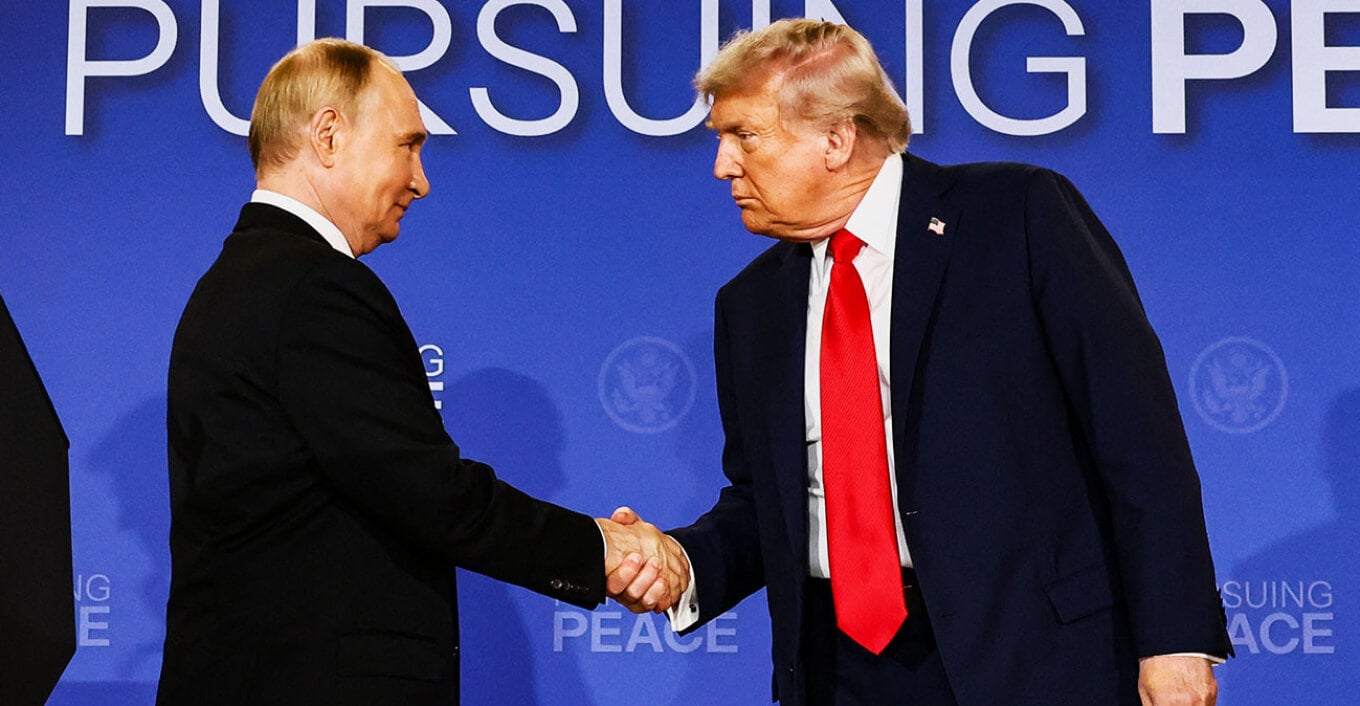
Οι συνομιλίες της κυβέρνησης του Ντόναλντ Τραμπ με τη Ρωσία για τον τερματισμό του πολέμου στην Ουκρανία έχουν διευρυνθεί και περιλαμβάνουν πλέον μια υπό διαπραγμάτευση συμφωνία δισεκατομμυρίων δολαρίων για την εξαγορά διεθνών περιουσιακών στοιχείων της ρωσικής πετρελαϊκής εταιρείας Lukoil, σύμφωνα με δημοσίευμα των «New York Times».
Η συμφωνία, η οποία δεν έχει ακόμη οριστικοποιηθεί και τελεί υπό την αίρεση της έγκρισης της αμερικανικής κυβέρνησης και του Κρεμλίνου, αφορά ένα εκτεταμένο χαρτοφυλάκιο πετρελαιοπηγών, διυλιστηρίων και πρατηρίων καυσίμων της Lukoil σε διάφορες χώρες.
Σύμφωνα με τους «New York Times», στο επίκεντρο της υπόθεσης βρίσκεται κοινοπραξία με επικεφαλής τον Αμερικανό επενδυτή Τοντ Μπόελι, στην οποία συμμετέχουν επίσης επενδυτικοί όμιλοι από τη Μέση Ανατολή. Στην προτεινόμενη συμφωνία συμμετέχει και η αμερικανική κυβέρνηση, μέσω της U.S. International Development Finance Corporation (DFC).
Στο τραπέζι των συνομιλιών Τραμπ-Πούτιν
Οι πολύμηνες διαπραγματεύσεις, σύμφωνα με οκτώ πρόσωπα με γνώση της υπόθεσης που επικαλούνται οι «New York Times», συνδέονται με την ευρύτερη προσπάθεια της κυβέρνησης Τραμπ να αποκαταστήσει οικονομικούς δεσμούς με τη Ρωσία στο πλαίσιο των συνομιλιών για τον τερματισμό του πολέμου στην Ουκρανία.
Το ζήτημα της Lukoil φέρεται να τέθηκε από τον Βλαντιμίρ Πούτιν κατά τη συνάντησή του με τους Αμερικανούς διαπραγματευτές Στιβ Γουίτκοφ και Τζάρεντ Κούσνερ στο Κρεμλίνο, στις 5 Σεπτεμβρίου. Σύμφωνα με πηγή που επικαλείται η αμερικανική εφημερίδα, ο Ρώσος πρόεδρος πρότεινε την προώθηση της συμφωνίας ως ένδειξη ότι η Ρωσία και οι Ηνωμένες Πολιτείες μπορούν να συνεργαστούν επιχειρηματικά.
Οι Αμερικανοί διαπραγματευτές φέρεται να απάντησαν ότι θα εργαστούν για την προώθηση της συμφωνίας, τόσο ως ένδειξη «καλής θέλησης» προς το Κρεμλίνο όσο και με στόχο τη μείωση των διεθνών τιμών ενέργειας.
Η ενδεχόμενη συμφωνία παρουσιάζει ιδιαίτερο οικονομικό ενδιαφέρον για τους υποψήφιους αγοραστές. Η έγκρισή της από τις Ηνωμένες Πολιτείες θα μπορούσε να οδηγήσει στην απελευθέρωση των ρωσικών περιουσιακών στοιχείων από τις αμερικανικές κυρώσεις, αυξάνοντας παράλληλα την αξία τους.
Οι διασυνδέσεις των επενδυτών
Στην κορυφή της κοινοπραξίας βρίσκεται ο Αμερικανός επενδυτής Τοντ Μπόελι, συνιδιοκτήτης των Los Angeles Dodgers και γνωστός υποστηρικτής του Τραμπ. Στο επενδυτικό σχήμα συμμετέχουν επίσης επιχειρηματικοί όμιλοι από το Κατάρ και τα Ηνωμένα Αραβικά Εμιράτα.
Οι «New York Times» επισημαίνουν ότι ορισμένοι από τους επενδυτές διατηρούν επιχειρηματικές σχέσεις με πρόσωπα που βρίσκονται κοντά στην κυβέρνηση Τραμπ.
Μεταξύ αυτών είναι οι αδελφοί Μουτάζ και Ράμεζ αλ-Χαγιάτ από το Κατάρ, οι οποίοι έχουν συνεργαστεί με τον Τζάρεντ Κούσνερ και την Ιβάνκα Τραμπ για τη χρηματοδότηση επενδυτικού σχεδίου στην Αλβανία.
Στην κοινοπραξία συμμετέχει επίσης επενδυτικό ταμείο με έδρα το Αμπού Ντάμπι, το οποίο ελέγχεται από τον σεΐχη Ταχνούν μπιν Ζαγιέντ Αλ Ναχιάν, σύμβουλο εθνικής ασφάλειας των Ηνωμένων Αραβικών Εμιράτων. Ο ίδιος συνδέεται με επενδύσεις στην World Liberty Financial, την εταιρεία κρυπτονομισμάτων της οικογένειας Τραμπ.
Παράλληλα, επενδυτικό ταμείο που συνδέεται με τον σεΐχη Ταχνούν αποτελεί σημαντικό μέτοχο της εταιρείας private equity που ίδρυσε ο Κούσνερ μετά την αποχώρησή του από τον Λευκό Οίκο.
Τα ερωτήματα για πιθανές συγκρούσεις συμφερόντων
Οι διασυνδέσεις αυτές έχουν προκαλέσει ερωτήματα σχετικά με το κατά πόσο προσωπικές επιχειρηματικές σχέσεις μπορεί να διασταυρώνονται με τη διαδικασία λήψης αποφάσεων για μια συμφωνία που συνδέεται με την αμερικανική εξωτερική πολιτική.
Οι «New York Times» αναφέρουν ότι δεν υπάρχει ένδειξη πως ο Γουίτκοφ ή ο Κούσνερ πρόκειται να αποκομίσουν προσωπικό οικονομικό όφελος από τη συμφωνία. Ωστόσο, η υπόθεση έχει εγείρει ζητήματα σχετικά με τις σχέσεις μεταξύ των εμπλεκόμενων επιχειρηματιών και προσώπων του στενού περιβάλλοντος του Τραμπ.
Η Χούι Τσεν, πρώην εισαγγελέας και σύμβουλος σε θέματα οικονομικού εγκλήματος και δεοντολογίας, χαρακτήρισε τις διασυνδέσεις «ανησυχητικές» και έθεσε το ερώτημα κατά πόσο προσωπικά συμφέροντα θα μπορούσαν να επηρεάσουν την αξιολόγηση των υποψήφιων αγοραστών.
Από την πλευρά του, εκπρόσωπος του Γουίτκοφ απέρριψε οποιοδήποτε ζήτημα σύγκρουσης συμφερόντων, υποστηρίζοντας ότι ο Αμερικανός διαπραγματευτής δεν λαμβάνει μισθό και καλύπτει ο ίδιος τα έξοδα των ταξιδιών του στο πλαίσιο της αποστολής του για λογαριασμό του Τραμπ.
Η κούρσα για τα περιουσιακά στοιχεία της Lukoil
Η Lukoil είχε θέσει προς πώληση τα διεθνή περιουσιακά της στοιχεία μετά την επιβολή αμερικανικών κυρώσεων. Αρκετοί υποψήφιοι αγοραστές είχαν εκδηλώσει ενδιαφέρον, μεταξύ των οποίων και μεγάλοι αμερικανικοί ενεργειακοί όμιλοι.
Τον Ιανουάριο, η επενδυτική εταιρεία Carlyle είχε καταλήξει σε προκαταρκτική συμφωνία για την εξαγορά σημαντικού μέρους του διεθνούς χαρτοφυλακίου της Lukoil. Η συμφωνία, ωστόσο, δεν ολοκληρώθηκε, καθώς απαιτούσε την έγκριση της αμερικανικής κυβέρνησης.
Στη συνέχεια, ο όμιλος υπό τον Μπόελι εμφανίστηκε ως ένας από τους βασικούς διεκδικητές των περιουσιακών στοιχείων.
Η αξία των διεθνών περιουσιακών στοιχείων της Lukoil είχε υπολογιστεί από την ίδια την εταιρεία σε περίπου 20 δισ. δολάρια στις αρχές του έτους. Ωστόσο, οι οικονομικοί όροι της υπό διαπραγμάτευση συμφωνίας δεν έχουν γίνει γνωστοί.
Ο ρόλος της αμερικανικής κυβέρνησης
Η αμερικανική κυβέρνηση συμμετέχει στην προτεινόμενη συμφωνία μέσω της U.S. International Development Finance Corporation, η οποία επενδύει και παρέχει χρηματοδότηση για έργα στο εξωτερικό.
Αμερικανός αξιωματούχος δήλωσε ότι μια ενδεχόμενη συμφωνία για τη Lukoil θα μπορούσε να ενισχύσει την οικονομική ασφάλεια των ΗΠΑ, να εξυπηρετήσει στόχους της αμερικανικής εξωτερικής πολιτικής και να συμβάλει στη μείωση του ενεργειακού κόστους για τους Αμερικανούς.
Η συμφωνία, ωστόσο, χρειάζεται την έγκριση του αμερικανικού υπουργείου Οικονομικών, το οποίο είναι αρμόδιο για την εφαρμογή των κυρώσεων κατά της Ρωσίας.
Η ενεργειακή διάσταση
Στο υπό διαπραγμάτευση χαρτοφυλάκιο περιλαμβάνονται διυλιστήρια της Lukoil στην Ολλανδία, τη Βουλγαρία και τη Ρουμανία, καθώς και άλλες ενεργειακές υποδομές και πρατήρια καυσίμων σε διάφορες χώρες.
Η ενεργειακή διάσταση αποκτά ιδιαίτερη σημασία καθώς η κυβέρνηση Τραμπ έχει επανειλημμένα υποστηρίξει ότι η αποκατάσταση οικονομικών σχέσεων με τη Ρωσία θα μπορούσε να λειτουργήσει ως κίνητρο για τη Μόσχα ώστε να προχωρήσει σε συμβιβασμούς για τον τερματισμό του πολέμου στην Ουκρανία.
Ο Ρώσος οικονομικός απεσταλμένος Κίριλ Ντμίτριεφ έχει επίσης εμπλακεί στη διαδικασία, ενώ, σύμφωνα με τους «New York Times», έχει δηλώσει ότι ο διάλογος ΗΠΑ-Ρωσίας συνεχίζεται σε πολλούς τομείς, μεταξύ των οποίων και η ενέργεια.
Η συμφωνία για τη Lukoil παραμένει, πάντως, ανοικτή και δεν έχει οριστικοποιηθεί. Η τελική απόφαση θα εξαρτηθεί από τις απαιτούμενες εγκρίσεις των αμερικανικών αρχών και της ρωσικής πλευράς.
skpress.gr
Γενικά θέματα
Πώς μια «Ελληνίδα» έγινε το «θεμέλιο» της Εθνικής Πινακοθήκης της Ουγγαρίας
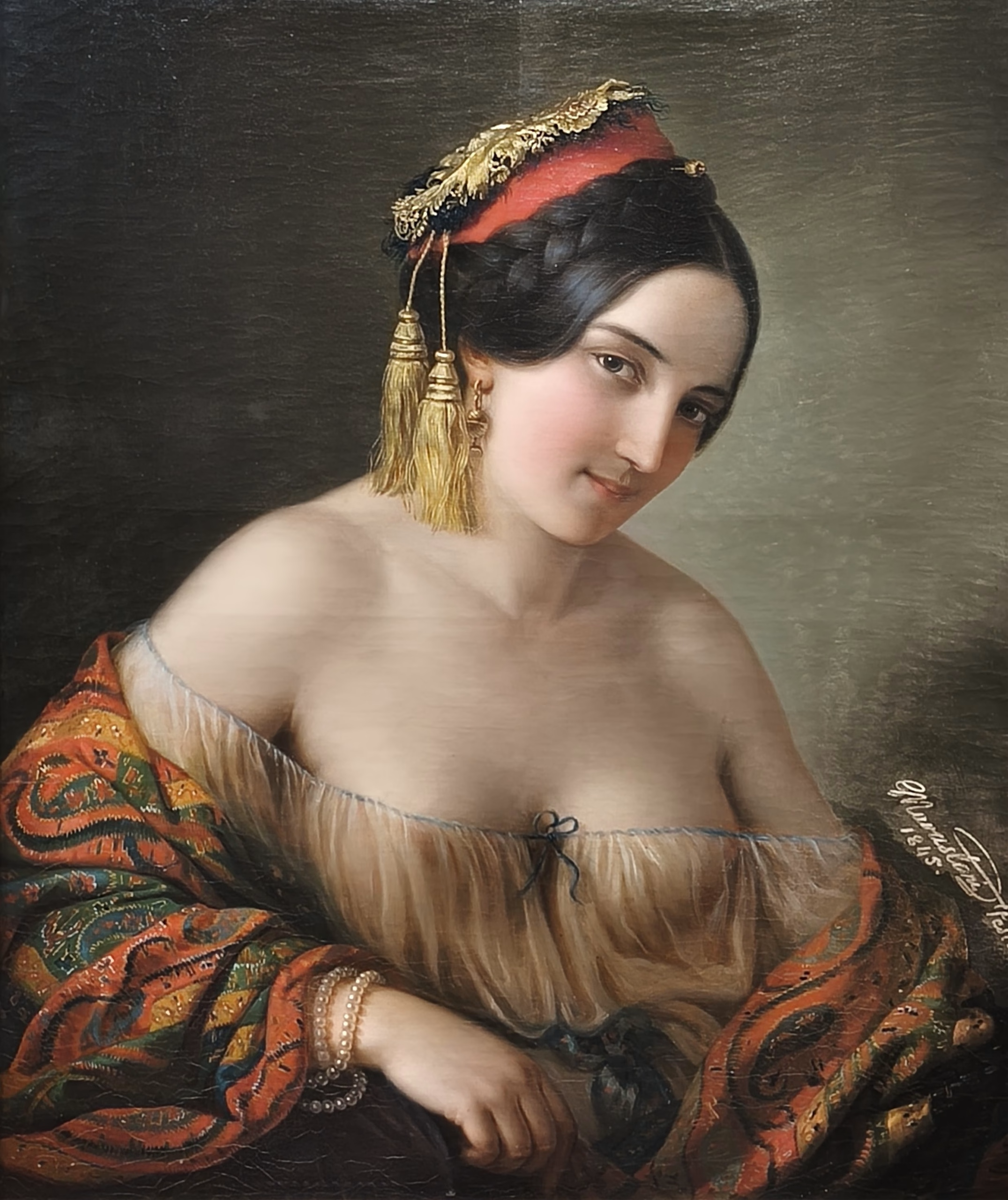
Στον πρώτο όροφο της Πινακοθήκης συναντήσαμε την «Ελληνίδα». Πρόκειται για ένα έργο του Jakob Marastoni (1804-1860), ενός ζωγράφου ιταλικής καταγωγής που εγκαταστάθηκε και εργάστηκε στην Πέστη και έγινε μία από τις σημαντικότερες μορφές στην ιστορία της ουγγρικής τέχνης.
Πριν λίγο καιρό επισκεφθήκαμε την Εθνική Πινακοθήκη της Ουγγαρίας στη Βουδαπέστη, ένα από τα πλέον σημαντικά μουσεία της χώρας, στο οποίο παρουσιάζεται με μοναδικό τρόπο η εξέλιξη της ουγγρικής εικαστικής τέχνης από τον 11ο αιώνα μέχρι σήμερα. Βρίσκεται στο Βασιλικό Ανάκτορο του Κάστρου της Βούδας και ιδρύθηκε το 1957 με βάση κυρίως τις ουγγρικές συλλογές του Μουσείου Καλών Τεχνών. Η συλλογή της περιλαμβάνει περίπου 110.00 έργα.
Στον πρώτο όροφο της Πινακοθήκης συναντήσαμε την «Ελληνίδα». Πρόκειται για ένα έργο του Jakob Marastoni (1804-1860), ενός ζωγράφου ιταλικής καταγωγής που εγκαταστάθηκε και εργάστηκε στην Πέστη και έγινε μία από τις σημαντικότερες μορφές στην ιστορία της ουγγρικής τέχνης.
Το έργο του με τίτλο «Ελληνίδα», φιλοτεχνημένο το 1845, θεωρείται εξαιρετικά σημαντικό για τη δημιουργία της συλλογής της Ουγγρικής Εθνικής Πινακοθήκης. Είναι το πρώτο έργο που σηματοδότησε την έναρξη της συστηματικής συλλογής ουγγρικής ζωγραφικής στα εθνικά ιδρύματα. Είναι επίσης το πιο γνωστό και εμβληματικό έργο του ζωγράφου.
Οι διαστάσεις του είναι 77Χ61,5 cm περίπου. Το μοντέλο δεν είναι Ελληνίδα, αλλά η σύζυγος του Marastoni, η Giovanna Bianchi, με καταγωγή από τη Βενετία. Ο ζωγράφος την απεικόνισε με παραδοσιακή (ή φανταστική) ελληνική φορεσιά της εποχής, σύμφωνα με τη μόδα του ρομαντισμού. Η εικόνα συνδυάζει εξωτισμό, ελαφρύ ερωτισμό και ιδανική ομορφιά.
Η ιστορία
Το 1845 η Pest Art Society — η πρώτη καλλιτεχνική εταιρεία στην Ουγγαρία — αγόραζε κάθε χρόνο ένα έργο από την ετήσια έκθεσή της για να το δωρίσει στο Ουγγρικό Εθνικό Μουσείο, το οποίο τότε περιλάμβανε και την πινακοθήκη.
Η «Ελληνίδα» του Marastoni ήταν αυτό που επέλεξαν και δώρισαν τον Νοέμβριο του 1845. Έτσι, καταγράφηκε ως το πρώτο έργο στη συλλογή ζωγραφικής του μουσείου. Το Εθνικό Μουσείο είχε ήδη κάποιες δωρεές, αλλά η συστηματική συλλογή ουγγρικής τέχνης ξεκινάει ουσιαστικά με αυτό το έργο. Η Εθνική Πινακοθήκη κληρονόμησε αυτή τη συλλογή από το Εθνικό Μουσείο.
Η επιλογή του προκάλεσε έντονες συζητήσεις και αποτέλεσε το «πρώτο καλλιτεχνικό σκάνδαλο» της εποχής, λόγω του ερωτισμού που απέπνεε το μοντέλο. Ωστόσο ο πίνακας αυτός ήταν και ιδιαίτερα δημοφιλής, κάτι που ενίσχυσε την εθνική συζήτηση για την τέχνη.
Σήμερα, το έργο παραμένει εμβληματικό και εκτίθεται συχνά ως αφετηρία της συλλογής ζωγραφικής του 19ου αιώνα στην Πινακοθήκη. Συμβολίζει το πώς η ουγγρική τέχνη χτίστηκε με συνεισφορές από ξένους καλλιτέχνες που ενσωματώθηκαν στη χώρα, όπως ο Marastoni.
Η δημιουργία της Πινακοθήκης
Αν κάνετε περίπατο στην οδό Deák Ferenc στο κέντρο της πόλης ίσως αξίζει κάποιες φορές να σηκώσετε το βλέμμα πάνω από τις βιτρίνες των καταστημάτων. Το βλέμμα σας θα συναντήσει όχι μόνο κλασικές προσόψεις, αλλά και αναμνηστικές πλάκες, όπως για παράδειγμα εκείνη στον αριθμό 21, όπου αναγράφεται: «Η Πρώτη Ουγγρική Ακαδημία Ζωγραφικής – ιδρυθείσα από τον Jakab Marastoni».
Η Πέστη του 19ου αιώνα ήταν μια πραγματικά πολυπολιτισμική πόλη. Γερμανοί, Ούγγροι, Έλληνες, Ιταλοί, Σέρβοι και πολλές άλλες μικρότερες εθνότητες ζούσαν εδώ δίπλα-δίπλα ειρηνικά. Ο καθένας καλλιεργούσε τον δικό του πολιτισμό, αλλά ένα πράγμα τους ένωνε: όλοι ήθελαν να είναι και Ούγγροι και επιδίωκαν να υπηρετήσουν τον ουγγρικό πολιτισμό με τις δραστηριότητές τους.
Εκείνη την εποχή ο Marastoni υπέβαλε την αίτησή του για την ακαδημία ζωγραφικής στο Βασιλικό Συμβούλιο των Κυβερνητών, όταν ιδρύθηκε εντός του Ουγγρικού Εθνικού Μουσείου ο Σύλλογος Εθνικής Πινακοθήκης, ένα «τμήμα που συνέλεγε αποκλειστικά ουγγρική ζωγραφική».
Όλα αυτά συνέβησαν το 1845 και αυτή η μεγάλη πολιτιστική δραστηριότητα μπορεί να ήταν αποτέλεσμα του γεγονότος ότι εκείνη τη χρονιά το Εθνικό Μουσείο ήθελε να τιμήσει δεόντως την πεντηκοστή επέτειο της ανάληψης καθηκόντων του αρχιδούκα Ιωσήφ της Αυστρίας.
Ο σύλλογος που έφερε το όνομα του αρχιδούκα εγκρίθηκε τελικά από το Βασιλικό Συμβούλιο των Κυβερνητών τον Σεπτέμβριο του 1845. Η Εθνική Πινακοθήκη του αρχιδούκα Ιωσήφ μπορεί, επομένως, να θεωρηθεί ως το πρώτο εθνικό ίδρυμα που συνέλεγε ουγγρικούς πίνακες.
Η πινακοθήκη δέχθηκε δωρεές έργων τόσο από συλλόγους, όσο και από ιδιώτες, και ανάμεσά τους το σημαντικότερο ήταν το έργο του Jakab Marastoni «H Ελληνίδα», το οποίο δωρήθηκε στην πινακοθήκη τον Νοέμβριο του 1845 από την Καλλιτεχνική Εταιρεία της Πέστης. Έτσι, μπορεί να πει κανείς ότι η ιστορία της μουσειακής συλλογής ουγγρικής ζωγραφικής ξεκίνησε με την «Ελληνίδα».
Αλλά γιατί μια Ελληνίδα; Το σύγχρονο (όχι αρχαίο) ελληνικό θέμα εμφανίστηκε στην ευρωπαϊκή ζωγραφική με την Ελληνική Επανάσταση ενάντια στην Οθωμανική Αυτοκρατορία τη δεκαετία του 1820. Φυσικά, οι συμπάθειες του ευρωπαϊκού ρομαντισμού προς τους Έλληνες άσκησαν επιρροή και στην ουγγρική τέχνη.
Οι Έλληνες, και ιδιαίτερα οι Ελληνίδες, αποτελούσαν συχνά θέμα στην ουγγρική ζωγραφική του 19ου αιώνα, και κατά μία έννοια η «Ελληνίδα» κατέληξε να αντιπροσωπεύει ένα εξωτικό θέμα αρωματισμένο με ερωτισμό.
Και αν σήμερα βρίσκουμε την «Ελληνίδα» να αποκαλύπτει ανοιχτά την ομορφιά και τη γοητεία της, δεν πρέπει να ξεχνάμε ότι επρόκειτο για θέμα μόδας. Και όσο κι αν μας γνέφει σαγηνευτικά αυτή η όμορφη γυναίκα, με την ιστορική έννοια το έργο αυτό είναι ένα από τα σημαντικότερα της ουγγρικής μουσειολογίας.
Ο ζωγράφος
Ο Jakab Marastoni (Giacomo Marastoni) γεννήθηκε το 1804 στη Βενετία και σπούδασε στην περίφημη Ακαδημία Καλών Τεχνών.
Ταξίδεψε στη Βιέννη στις αρχές της δεκαετίας του 1830, πέρασε από τη σημερινή Μπρατισλάβα το 1833 και εγκαταστάθηκε οριστικά στην Πέστη το 1836. Έγινε περιζήτητος πορτρετίστας μεταξύ αριστοκρατικών και αστικών οικογενειών, αλλά και κατά τη διάρκεια κοινοβουλευτικών συνεδριάσεων.
Το 1846 ίδρυσε την Πρώτη Ουγγρική Ακαδημία Ζωγραφικής στην Πέστη – την πρώτη ιδιωτική σχολή αποκλειστικά για ζωγραφική στην Ουγγαρία. Ανάμεσα στους μαθητές του περιλαμβάνονται σημαντικοί Ούγγροι καλλιτέχνες όπως ο Károly Lotz, ο Mihály Zichy, ο Soma Orlai Petrich κ.ά. Το 1846 έγινε Επίτιμος Πολίτης της Πέστης.
Στα τελευταία χρόνια της ζωής του ασχολήθηκε με την δαγκεροτυπία ήταν ο πρώτος επαγγελματίας αυτής της τεχνικής στην Ουγγαρία. Πέθανε σε ψυχιατρική κλινική και η σχολή του έκλεισε λίγο μετά.
tovima.gr
Γενικά θέματα
Ούμαρ Κρέμλεφ: Ο άνθρωπος του Πούτιν που «εισέβαλε» στον αμερικανικό αθλητισμό
Πριν γίνει γνωστός ως Ούμαρ Κρέμλεφ, ο 43χρονος που χρόνια αργότερα θα συνδεόταν ακόμη και με το πολυτελές πάρτι του Ντόναλντ Τραμπ Τζούνιορ στις Μπαχάμες, ήταν γνωστός με το όνομα Ούμαρ Λουτφουλόεφ. Μέχρι τον Μάρτιο του 2010, το όνομα Κρέμλεφ παρέμενε ουσιαστικά άγνωστο
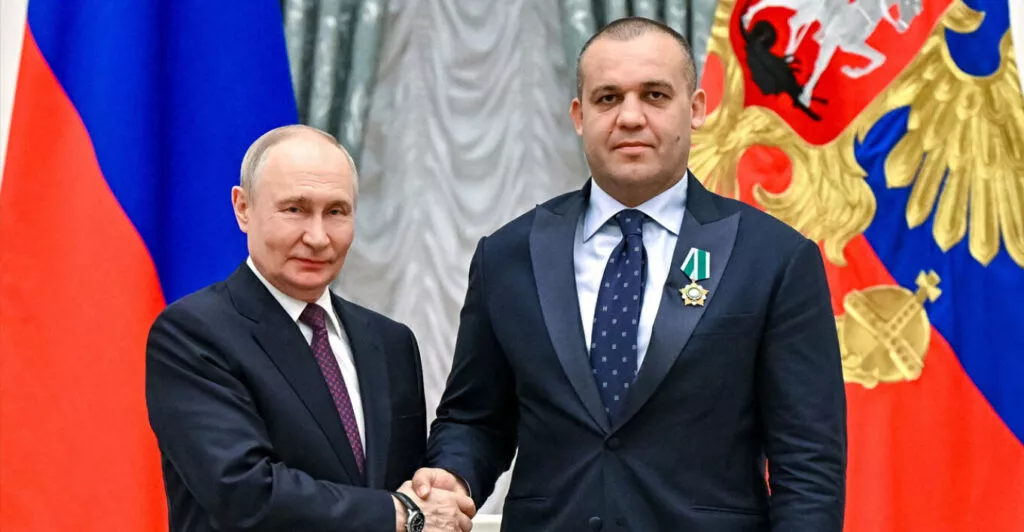
Πριν γίνει γνωστός ως Ούμαρ Κρέμλεφ, ο 43χρονος που χρόνια αργότερα θα συνδεόταν ακόμη και με το πολυτελές πάρτι του Ντόναλντ Τραμπ Τζούνιορ στις Μπαχάμες, ήταν γνωστός με το όνομα Ούμαρ Λουτφουλόεφ. Μέχρι τον Μάρτιο του 2010, το όνομα Κρέμλεφ παρέμενε ουσιαστικά άγνωστο.
Όταν «πάτησε» τα 28 κι έχοντας, σύμφωνα με δημοσιεύματα της εποχής, καταδίκες για εκβιασμό και ξυλοδαρμό, είδε τις φιλοδοξίες του για καριέρα στην πυγμαχία να σβήνουν εξαιτίας της έλλειψης πειθαρχίας και θέλησε να κάνει μια νέα αρχή για να ανεβεί τα σκαλοπάτια της ρωσικής κοινωνίας.
Ο 43χρονος μεγάλωσε στο Σερπούχοφ, μια πόλη περίπου 120.000 κατοίκων, 60 μίλια νότια της Μόσχας και 5.729 μίλια ανατολικά του Little Pipe Cay, του νησιού στις Μπαχάμες που νοίκιασε για τον γιο του Αμερικανού προέδρου. Γεννημένος από μητέρα Τατζίκα σε μουσουλμανική οικογένεια, «παντρεύτηκε» αρχή τον ρόλο του αουτσάιντερ.
Σύμφωνα με το ρωσικό ερευνητικό μέσο Proekt, καταδικάστηκε για εκβιασμό το 2004 και για ξυλοδαρμό το 2007, αν και οι ακριβείς συνθήκες των υποθέσεων παραμένουν ασαφείς. Ο ίδιος δεν έχει αρνηθεί τις καταδίκες.
Οι Night Wolves εμφανίστηκαν την περίοδο της Περεστρόικα, της οικονομικής αναδιάρθρωσης της δεκαετίας του 1980, ως μια ομάδα μοτοσικλετιστών και φίλων της ροκ μουσικής. Επικεφαλής τους ήταν ο Αλεξάντερ Ζαλντοστάνοφ, γνωστός ως «Χειρουργός», στενός φίλος του Βλαντίμιρ Πούτιν.
Μέσα σε αυτόν τον ετερόκλητο κόσμο που ο Κρεμλέφ άρχισε να καλλιεργεί τις σχέσεις που θα τον μετέτρεπαν από πυγμάχο σε ισχυρό παράγοντα της ρωσικής κοινωνίας. Η σημαντικότερη από αυτές ήταν με τον Αλεξέι Ρουμπέζνι, υποστράτηγο της Ομοσπονδιακής Υπηρεσίας Προστασίας (FSO) ψηλόβαθμων κρατικών αξιωματούχων, με τον οποίο έγιναν αχώριστοι.
Το 2016, ο Ρουμπέζνι ήταν πλέον επικεφαλής της Υπηρεσίας Ασφαλείας του Προέδρου και ο Κρεμλέφ είχε αποκτήσει, με αυτό τον τρόπο, πρόσβαση στον Πούτιν. Έκτοτε, η καριέρα του απογειώθηκε.
Ανέβηκε γρήγορα στην ιεραρχία και το 2017 ανέλαβε την ηγεσία της Ρωσικής Ομοσπονδίας Πυγμαχίας. Όμως η ορεξη του Κρεμλέφ είχε ανοίξει και δεν χόρταινε. Η Association Internationale de Boxe Amateur (AIBA – Διεθνής Ομοσπονδία Ερασιτεχνικής Πυγμαχίας) βρισκόταν τότε σε βαθιά κρίση, αντιμέτωπη με καταγγελίες διαφθοράς που οδήγησαν το 2019 στην αρχική αναστολή της από τους Ολυμπιακούς Αγώνες ως φορέα που είχε την ευθύνη της ολυμπιακής πυγμαχίας.
Ο Κρεμλέφ υποσχέθηκε σαρωτικές μεταρρυθμίσεις και την εξόφληση χρέους που υπολογιζόταν στα 16 εκατ. δολάρια, με στόχο ο οργανισμός να ανακτήσει τον έλεγχο της ολυμπιακής πυγμαχίας. Έτσι, το 2020 κέρδισε με άνεση την ψηφοφορία για την προεδρία, ενώ το γεγονός ότι μιλούσε από ελάχιστα έως καθόλου αγγλικά δεν αποτέλεσε εμπόδιο. Και όπως έκανε με τον ίδιο του τον εαυτό, και σε αυτή την περίπτωση έκανε το restart με τον ίδιο τρόπο: άλλαξε το όνομα του οργανισμού σε International Boxing Association (IBA).
Ακολούθησε συνεργασία της IBA με την Gazprom, τον ρωσικό κρατικό ενεργειακό κολοσσό, με συνέπεια το χρέος να μηδενιστεί και τα χρηματικά έπαθλα να αυξηθούν. «Γιατί να μην μπορούν οι ερασιτέχνες πυγμάχοι να πληρώνουν τα στεγαστικά τους δάνεια και να στηρίζουν τις οικογένειές τους;» είχε δηλώσει τότε ο Κρεμλέφ.
Το 2022, η IBA ήρε περιορισμούς που είχαν επιβληθεί νωρίτερα την ίδια χρονιά και επέτρεψε σε Ρώσους και Λευκορώσους πυγμάχους να αγωνίζονται με τις εθνικές σημαίες και τους ύμνους τους, ενώ απέκλεισε από τις τάξεις της την Ουκρανική Ομοσπονδία Πυγμαχίας. Την επόμενη χρονιά, ωστόσο, η Διεθνής Ολυμπιακή Επιτροπή (ΔΟΕ) ψήφισε – με αφορμή τον πόλεμο της Ρωσίας στην Ουκρανία – υπέρ της αφαίρεσης από την IBA της ιδιότητας της παγκόσμιας ομοσπονδίας του αθλήματος.
Ο Κρεμλέφ γίνεται ο «σκιώδης δήμαρχος»
Ωστόσο, δεν ήταν μόνο οι πυγμάχοι του Κρεμλέφ που πληρώνονταν καλά. Το 2019, μια εταιρεία του απέκτησε το δικαίωμα να γίνει ο μοναδικός διαχειριστής της εθνικής λοταρίας της Ρωσίας. Σε ένα μοτίβο που θα επαναλαμβανόταν αρκετές φορές, η λοταρία έγινε σύντομα χορηγός της IBA.
Τα επόμενα χρόνια, ο Κρεμλέφ απέκτησε μερίδια σε τρεις από τις μεγαλύτερες στοιχηματικές εταιρείες της Ρωσίας, τις Fonbet, Liga Stavok και Pari. Ρωσικά μέσα ενημέρωσης έχουν αναφέρει ότι οι συμφωνίες αυτές είχαν την υποστήριξη του Αντρέι Κόστιν, του υπό κυρώσεις χρηματοδότη και προέδρου της συνδεδεμένης με το Κρεμλίνο τράπεζας VTB, ο οποίος έχει χαρακτηριστεί «τραπεζίτης-κουμπαράς του Πούτιν».
Οι εταιρείες αυτές φαίνεται ότι είχαν συνολικά έσοδα περίπου 625 δισ. ρούβλια (5,5 δισ. λίρες) το 2023, ενώ η Liga Stavok αποτελεί πλέον βασικό εταίρο της IBA.
Ο Κρεμλέφ είχε επίσης αποκτήσει σταδιακά τον έλεγχο της Tsupis, μιας εταιρείας πληρωμών που συνδέει τους παίκτες με τις στοιχηματικές εταιρείες και εισπράττει προμήθεια από κάθε ποντάρισμα. Το 2021, ο Πούτιν εξέδωσε διάταγμα κατά της απάτης, το οποίο παραχώρησε στην Tsupis μονοπώλιο σε αυτή την εξαιρετικά επικερδή δραστηριότητα. Την ίδια περίοδο, οι φορείς που ρύθμιζαν την αγορά στοιχημάτων πέρασαν επίσης υπό τον έλεγχο του Κρεμλέφ και ενοποιήθηκαν σε έναν κοινό εποπτικό οργανισμό, με αρκετά μέλη του διοικητικού συμβουλίου να προέρχονται, σύμφωνα με δημοσιεύματα, από το δίκτυό του στον χώρο της πυγμαχίας.
Στη γενέτειρά του, το Σερπούχοφ, καθώς εξελισσόταν σε ολιγάρχη, ο Κρεμλέφ απέκτησε το προσωνύμιο «σκιώδης δήμαρχος», έχοντας συγκεντρώσει ένα εντυπωσιακό χαρτοφυλάκιο ακινήτων. Κάποια από αυτά φέρεται να περιήλθαν στην κατοχή του μετά την αναδιανομή περιουσιακών στοιχείων του φυλακισμένου πρώην δημάρχου Αλεξάντερ Σεστούν.
Πηγές αναφέρουν ότι απέκτησε γεωργικές εκτάσεις, βιομηχανικές εγκαταστάσεις, ένα λιμάνι, ένα εμπορικό κέντρο και ένα ξενοδοχείο, ενώ το 2024, ο Κρεμλέφ φέρεται να επωφελήθηκε και από απαλλοτρίωση. Τον Φεβρουάριο, το Κρεμλίνο κατέσχεσε τη Rolf, τη μεγαλύτερη αντιπροσωπεία αυτοκινήτων της Ρωσίας, από τον Σεργκέι Πετρόφ, τον εξόριστο ιδιοκτήτη της και πρώην βουλευτή της αντιπολίτευσης και μέχρι τον Σεπτέμβριο, η εταιρεία είχε περάσει στον Κρεμλέφ μέσω συμφωνίας ύψους 35 δισ. ρουβλίων.
Σε ανακοίνωσή της, η Rolf παρουσίασε τον Κρεμλέφ ως νέο ιδιοκτήτη της, χαρακτηρίζοντάς τον «στρατηγικό επενδυτή, ο οποίος θα επιτρέψει στην εταιρεία να διατηρήσει τη μοναδική εταιρική κουλτούρα της και να διευρύνει το φάσμα των δραστηριοτήτων της, με έμφαση στην αύξηση της αποτελεσματικότητας και την προσέλκυση νέων συνεργατών και πελατών».
Ένας από αυτούς τους νέους συνεργάτες, σύμφωνα με μεταγενέστερα δημοσιεύματα του Proekt, ήταν η IBA.
Η πίστη στον Πούτιν
Έχοντας συγκεντρώσει προσωπική περιουσία που υπολογίζεται έως και σε 300 εκατ. λίρες και αναλαμβάνοντας παράλληλα και άλλα αξιώματα – μεταξύ αυτών την προεδρία της Διεθνούς Ομοσπονδίας Ταβλιού – ο Κρεμλέφ δεν έκρυβε ποτέ τις πολιτικές του συμπάθειες.
«Χάρη σε έναν άνθρωπο, σήμερα υπάρχουν πραγματικά κάθε είδους ευκαιρίες να κερδίσεις χρήματα και να επιδιώξεις περισσότερα», είχε δηλώσει σε βιντεοσκοπημένη συνέντευξη το 2024, την οποία εντόπισε ο Guardian. «Αυτός ο άνθρωπος, φυσικά, είναι ο πρόεδρός μας, Βλαντίμιρ Βλαντιμίροβιτς Πούτιν».
Λίγους μήνες αργότερα, η Ουκρανία του επέβαλε κυρώσεις, χωρίς να βρίσκεται, ωστόσο, υπό κυρώσεις από τη Βρετανία, τις ΗΠΑ ή την Ευρωπαϊκή Ένωση.
Τον Απρίλιο, ο Πούτιν απένειμε στον Κρεμλέφ το Παράσημο της Φιλίας, ενώ λίγες ημέρες πριν από τον γάμο του Τραμπ Τζούνιορ, ο Κρεμλέφ συνόδευσε τον Ρώσο πρόεδρο σε επίσκεψη στην Κίνα, επιμένοντας πάντως ότι δεν βρισκόταν εκεί με επίσημη ιδιότητα.
Τα οφέλη για την οικογένειά του
Όπως συμβαίνει συχνά με τις οικογένειες ισχυρών και εύπορων πατριαρχών, και οι συγγενείς του Κρεμλέφ φαίνεται ότι επωφελήθηκαν από την άνοδό του. Το 2024, η ρωσική Novaya Gazeta ανέφερε ότι είχε παραχωρήσει στην τότε 21χρονη σύζυγό του, Αναστάσια Λεστσίνσκαγια, ένα κουρείο και ένα καφέ στο Σερπούχοφ, καθώς και πολυτελή αυτοκίνητα. Μάλιστα, αψηφώντας πλήρως τους νόμους, οι Porsche, Lamborghini και Aston Martin που φέρεται να της ανήκαν έχουν, σύμφωνα με δημοσιεύματα, συγκεντρώσει περίπου 50 κλήσεις από την τροχαία της περιφέρειας της Μόσχας.
Η Λεστσίνσκαγια ήταν γνωστή δημιουργός στο TikTok και το ένα από τα δύο μέλη του διδύμου «twinsrussian».
Ωστόσο, η δίδυμη αδελφή της είναι εκείνη που έχει προσελκύσει ακόμη μεγαλύτερο ενδιαφέρον. Η Εκατερίνα Λεστσίνσκαγια διευθύνει τη φιλοπουτινική οργάνωση Healthy Fatherland, ένα αθλητικό και πατριωτικό κίνημα στο οποίο το Κίεβο έχει επιβάλει κυρώσεις για τον φερόμενο ρόλο του στην απαγωγή, την απέλαση και την αναγκαστική μεταφορά παιδιών από την Ουκρανία. Η ίδια έχει επίσης συναντηθεί επανειλημμένα με τον Ρώσο πρόεδρο.
Και φαίνεται πως αυτή ακριβώς η σύνδεση του Τζούνιορ με τον Κρεμλέφ ήταν που ώθησε τη Μελάνια Τραμπ – η οποία έχει μεσολαβήσει σε συμφωνίες με Ρώσους αξιωματούχους για την επιστροφή Ουκρανών παιδιών – να πάρει αποστάσεις από τον γάμο του θετού γιου της, με εκπρόσωπό της να δηλώνει: «Η κυρία Τραμπ δεν έχει και δεν είχε ποτέ καμία σχέση με τον κ. Κρεμλέφ».
Ασαφής ο τρόπος σύνδεσης του Τραμπ Τζούνιορ με τον Κρεμλέφ
Ο Τραμπ Τζούνιορ, όμως, έχει. Το πώς ακριβώς ο γιος του Αμερικανού προέδρου μπήκε στον κύκλο του Κρεμλέφ παραμένει ασαφές. Εκπρόσωπος του γιου του Αμερικανού προέδρου δήλωσε ότι οι δύο άνδρες, αμφότεροι λάτρεις του κυνηγιού, γνωρίστηκαν μέσω κοινού φίλου και «δέθηκαν χάρη στην αγάπη τους για την πυγμαχία και τις δραστηριότητες στη φύση».
Επιπλέον, ο Τραμπ Τζούνιορ είχε επαφή με την πυγμαχία από μικρή ηλικία, λόγω της δραστηριότητας του πατέρα του ως διοργανωτή αγώνων. Στα δέκα του χρόνια είχε παρακολουθήσει από κοντά τον Μάικ Τάισον να διαλύει τον Μάικλ Σπινκς μέσα σε μόλις 91 δευτερόλεπτα στο Trump Plaza Hotel του Ατλάντικ Σίτι.
Ο κοινός φίλος μέσω του οποίου γνωρίστηκαν δεν έχει κατονομαστεί, ωστόσο αμφότεροι διατηρούν στενές σχέσεις με έναν Τούρκο επιχειρηματία, τον Κάαν Καρακάγια. Ο Καρακάγια φέρεται, μάίστα, να ήταν παρών σε ένα αμφιλεγόμενο κυνηγετικό ταξίδι στη Μογγολία το 2019, κατά το οποίο ο Τραμπ Τζούνιορ πυροβόλησε και σκότωσε ένα απειλούμενο πρόβατο.
Τον Σεπτέμβριο του περασμένου έτους, σε εκδήλωση της IBA στην Κωνσταντινούπολη, στην οποία παρευρέθηκε και ο Μάνι Πακιάο, παγκόσμιος πρωταθλητής σε οκτώ διαφορετικές κατηγορίες βάρους, ο Κρεμλέφ ανακοίνωσε τον διορισμό του Καρακάγια ως εκπροσώπου της οργάνωσης στην Τουρκία.
«Ο Κάαν υπήρξε μια γέφυρα ανάμεσα σε διαφορετικούς κόσμους, ένας φίλος που φέρνει τους ανθρώπους κοντά», είχε δηλώσει ο Κρεμλέφ.
«Ηγέτης και φίλος»
Ο Τραμπ Τζούνιορ παρευρέθηκε στην ίδια εκδήλωση της IBA και κάθισε δίπλα στον Κρεμλέφ πάνω στη σκηνή. Οι δύο άνδρες φαίνεται ότι διατηρούσαν ήδη τότε φιλική σχέση, παρά τα περιορισμένα αγγλικά του Ρώσου, ενώ ο Κρεμλέφ, σε μια ιδιαίτερα θερμή αναφορά, δήλωσε ότι ήταν «υπερήφανος που βρίσκεται εδώ με τον φίλο μου» και υποσχέθηκε ότι εκείνος και ο Τραμπ Τζούνιορ θα «προστατεύσουν τη διαφάνεια στην πυγμαχία και θα ανοίξουν τον δρόμο για την επόμενη γενιά».
Από την πλευρά του, ο Τραμπ Τζούνιορ επαίνεσε τον 43χρονο για το γεγονός ότι «επανέφερε την καθαρότητα της πυγμαχίας» και «αποκατέστησε την πραγματική δικαιοσύνη» στο άθλημα – μια αναφορά, όπως φαίνεται, στην πολιτική της IBA να μην επιτρέπει σε βιολογικούς άνδρες να αγωνίζονται στη γυναικεία πυγμαχία. «Είμαι υπερήφανος που αποκαλώ τον Ούμαρ όχι μόνο ηγέτη αλλά και φίλο», είχε δηλώσει, σύμφωνα με δελτίο Τύπου της IBA που είχε τον χαρακτηριστικό τίτλο: «Ούμαρ Κρεμλέφ και Ντόναλντ Τραμπ Τζούνιορ ενώνουν τις δυνάμεις τους».
Η θέση του για την πυγμάχο Ιμάν Κελίφ
Η IBA βρέθηκε ακόμη περισσότερο στο επίκεντρο της διεθνούς προσοχής κατά τη διάρκεια των Ολυμπιακών Αγώνων του Παρισιού το 2024, γεγονός που δημιούργησε μια ευκαιρία την οποία ο Κρεμλέφ μπορούσε να αξιοποιήσει.
Στους Αγώνες, η ΔΟΕ χρησιμοποίησε δική της μονάδα πυγμαχίας για τη διοργάνωση του τουρνουά, καθώς η IBA είχε ήδη αποβληθεί. Η διοργάνωση, ωστόσο, βρέθηκε στο επίκεντρο έντονης αντιπαράθεσης όταν επετράπη στην Αλγερινή πυγμάχος Ιμάν Κελίφ να αγωνιστεί στην κατηγορία των 66 κιλών γυναικών, μολονότι είχε αποκλειστεί από το Παγκόσμιο Πρωτάθλημα της προηγούμενης χρονιάς επειδή δεν είχε περάσει εξετάσεις επαλήθευσης φύλου.
Κι ενώ η IBA του Κρεμλέφ είχε αποκλείσει την Κελίφ από τις διοργανώσεις της, η ΔΟΕ της επέτρεψε να αγωνιστεί στους Ολυμπιακούς Αγώνες με βάση το γεγονός ότι στο διαβατήριό της αναγράφεται ως γυναίκα. Ακολούθησε διεθνής αντιπαράθεση, με την Κελίφ να κερδίζει ομόφωνα όλους τους αγώνες της και να κατακτά τελικά το χρυσό μετάλλιο.
«Είναι ξεκάθαρα καθορισμένο: ο γυναικείος αθλητισμός είναι για γυναίκες, ο ανδρικός αθλητισμός για άνδρες. Ο γυναικείος αθλητισμός είναι για γυναίκες», είχε δηλώσει ο Κρεμλέφ στο TalkSPORT, μεταφέροντας, μάλιστα, το μήνυμα αυτό στο υψηλότερο δυνατό επίπεδο, στέλνοντας ανοιχτή επιστολή 1.100 λέξεων στον Ντόναλντ Τραμπ, ο οποίος είχε πρόσφατα υπογράψει εκτελεστικό διάταγμα που απαγόρευε στις τρανς γυναίκες να αγωνίζονται στις γυναικείες κατηγορίες αθλημάτων.
Στην επιστολή, ο Κρεμλέφ έγραφε: «Είναι ζωτικής σημασίας όλοι οι αθλητές να αγωνίζονται επί ίσοις όροις και η θέση σας στο ζήτημα αποτελεί σημαντικό βήμα προς την επίτευξη αυτού του στόχου», ενώ επιτέθηκε και στη ΔΟΕ, λέγοντας: «Η Διεθνής Ολυμπιακή Επιτροπή και η σημερινή ηγεσία της έχουν, δυστυχώς, οδηγήσει το Ολυμπιακό Κίνημα σε παρακμή με τις κοντόφθαλμες ενέργειές τους και την κακή διοίκηση».
Ο Κρεμλέφ έριξε επίσης στον Αμερικανό πρόεδρο άλλο ένα «τυράκι». «Το τελευταίο Παγκόσμιο Πρωτάθλημα Πυγμαχίας της IBA στις Ηνωμένες Πολιτείες πραγματοποιήθηκε το 2007 στο Σικάγο. Ενδιαφερόμαστε πολύ να επαναφέρουμε τη διοργάνωση στη χώρα σας και είμαστε περισσότερο από έτοιμοι να συνεργαστούμε προς αυτή την κατεύθυνση» έγραψε, ενώ έκλεισε την επιστολή του παραλλάσσοντας δύο από τις αγαπημένες φράσεις του Τραμπ: «Σας ευχαριστώ για την προσοχή σας σε αυτά τα σημαντικά ζητήματα. Προσβλέπουμε με μεγάλη αισιοδοξία στην πιθανότητα να συνεργαστούμε για να κάνουμε ξανά σπουδαίο το Ολυμπιακό Κίνημα, να προωθήσουμε το άθλημα της πυγμαχίας και να υπερασπιστούμε τα δικαιώματα των αθλητών σε ολόκληρο τον κόσμο».
Η αντιπαράθεση με τους Σαουδάραβες
Το 2025, η IBA ανέβασε ακόμη περισσότερο στροφές. Σύμφωνα με πληροφορίες της Telegraph, στην Κωνσταντινούπολη η ομάδα του Κρεμλέφ προσέφερε στον γνωστό Βρετανό πυγμάχο Τάισον Φιούρι αμοιβή 50 εκατ. λιρών προκειμένου να αγωνιστεί σε μία από τις διοργανώσεις της IBA. Ο Φιούρι, ωστόσο, επέλεξε να υπογράψει συμφωνία τριών αγώνων με τον Τούρκι Αλ-Σέιχ, αξιωματούχο της κυβέρνησης της Σαουδικής Αραβίας.
Ο Κρεμλέφ αποτελεί, ουσιαστικά, τον ισχυρότερο promoter του αθλήματος στην Ανατολική Ευρώπη, αποτελώντας άμεση πρόκληση για την επιρροή του Αλ-Σέιχ και των Σαουδαράβων στην πυγμαχία και για τον έλεγχό τους σε ορισμένους από τους σημαντικότερους αγώνες του αθλήματος.
Άνθρωποι από τον χώρο της πυγμαχίας περιγράφουν τον Κρεμλέφ ως «μια χαρισματική προσωπικότητα που εμφανίζεται σε εκδηλώσεις και διοργανώσεις περιστοιχισμένος από μια πολυάριθμη ομάδα συνεργατών, σχεδόν σαν αρχηγός κράτους». Οι ομιλίες του είναι συχνά φορτισμένες συναισθηματικά και δυναμικές, με επαναλαμβανόμενες αναφορές στον τρόπο με τον οποίο η πυγμαχία μπορεί να αλλάξει τις ζωές των νέων ανθρώπων.
«Συχνά δεν έχει ιδιαίτερη έκφραση στο πρόσωπό του, κι όμως αποπνέει μια ευγένεια και μια ταπεινότητα», δήλωσε άνθρωπος του χώρου.
Το περασμένο καλοκαίρι, η IBA λάνσαρε και δικό της πρωτάθλημα πυγμαχίας χωρίς γάντια. Οι πρώτοι αγώνες πραγματοποιήθηκαν στη Μόσχα, όμως ήταν το ντεμπούτο στις ΗΠΑ, στο Μαϊάμι, το φετινό καλοκαίρι που τράβηξε την προσοχή.
Συμπαρουσιαστής της εκδήλωσης ήταν ο Άντριου Τέιτ, ο Βρετανός πρώην kickboxer και αυτοαποκαλούμενος μισογύνης, ο οποίος δεν ανέβηκε ποτέ στη σκηνή, καθώς συνελήφθη έξω από τον χώρο της διοργάνωσης. Ο Τέιτ και ο αδελφός του, Τρίσταν, βρίσκονται αντιμέτωποι με έκδοση στη Βρετανία, όπου αντιμετωπίζουν συνολικά 59 κατηγορίες, μεταξύ των οποίων βιασμό, αδικήματα που συνδέονται με εμπορία ανθρώπων για σεξουαλική εκμετάλλευση και άσεμνες εικόνες παιδιού. Και οι δύο αρνούνται οποιαδήποτε παρανομία.
Γλυκάθηκε με το Παγκόσμιο Κύπελλο και το UFC Freedom στον Λευκό Οίκο
Ωστόσο, δύο άλλες διοργανώσεις του καλοκαιριού φαίνεται ότι ενέπνευσαν περισσότερο τον Κρεμλέφ: το Παγκόσμιο Κύπελλο της FIFA υπό τον Τζάνι Ινφαντίνο και το UFC Freedom 250 του Ντέινα Γουάιτ, που φιλοξενήθηκε σε κήπο του Λευκού Οίκου.
«Ο Κρεμλέφ είδε πώς ο Ντέινα και ο Ινφαντίνο κατάφεραν να πάρουν αυτό που ήθελαν», δήλωσε παράγοντας του αθλητισμού. «Θέλει κι αυτός ένα κομμάτι από αυτή την πίτα».
«Και το να έχεις πρόσβαση στον Ντον Τζούνιορ είναι μια καλή αρχή», πρόσθεσε η ίδια πηγή.
Μάλλον πέρασε τα όρια και το «πληρώνει»
Στην προσπάθειά του, όμως, να αποκτήσει κυρίαρχη θέση στον παγκόσμιο αθλητισμό, ο Κρεμλέφ ίσως να πέρασε τα όρια. Η Ομοσπονδπια της οποίας ηγείται, απέχει πολύ από το να ανακτήσει τον έλεγχο της ολυμπιακής πυγμαχίας, καθώς τι χάσμα με τη ΔΟΕ δεν γεφυρώνεται, και η ζημιά που προκάλεσε το «εξαιρετικά γενναιόδωρο γαμήλιο δώρο» του – όπως το χαρακτήρισαν ο κύριος και η κυρία Τραμπ Τζούνιορ – φαίνεται ότι βαρύνει κυρίως τον ίδιο.
Παρότι στο νησί στις Μπαχάμες βρίσκονταν μόλις περίπου 50 άνθρωποι, ο Κρεμλέφ είχε φτάσει συνοδευόμενος από μεγάλη ομάδα Ρώσων, οι οποίοι απομονώνονταν από τους υπόλοιπους και μιλούσαν μεταξύ τους, σύμφωνα με το ProPublica. Η παρουσία και η συμπεριφορά τους είχε προκαλέσει, μάλιστα, απορίες στους άλλους καλεσμένους.
Και ύστερα τραβήχτηκε μια ομαδική φωτογραφία, όπου το ξυρισμένο κεφάλι του Κρεμλέφ διακρίνεται μισοκρυμμένο στο πίσω μέρος, ενώ στο κέντρο βρίσκονται η Ιβάνκα Τραμπ, ο Τζάρεντ Κούσνερ, η Τίφανι Τραμπ και άλλοι.
«Τι σκεφτόταν;» σχολίασε στην Telegraph πρόσωπο από κύκλους Ρώσων ολιγαρχών. «Είναι ένας μπράβος που κατάφερε να βρεθεί στη σωστή πλευρά του προέδρου και ενθουσιάστηκε υπερβολικά».
Πρώτα ήταν η Μελάνια Τραμπ που πήρε αποστάσεις. Στη συνέχεια, εκπρόσωπος του Έρικ Τραμπ, αδελφού του Ντόναλντ Τραμπ Τζούνιορ, δήλωσε για τον Κρεμλέφ: «Ο Έρικ δεν έχει απολύτως καμία ιδέα ποιος είναι αυτός ο άνθρωπος και δεν έχει ακούσει ποτέ το όνομά του». Και μετά ήρθε το τελειωτικό χτύπημα από τον ίδιο τον Ντόναλντ Τραμπ: «Δεν έχω ιδέα ποιος είναι ο Ούμαρ. Δεν τον έχω ξανακούσει ποτέ».
protothema.gr

Συμπτώματα Παρακμής…
Η Τουρκία διεκδικεί ξανά πρόσβαση στη δυτική αμυντική αγορά, ενώ η Ελλάδα καλείται να μετατρέψει τους εξοπλισμούς και τις συμμαχίες...

Επιπτώσεις συνεχών παρατάσεων επαναφοράς ελέγχου εσωτερικών συνόρων στη λειτουργία του Σένγκεν
Οι διαδοχικές παρατάσεις των γερμανικών συνοριακών ελέγχων δοκιμάζουν στην πράξη την ελεύθερη κυκλοφορία στον χώρο Σένγκεν. Με το Βερολίνο να...

Παρουσίαση του βιβλίου «Στέλιος Καζαντζίδης: Δεν με σβήνει κανένας» στη Βέροια την Παρασκευή 9 Οκτωβρίου
Η παρουσίαση θα πραγματοποιηθεί στην Αντωνιάδειο Στέγη Γραμμάτων και Τεχνών, στη Σκηνή «Οδυσσέας Γωνιάδης», με ελεύθερη είσοδο για το κοινό.

Ελληνική NAVTEX για αεροναυτική άσκηση στη θάλασσα του Καστελλόριζου
Αεροναυτική άσκηση χωρίς πυρά, νοτιοανατολικά της Ρόδου και στις θαλάσσιες προσβάσεις του συμπλέγματος του Καστελλόριζου

Η αναφορά του Γεραπετρίτη στην Κύπρο μπροστά στον Ρούμπιο! “Αναγκαία η λύση επανένωσης”
Ο κ. Γεραπετρίτης υπογράμμισε ιδιαίτερα τη σημασία της Κύπρου για την περιφερειακή ασφάλεια, τονίζοντας την ανάγκη επανένωσης της νήσου με...
-
 Αναλύσεις3 εβδομάδες πριν
Το τελεσίγραφο Καλίν την ώρα που η Τουρκία προετοιμάζεται για πόλεμο!
-
 Άμυνα3 μήνες πριν
Ρωσσικό ΜΜΕ: Ελληνικό «μπλόκο» στην απαίτηση για Patriot – Πώς γνωρίζει το Κίεβο απόρρητα στοιχεία για τους πυραύλους μας;
-

 ΑΝΑΡΤΗΣΕΙΣ ΜΕ ΣΗΜΑΣΙΑ2 μήνες πριν
Πακιστανός με καναδική υπηκοότητα ο υπαίτιος της πυρκαγιάς στον Έβρο! Πιθανόν να μετέφερε μετανάστες
-

 GEOPOLITICO1 μήνα πριν
Το διέρρευσε ο Παπαχελάς! Έφεραν τον Καλίν στο Μαξίμου – Τί συζήτησε με τον Μητσοτάκη;
-
 Αναλύσεις1 μήνα πριν
Καραγκιούλ: «Αν Ελλάδα, Κύπρος και Ισραήλ επιτεθούν στην Τουρκία, ο χάρτης του Αιγαίου θα αλλάξει»
-

 ΑΝΑΡΤΗΣΕΙΣ ΜΕ ΣΗΜΑΣΙΑ2 μήνες πριν
Ξέσπασμα της μητέρας της Μυρτούς για την υπόθεση Τζαβέντ Ασλάμ: «Δεν ξεχνώ ποτέ» – «Δήμαρχος των Πακιστανών ο Δούκας»
-

 GEOPOLITICO3 εβδομάδες πριν
Τί λέει Τούρκος δημοσιογράφος για Σάββα Καλεντερίδη; «Έκανε πολύ καλά τη δουλειά του για τη χώρα του – Δεν μπορούσε να τον στριμώξει η ΜİΤ»
-

 Αναλύσεις3 μήνες πριν
Εάν η Τουρκία απορρίψει τη συμφωνία αποχώρησης από την Κύπρο θα απομακρυνθεί δια της βίας