Ακολουθήστε μας

Οικονομία

Newly Independent Greece had an Odious Debt round her Neck
Δημοσιεύτηκε στις

Part I of the series “Greece and debt: two centuries of interference from creditors”

by Eric Toussaint
Since 2010, Greece has been the centre of attention. Yet this debt crisis, mainly the work of private banks, is nothing new in the history of independent Greece. The lives of Greeks have been blighted by major debt crises no less than four times since 1826. Each time, the European powers have connived together to force Greece to contract new debts to repay the previous ones. This coalition of powers dictated policies to Greece that served their own interests and those of a few big private banks they favoured. Each time, those policies were designed to free up enough fiscal resources to service the debt by reducing social spending and public investment. Thus Greece and her people have, in a variety of ways, been denied the exercise of their sovereign rights, keeping Greece down with the status of a subordinate, peripheral country. The local ruling classes complied with this.

This series of articles analyses the four major crises of Greek indebtedness, placing them in their international political and economic context – something which is systematically omitted from the dominant narrative and very rarely included in critical analysis.
To fund the independence war it waged against the Ottoman Empire from 1821 and to establish the new state, the provisional government of the Hellenic Republic contracted two loans from London, one in 1824 and the other in 1825. Bankers in London, by far the biggest financial centre in the world at the time, hastened to set up the loan, seeing it as a means of making a huge profit.
Internationally, the capitalist system was in full speculative phase which, throughout the history of capitalism, has generally been the final phase of a period of strong economic growth preceding a backlash. That backlash takes the form of bursting speculative bubbles and then a period of depression and/or slow growth. |1| Bankers in London, followed by those of Paris, Brussels and other European finance centres, were in a frenzy to invest the enormous amounts of liquidity at their disposal. Between 1822 and 1825, London bankers ‘harvested’ £20 million sterling on behalf of leaders of the newly independent Latin-American countries (Simón Bolívar, Antonio Sucre, Jose de San Martín and more) to finalize their independence struggle against the Spanish crown. |2| The two Greek loans of 1824 and 1825 came to a total of £2.8 million, i.e. 120% of the country’sGDP at the time.
Both in the case of Greece and in that of the young revolutionary independent governments of Latin America, the new states were barely emerging and did not yet have international recognition. Spain was opposed to European states giving financial support to the fledgling Latin-American ones. After all, it could reasonably be supposed, at the time, that the independence struggles were not completely over. Lastly, loans were being granted to republics whereas hitherto only monarchies had been admitted to the club of sovereign borrowers.
All that goes to show just how eager bankers were to take financial risks. That banks would lend 120% of a country’s entire annual product to the provisional government of a Greek state only just emerging under wartime conditions is a clear indication of a reckless desire to make juicy profits. Alongside the bankers, big industrial and commercial companies also supported this craze, as the amounts loaned were largely going to be used by the borrowers to buy the new armies weaponry, uniforms and equipment of every sort from the United Kingdom.

How did the loans work?

JPEG - 450.8 kb
Greek Government 5 ­loan of 1825 bond for­ L100 no-1041 signed as contr­actors by J.S.Ricard­o ornate border Athe­na at top

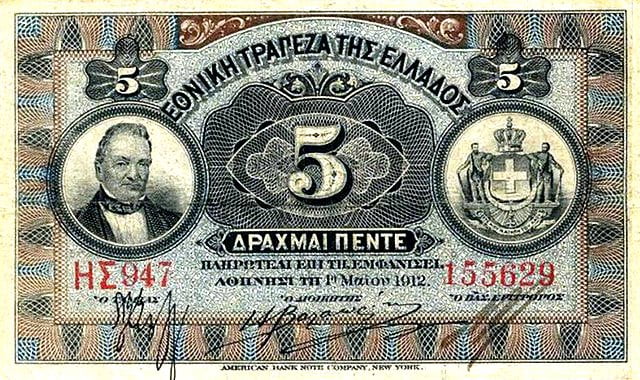
London bankers issued sovereign bonds in the name of the borrower states and sold them on the stock-exchange in the City. Most of the time, bonds were sold for less than their face value (see the illustration of an 1825 bond worth £100). Thus each bond issued on Greece’s account for a face value of £100 was sold for £60. |3| This meant that Greece obtained less than £60, once a hefty commission had been deducted by the issuing bank against an IOU of £100. This explains why for a loan valued at £2.8 million, Greece only received payment of £1.3 million. Two further important facts: if the interest rate on the Greek bonds was 5%, it was calculated on the face value so the Greek government had to pay £5 a year to the bearer of a bond valued at £100, which was an excellent deal for him or her, bringing a real profit of 8.33% (and not 5%). On the other hand, for the borrower state, the cost is exorbitant. In the case of Greece, the government received £1.3 million but had to pay interest each year on the £2.8 million ostensibly borrowed. That was not sustainable.
In 1826, the provisional government suspended debt payments. Studies of this period generally explain the suspension by the high cost of military operations and the continuing conflict.
In fact, the causes of Greece’s default were not only internal; international factors, beyond the control of the Greek government, also played a very important role. For one thing, the first great global crisis of international capitalism began in December 1825, with the bursting of the speculative bubble created in the London stock-exchange over the previous years. That crisis caused a fall in economic activity, bringing down numerous banks and creating an aversion to risk. Starting in December 1825, British bankers, followed by other European bankers, ceased making foreign and domestic loans. The new states, expecting to finance their debt payments by taking out fresh loans in London or Paris, could no longer find any bankers disposed to lend. The 1825-26 crisis affected all the finance centres of Europe: London, Paris, Frankfurt, Berlin, Vienna, Brussels, Amsterdam, Milan, Bologna, Rome, Dublin, Saint Petersburg, and the list goes on. There was an economic depression and hundreds of banks, traders and manufacturing companies went bankrupt. International trade fell through the floor. Most economists consider the 1825-26 slump to be the first of the great cyclic crises of capitalism. |4|
When the crisis broke in London in December 1825, Greece and the new Latin-American states continued to repay their debts. However in the course of 1826, several countries – Greece, Peru and Great Colombia which included Colombia, Venezuela and Ecuador – were obliged to suspend repayments. This was partly due to banks refusing to grant new loans, and partly because states’ revenues were adversely affected by the deterioration of the economic situation, and particularly international trade. By 1828, all the independent Latin-American countries, from Mexico to Argentina, had suspended payments.
In 1829, the provisional Hellenic government made their London creditors an offer to resume payments, on condition that the debt be reduced. The creditors refused, demanding 100% of the nominal value; no agreement was reached.
From 1830 on, three of Europe’s major powers – the United Kingdom, France and Russia |5| – formed the first Troika in modern Greek history and decided to establish a monarchy in Greece with a German prince at its head. Negotiations began over which prince to choose: Leopold of Saxe-Coburg Gotha, Prince Otto of Bavaria or someone else? Finally Leopold was placed on the throne of Belgium which became an independent state in 1830 and the Bavarian prince, Otto von Wittelsbach, was chosen to be the King of Greece. At the same time, the three great powers agreed to give their support to British and other European banks which, through them, bought Greek bonds. The idea was also to exert pressure on the new Greek state to get full reimbursement of the loans of 1824 and 1825.

How did the Troika of the United Kingdom, France and Russia proceed?
The Troika turned to French banks, asking them to issue a loan of 60 million French francs (FF) equivalent to about £2.4 million sterling. The United Kingdom, France and Russia acted as guarantors to the banks, promising to undertake repayment themselves, should Greece default. |6| The Troika added that they would take measures to ensure that the loans of 1824 and 1825 would also be repaid (see below). The agreement between the three powers was made in 1830 but such were the difficulties involved in carrying it out, that it did not come into effect until 1833. The FF 60 million loan was made in 1833 and paid in three tranches.

PNG - 108.3 kb
Grèce remaniée en 1832

It is particularly edifying to note what the first two tranches were used for. (The loan was issued in French francs and paid in Greek drachma (GDR) at the rate of one gold franc to 1.2 GDR.) Out of a total of 44.5 million GDR, only 9 million ended up in the Greek State Treasury, i.e. 20% of the nominal amount borrowed. The Rothschild Bank in France deducted more than 10% commission or 5 million GDR; those who bought the bonds, including Rothschild, received 7.6 million in advance interest for the period 1833-1835, i.e. more than 15% of the nominal amount; 12.5 million, or a little less than 30% of the nominal amount, was paid to the Ottoman Empire as compensation to offset their losses due to Greek independence; France, the United Kingdom and Russia took 2 million GDR, as creditors of Greece; over 15% of the nominal amount borrowed, or 7.4 million GDR, was paid to King Otto to cover pay and travelling expenses for his suite of Bavarian dignitaries who assured the regency |7| and for the 3500 mercenaries recruited in Bavaria, as well as 1 million GDR spent on arms.

The First Odious Loan imputed to Greece in 1833 by the Troika (France, the United Kingdom and Russia, known as the Great Powers)

How the money was distributed
There follows a summary of how the funds loaned and guaranteed in 1833 by the Great Powers were used (tranches A and B, i.e. two-thirds of a total of 44.5 million GDR).
Commission and fees paid to the Rothschild Bank 5 million
Interest in advance on the loan for the period 1833 to 1835 7,6 million
Compensation to the Ottoman Empire 12,5 million
Debt repayments to the Great Powers – F, UK and R (in advance) 2 million
Travelling expenses for King Otto, his staff and his escort 2,1 million
Salaries and other expenditure for members of Otto’s regency council 2 million
Recruitment and travelling expenses for the Bavarian mercenaries 3,3 million
Purchase of military equipment 1 million
Sub-total 35,5 million
Remainder transferred to the Greek Public Treasury 9 millions
ci.e. 20% of the 44.5 million GDR imputed to Greece
Sources: following Reinhart and Trebesch, 2015, The pitfalls of external dependence: Greece, 1829-2015, page 22; Kofas, Jon, 1981, Financial Relations of Greece and the Great Powers 1832-1862, Boulder: East European Monographs, page 25.

JPEG - 884 kb
Protocole de Londres­ 1832 – London Protocol, 1832

On 7 May 1832 the great powers signed an agreement with the King of Bavaria, father of Otto, the future King of Greece, obliging the newly ‘independent’ state to give absolute priority to repayment of debt (see article XII in the illustration below). As can be clearly seen in the reproduction of part of the agreement of 7 May 1832, this document was signed by the representative of the British Crown, Lord Palmerston; the representative of the French monarchy, Talleyrand; the representative of the Tsar of all the Russias and the representative of the King of Bavaria acting on behalf of Greece before Otto and his suite had even left Munich! Otto was not to arrive in Greece until January 1833. With this document, we have undeniable proof of the odious and illegal nature of the debt imputed to the Greek people from 1833.
The Troika exerted strict budgetary control on the state and its revenue collection. They regularly demanded that taxes and duties be increased and that spending be compressed. We note that the 5th National Assembly which met in December 1831 had adopted a ‘Greek Constitution’ of which Article 246 stipulated that the sovereign did not have the right to make decisions alone regarding taxes, duties, public spending or revenue collection, without observing laws or resolutions adopted by the legislative body. |8| The monarchy and the Troika trampled this Constitution underfoot without ever giving it due recognition.
In 1838 and 1843, the monarchy suspended debt payments, not having enough funds in the Treasury to afford such heavy interest rates. |9| At the time of the 1843 default, when the interest to be paid represented 43% of state revenue, the Troika put maximum pressure on the monarchy to implement a radical austerity plan as dictated by the ambassadors of the three powers (see box ‘The Memorandum imposed by the Troika in 1843’).
Such were the sacrifices imposed on the Greek population that they rebelled on several occasions. In 1843, the revolt was particularly strong. Already outraged by the pomp and extravagance of the ceremonial inauguration of the imposing royal palace (now the seat of the Hellenic Parliament), in September 1843 the population of Athens rose up against yet another tax increase and clamoured for a constitutional regime. The United Kingdom went as far as threatening King Otto with military intervention if he did not increase taxes to fulfil his obligations towards the Troika. The British and French navies occupied the port of Piraeus for two years from May 1854 as a very efficient way of laying hands on customs revenue levied in the port.

The memorandum imposed by the Troika in 1843

Adapted from Takis Katsimardos
In June 1843, unable to afford the annual tranche of interest payments on the 1833 loan, Greece was forced to default. Faced with threats from the creditors, the government undertook to apply a brutal austerity programme to enable them to keep on servicing their debt.
Greece then entered a phase of ‘extreme’ austerity. Sources of the time report scenes of mass hardship, in town and country. In the capital, penniless citizens stopped paying their taxes to the point where there were no candidates for the once coveted post of tax-collector, previously attributed by auction!
Obviously it was impossible to collect money for debt servicing in a country where the majority of the population was living in utter deprivation. Yet the creditors continued to demand the debt payments.
The situation led to a conference being held in London on Greek debt where the representatives of the Troika redacted a statement condemning Greece (June 1843). The statement declared that Greece had failed to fulfil her obligations. The three ambassadors gave the government 15 days to make even more drastic cuts in public spending to raise the sum of about 4 million GDR. The cuts that the government had initially planned would only have levied 1 million GDR.
After a month of discussions, a memorandum protocol was drawn up by the ambassadors and the Greek government. The agreement was ratified on 2 September, giving rise to a storm of protest. The next day was the start of the 3 September 1843 Revolution, which was to result in a new Constitution that was still far from democratic. |10|
The main measures taken by the Greek government in 1843 in application of the Memorandum of that time included: |11|
  1. Laying off one third of civil servants and reducing the salaries of those remaining by 15-20%;
  2. Suspension of retirement pension payments;
  3. Considerable reduction of military spending;
  4. Payment by all producers of an advance on tax called a ‘tithe’, corresponding to a tenth of the value of everything produced;
  5. Increases in customs duties and stamp duties;
  6. Laying off all civil servants in the National Printers, forest wardens and most university professors (all but 26!);
  7. Closure of all state health services;
  8. All State civil engineers laid off and all public works projects halted;
  9. Cancellation of all diplomatic missions abroad;
  10. Legalization of all illegal constructions and illegally appropriated land belonging to the state, upon payment of a fine;
  11. Regularization of all pending tax fraud cases (to the value of 5 million GDR) on payment of a modest sum.
Furthermore, in line with the terms of the ‘Memorandum’, the ambassadors of the Troika countries of that time were present at all cabinet meetings where the measures were validated, and were sent detailed reports every month concerning their implementation and the monies collected.
Do you not have a funny feeling that you have heard all this before?
Otto was eventually overthrown and expelled by popular uprisings throughout the country in 1862. After which, a new constitution was introduced that was only a limited restriction of regal powers. The Troika looked for a new King. London proposed the second son of Queen Victoria. France and Russia were hostile to this proposal, not wanting to see British influence spread further. Finally, agreement was reached on a Danish prince by the name of Wilhelm of Schleswig-Holstein-Sonderburg-Glücksburg.
Since 1843, as promised to the banks, the Troika had undertaken the repayments of Greek debt when Greek revenues were insufficient to cover capital and/or interest repayments. Troika repayments ended in 1871 and the creditors could be well satisfied: they had earned interest and their loans were repaid. The FF 60 million loan was wiped out.
However, Greece continued to devote a part of its revenues to debt repayment. France, Russia and the UK claimed from Greece the sums they had paid out to the bankers when Greece was unable to pay. These payments continued into the 1930s, although Russia received no further repayments after the 1917 revolution.

What happened to the repayments of the 1824 and 1825 loans?
It is worth remembering that repayments were suspended in 1826 and the creditors refused to come to an agreement with the provisional Greek government. The Troika finally deposed and replaced the provisional government with a monarchy. The FF 60 million loan (which was the equivalent of 124% of Greek GDP in 1833) did not replace the 1824 and 1825 loans (which were the equivalent of 120% of Greek GDP in 1833). Once the FF 60 million had been repaid, the Troika insisted that the matter of the 1824 and 1825 loans be settled. That is why, in 1878, Greece was pressed into an agreement with the bankers who held these loans. The old bonds were exchanged for new bonds worth £1.2 million sterling. This was an excellent arrangement for the creditors but more injustice for the Greek people. As the amount effectively transferred to Greece in the 1824-25 loans was no more than £1.3 million, the creditors had every reason for satisfaction, especially as some of them had purchased their bonds for next to nothing. The bankers have continually speculated on Greek bonds, selling when they start to go down and buying back when they start to rise.
It is shocking to see how most of the superficial analysis of Greek debt claims that Greek public spending was too high and tax evasion was rife. However, a rigorous analysis of State budgets shows primary surpluses, with only two exceptions; in other words, all through the 41 years between 1837 and 1877, revenues were superior to expenditure before debt repayment was taken into account. Once debt repayment enters the picture, it becomes clear that it was the sole cause of the unsustainable debt burden. |12| We are not suggesting that the Monarchy managed the State budget in the interests of the population. Throughout history, creditors have typically insisted upon having a primary budget surplus. A primary surplus is a guarantee to creditors that a debt can be repaid, as it provides the funds for repayment. The burden of debt repayment and administrative supervision exercised by the big European powers are among the principal reasons why Greece has been unable to establish a growing economy.

Conclusion of this part
The 1824-25 loans should be considered as illegitimate and illegal because the terms in the contracts were unfair and the manipulations by the bankers clearly deceptive.
The 1833 loan clearly falls into the category of odious debt. |13| The debt was taken on by a despotic regime dominated by major foreign powers consolidating their strategic objectives on the backs of the Greek people, while at the same time catering to the demands of the international bankers.
The refusal of the creditors and the great powers to abolish or reduce the debt has produced long-term effects that maintain Greece in submission and prohibit real economic development.
The people of Greece have remained in the thrall of the odious debt that she was born with.

Several key economic and social points to understanding the historical context in which Greece attained independence in the 19thcentury

Constantine Tsoucalas, whilst exiled in Paris in 1969 during the Greek colonels’ dictatorship, wrote: « In almost a century and a half of modern Greek history, foreign intervention or foreign support has almost always been responsible – to a greater or lesser extent – for the birth and outcome of every crisis. Domestic social and political forces have never been able to develop or function autonomously. The Greek people have long been powerless to take their destiny into their own hands: most flagrantly so when there was the most to win or lose. For, whatever the strategic and diplomatic line-up, Greece could not escape international attention because of her geographical situation. As a pawn of Western diplomacy when the Ottoman Empire was breaking up, as a naval base essential for the control of the Dardanelles, as a bastion of the ‘free world’ in its attempt to stop the expansion of Communism, or as one of the very few secure bases for the strategic control of the ever-unstable Middle East, Greece has always had to pay the price for the international interest she has provoked.» |14|
Constantine Tsoucalas’s observation has its exceptions; the Greek people defeated the Nazi occupation through a long, difficult and heroic struggle. Nevertheless, the tragic events of 2015 confirm the political aspects of these remarks made nearly half a century ago. The Western European powers once again intervened in Greece for international political reasons: to prevent the success of an experiment that breaks with austerity policies so that it does not spread to other European countries such as Spain and Portugal; to prevent their project of European integration dominated by powerful economic interests from being called into question. The European institutions and the IMF have terminated an experiment that could have changed the course of history.
To continue with Constantine Tsoucalas’s description:
“It is difficult to pin down the historical and cultural character of the Greek nation – Balkan but not Slav, Near Eastern but not Moslem, European but not Western. It may or may not be possible to trace a racial, cultural and national continuity from the Classical period through the Byzantine Empire to modern Greece; the undoubted fact is that the origins of the modern social and economic structure are deeply rooted in the long period of Ottoman rule. (…)

“The Ottoman ideology, with its rigid social divisions, maintained a disdainful attitude to mercantile activities; this enabled the Greeks, and to a lesser degree other minority groups like the Jews and the Armenians, virtually to monopolize business life. The Greek community of Constantinople, consisting of the remnants of the Byzantine aristocracy and of the emerging groups of bankers and merchants knows as Phanariots, rapidly gained control of the greater part of economic transactions. The role of the Phanariots, however, was not confined to the financial sphere. They were often called upon to play a significant political and administrative part in the Ottoman power system. (…)


“The Greek element was also predominant in the commercial, entrepreneurial and maritime activities which grew rapidly after the middle of the eighteenth century, and infused a new spirit into the lethargic life of the Balkans. The prestige of this nascent Greek bourgeoisie, through which the new revolutionary ideas fermenting in Europe, especially after 1789, became gradually paramount among both Greek and Slav peoples. The idea of a movement for independence, leading to an All-Balkan federation, was spreading, mainly under the instigation of Russia, while the widespread decay of the Ottoman Empire roused strong hopes of approaching independence in all social classes throughout the Balkan peninsula.


“This process culminated in the Greek revolution of 1821. But, after considerable successes in the first years of the struggle, the reorganized Turkish-Egyptian army managed to win decisive victories which led to a political stalemate. By 1827 the revolution – which had been restricted to the Aegean islands, the Peloponnese and the southern part of the main peninsula (Sterea Hellas) – was nearly expiring.

“It was then that the intervention of the foreign powers became decisive. (…) The atrocities committed during the war and the romantic aura of the Hellenic past had greatly excited international public opinion. Popular pressure and diplomatic interests converged for once, and the great powers decided to take the situation in hand. Russia, France and Great Britain destroyed the Turkish-Egyptian fleet at Navarino (1827) and thus secured Greek independence.

“To see how important these powers were in ensuing events, we must look briefly at the policies they pursued. Russian policy was based on the idea of creating a large Balkan Greco-Slav state under her protection, to ensure her a stronghold in the Mediterranean after the breakdown of Ottoman power. Most of the population of the Balkans was Slav, and 90% subscribed to the Christian Orthodox faith; these were the two main propaganda instruments serving Russian aims. By contrast, British policy was basically oriented towards the conservation of the Ottoman Empire, as a counterbalancing power against Russian expansionism. To the extent, however, that the growing centrifugal forces within the Empire made its disintegration unavoidable in the long run, Great Britain favoured the creation of an independent Greek state which would, however, be politically and economically dependent on Britain, and therefore openly antagonistic to the other ethnic groups in the Balkans. The Protocol of London (1830), through which Greek independence was finally recognized, was a victory for British policy. The decision to install an absolute monarchy was aimed at the replacement of the first Greek Governor, Ioannis Kapodistrias, an ex-minister of the Tsar and naturally inclined towards Russian conceptions. Meanwhile, the restriction of the independent state’s boundaries to a very small area, inhabited by a comparatively homogeneous population, made the new-born State absolutely dependent on foreign (that is British) economic and diplomatic support, and eventually led to antagonism between Greeks and Slavs. Thus, for more than a century, the Balkan peninsula was to be the most turbulent spot in Europe and the scene of continual struggles between interventionist powers. The idea of a federation uniting the Christian peoples of the European provinces of the Ottoman Empire, who had been living in relative harmony with one another for four centuries, was shelved. Britain, Russia, France, Austria and later Germany fought over the future of these provinces; their peoples paid and are still paying the bill.”

Social structures
“After independence, the social and economic structure of Greece remained basically unchanged. The semi-feudal system prevailing under the Ottoman regime disappeared; but the land owned by Turkish feudal lords, amounting to about half the cultivated area of the country, passed in the main into the hands of the local chiefs and notables. These chieftains had played a significant role during the Ottoman period. They had been entrusted with considerable administrative and representational powers, especially in those villages which had been granted a certain degree of autonomy. After an ambiguous attitude in the first months of the War of Independence, they joined the revolutionary movement and played an important role. Very soon, however, they were involved in bitter struggles with the popular elements, which sometimes led to brutal armed conflicts. The outcome of class antagonism between local chieftains and popular forces was still inconclusive when independence was proclaimed. Under pressure from the chieftains, Kapodistrias hesitated to distribute the land among the impoverished peasants. When Kapodistrias was murdered by members of one of the most powerful clans, and when King Otto Wittelsbach, second son of King Ludwig I of Bavaria, was placed on the throne, the antiquated social structure was safeguarded.
“Admittedly local chieftains had not succeeded in ousting the Ottoman rulers. While agricultural production was increasingly based on small private farmsteads, local chieftains, who often owned considerable lands, exerted economic, and thus political, control on most farmers; it was to take almost a century to achieve the necessary reforms and solve the land problem.”

In 1832 Greece was 95% rural
“This, then, is Greece in 1832: a small country utterly devastated after a terrible war lasting almost ten years, with a 95 per cent peasant population and an archaic, semi-feudal structure. The new state is not even the centre of Hellenism. No city of any importance is included within its boundaries. Its cultural, religious, and economic centres are all abroad. Out of a total of three million Greeks, barely 700,000 are living in the Greek state. When Athens became the second capital of the country (after Nafplio) it was a miserable village with no more than 5,000 inhabitants – hardly to be compared with Constantinople, the symbol of national and religious regeneration, seat of the Patriarchate, centre of the Phanariots and the Greek bourgeoisie, swarming with Greek schools and publishing houses, housing the ‘Great School of the Nation’, a university of high prestige, and with a Greek population of over 200,000.”

The “Great Idea” of uncontrolled and unconditional nationalism leading to chauvinism
“Naturally, the new state’s main preoccupation was to try to liberate those Greek-inhabited regions that were still under Turkish rule. But although this natural urge towards national fulfilment was of supreme importance to Greeks, and although in itself it did not directly conflict with the interests of the other Balkan nationalities, it quickly degenerated into a utopian dream of rebuilding the Byzantine Empire under Greek sovereignty. The ‘Great Idea’, as this conception came to be called, was the main ideological and political slogan throughout the century. The repercussions of this orientation are enormous, both in domestic and in foreign policy. The solution of all internal problems was usually shelved by means of skilful demagogy, in the name of the national unity necessary to make the dream come true. Time after time the realization of this dream is successfully called upon to divert public attention from the incapacity or unwillingness of the ruling groups to take the measures required by the permanently frustrating internal situation. It is true that the glorification of ‘Hellenic’ values, which constitutes the cultural parallel to the ‘Great Idea’, did much to develop national unity and consciousness. The mystifying power of the notions of ‘Eternal Greece’ and ‘cultural unity of the Greek people’, however, resulted in serious ideological distortions which have yet to be completely dissipated. For not only did the mystical orientation towards classical antiquity constitute a major obstacle to a realistic and progressive national outlook; it also led to the imposition of, a ‘pure’ language, reintroducing grammatical elements of ancient Greek, completely strange to the spoken idiom and to a certain extent incomprehensible to the common people. The contradiction between official and spoken language dominated the second half of the century and became the main cultural issue. The educational obscurantism which persists up to the present day is to a large extent due to the fact that conservative political forces have managed to identify the ‘purity’ of the language, symbol of the eternity of the nation, with the conservation of retrograde and mystifying educational and cultural values.
“The international repercussions of the ‘Great Idea’ were even more far-reaching. Uncontrolled and intransigent nationalism led to chauvinism and pushed the country into conflict with the similarly motivated neighbouring Balkan countries, a conflict which haunts Balkan relations to the present day. Imperialist antagonism between the powers, and especially between Britain and Russia, did much to aggravate the problem. Throughout the nineteenth century the powers continued to instigate or to repress the outbursts of their diplomacy, and not hesitating to use direct military intervention. When, at the outbreak of the Crimean War (1853), Russia induced Greece to support revolutionary movements in Thessaly and Macedonia, the Anglo-French answer was prompt. French and British troops landed at the port of Piraeus and Greece was virtually occupied for three years (1854-7).”

The political system
“After the departure of the troops, the country was formally declared to be under economic control by the powers. Meanwhile, the evolution of the socio-economic structures of the country was extremely slow. The absolute monarchy of King Otto, surrounded by a large Bavarian court, was characterized by total disregard of the real needs and aspirations of the Greeks. Both the common people, who lived in a state of absolute misery, and the leading strata, who had emerged during and after the revolution (landowners, notables and military leaders), were intensely dissatisfied. The Bavarian administration had installed an undisguised despotism and ruled in complete separation from the indigenous forces. This state of affairs was only slightly modified by the revolution of 1844, which resulted in the promulgation of the first Greek Constitution. The limitations imposed on the monarch’s absolute powers were nominal, and therefore the machinations of the three major parties openly representing the interests of the foreign ‘protectors’ (characteristically named the English, French and Russian parties respectively) were openly and unequivocally directed towards acquiring the royal favour.”

From 1860, the rise of the bourgeoisie
“It is only after the ending of economic control in 1860 that some progress is visible. A new political generation emerged and the first signs of early capitalist development were manifest. If industrial activity was still extremely limited, the boom in the merchant navy, tripled since 1838, and the spectacular growth of commerce resulted in the creation of a rising bourgeoisie. Though the main centres of economic and cultural activity were still abroad, the prestige of the national state was growing. A considerable amount of Greek-owned capital was invested in the country and began to constitute a strong pole of attraction for Greeks abroad. This trend gathered pace among the Greek bourgeoisie of Constantinople and the other large cities of the Ottoman Empire, for they lived under the threat of hostility from the Ottoman government.”

The balance of power between the UK and Russia in the Balkans
“Whenever the Balkan peoples tended to unite against the Sultan, Britain imposed a veto, for she was still haunted by the nightmare of a Balkan federation under Russian influence. In 1867 the Greek Prime Minister signed a treaty with Serbia, Rumania and Montenegro declaring that the future of the Balkans should be considered an internal Balkan affair; the British put pressure on King George and the government was immediately dismissed. Again, on the eve of the Russo-Turkish war in 1877, Greece was forced by Britain to turn down Serbian proposals for a common offensive against Turkey. When, however, at the end of the war, the treaty of San Stefano strengthened the Slav states to a considerable extent at the expense of Greece, not only did the British insist on a revision of the treaty and finally obtain a considerable curtailment of the Slav territorial gains through the treaty of Berlin (1878), but moreover, during subsequent negotiations with Turkey, they insisted on the cession of Thessaly and a part of Epirus to Greece (1881). Thus, not only was the territorial balance successfully maintained against Russia; Britain also postponed an eventual Balkan coalition through the intensification of inter-Balkan grievances resulting from the treaties.”
It is striking to note that in Constantine Tsoucalas’s analysis, often perspicacious and always interesting, the debt claimed from Greece is considered of marginal importance, whereas in fact it was a decisive element in the subordination of Greece to the great powers.

PNG - 106.6 kb
Grèce 1832 – 1947

Bibliography for the first part:
  • BELOYANNIS Nikos, “Foreign capital in Greece” (in Greek) http://iskra.gr/index.php?option=co…
  • Truth Committee on the Greek Public Debt, Preliminary Report of the Truth Committee on Public Debt, Athens, 2015 http://cadtm.org/Preliminary-Report…
  • JUGLAR Clément. 1862. “Des crises commerciales et de leur retour périodique en France, en Angleterre et aux Etats-Unis, Paris 1862”  http://gallica.bnf.fr/ark:/12148/bp…(in French).
  • KATSIMARDOS Takis, “L’ancien Mémorandum dans la Grèce de 1843”, published 18/09/2010 in the Greek financial daily Imerisia, (not available in English).
  • Mandel, Ernest. 1972. Le Troisième âge du Capitalisme, Paris: La Passion, [1997], 500 p.
  • Mandel, Ernest. 1972. Late Capitalism, London: Verso, / 1975. London: New Left Books.
  • Mandel, Ernest. 1978. Long Waves of Capitalist Development, the Marxist Interpreta­tion, based on the Marshall Lectures given at the University of Cambridge, Cambridge University Press and Paris: Editions de la Maison des Sciences de l’Homme, 141 p.
  • Marichal, Carlos. 1989. A century of debt crises in Latin America, Prince­ton: University Press, 283p.
  • Marx–Engels, 1978. La Crise, col. 10/18, Union générale d’éditions, 444 p.
  • Reinhardt Carmen and Rogoff Kenneth, 2011. This Time is Different: Eight Centuries of Financial Folly, Princeton University Press.
  • Reinhardt Carmen M., and Sbrancia M. Belen. 2015 “The Liquidation of Government Debt.” Economic Policy, no. 82: 291-333
  • Reinhardt Carmen and TREBESCH Christoph. 2015. The pitfalls of external dependance : Greece, 1829-2015 http://www.brookings.edu/ /media/pr…
  • Sack, Alexander Nahum. 1927. Les Effets des Transformations des Etats sur leurs Dettes Publiques et Autres Obligations financières, Recueil Sirey, Paris (in French).
  • Tsoucalas Constantine. 1969. The Greek Tragedy, Penguin Books Ltd, Harmondsworth, 1969.

Acknowledgements:

The author’s thanks for help and suggestions go to: Tassos Anastassiadis, Thanos Contargyris, Olivier Delorme, Romaric Godin, Jean-Marie Harribey, Daphne Kioussis, Yvette Krolikowski, Christian Louedec, Damien Millet, Giorgos Mitralias, Antonis Ntavanellos, Nikos Pantelakis, Claude Quémar, Yannis Thanassekos, Dimitra Tsami, Eleni Tsekeri, Alekos Zannas.
The author accepts full responsibility for any errors that may occur in this work.

Translated from the French by Snake Arbusto, Vicki Briault and Mike Krolikowski (CADTM)


Footnotes
|1| See the work of Juglar, Marx, Kondratieff, Kindelberger, Mandel and others.
|2| A decisive battle was won by the independentists at Ayacucho in Peru on 9 December 1824, but the conflict was not over. Note that only half the sum of £20 million was actually transferred to Latin America.
|3| This is indeed what happened with the two loans of 1824 and 1825. The bonds were sold at 60% of their face value right from the start. See Carmen M. Reinhart and Christoph Trebesch: The pitfalls of external dependence: Greece, 1829-2015, p. 24. It is still common practice to sell bonds below their face or nominal value when they are first issued in order to attract buyers, even if the discount is much less than it was in the 19th century.
|4| Ernest Mandel proposes the following chronology for the long waves from the late 18th century to the early 20th century: 1793-1825 was a period of strong growth ending with the big crisis that broke in 1825; followed by a period of slow growth from 1826 to 1847 with a major crisis in 1846-47; a period of strong growth from 1848 to 1873 with a major crisis in 1873; slow growth from 1874 to 1893 with a major banking crisis from 1890-1893; strong growth from 1894 to 1913. See E. Mandel, Late Capitalism, London: Verso, 1972/ London: New Left Review, 1975. The phases of strong expansion and those of slow expansion are in turn subdivided into shorter cycles of between 7 and 10 years, which themselves end in crisis.
|5| On the complex and tense relations between the United Kingdom and Russia, see the box entitled ‘Keys to understanding the historic context of the birth of the independent Greek state in the 19thcentury’. See also Olivier Delorme, La Grèce et les Balkans, du Ve siècle à nos jours, Gallimard, Paris, 2013 (in French).
|6| This is largely what also happened in 2010-2012 when 13 Eurozone countries guaranteed the loan made by the European Financial Stability Facility. Should Greece decide to default, these countries undertook to ensure the repayment of bonds held by private banks. See the Preliminary Report of the Truth Committee for the Greek Public Debt, Athens, 2015 http://cadtm.org/Preliminary-Report… chapters 3 and 4.
|7| Until Otto reached the age of 20 (in 1835), a Regency Council was appointed, composed of two Bavarian aristocrats and a general. When he first arrived Otto settled in Nafplion, a town of 6000 inhabitants, before deciding with the approval of the Regency Council that Athens, then with only 5000 inhabitants, would become the capital. See https://en.wikipedia.org/wiki/Otto_…
|8| See Nikos Beloyannis, “Foreign capital in Greece” (in Greek). http://iskra.gr/index.php?option=co…
|9| On 31 December 1843, Greece had already paid the 33 million GDR of interest plus capital due. But she still had to pay the sum of 66 million GDR to the three Troika powers guaranteeing the 1833 loan. This was far more than Greece had actually received in 1833. (Information provided by Dimitra Tsami.)
|10| This was the historic episode that gave its name to Syntagma Square, meaning Constituion Square.
|11| From Takis Katsimardos “The Former Memorandum in the Greece of 1843”, published 18/09/2010 in the Greek financial daily, Imerissia, now discontinued.
|12| According to Reinhart and Trebesch, 2015, The pitfalls of external dependence: Greece, 1829-2015, p. 23, Appendix B.
|13| Several times during the 19th and 20th centuries, debts that were considered odious were abolished. The jurist Alexander Sack, who was the authority on odious debt, describes a number of case references in a study published in Paris in 1927,
See: Sack, Alexander Nahum. 1927. Les Effets des Transformations des États sur leurs Dettes Publiques et Autres Obligations financières, Recueil Sirey, Paris (in French):
(http://www.worldcat.org/title/effet… ). In this treatise Sack, a Russian émigré and legal theorist, formalized the doctrine of odious debt. It was based on two 19th-century precedents—Mexico’s repudiation of debts incurred by Emperor Maximilian, and the denial by the United States of Cuban liability for debts incurred by the Spanish colonial regime.
|14| All citations are from Chapter 1 (“The Emergence of Independent Greece (1821-1909”) of The Greek Tragedy by Constantine Tsoucalas, Harmondsworth: Penguin Books Ltd, 1969.

Author


Eric Toussaint 

is a historian and political scientist who completed his Ph.D. at the universities of Paris VIII and Liège, is the spokesperson of the CADTM International, and sits on the Scientific Council of ATTAC France. He is the author of Bankocracy (2015); The Life and Crimes of an Exemplary Man (2014); Glance in the Rear View Mirror. Neoliberal Ideology From its Origins to the Present, Haymarket books, Chicago, 2012 (see here), etc. See his bibliography:https://en.wikipedia.org/wiki/%C3%89ric_Toussaint He co-authoredWorld debt figures 2015 with Pierre Gottiniaux, Daniel Munevar and Antonio Sanabria (2015); and with Damien Millet Debt, the IMF, and the World Bank: Sixty Questions, Sixty Answers, Monthly Review Books, New York, 2010. Since the 4th April 2015 he is the scientific coordinator of the Greek Truth Commission on Public Debt.


Other articles in English by Eric Toussaint (358)

http://cadtm.org/Newly-Independent-Greece-had-an#pagination_tous_articles_auteur

Οικονομία

Η Ινδία στρέφεται σε Κατάρ και Κόλπο για την ενεργειακή της μετάβαση – Στόχος κεφάλαια για διυλιστήρια και ασφάλεια εφοδιασμού

Το Νέο Δελχί αναζητά συμμετοχή κρατικών επενδυτικών ταμείων του Κόλπου σε ενεργειακές υποδομές – Στο επίκεντρο το Κατάρ, η Saudi Arabia και τα ΗΑΕ
Δημοσιεύτηκε

στις

από τον

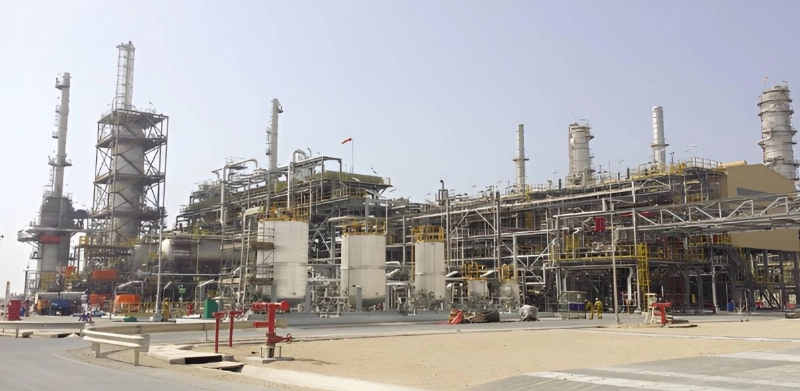
Η Ινδία επιταχύνει την προσπάθειά της να προσελκύσει κεφάλαια από το Κατάρ και άλλες χώρες του Κόλπου για τη χρηματοδότηση της μεγάλης αναβάθμισης του ενεργειακού της τομέα, με βασικό στόχο την επέκταση της διυλιστικής ικανότητας και τη μακροπρόθεσμη ενίσχυση της ενεργειακής ασφάλειας της χώρας.

Σύμφωνα με στοιχεία που παρουσιάζει η Gulf Times, οι ινδικές αρχές επιδιώκουν μεγαλύτερη συμμετοχή κρατικών επενδυτικών ταμείων της Μέσης Ανατολής σε έργα του downstream τομέα, δηλαδή σε διύλιση, επεξεργασία και υποδομές που βρίσκονται στο τελικό στάδιο της ενεργειακής αλυσίδας.

Η κίνηση εντάσσεται στον ευρύτερο σχεδιασμό του Νέου Δελχί να αυξήσει τη συνολική εθνική διυλιστική ικανότητα από περίπου 5,4 εκατομμύρια βαρέλια ημερησίως σε περισσότερα από 6,2 εκατομμύρια βαρέλια, προκειμένου να καλυφθεί η αυξανόμενη εγχώρια ζήτηση καυσίμων.

Ενδιαφέρον από Σαουδική Αραβία και ΗΑΕ

Ο Ινδός υπουργός Πετρελαίου και Φυσικού Αερίου Hardeep Singh Puri είχε δηλώσει ήδη τον προηγούμενο μήνα ότι μεγάλοι ενεργειακοί παραγωγοί της περιοχής, μεταξύ των οποίων η Σαουδική Αραβία και τα Ηνωμένα Αραβικά Εμιράτα, έχουν εκφράσει ισχυρό ενδιαφέρον για επενδύσεις στον ινδικό τομέα διύλισης.

Η σημασία αυτών των κεφαλαίων είναι διπλή.

Από τη μία πλευρά, η Ινδία αποκτά πρόσβαση σε μακροπρόθεσμη χρηματοδότηση για έργα πολύ μεγάλης κλίμακας.

Από την άλλη, οι χώρες του Κόλπου αποκτούν άμεση συμμετοχή σε μία από τις ταχύτερα αναπτυσσόμενες αγορές ενέργειας στον κόσμο.

Το Κατάρ μπαίνει βαθύτερα στην εξίσωση

Παράλληλα με τη Σαουδική Αραβία και τα ΗΑΕ, το Νέο Δελχί διευρύνει την οικονομική και ενεργειακή προσέγγισή του με το Κατάρ.

Τον Απρίλιο του 2026, κατά τη διάρκεια διήμερης επίσκεψής του στη Ντόχα, ο Hardeep Singh Puri συναντήθηκε με τον υπουργό Επικρατείας για Ενεργειακές Υποθέσεις και διευθύνοντα σύμβουλο της QatarEnergy, Saad Sherida al-Kaabi.

Οι συνομιλίες επικεντρώθηκαν στις στρατηγικές ενεργειακές σχέσεις, στο εμπόριο, στις επενδύσεις και στην ασφάλεια των θαλάσσιων εφοδιαστικών αλυσίδων.

Ιδιαίτερη έμφαση δόθηκε στη σταθερότητα των παγκόσμιων ενεργειακών ροών και στη διατήρηση της απρόσκοπτης θαλάσσιας εμπορικής δραστηριότητας σε περιόδους περιφερειακών κρίσεων.

Από τις αγορές LNG στις κοινές επενδύσεις

Η σχέση Ινδίας–Κατάρ στηριζόταν παραδοσιακά στις μακροχρόνιες συμφωνίες για προμήθεια υγροποιημένου φυσικού αερίου.

Αυτή η σχέση, όμως, φαίνεται ότι διευρύνεται.

Ο διμερής διάλογος μετατοπίζεται σταδιακά από μια απλή σχέση αγοραστή–προμηθευτή προς ένα μοντέλο αμοιβαίας συμμετοχής σε ενεργειακά περιουσιακά στοιχεία.

Χαρακτηριστικό παράδειγμα αποτελεί η συμφωνία της Petronet LNG με την QatarEnergy για προμήθεια 7,5 εκατομμυρίων τόνων LNG ετησίως, στο πλαίσιο μακροχρόνιας συνεργασίας που παραμένει βασικός πυλώνας των ενεργειακών σχέσεων των δύο χωρών.

Το Νέο Δελχί επιδιώκει πλέον το επόμενο βήμα: όχι μόνο να αγοράζει καταριανό αέριο, αλλά να προσελκύσει καταριανά κεφάλαια σε ινδικά διυλιστήρια, δίκτυα και ενεργειακές υποδομές.

Ο ρόλος της Qatar Investment Authority

Η παρουσία του Κατάρ στην ινδική ενεργειακή αγορά δεν ξεκινά τώρα.

Η Qatar Investment Authority (QIA) έχει ήδη πραγματοποιήσει σημαντικές επενδύσεις σε ινδικές εταιρείες ενέργειας και κοινής ωφέλειας.

Τον Φεβρουάριο του 2020 απέκτησε ποσοστό 25,1% στην Adani Electricity Mumbai Limited έναντι περίπου 450 εκατ. δολαρίων.

Τον Αύγουστο του 2023 προχώρησε σε νέα επένδυση, αποκτώντας 2,68% της Adani Green Energy Limited έναντι περίπου 500 εκατ. δολαρίων.

Οι κινήσεις αυτές δείχνουν ότι το καταριανό κρατικό επενδυτικό ταμείο έχει ήδη αποκτήσει επιχειρησιακή παρουσία σε κρίσιμα τμήματα της ινδικής ενεργειακής αγοράς.

Τον Απρίλιο του 2026, ο διοικητής της Κεντρικής Τράπεζας του Κατάρ και πρόεδρος της QIA, Sheikh Bandar bin Mohammed bin Saoud al-Thani, είχε συνάντηση με τον εκτελεστικό διευθυντή της Adani Green Energy, Sagar Adani, με αντικείμενο τις εξελίξεις στις διεθνείς αγορές και τις επενδυτικές προοπτικές.

Θεσμική θωράκιση των επενδύσεων

Ινδία και Κατάρ έχουν ήδη δημιουργήσει μηχανισμούς που διευκολύνουν πιο οργανωμένες επενδυτικές ροές.

Η Joint Task Force on Investment έχει συσταθεί για να εξετάζει επενδυτικές ευκαιρίες σε υποδομές, τεχνολογία και ενέργεια.

Η πρώτη συνεδρίαση της κοινής ομάδας πραγματοποιήθηκε στο Νέο Δελχί τον Ιούνιο του 2024.

Παράλληλα, οι δύο χώρες διαθέτουν εδώ και χρόνια φορολογικό πλαίσιο μέσω της συμφωνίας αποφυγής διπλής φορολογίας, στοιχείο που μειώνει τα εμπόδια για διασυνοριακές επενδύσεις.

Εμπόριο άνω των 13 δισ. δολαρίων

Η οικονομική σχέση είναι ήδη σημαντική.

Το διμερές εμπόριο είχε φτάσει περίπου τα 13,46 δισ. δολάρια το 2023, με την Ινδία να αποτελεί τον δεύτερο μεγαλύτερο εμπορικό εταίρο του Κατάρ.

Οι καταριανές εξαγωγές προς την Ινδία περιλαμβάνουν κυρίως LNG, LPG, χημικά, πετροχημικά, πλαστικά και αλουμίνιο.

Αντίστοιχα, η Ινδία εξάγει προς το Κατάρ δημητριακά, προϊόντα χαλκού, σίδηρο και χάλυβα, λαχανικά, μπαχαρικά, ηλεκτρολογικό εξοπλισμό, δομικά υλικά και κλωστοϋφαντουργικά προϊόντα.

Γιατί η Ινδία χρειάζεται τον Κόλπο

Το πραγματικό βάθος της στρατηγικής φαίνεται από τις προβλέψεις για τη μελλοντική ενεργειακή ζήτηση της Ινδίας.

Η χώρα αναμένεται να ευθύνεται για περίπου το 25% της αύξησης της παγκόσμιας ενεργειακής ζήτησης μέσα στις επόμενες δύο δεκαετίες.

Αυτό σημαίνει ότι το Νέο Δελχί δεν μπορεί να στηρίζεται αποκλειστικά σε παραδοσιακές εμπορικές σχέσεις εισαγωγής πετρελαίου και φυσικού αερίου.

Χρειάζεται κεφάλαια, υποδομές, πρόσβαση σε παραγωγούς και μακροχρόνιες στρατηγικές συμμαχίες.

Οι χώρες του Κόλπου διαθέτουν ακριβώς αυτά τα χαρακτηριστικά: τεράστια επενδυτικά αποθέματα, ενεργειακή ισχύ και μακρά εμπειρία στην πετρελαϊκή και αεριοπαραγωγική αλυσίδα.

Μια νέα ενεργειακή γεωοικονομία

Η κίνηση της Ινδίας δείχνει ότι η ενεργειακή μετάβαση δεν σημαίνει απαραίτητα απομάκρυνση από τα συμβατικά καύσιμα.

Αντιθέτως, για μια οικονομία του μεγέθους και της ταχύτητας ανάπτυξης της Ινδίας, η μετάβαση απαιτεί ταυτόχρονα περισσότερη διύλιση, περισσότερες υποδομές, σταθερές προμήθειες LNG και μεγαλύτερη διαφοροποίηση των επενδυτικών πηγών.

Σε αυτό το πλαίσιο, το Κατάρ και ο ευρύτερος Κόλπος μετατρέπονται όχι μόνο σε προμηθευτές ενέργειας, αλλά και σε μετόχους της ίδιας της ενεργειακής ανάπτυξης της Ινδίας.

Και αυτό δημιουργεί μια βαθύτερη στρατηγική αλληλεξάρτηση ανάμεσα στο Νέο Δελχί και τις μοναρχίες του Κόλπου, με επιπτώσεις που ξεπερνούν την ενέργεια και αγγίζουν πλέον την οικονομία, τη ναυσιπλοΐα και τη γεωπολιτική της ευρύτερης περιοχής.

Συνέχεια ανάγνωσης

Οικονομία

Ινδικός κολοσσός επενδύει 18 δισ. δολάρια στις ΗΠΑ – Ο Τραμπ ανακοίνωσε το μεγαλύτερο χαλυβουργείο στην αμερικανική ιστορία

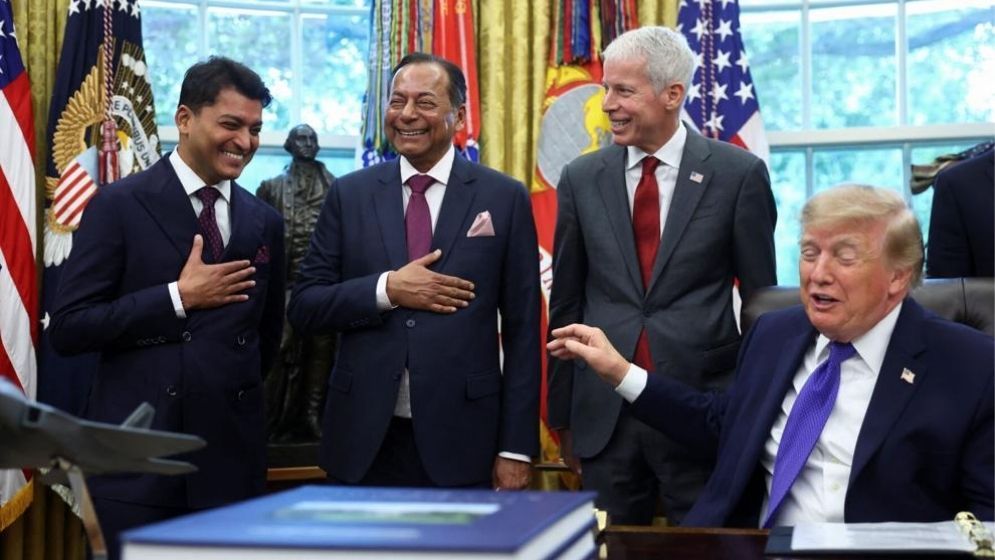
Μία από τις μεγαλύτερες ινδικές βιομηχανικές επενδύσεις που έχουν πραγματοποιηθεί στις Ηνωμένες Πολιτείες ανακοίνωσε ο Ντόναλντ Τραμπ, παρουσιάζοντας σχέδιο του ομίλου Essar για επενδύσεις συνολικού ύψους 18 δισ. δολαρίων, με επίκεντρο την κατασκευή γιγαντιαίου χαλυβουργείου στην Αϊόβα.
Δημοσιεύτηκε

στις

από τον

Το νέο εργοστάσιο, προϋπολογισμού περίπου 15 δισ. δολαρίων, θα αναπτυχθεί από την Mesabi Metallics, αμερικανική θυγατρική του ινδικού ομίλου Essar, και σύμφωνα με τον Αμερικανό πρόεδρο φιλοδοξεί να αποτελέσει το μεγαλύτερο συγκρότημα παραγωγής χάλυβα στην ιστορία των Ηνωμένων Πολιτειών.

Η ανακοίνωση έγινε στον Λευκό Οίκο, παρουσία στελεχών της οικογένειας Ruia, που ελέγχει τον όμιλο Essar.

Ο Τραμπ χαρακτήρισε το έργο «το μεγαλύτερο εργοστάσιο χάλυβα στην αμερικανική ιστορία», υποστηρίζοντας ότι θα αποτελέσει ακόμη ένα δείγμα επιστροφής της βαριάς βιομηχανίας στις ΗΠΑ.

Παραγωγή έως 10 εκατ. τόνους χάλυβα τον χρόνο

Σύμφωνα με τον σχεδιασμό, η παραγωγή αναμένεται να ξεκινήσει το 2030.

Το συγκρότημα προβλέπεται αρχικά να παράγει περίπου 7,5 εκατομμύρια τόνους χάλυβα ετησίως, με τελικό στόχο δυναμικότητας που θα φθάνει τα 10 εκατομμύρια τόνους τον χρόνο.

Ιδιαίτερη σημασία έχει το γεγονός ότι το σχέδιο βασίζεται στη δημιουργία μιας σχεδόν πλήρως καθετοποιημένης αμερικανικής αλυσίδας παραγωγής.

Το σιδηρομετάλλευμα θα προέρχεται από τις εγκαταστάσεις της Mesabi Metallics στη Μινεσότα και θα μεταφέρεται στην Αϊόβα για την παραγωγή χάλυβα, ενισχύοντας τη σύνδεση εξόρυξης, επεξεργασίας και τελικής βιομηχανικής παραγωγής εντός των Ηνωμένων Πολιτειών.

Η Mesabi έχει ήδη επενδύσει περισσότερα από 2,5 δισ. δολάρια στις δραστηριότητές της στη Μινεσότα.

Χιλιάδες θέσεις εργασίας

Το έργο αναμένεται να δημιουργήσει τουλάχιστον 1.750 μόνιμες θέσεις εργασίας, ενώ κατά τη διάρκεια της κατασκευής υπολογίζεται ότι θα υποστηριχθούν έως και 6.000 θέσεις εργασίας.

Σύμφωνα με τις εκτιμήσεις που παρουσιάστηκαν κατά την ανακοίνωση, η συνολική οικονομική επίδραση του έργου μπορεί να φτάσει περίπου τα 95 δισ. δολάρια κατά την πρώτη δεκαετία λειτουργίας του.

Τραμπ: Οι δασμοί φέρνουν τα εργοστάσια πίσω στις ΗΠΑ

Ο Αμερικανός πρόεδρος συνέδεσε άμεσα την επένδυση με την εμπορική πολιτική της κυβέρνησής του και ειδικότερα με τους υψηλούς δασμούς στις εισαγωγές χάλυβα.

Η κυβέρνηση Τραμπ παρουσιάζει τις επενδύσεις αυτές ως απόδειξη ότι οι εμπορικοί φραγμοί ωθούν ξένες εταιρείες να μεταφέρουν παραγωγική δραστηριότητα στο αμερικανικό έδαφος.

Ο Τραμπ υποστήριξε ότι η αμερικανική χαλυβουργία «επιστρέφει δυναμικά», αποδίδοντας σημαντικό μέρος αυτής της εξέλιξης στην πολιτική προστασίας της εγχώριας παραγωγής.

Η ανακοίνωση πραγματοποιείται παράλληλα με ευρύτερες αμερικανικές πρωτοβουλίες για την αντιμετώπιση της παγκόσμιας υπερπαραγωγής χάλυβα, με την Ουάσιγκτον να πιέζει και άλλες χώρες να υιοθετήσουν αυστηρότερα εμπορικά μέτρα απέναντι σε παραγωγούς με μεγάλη πλεονάζουσα παραγωγική ικανότητα.

Κρίσιμος ο χάλυβας για άμυνα και βιομηχανία

Η επένδυση έχει ευρύτερη στρατηγική σημασία, καθώς ο χάλυβας αποτελεί βασικό υλικό για μια σειρά κρίσιμων τομέων της αμερικανικής οικονομίας και εθνικής ασφάλειας.

Η παραγωγή του νέου εργοστασίου προορίζεται μεταξύ άλλων να καλύψει ανάγκες:

  • της αμυντικής βιομηχανίας,
  • της ναυπηγικής,
  • της αυτοκινητοβιομηχανίας,
  • του ενεργειακού τομέα,
  • των κατασκευών και μεγάλων υποδομών,
  • καθώς και της βιομηχανίας μηχανημάτων και οικιακού εξοπλισμού.

Ο διευθύνων σύμβουλος της Mesabi Metallics, Joe Broking, χαρακτήρισε το σχέδιο σημαντικό βήμα για τον αμερικανικής παραγωγής χάλυβα, δίνοντας ιδιαίτερη έμφαση στην ανάγκη εγχώριας τροφοδοσίας στρατηγικών βιομηχανιών.

Η Essar και η διεθνής επέκταση

Ο όμιλος Essar ιδρύθηκε στην Ινδία το 1969 από τους αδελφούς Shashi και Ravi Ruia και εξελίχθηκε σε έναν από τους σημαντικούς βιομηχανικούς ομίλους της χώρας, με δραστηριότητες στους τομείς της ενέργειας, των μετάλλων, των εξορύξεων, της τεχνολογίας και των υποδομών.

Ο όμιλος έχει αναπτύξει μεγάλα βιομηχανικά περιουσιακά στοιχεία στην Ινδία, ενώ έχει πραγματοποιήσει σημαντικές επενδύσεις και εκτός χώρας.

Στις Ηνωμένες Πολιτείες, η Mesabi Metallics έχει παρουσία στη Μινεσότα από το 2007 και ελέγχει σημαντικά αποθέματα σιδηρομεταλλεύματος.

Το σχέδιο των 18 δισ. δολαρίων σηματοδοτεί πλέον μία σαφή αναβάθμιση της παρουσίας του ινδικού ομίλου στις ΗΠΑ, αλλά ταυτόχρονα εντάσσεται και στη γενικότερη αμερικανική προσπάθεια επαναφοράς κρίσιμων παραγωγικών αλυσίδων στο εσωτερικό της χώρας.

Και πολιτική διάσταση ενόψει ενδιάμεσων εκλογών

Η επιλογή της Αϊόβα έχει και πολιτική βαρύτητα, καθώς η ανακοίνωση έρχεται λίγες εβδομάδες πριν από τις αμερικανικές ενδιάμεσες εκλογές του Νοεμβρίου.

Στην παρουσίαση συμμετείχαν στελέχη των Ρεπουμπλικανών από την Αϊόβα, ενώ ο Τραμπ δήλωσε ότι σχεδιάζει να πραγματοποιήσει προεκλογική συγκέντρωση στην Πολιτεία.

Το Reuters σημειώνει ότι η κυβέρνηση προβάλλει το έργο ως σημαντική επιτυχία της βιομηχανικής της πολιτικής, σε μια περίοδο κατά την οποία η οικονομία και η εγχώρια παραγωγή βρίσκονται ψηλά στην ατζέντα της προεκλογικής αντιπαράθεσης.

Το μέγεθος πάντως της σχεδιαζόμενης επένδυσης υπερβαίνει την άμεση πολιτική συγκυρία: εφόσον το έργο υλοποιηθεί στον προβλεπόμενο χρόνο και στην ανακοινωθείσα κλίμακα, η Essar και η Mesabi Metallics θα αποκτήσουν κομβικό ρόλο στην αμερικανική εφοδιαστική αλυσίδα χάλυβα, από την εξόρυξη του μεταλλεύματος μέχρι την τελική παραγωγή.

Συνέχεια ανάγνωσης

Αναλύσεις

CPEC 2.0 and Pakistan’s Digital Dependency on China

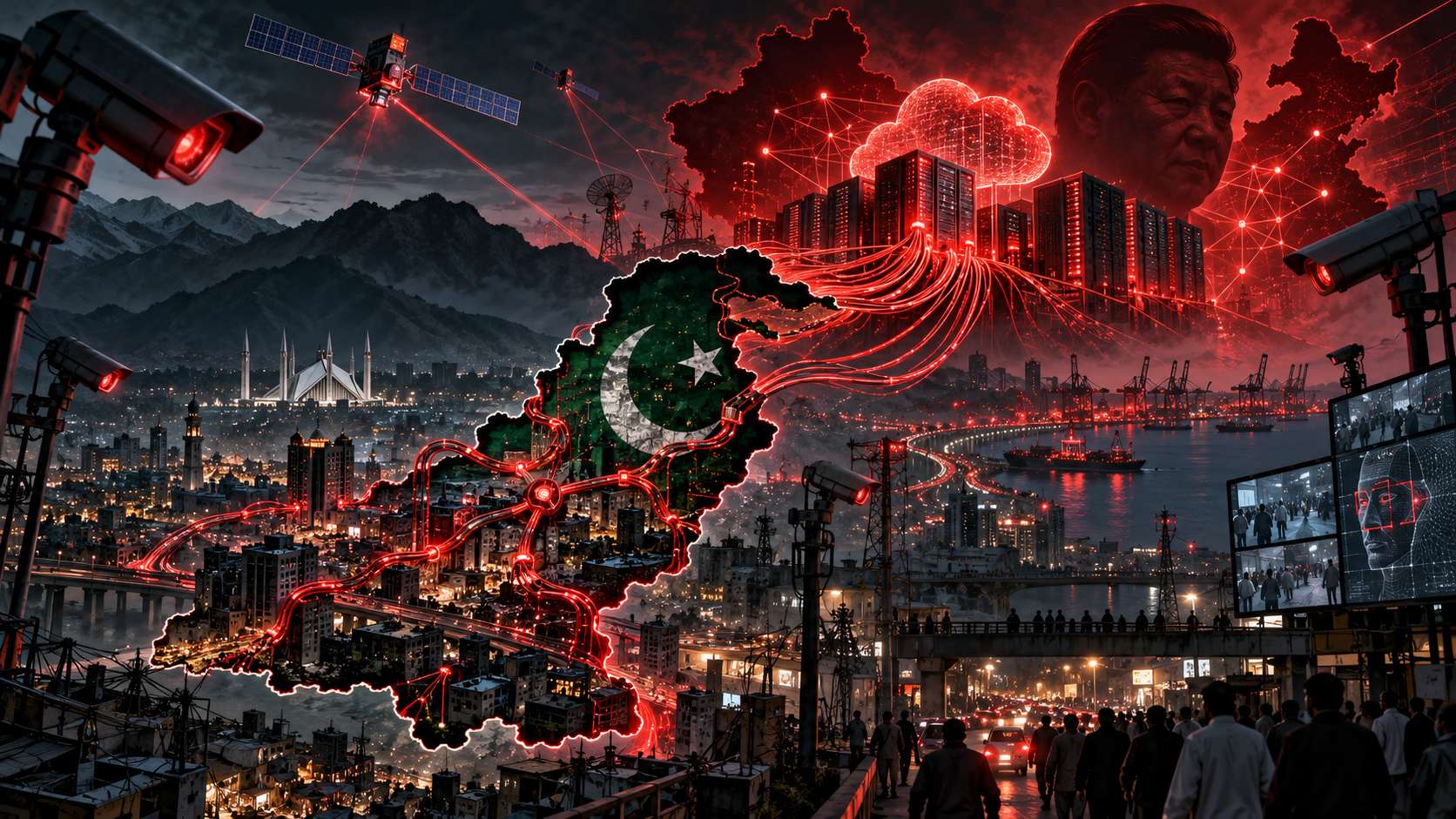
The second phase of the China-Pakistan Economic Corridor is no longer just an infrastructure story. As Chinese technology becomes embedded in Pakistan’s telecom, AI, surveillance and cloud ecosystems, CPEC 2.0 is emerging as a test case for a wider geopolitical question: can a state modernise digitally without surrendering strategic control over its data and technological architecture?
Δημοσιεύτηκε

στις

από τον

The China-Pakistan Economic Corridor entered a new stage in 2025. Known as CPEC 2.0, the second phase represents a significant departure from the original model, which was dominated by roads, energy projects, ports and other large-scale physical infrastructure.

The new agenda places greater emphasis on industrial development, agriculture and digital integration. Of these three pillars, the digital component may prove the most strategically consequential.

Pakistan’s planned transformation now extends into artificial intelligence, cloud services, data centres, 5G connectivity, smart-energy systems, agricultural technologies and urban surveillance networks. This evolution offers Islamabad access to technologies that would otherwise require major domestic investment and years of development.

But it also raises a more difficult question: who will ultimately control the technological architecture on which Pakistan’s digital economy depends?

China’s wider Digital Silk Road strategy has long focused not only on exporting hardware but also on expanding Chinese technological standards, platforms and infrastructure abroad. Under this model, physical connectivity — fibre-optic cables, satellite links, servers, data centres and telecom equipment — becomes inseparable from questions of data governance, software ecosystems and long-term strategic influence.

For Pakistan, this creates both opportunity and risk.

Chinese technology companies, particularly Huawei, have become increasingly involved in Pakistan’s telecommunications, cloud-computing, smart-city and artificial-intelligence sectors. Training programmes have also been established for Pakistani students and young professionals in areas such as AI, cybersecurity and cloud technology.

On the surface, such initiatives strengthen Pakistan’s human capital and accelerate digital readiness. Yet critics argue that they can also create a form of technological lock-in.

If engineers, government agencies and private companies are trained primarily on proprietary Chinese systems, future switching costs rise considerably. Once a country’s databases, cloud infrastructure, telecom equipment and cybersecurity architecture are built around one technological ecosystem, diversification becomes both expensive and operationally difficult.

The result could be a progressively deeper dependence on Chinese platforms, expertise and technical standards.

The question of digital sovereignty

This dependence becomes especially sensitive when technology moves from the commercial sector into critical national infrastructure.

As Pakistan develops national databases, cybersecurity systems and digital-governance platforms in close cooperation with Chinese institutions and companies, it may also be adopting, implicitly or explicitly, Chinese technical norms and data-management standards.

That matters because technological sovereignty is not simply about owning computers, servers or fibre-optic cables. It is also about maintaining control over software, code, access permissions, encryption standards, data storage and the ability to replace one supplier with another.

A country that cannot easily alter its technological architecture without external assistance may possess digital infrastructure without enjoying full digital autonomy.

This is where the debate over what some analysts describe as “digital colonialism” begins.

The term is controversial, but it captures a real strategic concern: that dependency on a foreign technology provider can eventually influence policy choices, procurement decisions, data access and national security.

In Pakistan’s case, the concern is amplified by the scale of Chinese involvement.

Western pressure could expose Pakistan’s vulnerabilities

Heavy integration into Chinese technology supply chains could also complicate Pakistan’s relationship with Western markets.

The United States and several allied governments have tightened restrictions on Chinese technology companies over concerns related to cybersecurity, data protection and national security.

If further sanctions or export controls are imposed on components, software or services linked to Chinese digital platforms, Pakistani companies deeply integrated into those ecosystems could face indirect consequences.

This could affect everything from software compatibility and equipment upgrades to access to international cloud platforms, financial systems and Western technology partnerships.

The deeper Pakistan becomes embedded in one technological sphere, the greater the potential cost of geopolitical fragmentation between China and the West.

Surveillance and the legal vacuum

The most sensitive dimension of Pakistan’s digital transformation concerns surveillance.

Pakistan still lacks a fully developed and comprehensive framework for personal-data protection. At the same time, large-scale surveillance systems are expanding through projects such as Safe City, which combine cameras, monitoring systems, databases and digital policing technologies.

Human-rights organisations have warned that sophisticated surveillance tools operating without strong institutional safeguards can facilitate privacy violations, censorship and political monitoring.

This concern is particularly serious because Pakistan has already faced international criticism regarding internet restrictions, censorship and state surveillance.

The country’s evolving digital-control architecture has at times been described as a “Great Digital Firewall of Pakistan”, reflecting the increasing technological capacity to filter communications, monitor users and restrict online activity.

Research by Amnesty International has also highlighted the international nature of Pakistan’s surveillance ecosystem, which includes technology originating not only from China but also from companies based in Europe, the United Arab Emirates and North America.

Therefore, the problem cannot be reduced simply to Chinese involvement.

However, China remains central to the wider debate because of the scale and strategic depth of its technological partnership with Islamabad.

Modernisation without ownership

Pakistan faces a genuine structural problem.

Its limited fiscal capacity, recurring economic crises and shortage of domestic capital make it extremely difficult to finance next-generation infrastructure independently.

CPEC 2.0 therefore offers something highly attractive: rapid access to digital systems, capital, expertise and technology.

But speed can carry strategic costs.

Importing ready-made digital infrastructure is easier than building a domestic technological base. Yet over time, excessive dependence on imported systems can weaken incentives to develop indigenous alternatives.

If Pakistan’s most important AI platforms, data centres, telecom systems, cybersecurity architecture and surveillance technologies remain dependent on foreign vendors, the country may modernise without becoming technologically independent.

In that scenario, Pakistan would possess advanced infrastructure but remain dependent on external suppliers for upgrades, maintenance, security patches, technical standards and specialised expertise.

From physical infrastructure to data dependence

The first phase of CPEC was largely about physical assets: highways, energy plants, logistics corridors and connectivity.

CPEC 2.0 introduces something much more intangible — and potentially more consequential.

Data itself becomes a strategic resource.

Historically, colonial powers extracted raw materials and economic resources from territories under their control. Critics of modern technological dependency argue that data, algorithms and digital infrastructure can now create comparable asymmetries of power.

Pakistan is not a colony of China, and describing the relationship literally in colonial terms would oversimplify a complex strategic partnership.

Yet the analogy highlights an important concern.

If one side provides subsidised or preferential access to digital infrastructure while also supplying the software, technical standards, hardware and institutional architecture governing that infrastructure, dependence can become structural rather than temporary.

The key question is therefore not whether Pakistan should cooperate with China.

It is whether Pakistan can cooperate while preserving the ability to control, modify and ultimately replace the systems it adopts.

Pakistan needs safeguards

To protect its long-term strategic autonomy, Islamabad would need to accompany Chinese investment with stronger domestic safeguards.

That would include strict data-localisation rules, robust personal-data legislation, domestic access to source code where national-security systems are concerned, diversified suppliers and serious investment in indigenous research and development.

Pakistan would also need to avoid building critical infrastructure around a single technological ecosystem.

The objective should be interoperability rather than dependence.

CPEC 2.0 could undoubtedly accelerate Pakistan’s digital transformation. But technological progress should not be measured solely by how quickly infrastructure is deployed.

The more important question is who controls the system once it is built.

If Pakistan’s data, AI infrastructure and surveillance networks become inseparable from Chinese technological architecture, the country may find that the short-term benefits of rapid modernisation come with a long-term strategic price.

That would not necessarily amount to colonialism in the traditional sense.

But it could create something increasingly important in the 21st century: technological path dependence powerful enough to constrain national sovereignty.
Συνέχεια ανάγνωσης

ΡΟΗ ΕΙΔΗΣΕΩΝ

GEOPOLITICO4 λεπτά πριν

Κειμήλια αντί λειψάνων Σαμουήλ: Τα ερωτήματα για τη συμφωνία με τη Βουλγαρία και τη Συνθήκη του Νεϊγύ

Ο Γιώργος Καρανίκας, με άρθρο του στον «Χρόνο», θέτει ζήτημα αντιμετώπισης των λεηλατημένων ελληνικών θησαυρών ως αντικειμένων ανταλλαγής. Η υποχρέωση...
GEOPOLITICO34 λεπτά πριν

Μουντζουρούλιας: «Πού είναι η ελληνική αντίδραση;» – Μακεδονικό, γαλλοτουρκική προσέγγιση και αποτροπή στο Αιγαίο

Αιχμές για τις αναφορές της Ούρσουλα φον ντερ Λάιεν, ερωτήματα για τη στάση του Παρισιού απέναντι στην Άγκυρα και ανάλυση...

GEOPOLITICO54 λεπτά πριν

Η Nexans διαψεύδει το σχέδιο ενημέρωσης της Τουρκίας για το καλώδιο Ελλάδας–Κύπρου

Η γαλλική εταιρεία ξεκαθαρίζει ότι δεν είχε ούτε σχεδιάζει επαφές με την Άγκυρα για τις έρευνες βυθού. Η επιστολή στην...
GEOPOLITICO2 ώρες πριν

Μάζης: «Αυτό δεν είναι ενημέρωση, είναι υποτέλεια» – Προειδοποίηση για το καλώδιο και την Τουρκία

Ο καθηγητής, μιλώντας στη «Ναυτεμπορική», προειδοποίησε ότι μια ειδική ενημέρωση της Άγκυρας για το ηλεκτρικό καλώδιο μπορεί να αξιοποιηθεί ως...

school of gray fish school of gray fish
GEOPOLITICO11 ώρες πριν

Θεσσαλονίκη: Αλιείς «έσπασαν» την απεργία και αγόρασαν ψάρια από τουρκικό φορτηγό

Ένταση προκαλεί στη Θεσσαλονίκη υπόθεση αγοραπωλησίας αλιευμάτων εκτός ιχθυόσκαλας, την ώρα που ο κλάδος βρίσκεται σε κινητοποιήσεις. Βίντεο που παρουσίασε...

Δημοφιλή