By Andrew Gavin Marshall Global Research, July 15, 2011
In late June of 2011, the Greek government passed another round of austerity measures, ostensibly aimed at getting Greece “back on track” to economic progress, but in reality, implementing a systematic program of ‘social genocide’ in the name of servicing an endless and illegitimate debt to foreign banks. Right on cue, protests and riots broke out in Athens against the draconian measures, and the state moved in to do what states do best: oppress the people with riot police, tear gas and bashing batons, leaving roughly 300 people injured.
Is Greece simply a case of a country full of lazy people who spent beyond their means and are now paying for their own decadence? Or, is there something much larger at stake – and at play – here? Greece is, in fact, a microcosm of the global economy: mired in excessive debt, economically ruined, increasingly politically repressive and socially explosive. This report takes a look at the case of the Greek debt crisis specifically, and places it within a wider global context. The conclusion is clear: what happens in Greece will happen here.
This report examines the Greek crisis, as well as the larger global economic crisis, including the origins of the housing bubble, the bailouts, the banks, and the major actors and institutions which will come to dominate the stage over the next decade in what will play out as ‘The Great Global Debt Depression.’
An Olympian Debt
With the global economic crisis rampaging throughout the world in 2008, Greece experienced major protests and riots at government reactions to the crisis. The unpopularity of the government led to an election in which a Socialist government came to power in October of 2009 under the premise of promising an injection of 3 billion euros in order to revive the Greek economy.[1] When the government came to power, they inherited a debt that was double that which the previous government had disclosed. This prompted Greece’s entry into a major debt crisis, as the debt was roughly 127% of Greece’s GDP in 2009, and thus, the costs of borrowing rose exponentially.
In April of 2010, Greece had to seek a bailout by the EU and the IMF in order to pay the interest on its debt. However, by taking such a bailout from the EU and IMF, Greece ultimately incurred a larger long-term debt, as the money from these institutions simply added to the overall debt, and thus, actually increased eventual interest payments on that debt. Thus, we see the true nature of debt: a financial form of slavery. Debt is designed in such a way that, like a fly caught in a spider’s web, the more it struggles, the more entangled it gets; the more it struggles to break free, the more it arouses the attention of the spider, which quickly moves in to strike its prey – paralyzed – with its venom, so that it may wrap the fly in its silk and eat it alive. Debt is the silk, the people are the fly, and the spider is the large financial institutions – from the banks to the IMF. The nature of debt is that one is never meant to be able to escape it. Hence, the “solution” for Greece’s debt problem – according to those who decide policy – is for Greece to acquire more debt. Of course, this new debt is used to pay the interest on the old debt (note: it is not used to pay OFF the old debt, just the interest on it). However, the effect this has is that it increases the over-all debt of the nation, which leads to higher interest payments and thus a greater cost of borrowing. This, ultimately, leads to a need to continue borrowing in order to pay off the higher interest payments, and thus, the cycle continues. For all the “bail outs” and aims at addressing Greece’s debt, this prescription inevitably results in greater debt levels than those which induced the debt crisis in the first place.
So why is this the prescription?
Not only does this prescription incur more debt to pay interest on old debt, but the process of borrowing and “consolidating” debt has devastating social and political consequences. For example, in the case of Greece, in order to receive loans from the IMF and EU, Greece was forced to impose “fiscal austerity measures.” This blatantly ambiguous economic nomenclature of “fiscal austerity” is in fact more accurately described in real human terms as “social genocide.” Why is this so?
‘Fiscal Austerity’ means that the state – in this case, Greece – must engage in “fiscal consolidation.” In economic parlance, this implies that the state must cut spending and increase taxes in order to “service” its debt by reducing its annual deficit. Thus, the ‘conditions’ for receiving a loan demand “fiscal austerity” measures being implemented by the debtor nation. This is supposedly a way for the lender to ensure that their loans are met with appropriate measures to deal with the debt. The objective, purportedly, is to reduce expenditure (spending) and increase revenue (income), allowing for more money to pay off the debt. However, as with most economic concepts, the reality is far different than the theoretical implications of “fiscal austerity.”
In fact, ‘fiscal austerity’ is a state-implemented program of social destruction, or ‘social genocide’. Such austerity measures include cutting social spending, which means no more health care, education, social services, welfare, pensions, etc. This directly implies a massive wave of layoffs from the public sector, as those who worked in health care, education, social services, etc., have their jobs eliminated. This, naturally, creates a massive growth in poverty rates, with the jobless and homeless rates climbing dramatically. Simultaneously, of course, taxes are raised drastically, so that in a social situation in which the middle and lower classes are increasingly impoverished, they are then over-taxed. This creates a further drain of wealth, and consumption levels go down, further driving production levels downward, and (local) private businesses cannot compete with foreign multinational conglomerates, and so businesses close and more lay-offs take place. After all, without a market for consumption, there is no demand for production. In a country such as Greece, where the percentage of people in the employ of the state is roughly 25%, these measures are particularly devastating.
Naturally, in such situations, the masses of people – those who are doomed to suffer most – are left greatly impoverished and the middle classes essentially vanish, and are absorbed into the lower class. As social services vanish when they are needed most, life expectancy rates decrease. With few jobs and massive unemployment, many are left to choose between buying food or medicine, if those are even options. Crime rates naturally increase in such situations, as desperate conditions breed desperate actions. This creates, especially among the educated youth who graduate into a jobless market, a ‘poverty of expectations,’ having grown up with particular expectations of what they would have in terms of opportunities, which then vanish quite suddenly. This results in enormous social stress, and often, social unrest: protests, riots, rebellion, and even revolution in extreme circumstances. These are exactly the conditions that led to the uprising in Egypt.
The reflexive action of states, therefore, is to move in to repress – most often quite violently – protests and demonstrations. The aim here is to break the will of the people. Thus, the more violent and brutal the repression, the more likely it is that the people may succumb to the state and consent – even if passively – to their social conditions. However, as the state becomes more repressive, this often breeds a more reactive and radical resistance. When the state oppresses 500 people one day, 5,000 may show up the next. This requires, from the view of the state, an exponentially increased rate of oppression. The risk in this strategy is that the state may overstep itself and the people may become massively mobilized and intensely radicalized and overthrow – or at least overcome – the power of the state. In such situations, the political leadership is often either urged by a foreign power to leave (such as in the case of Egypt’s Mubarak), or flees of their own will (such as in Argentina), in order to prevent a true revolution from taking place. So, while the strategy holds enormous risk, it is often employed because it also contains possible reward: that the state may succeed in destroying the will of the people to resist, and they may subside to the will of the state and thereby consent to their new conditions of social genocide.
Social genocide is a slow, drawn-out and incremental process. Its effects are felt by poor children first, as they are those who need health care and social services more than any other, and are left hungry and unable to go to school or work. They are the ‘forgotten’ of society, and they suffer deeply as such. The reverberations, however, echo throughout the whole of society. The rich get richer and the poor get poorer, while the middle class is absorbed into poverty.
The rich get richer because through economic crises, they consolidate their businesses and receive tax breaks and incentives from the state (as well as often direct infusions of cash investments – bailouts – from the state), purportedly to increase private capital and production. This aspect of “fiscal austerity” is undertaken in the wider context of what is referred to as “Structural Adjustment.”
This term refers to the loans from the World Bank and IMF that began in the late 1970s and early 1980s in their lending to ‘Third World’ nations in the midst of the 1980s debt crisis. Referred to as “Structural Adjustment Programs,” (SAPs) any nation wanting a loan from the World Bank or IMF needed to sign a SAP, which set out a long list of ‘conditionalities’ for the loan. These conditions included, principally, “fiscal austerity measures” – cutting social spending and raising taxes – but also a variety of other measures: liberalization of markets (eliminating any trade barriers, subsidies, tariffs, etc.), supposedly to encourage foreign investment which it was theorized would increase revenue to pay off the debt and revive the economy; privatization (privatizing all state-owned industries), in order to cut state spending and encourage foreign direct investment (FDI), which again – in theory – would create revenue and reduce debt; currency devaluation (which would make foreign dollars buy more for less), again, under the aegis of encouraging investment by making it cheaper for foreign companies to buy assets within the country.
However, the effects that these ‘structural adjustment programs’ had were devastating. Liberalizing markets would eliminate subsidies and protections which were desperately needed in order for these ‘developing’ nations to compete with the industrialized powers of America and Europe (who, in a twisted irony, heavily subsidize their agriculture in order to make it cheaper to foreign markets). For example, a small country in Africa which was dependent upon a particular agricultural export had heavily subsidized this commodity, (which keeps the price low and thus increases its demand as an exported commodity), then was ordered by the IMF and World Bank to eliminate the subsidy. The effect was that foreign agricultural imports, say from the United States or Europe, were cheaper not only in the international market, but also in the nation’s domestic market. Thus, grains imported from America would be cheaper than those grown in neighbouring fields. The effect this had in an increasingly-impoverished nation was that they would become dependent upon foreign imports for food and agriculture (as well as other commodities), while the domestic industries would suffer and be bought out by foreign multinational corporations, thus increasing poverty, as many of these nations were heavily dependent upon their agricultural sectors as they were often still largely rural societies in some respects. This would accelerate urbanization and urban poverty, as people leave the countryside and head to the cities looking for work, where there was none.
Privatization, for its part, would eliminate state-owned industries, which in many developing nations of the post-World War II era, were the major employers of the population. Thus, massive unemployment would result. As foreign multinational corporations – largely American or European – would come in and buy up the domestic industries, they would often cooperate with the dominant domestic corporations and banks – or create domestic subsidiaries of their own – and consolidate the markets and industries. Thus, the effect would be to strengthen a domestic elite and entrench an oligarchy in the nation. The rich would get richer, profiting off of their cooperation and integration with the international economic system, and they would then come to rely ever-more on the state for protection from the masses.
The devaluation of currencies would, while making commodities and investments cheaper for foreign multinationals and banks, simultaneously make it so that for the domestic population, it would require more money to buy less products than before. This is called inflation, and is particularly brutal in the case of buying food and fuel. For a population whose wages are frozen (as a requirement of ‘fiscal austerity’), their income (for those that have an income) does not adjust to the rate of inflation, hence, they make the same dollar amount even though the dollar is worth much less than before. The result is that their income purchases much less than it used to, increasing poverty.
This is ‘Structural Adjustment.’ This is ‘fiscal austerity.’ This is social genocide.
Debt and Derivatives
Greece has a total debt of roughly 330 billion euros (or U.S. $473 billion).[2] So how did this debt get out of control? As it turned out, major U.S. banks, specifically J.P. Morgan Chase and Goldman Sachs, “helped the Greek government to mask the true extent of its deficit with the help of a derivatives deal that legally circumvented the EU Maastricht deficit rules.” The deficit rules in place would slap major fines on euro member states that exceeded the limit for the budget deficit of 3% of GDP (gross domestic product), and that the total government debt must not exceed 60% of GDP. Greece hid its debt through “creative accounting,” and in some cases, even left out huge military expenditures. While the Greek government pursued its “creative accounting” methods, it got more help from Wall Street starting in 2002, in which “various investment banks offered complex financial products with which governments could push part of their liabilities into the future.” Put simply, with the help of Goldman Sachs and JP Morgan Chase, Greece was able to hide its debt in the future by transferring it into derivatives. A large deal was signed with Goldman Sachs in 2002 involving derivatives, specifically, cross-currency swaps, “in which government debt issued in dollars and yen was swapped for euro debt for a certain period — to be exchanged back into the original currencies at a later date.” The banks helped Greece devise a cross-currency swap scheme in which they used fictional exchange rates, allowing Greece to swap currencies and debt for an additional credit of $1 billion. Disguised as a ‘swap,’ this credit did not show up in the government’s debt statistics. As one German derivatives dealer has stated, “The Maastricht rules can be circumvented quite legally through swaps.”[3]
In the same way that homeowners take out a second mortgage to pay off their credit card debt, Goldman Sachs and JP Morgan Chase and other U.S. banks helped push government debt far into the future through the derivatives market. This was done in Greece, Italy, and likely several other euro-zone countries as well. In several dozen deals in Europe, “banks provided cash upfront in return for government payments in the future, with those liabilities then left off the books.” Because the deals are not listed as loans, they are not listed as debt (liabilities), and so the true debt of Greece and other euro-zone countries was and likely to a large degree remains hidden. Greece effectively mortgaged its airports and highways to the major banks in order to get cash up-front and keep the loans off the books, classifying them as transactions.[4]
Further, while Goldman Sachs was helping Greece hide its debt from the official statistics, it was also hedging its bets through buying insurance on Greek debt as well as using other derivatives trades to protect itself against a potential Greek default on its debt. So while Goldman Sachs engaged in long-term trades with Greek debt (meaning Greece would owe Goldman Sachs a great deal down the line), the firm simultaneously was betting against Greek debt in the short-term, profiting from the Greek debt crisis that it helped create.[5]
This is not an unusual tactic for the company to engage in. As a two-year Senate investigation into Goldman Sachs revealed in April of 2011, “Goldman Sachs Group Inc. profited from the financial crisis by betting billions against the subprime mortgage market, then deceived investors and Congress about the firm’s conduct.”[6] In 2007, as the housing crisis was gaining momentum, Goldman Sachs executives sent emails to each other explaining that they were making “some serious money” by betting against the housing market, a giant bubble which they and other Wall Street firms had helped create. So while the bank had a large exposure (risk) in the housing market, by holding significant derivatives in trading mortgages (mortgage-backed securities, collateralized debt obligations, credit default swaps, etc.), the same bank also used the derivatives market to bet against the housing market as it crashed – a type of self-fulfilling prophecy – which further drove the market down (as speculation does), and thus, Goldman Sachs profited from the crisis it created and made worse.[7]
The derivatives market is a very important feature not only in the housing bubble and bust of 2008, but also in the current Greek crisis, and will remain an important facet of the unfolding global debt crisis. The current global derivatives market was developed in the 1990s. Derivatives are referred to as “complex financial instruments” in which they are traded between two parties and their value is derived (hence: “deriv-ative”) from some other entity, be it a commodity, stock, debt, currency or mortgage, to name a few. There are several types of derivatives. One example is a ‘put option,’ which is betting that a particular stock, commodity or other asset will fall in price over the short term; that way, those who purchase put options will profit from the fall in prices of the asset bet on.
Who Built the Bubble?
One of the most common derivatives is a credit default swap (CDS). These ‘financial instruments’ were developed by JP Morgan Chase in 1994 as a sort of insurance policy. The aim, as JP Morgan at the time had tens of billions of dollars on the books as loans to corporations and foreign governments, was to trade the debt to a third party (who would take on the risk), and would then receive payments from the bank; thus, JP Morgan would be able to remove the risk from its books, freeing up its reserves to make more loans. JP Morgan was the first bank to make it big on credit default swaps, opening the first credit default swaps desk in New York in 1997, “a division that would eventually earn the name ‘the Morgan Mafia’ for the number of former members who went on to senior positions at global banks and hedge funds.” The credit default swaps played a large part in the housing boom:
As the Federal Reserve cut interest rates and Americans started buying homes in record numbers, mortgage-backed securities became the hot new investment. Mortgages were pooled together, and sliced and diced into bonds that were bought by just about every financial institution imaginable: investment banks, commercial banks, hedge funds, pension funds. For many of those mortgage-backed securities, credit default swaps were taken out to protect against default.[8]
Of course, there were a great many players in the financial crisis: bankers, economists, politicians, regulators, etc. The confusion of the situation has allowed all those who are culpable to point the finger at one another and place blame on each other. For example, Jamie Dimon, CEO of JPMorganChase, referred to the government-chartered mortgage lending companies, Fannie Mae and Freddie Mac, as “the biggest disasters of all time,” blaming them for encouraging the banks to make the bad loans in the first place.[9] Of course, he had an ulterior motive in removing blame from himself and the other banks.
There is, however, some truth to his contention, but the situation is more complex. Fannie Mae was created in 1938 after the Great Depression to provide local banks with federal money in order to finance home mortgages with an aim to increase home ownership. In 1968, Fannie Mae was transformed into a publicly held corporation, and in 1970, the government created Freddie Mac to compete with Fannie Mae in providing home mortgages. In 1992, President George H.W. Bush signed the Housing and Community Development Act of 1992, which included amendments to the charters of Fannie Mae and Freddie Mac, stating that they “have an affirmative obligation to facilitate the financing of affordable housing for low- and moderate-income families.”[10]
In 1992, the U.S. Department of Housing and Urban Development (HUD) subsequently became the ‘regulator’ of Fannie Mae and Freddie Mac. In 1995, Bill Clinton’s HUD “agreed to let Fannie and Freddie get affordable-housing credit for buying subprime securities that included loans to low-income borrowers.”[11] In 1996, HUD “gave Fannie and Freddie an explicit target — 42% of their mortgage financing had to go to borrowers with income below the median in their area.”[12] In a 1999 article in the New York Times, it was reported that, “the Fannie Mae Corporation is easing the credit requirements on loans that it will purchase from banks and other lenders.” The action, reported the Times, “will encourage those banks to extend home mortgages to individuals whose credit is generally not good enough to qualify for conventional loans.” It began in 1999 as a pilot program involving 24 banks in 15 markets (including New York), and had hoped to make it nationwide by Spring 2000. The article went on:
Fannie Mae, the nation’s biggest underwriter of home mortgages, has been under increasing pressure from the Clinton Administration to expand mortgage loans among low and moderate income people and felt pressure from stock holders to maintain its phenomenal growth in profits.
In addition, banks, thrift institutions and mortgage companies have been pressing Fannie Mae to help them make more loans to so-called subprime borrowers. These borrowers whose incomes, credit ratings and savings are not good enough to qualify for conventional loans, can only get loans from finance companies that charge much higher interest rates — anywhere from three to four percentage points higher than conventional loans.[13]
The loans going to low-income households increased the rate given to African Americans, as in the conventional loan market, black borrowers accounted for 5% of loans, whereas in the subprime market, they accounted for 18% of loans. The article itself warned that Fannie Mae “may run into trouble in an economic downturn, prompting a government rescue.”[14] In 2000, as housing prices increased, the U.S. Department of Housing and Urban Development (HUD), under Bill Clinton, continued to encourage loans to low-income borrowers.
Just in time, the Federal Reserve (the central bank of the United States) dramatically lowered interest rates and kept them artificially low in order to encourage the lending by mortgage lenders and banks, and to encourage borrowing by low-income individuals and families, essentially lulling them into a false sense of security. This ‘easy money’ flowing from the Federal Reserve’s low interest rates and printing press (as the Fed is responsible for the amount of money pumped into the U.S. economy), oiled the wheels of the mortgage lenders and the banks that were making bad loans to high-risk individuals. In the 1990s, the Federal Reserve under Chairman Alan Greenspan had created the dot-com bubble, which burst (as all bubbles do), and subsequently, in order to avoid a deep recession, Greenspan and the Federal Reserve actively inflated the housing bubble. So, with the dot-com bubble bursting in 2000 (brought to you by Alan Greenspan and the Federal Reserve), Greenspan’s Fed then cut interest rates to historic lows and began pumping out money in order to prevent a downward spiral of the economy, which would later prove to be inevitable. This also encouraged rabid speculation in the derivatives market, in particular by hedge funds, managing money from banks, who engaged in high-risk trades taking advantage of the uniquely low interest rates in order to purchase derivatives which provide more long-term gains, further fuelling a massive speculative bubble.[15]
Transcripts from a 2004 meeting of Federal Reserve officials revealed a debate about whether there was an inflating housing bubble, at which Greenspan stated that dissent should be kept secret so that the debate does not reach a wider audience (i.e., the ‘public’). As he stated, “We run the risk, by laying out the pros and cons of a particular argument, of inducing people to join in on the debate, and in this regard it is possible to lose control of a process that only we fully understand.”[16] In 2005, the Fed officials were openly acknowledging the existence of a bubble, but continued with their policies all the same.[17] In 2005, Alan Greenspan left the Fed to be replaced by Ben Bernanke, who that year told Congress that there was no housing bubble, and that the increases in hosuing prices “largely reflect strong economic fundamentals.”[18]
The bubble was fuelled in a number of ways. The Federal Reserve kept the interest rates at historic lows, which encouraged both lending and borrowing. The Fed also pumped large amounts of money into the economy for the purpose of lending and borrowing. The government-sponsored mortgage companies of Freddie Mac and Fannie Mae encouraged the banks to make bad loans to high-risk individuals (and provided significant funds to do so). The banks, all too happy to make bad loans to high-risk borrowers, then used the derivatives market they created to profit off of those loans (and further inflate the bubble), through trading primarily Credit Default Swaps (CDS). As the Fed’s long-term interest rates were kept artificially low, the banks speculated through the derivatives market that the housing market would continue to grow apace, and massive amounts of speculative money flowed into the housing bubble, which itself further increased confidence of banks and mortgage companies to lend, as well as individuals to borrow. Of course, the reality was that the individuals were high-risk for a reason: because they couldn’t afford to pay. Thus, it was an inevitable result that this massive and ever-increasing bubble built on nothing but bank-created and government-sponsored ‘faith’ was destined to burst.
Of course, when the bubble burst, the major banks were in a unique position to profit immensely from the collapse through speculation, and then, of course, repossess everyone’s homes. In order for financial speculation to be such a menace in the global economy as it is today, the Clinton administration took the bold steps necessary to eradicate the barriers to such destructive financial practices and facilitate the rapid and unregulated growth of the derivatives market. This was termed the “financialization” of the U.S. economy, and de facto, much of the global economy.
The Glass-Steagall Act was put in place by FDR in 1933 in order to establish a barrier between investment banks and commercial banks and to prevent them from engaging in rabid speculative practices (a major factor which created the Great Depression). However, in 1987, the Federal Reserve Board voted to ease many regulations under the act, after hearing “proposals from Citicorp, J.P. Morgan and Bankers Trust advocating the loosening of Glass-Steagall restrictions to allow banks to handle several underwriting businesses, including commercial paper, municipal revenue bonds, and mortgage-backed securities.” Alan Greenspan, in 1987, “formerly a director of J.P. Morgan and a proponent of banking deregulation – [became] chairman of the Federal Reserve Board.” In 1989, “the Fed Board approve[d] an application by J.P. Morgan, Chase Manhattan, Bankers Trust, and Citicorp to expand the Glass-Steagall loophole to include dealing in debt and equity securities in addition to municipal securities and commercial paper.” In 1990, “J.P. Morgan [became] the first bank to receive permission from the Federal Reserve to underwrite securities.”[19]
In 1998, the House of Representatives passed “legislation by a vote of 214 to 213 that allow[ed] for the merging of banks, securities firms, and insurance companies into huge financial conglomerates.” And in 1999, “After 12 attempts in 25 years, Congress finally repeal[ed] Glass-Steagall, rewarding financial companies for more than 20 years and $300 million worth of lobbying efforts.”[20]
[In] the late 1990s, with the stock market surging to unimaginable heights, large banks [were] merging with and swallowing up smaller banks, and a huge increase in banks having transnational branches, Wall Street and its many friends in congress wanted to eliminate the regulations that had been intended to protect investors and stabilize the financial system. Hence the Gramm-Leach-Bliley Act of 1999 repealed key parts of Glass-Steagall and the Bank Holding Act and allowed commercial and investment banks to merge, to offer home mortgage loans, sell securities and stocks, and offer insurance.[21]
The principal adherents for the repeal of Glass-Steagle were Alan Greenspan, as well as Treasury Secretary Robert Rubin (who had been with Goldman Sachs for 26 years prior to entering the Treasury), and Deputy Treasury Secretary Larry Summers (who was previously the Chief Economist of the World Bank). After largely orchestrating the removal of Glass-Steagle, Rubin went on to become an executive at Citigroup and is currently the Co-Chairman of the Council on Foreign Relations; while Summers went on to become President of Harvard University and later, served as Director of the White House National Economic Council for the first couple years of the Obama administration. Larry Summers had sparked controversy when he was Chief Economist of the World Bank, and in 1991, signed a memo in which he endorsed toxic waste dumping in poor African countries, stating, “A given amount of health-impairing pollution should be done in the country with the lowest cost, which will be the country with the lowest wages,” and further, “I think the economic logic behind dumping a load of toxic waste in the lowest-wage country is impeccable and we should face up to that.”[22] The “impeccable logic” Summers referred to was the notion that in countries with the lowest life expectancy, dumping toxic waste is intelligent, because statistically speaking, the population of the country is more likely to die before the long-term health impacts of the toxic waste take effect. Put more bluntly: the poor should be the first to die.
The most prestigious (and arguably most powerful) financial institution in the world is the Bank for International Settlements (BIS). One might say it’s the most powerful institution you never heard of, since it is rarely discussed, even more rarely studied, and barely understood at all. It is, essentially, a global central bank for the world’s central banks, and de facto acts as an independent global banking supervisory body, establishing agreements for the practices of central banks and private banks. In 2004, the BIS established the Basel II accords to manage capital risk by banks. Basel II was “intended to keep banks safe by requiring them to match the size of their capital cushion to the riskiness of their loans and securities. The higher the odds of default, the less they can lend.” However, as the regulations were being implemented in 2008 in the midst of the financial crisis, it lessened the ability of banks to lend, and thus, deepened the financial crisis itself.[23] The BIS, formed in 1930 in the wake of the Great Depression, was created in order to “remedy the decline of London as the world’s financial center by providing a mechanism by which a world with three chief financial centers in London, New York, and Paris could still operate as one.” As historian Carroll Quigley wrote:
[T]he powers of financial capitalism had another far-reaching aim, nothing less than to create a world system of financial control in private hands able to dominate the political system of each country and the economy of the world as a whole. This system was to be controlled in a feudalist fashion by the central banks of the world acting in concert, by secret agreements arrived at in frequent private meetings and conferences. The apex of the system was to be the Bank for International Settlements in Basle, Switzerland, a private bank owned and controlled by the world’s central banks which were themselves private corporations.[24]
In 2007, the BIS released its annual report warning that the world was on the verge of another Great Depression, as “years of loose monetary policy has fuelled a dangerous credit bubble, leaving the global economy more vulnerable to another 1930s-style slump than generally understood.” Among the worrying signs cited by the BIS were “mass issuance of new-fangled credit instruments, soaring levels of household debt, extreme appetite for risk shown by investors, and entrenched imbalances in the world currency system.” The BIS hinted at the U.S. Federal Reserve when it warned that, “central banks were starting to doubt the wisdom of letting asset bubbles build up on the assumption that they could safely be ‘cleaned up’ afterwards.”[25]
In 2008, the outgoing Chief Economist of the BIS, William White, authored the annual report of the BIS in which he again warned that, “The current market turmoil is without precedent in the postwar period. With a significant risk of recession in the US, compounded by sharply rising inflation in many countries, fears are building that the global economy might be at some kind of tipping point.” In 2007, warned the BIS, global banks had $37 trillion of loans, equaling roughly 70% of global GDP, and that countries were already so indebted that monetization (printing money) could simply sow the seeds of a future crisis.[26]
Bailout the Bankers, Punish the People
In the fall of 2008, the Bush administration sought to implement a bailout package for the economy, designed to save the US banking system. The leaders of the nation went into rabid fear mongering. Advertising the bailout as a $700 billion program, the fine print revealed a more accurate description, saying that $700 billion could be lent out “at any one time.” As Chris Martenson wrote:
This means that $700 billion is NOT the cost of this dangerous legislation, it is only the amount that can be outstanding at any one time. After, say, $100 billion of bad mortgages are disposed of, another $100 billion can be bought. In short, these four little words assure that there is NO LIMIT to the potential size of this bailout. This means that $700 billion is a rolling amount, not a ceiling.
So what happens when you have vague language and an unlimited budget? Fraud and self-dealing. Mark my words, this is the largest looting operation ever in the history of the US, and it’s all spelled out right in this delightfully brief document that is about to be rammed through a scared Congress and made into law.[27]
Further, as the bailout agreement stipulated, it essentially hands the Federal Reserve and the U.S. Treasury total control over the nation’s finances in what has been termed a “financial coup d’état” as all actions and decisions by the Fed and the Treasury Secretary may be done in secret and are not able to be reviewed by Congress or any other administrative or legal agency.[28] Passed in the last months of the Bush administration, the Obama administration further implemented the bailout (and added a stimulus package on top of it).
The banks got a massive bailout of untold trillions, and they were simultaneously consolidating the industry and merging with one another. In 2008, with the collapse of Bear Stearns, JP Morgan Chase bought the failed bank with funds in an agreement organized by the Federal Reserve Bank of New York, whose President at the time was Timothy Geithner (who would go on to become Obama’s Treasury Secretary, managing the major bailout program). As JPMorganChase was the ultimate benefactor of the Bear Stearns purchase by the NYFed, it is perhaps no small coincidence that Jamie Dimon, CEO of JPMorganChase, was on the board of the New York Fed, a privately-owned bank, of which JPMorganChase is itself a major shareholder. JPMorganChase later absorbed Washington Mutual, one of the nation’s largest banks prior to the crisis; Bank of America bought Merrill Lynch; Wells Fargo bought Wachovia; and a host of other mergers and acquisitions took place. Thus, the “too big to fail” banks became much bigger and more dangerous than ever before.
Among the many recipients of bailout funds (officially referred to as the Troubled Asset Relief Program – TARP), were Fannie Mae, AIG (insurance), Freddie Mac, General Motors, Bank of America, Citigroup, JPMorgan Chase, Wells Fargo, Goldman Sachs, Morgan Stanley, and hundreds of others.[29] As the Federal Reserve dished out trillions of dollars in bailouts to banks, many European banks even became recipients of American taxpayer-funded bailouts, including Barclays, UBS, the Royal Bank of Scotland, and Société Générale, among many others.[30] The Federal Reserve bailout of American insurance giant AIG was actually a stealth bailout of foreign banks, as the money went through AIG to the major European banks that had significant risks with AIG, including Société Générale of France, UBS of Belgium, Barclays of the U.K., and Deutsche Bank of Germany.[31] In total, the multi-billion dollar bailout of AIG in 2008 benefited roughly 87 banks and financial institutions, 43 of which were foreign, primarily located in France and Germany, but also in the U.K., Canada, the Netherlands, Denmark, and Switzerland, and on the domestic side much of the funds went to Goldman Sachs, JPMorgan Chase, and Bank of America.[32]
Neil Barofsky, who was until recently, the special inspector general for the TARP bailout program – the individual responsible for attempting to engage in oversight of a secret bailout program – wrote an article for the New York Times upon his resignation from the position in March of 2011, in which he stated that he “strongly disagrees” that the program was successful, saying that:
billions of dollars in taxpayer money allowed institutions that were on the brink of collapse not only to survive but even to flourish. These banks now enjoy record profits and the seemingly permanent competitive advantage that accompanies being deemed “too big to fail.”[33]
In June of 2009, as governments around the world were implementing stimulus packages and bailouts to save the banks and ‘rescue’ their economies, the Bank for International Settlements (BIS) issued a new round of warnings about the state of the global economy. Among them, the BIS warned that, “governments and central banks must not let up in their efforts to revive the global banking system, even if public opinion turns against them,” and that the BIS felt that there had only been “limited progress” in reviving the banking system. The BIS continued:
Instead of implementing policies designed to clean up banks’ balance sheets, some rescue plans have pushed banks to maintain their lending practices of the past, or even increase domestic credit where it’s not warranted… The lack of progress threatens to prolong the crisis and delay the recovery because a dysfunctional financial system reduces the ability of monetary and fiscal actions to stimulate the economy… without a solid banking system underpinning financial markets, stimulus measures won’t be able to gain traction, and may only lead to a temporary pickup in growth.[34]
Further, the BIS warned, “A fleeting recovery could well make matters worse,” as “further government support for banks is absolutely necessary, but will become unpopular if the public sees a recovery in hand. And authorities may get distracted with sustaining credit, asset prices and demand rather than focusing on fixing bank balance sheets.” The BIS concluded that all the various measures to revive the global economy leave an “open question” as to whether or not they will be successful, and specifically, “as governments bulk up their deficits to spend their way out of the crisis, they need to be careful that their lack of restraint doesn’t come back to bite them.” As the annual report warned, “Getting public finances in order will therefore be the main task of policy makers for years to come.”[35]
The BIS further warned that, “there’s a risk central banks will raise interest rates and withdraw emergency liquidity too late, triggering inflation,” as history shows policy-makers “have a tendency to be late, tightening financial conditions slowly for fear of doing it prematurely or too severely.” As Bloomberg reported:
Central banks around the globe have lowered borrowing costs to record lows and injected billions of dollars into the financial system to counter the worst recession since World War II. While some policy makers have stressed the need to withdraw the emergency measures as soon as the economy improves, the Federal Reserve, Bank of England, and European Central Bank are still in the process of implementing asset-purchase programs designed to unblock credit markets and revive growth.
“The big and justifiable worry is that, before it can be reversed, the dramatic easing in monetary policy will translate into growth in the broader monetary and credit aggregates,” the BIS said. That will “lead to inflation that feeds inflation expectations or it may fuel yet another asset-price bubble, sowing the seeds of the next financial boom-bust cycle.”[36]
The BIS report stated that the unprecedented policies of central banks “may be insufficient to put the economy on the path to recovery,” stressing that there was a “significant risk” that the monetary and fiscal stimulus of governments will only lead to “a temporary pickup in growth, followed by a protracted stagnation.”[37]
William White, the former Chief Economist of the BIS, warned in September of 2009 that, “the world has not tackled the problems at the heart of the economic downturn and is likely to slip back into recession,” and he “also warned that government actions to help the economy in the short run may be sowing the seeds for future crises.” White, who accurately predicted the global financial crisis in 2008, stated that we are “almost certainly” going into a double-dip recession and “would not be in the slightest bit surprised” if we were to go into a protracted stagnation. He added: “The only thing that would really surprise me is a rapid and sustainable recovery from the position we’re in.” White, a Canadian economist who ran the economic department at the BIS from 1995 until 2008, had “warned of dangerous imbalances in the global financial system as far back as 2003 and – breaking a great taboo in central banking circles at the time – he dared to challenge Alan Greenspan, then chairman of the Federal Reserve, over his policy of persistent cheap money.” As the Financial Times reported in 2009:
Worldwide, central banks have pumped thousands of billions [i.e., trillions] of dollars of new money into the financial system over the past two years in an effort to prevent a depression. Meanwhile, governments have gone to similar extremes, taking on vast sums of debt to prop up industries from banking to car making.
These measures may already be inflating a bubble in asset prices, from equities to commodities, [White] said, and there was a small risk that inflation would get out of control over the medium term if central banks miss-time their “exist strategies”.
Meanwhile, the underlying problems in the global economy, such as unsustainable trade imbalances between the US, Europe and Asia, had not been resolved, he said.[38]
William White further warned that, “we now have a set of banks that are even bigger – and more dangerous – than ever before.” Simon Johnson, former Chief Economist of the IMF, also warned that the finance industry had effectively captured the US government and that “recovery will fail unless we break the financial oligarchy that is blocking essential reform.”[39]
In 2009, the BIS warned that the market for derivatives still poses “major systemic risks” to the financial system, standing at a total value of $426 trillion (more than the worth of the entire global economy combined) and that, “the use of derivatives by hedge funds and the like can create large, hidden exposures.”[40] In 2010, one independent observer estimated the derivatives market was at roughly $700 trillion.[41] The Bank for International Settlements estimated the market value at $600 trillion in December 2010.[42] In June of 2011, the BIS warned that, “the world’s top 14 derivatives dealers may need extra cash to handle a surge in transaction clearing, especially in choppy markets,” as “world leaders have agreed that chunks of the $600 trillion off-exchange derivatives market must be standardized and cleared by the end of 2012 to broaden transparency and curb risk.” The major institutions that the BIS identified as in need of more funds to handle their derivatives exposure are Bank of America-Merrill Lynch, Barclays Capital, BNP Paribas, Citi, Credit Suisse, Deutsche Bank, Goldman Sachs, HSBC, JP Morgan Chase, Morgan Stanley, RBS, Société Générale, UBS, and Wells Fargo Bank.[43]
In January of 2011, Barofsky, while still Special Inspector General of the TARP bailout program, issued a report which warned that future bailouts of major banks could be “a necessity,” and that, “the government still had not developed objective criteria to measure the amount of systemic risk posed by giant financial companies.”[44] In an interview with NPR, Barofsky stated:
The problem is that the notion of too big to fail – these large financial institutions that were just too big to allow them to go under – since the 2008 bailouts, they’ve only gotten bigger and bigger, more concentrated, larger in size. And what’s really discouraging is that if you look at how the market treats them, it treats them as if they’re going to get a government bailout, which destroys market discipline and really puts us in a very dangerous place.[45]
In June of 2011, Barofsky stated in an interview with Dan Rather that the next crisis may cost $5 trillion, and told Rather, “You should be scared, I’m scared,” and that a coming crisis is inevitable.[46]
Even though the bailouts have already cost the U.S. taxpayers several trillion dollars (which they will pay for through the decimation of their living standards), the IMF in October of 2010 warned that within the coming 24 months (up to Fall 2012), global banks face a $4 trillion refinancing crisis, and that, “governments will have to inject fresh equity into banks – particularly in Spain, Germany and the US – as well as prop up their funding structures by extending emergency support.” The IMF Global Financial Stability Report stated that, “the global financial system is still in a period of significant uncertainty and remains the Achilles’ heel of the economic recovery.” This is especially significant considering that the debts that banks needed to write off between 2007 and 2010 sat at $2.2 trillion, and that benchmark hadn’t even been achieved. Thus, with nearly double that amount needing to be written off in an even shorter time span, it would seem inevitable that the banks will need a massive bailout as “nearly $4 trillion of bank debt will need to be rolled over in the next 24 months.” Further, warned the IMF, “Planned exit strategies from unconventional monetary and financial support may need to be delayed until the situation is more robust, especially in Europe… With the situation still fragile, some of the public support that has been given to banks in recent years will have to be continued.”[47]
In other words, “exit strategies,” meaning harsh draconian austerity measures may need to be delayed in order to give enough time to undertake bailouts of major banks. After all, engineering trillion dollar bailouts of large financial institutions which created a massive global crisis is hard to do at the same time as punishing an entire population through destruction of their living standards and general impoverishment in order to pay off the debt already incurred by governments (which through bailouts essentially ‘buy’ the bad debts of the banks, and hand the taxpayers the bill).
So while many say that the banks need another bailout, one must question whether the first bailout was necessary, as it simply allowed the banks to get bigger, take more risks, and essentially get a government guarantee of future bailouts (not to mention, the massive fraud and illegalities that took place through the bailout mechanism). However, several top economists and financial experts have pointed out that the “too big to fail” banks are actually the largest threat to the economy, and that they are more accurately “too big to exist,” explaining that recovery cannot take place unless they are broken up. Nobel Prize winning economist and former Chief Economist of the World Bank, Joseph Stiglitz, along with former Chief Economist of the IMF, Simon Johnson, both warned Congress that propping up the banks is preventing recovery from taking place. Even the President of the Federal Reserve Bank of Kansas stated that, “policymakers must allow troubled firms to fail rather than propping them up.”[48]
The true aim of the bailouts was to prevent the major banks of the world (all of which are insolvent – unable to pay debts) from collapsing under the weight of their own hubris, and to effectively employ the largest transfer of wealth in human history from major nations (taxpayers) to the bankers and their shareholders. The true cost of the bailouts, a far cry from the IMF’s statement of a couple trillion dollars, was in the tens of trillions. The Federal Reserve itself bailed out the financial industry for over $9 trillion, with $2 trillion going to Merrill-Lynch (which was subsequently acquired by Bank of America), $2 trillion going to Morgan Stanley, $2 trillion going to Citigroup, and less than $1 trillion each for Bear Stearns (which was acquired by JPMorgan Chase), Bank of America, and Goldman Sachs. These details were released by the Federal Reserve and cover 21,000 separate transactions between December 2007 and July of 2010.[49]
The Federal Reserve also undertook a massive bailout of foreign central banks. During the financial crisis, the Fed established a lending program of shipping US dollars overseas through the European Central Bank, the Bank of England, and the Swiss National Bank (among others), and “the central banks, in turn, lent the dollars out to banks in their home countries in need of dollar funding.”[50] The overall bailouts, including those not undertaken by the Fed specifically, but government-implemented, reach roughly $19 trillion, with $17.5 trillion of that going to Wall Street.[51] No surprise there, considering that Neil Barofsky had warned in July of 2009 that the bailout could cost taxpayers as much as $23.7 trillion dollars.[52]
The Federal Reserve Represents the Banks
In February of 2010, the Federal Reserve announced that it would be investigating the role of U.S. banks in Greece’s debt crisis.[53] However, the Washington Post article which reported on the Fed’s ‘investigation’ failed to mention the ‘slight’ conflicts of interest, which essentially have the fox guarding the hen house. What am I referring to? The Federal Reserve System is a quasi-governmental entity, with a national Board of Governors based in Washington, D.C., with the Chairman appointed by the President. Alan Greenspan, one of the longest-serving Federal Reserve Chairmen in its history, was asked in a 2007 interview, “What is the proper relationship – what should be the proper relationship between a Chairman of the Fed and the President of the United States?” Greenspan replied:
Well, first of all, the Federal Reserve is an independent agency, and that means basically that there is no other agency of government which can over-rule actions that we take. So long as that is in place and there is no evidence that the administration, or the Congress, or anybody else is requesting that we do things other than what we think is the appropriate thing, then what the relationships are don’t frankly matter.[54]
Not only is the Federal Reserve unaccountable to the American government, and thereby, the American people, but it is directly accountable to and in fact, owned by the major American and global banks. Thus, the notion that it would ‘investigate’ the illicit activities of banks like Goldman Sachs and J.P. Morgan Chase is laughable at best, and is more likely to resemble a criminal cover-up as opposed to an ‘independent investigation.’
The Federal Reserve System is made up of 12 regional Federal Reserve banks, which are themselves private banks, owned by shareholders, which are made up of the principle banks in their region, who ‘select’ a president to represent them and their interests. The most powerful of these banks, unsurprisingly, is the Federal Reserve Bank of New York, which represents the powerful banks of Wall Street. The current Treasury Secretary, Timothy Geithner, was previously President of the Federal Reserve Bank of New York, where he organized the specific bailouts of AIG and JP Morgan’s purchase of Bear Stearns. The current president of the New York Fed is William Dudley, who previously was a partner and managing director at Goldman Sachs, and is also currently a member of the board if directors of the Bank for International Settlements (BIS). The current chairman of the board of the New York Fed is Lee Bollinger, President of Columbia University, who is also on the board of directors of the Washington Post Company. Until recently, Jeffrey R. Immelt was on the board of directors of the New York Fed, while serving as CEO of General Electric. However, he was more recently appointed by President Obama to head his Economic Recovery Advisory Board, replacing former Federal Reserve Chairman Paul Volcker. Another current member of the board of directors of the New York Fed include Jamie Dimon, Chairman and CEO of JP Morgan Chase.
Not only are the major banks represented at the Fed, but so too are the major corporations, as evidenced by the recent board membership of the CEO of General Electric (which incidentally received significant funds from the bailouts organized by the Fed). However, the Fed also has a number of advisory groups, such as the Community Affairs Advisory Council, which was formed in 2009 and, according to the New York Fed’s website, “meets three times a year at the New York Fed to share ground-level intelligence on conditions in low- and moderate-income (LMI) communities.” The members include individuals from senior positions at Bank of America and Goldman Sachs.[55]
The Economic Advisory Panel is “a group of distinguished economists from academia and the private sector [who] meet twice a year with the New York Fed president to discuss the current state of the economy and to present their views on monetary policy.” Among the institutions represented through individual membership are: Harvard University, Morgan Stanley, Deutsche Bank, Columbia University, American International group (AIG), New York University, Carnegie Mellon University, University of Chicago, and the Peter G. Peterson Institute for International Economics.[56]
Perhaps one of the most important advisory groups is the International Advisory Committee, “established in 1987 under the sponsorship of the Federal Reserve Bank of New York to review and discuss major issues of public policy concern with respect to principal national and international capital markets.” The members include: Lloyd C. Blankfein, Chairman and CEO of Goldman Sachs; William J. Brodsky, Chairman and CEO of the Chicago Board Options Exchange (derivatives); Stephen K. Green, Chairman of HSBC; Marie-Josée Kravis, Senior Fellow and Member of the Board of Trustees of the Hudson Institute (and longtime Bilderberg member); Sallie L. Krawcheck, President of Global Wealth and Investment Management at Bank of America; Michel J.D. Pebereau, Chairman of the Board of BNP Paribas; and Kurt F. Viermetz, retired Vice Chairman of J.P. Morgan.[57]
Another group, the Fedwire Securities Customer Advisory Group, consists of individuals from senior positions at JP Morgan Chase, Citibank, The Bank of New York Mellon, Fannie Mae, Northern Trust, State Street Bank and Trust Company, Freddie Mac, Federal Home Loan Banks, the Depository Trust & Clearing Corporation, and the Assistant Commissioner of the U.S. Department of the Treasury.[58] It is then made painfully clear whose interests the Federal Reserve – and specifically the Federal Reserve Bank of New York – serve. An article from Bloomberg in January of 2010 analyzed the information that was revealed in a Senate hearing regarding the secret bailout of AIG by the New York Fed, which “described a secretive group deploying billions of dollars to favored banks, operating with little oversight by the public or elected officials.” As the author of the article wrote, “It’s as though the New York Fed was a black-ops outfit for the nation’s central bank.”[59]
Who Benefits from the Greek Bailout?
Greece has a total debt of roughly 330 billion euros (or U.S. $473 billion).[60] In the lead-up to the Greek bailout orchestrated by the IMF and European Union in 2010, the Bank for International Settlements (BIS) released information regarding who exactly was in need of a bailout. With the bailout largely organized by France and Germany (as the dominant EU powers), who would be providing the majority of funds for the bailout itself (subsequently charged to their taxpayers), the BIS revealed that German and French banks carry a combined exposure of $119 billion to Greek borrowers specifically, and more than $900 billion to Greece, Spain, Portugal and Ireland combined. The French and German banks account for roughly half of all European banks’ exposure to those euro-zone countries, meaning that the combined exposure of European banks to those four nations is over $1.8 trillion, nearly half of which is with Spain alone. Thus, in the eyes of the elites and the institutions which serve them (such as the EU and IMF), a bailout is necessary because if Greece were to default on its debt, “investors may question whether French and German banks could withstand the potential losses, sparking a panic that could reverberate throughout the financial system.”[61]
In late February of 2010, Greece replaced the head of the Greek debt management agency with Petros Christodoulou. His job was “to procure favorable loans in the financial markets so that Athens can at least pay off its old debts with new debt.” His career went along an interesting path, to say the least, as he studied finance in Athens and Columbia University in New York, and went on to hold senior executive positions at several financial institutions, such as Credit Suisse, Goldman Sachs, JP Morgan, and just prior to heading the Public Debt Management Agency (PDMA), he was treasurer at the National Bank of Greece.[62] Before his 12-year stint at the National Bank of Greece, the largest commercial bank in Greece, he headed the derivatives desk at JP Morgan.[63]
In March of 2010, Greece passed a draconian austerity package in order to qualify for a bailout from the IMF and EU, as they had demanded. In April, Greece officially applied for an emergency loan, and in May of 2010, the EU and the IMF agreed to a $146 billion loan after Greece unveiled a new round of austerity measures (spending cuts and tax hikes). While Greece had already imposed austerity measures in March to even be considered for receivership of a loan, the EU and IMF demanded that they impose new and harsher austerity measures as a condition of the loan (just as the IMF and World Bank forced the ‘Third World’ nations to impose ‘Structural Adjustment Programs’ as a condition of loans). As the Los Angeles Times wrote at the time:
In Greece, workers have been mounting furious protests against the prospect of drastic government cuts. Officials are bracing for a general strike Wednesday over the new austerity plan, which includes higher fuel, tobacco, alcohol and sales taxes, cuts in military spending and the elimination of two months’ annual bonus pay for civil servants. Axing the bonus is a particularly fraught move in a country where as many as one in four workers is employed by the state.[64]
The EU was set to provide 80 billion euros of the 110 billion euro total, and the IMF was to provide the remaining 30 billion euros.[65] Greece was broke, credit ratings agencies (CRAs) were downgrading Greece’s credit worthiness (making it harder and more expensive for Greece to borrow), banks were speculating against Greece’s ability to repay its debt in the derivatives market, and the EU and IMF were forcing the country to increase taxes and cut spending, impoverishing and punishing its population for the bad debts of bankers and politicians. However, in one area, spending continued.
While France and Germany were urging Greece to cut its spending on social services and public sector employees (who account for 25% of the workforce), they were bullying Greece behind the scenes to confirm billions of euros in arms deals from France and Germany, including submarines, a fleet of warships, helicopters and war planes. One Euro-MP alleged that Angela Merkel and Nicolas Sarkozy blackmailed the Greek Prime Minister by making the Franco-German contributions to the bailout dependent upon the arms deals going through, which was signed by the previous Greek Prime Minister. Sarkozy apparently told the Greek Prime Minister Papandreou, “We’re going to raise the money to help you, but you are going to have to continue to pay the arms contracts that we have with you.” The arms deals run into the billions, with 2.5 billion euros simply for French frigates.[66] Greece is in fact the largest purchaser of arms (as a percentage of GDP) in the European Union, and was planning to make more purchases:
Greece has said it needs 40 fighter jets, and both Germany and France are vying for the contract: Germany wants Greece to buy Eurofighter planes — made by a consortium of German, Italian, Spanish and British companies — while France is eager to sell Athens its Rafale fighter aircraft, produced by Dassault.
Germany is Greece’s largest supplier of arms, according to a report published by the Stockholm International Peace Research Institute in March, with Athens receiving 35 percent of the weapons it bought last year from there. Germany sent 13 percent of its arms exports to Greece, making Greece the second largest recipient behind Turkey, SIPRI said.[67]
Thus, France and Germany insist upon French and German arms manufacturers making money at the expense of the standard of living of the Greek people. Financially extorting Greece to purchase weapons and military equipment while demanding the country make spending cuts in all other areas (while increasing the taxes on the population) reveals the true hypocrisy of the whole endeavour, and the nature of who is really being ‘bailed out.’
As Greece was risking default in April of 2010, the derivatives market saw a surge in the trading of Credit Default Swaps (CDS) on Greece, Portugal, and Spain, which increased the expectations of a default, and acts as a self-fulfilling prophecy in making the debt more severe and access to funding more difficult.[68] Thus, the very banks that are owed the debt payments by Greece bet against Greece’s ability to repay its debt (to them), and thus make it more difficult and urgent for Greece to receive funds. In late April of 2010, Standard & Poor’s (a major credit ratings agency – CRA) downgraded Greece’s credit rating to “junk status,” and cut the rating of Portugal as well, plunging both those nations into deeper crisis.[69] Thus, just at a time when the countries were in greater need of funds than before, the credit ratings agencies made it harder for them to borrow by making them less attractive to lenders and investors. Investors wait for the ratings given by CRAs before they make investment decisions or provide credit, and thus they “wield enormous clout in the financial markets.” There are only three major CRAs, Standard & Poor’s (S&P), Moody’s, and Fitch. In relation to the S&P downgrading on Greece’s rating, the Guardian reported:
S&P has effectively said it views Greece as a much riskier place to invest, which increases the interest rate investors will charge the Greek government to borrow money on the open market. But S&P is also implying that the risk of Greece defaulting on its loans has increased, a frightening prospect for bondholders and European politicians.[70]
CRAs also have major conflicts of interest, since they are companies in their own right, and receive funding and share leadership with individuals and corporations who they are responsible for applying credit-worthiness to. For example, Standard and Poor’s leadership includes individuals who have previously worked for JP Morgan, Morgan Stanley, Deutsche Bank, the Bank of New York, and a host of other corporations.[71] Further, S&P is owned by The McGraw-Hill Companies. The executives of McGraw-Hill include individuals past or presently associated with: PepsiCo, General Electric, McKinsey & Co., among others.[72] The Board of Directors includes: Pedro Aspe, Co-Chairman of Evercore Partners, former Mexican Finance Minister and director of the Carnegie Corporation; Sir Winfried Bischoff, the Chairman of Lloyds Banking Group, former Chairman of Citigroup, former Chairman of Schroders; Douglas N. Daft, former Chairman and CEO of the Coca-Cola Company, a director of Wal-Mart, and is also a member of the European Advisory Council for N.M. Rothschild & Sons Limited; William D. Green, Chairman of Accenture; Hilda Ochoa-Brillembourg, President and Chief Executive Officer of Strategic Investment Group, formerly at the World Bank, a director of General Mills and the Atlantic Council, and is an Advisory Board member of the Rockefeller Center for Latin American Studies at Harvard University; Sir Michael Rake, Chairman of British Telecom, and is on the board of Barclays; Edward B. Rust, Jr., Chairman and CEO of State Farm Insurance Companies; among many others.[73]
Moody’s is another of the major Credit Ratings Agencies. Its board of directors includes individuals past or presently affiliated with: Citigroup, the Federal Reserve Bank of Dallas, the Federal Reserve Bank of New York, Barclays, Freddie Mac, ING Group, the Dutch National Bank, and Pfizer, among many others.[74] The Executive team at Moody’s includes individuals past or presently affiliated with: Citigroup, Bank of America, Dow Jones & Company, U.S. Trust Company, Bankers Trust Company, American Express, and Lehman Brothers, among many others.[75]
Fitch Ratings, the last of the big three CRAs, is owned by the Fitch Group, which is itself a subsidiary of a French company, Fimalac. The Chairman and CEO is Marc Ladreit de Lacharrière, who is a member of the Consultative Committee of the Bank of France, and is also on the boards of Renault, L’Oréal, Groupe Casino, Gilbert Coullier Productions, Cassina, and Canal Plus. The board of directors includes Véronique Morali, who is also a member of the board of Coca-Cola, and is a member of the management board of La Compagnie Financière Edmond de Rothschild, a private bank belonging to the Rothschild family. The board includes individuals past or presently affiliated with: Barclays, Lazard Frères & Co, JP Morgan, Bank of France, and HSBC, among many others.[76]
So clearly, with the immense number of bankers present on the boards of the CRAs, they know whose interest they serve. The fact that they are responsible not only for rating banks and other corporations (of which the conflict of interest is obvious), but that they rate the credit-worthiness of nations is also evident of a conflict, as these are nations who owe the banks large sums of money. Thus, lowering their ratings makes them more desperate for loans (and makes the loans more expensive), since the nation is a less attractive investment, loans will be given with higher interest rates, which means more future revenues for the banks and other lenders. As the credit ratings are downgraded, the urgency to pay interest on debt is more severe, as the nation risks losing more investments and capital when it needs it most. To get a better credit rating, it must pay its debt obligations to the foreign banks. Thus, through Credit Ratings Agencies, the banks are able to help strengthen a system of financial extortion, made all the more severe through the use of derivatives speculation which often follows (or even precedes) the downgraded ratings.
So while Greece received the bailout in order to pay interest to the banks (primarily French and German) which own the Greek debt, the country simply took on more debt (in the form of the bailout loan) for which they will have to pay future interest fees. Of course, this would also imply future bailouts and thus, continued and expanded austerity measures. This is not simply a Greek crisis, this is indeed a European and in fact, a global debt crisis in the making.
The Great Global Debt Depression
In March of 2010, prior to Greece receiving its first bailout, the Bank for International Settlements (BIS) warned that, “sovereign debt is already starting to cross the danger threshold in the United States, Japan, Britain, and most of Western Europe, threatening to set off a bond crisis at the heart of the global economy.” In a special report on ‘sovereign debt’ written by the new chief economist of the BIS, Stephen Cecchetti, the BIS warned that, “The aftermath of the financial crisis is poised to bring a simmering fiscal problem in industrial economies to the boiling point,” and further: “Drastic austerity measures will be needed to head off a compound interest spiral, if it is not already too late for some.” In reference to the way in which Credit Ratings Agencies and banks have turned against Greece in ‘the market’, the report warned:
The question is when markets will start putting pressure on governments, not if. When will investors start demanding a much higher compensation [interest rate] for holding increasingly large amounts of public debt? In some countries, unstable debt dynamics — in which higher debt levels lead to higher interest rates, which then lead to even higher debt levels — are already clearly on the horizon.[77]
Further, the report stated that official debt figures in Western nations are incredibly misleading, as they fail to take into account future liabilities largely arising from increased pensions and health care costs, as “rapidly ageing populations present a number of countries with the prospect of enormous future costs that are not wholly recognised in current budget projections. The size of these future obligations is anybody’s guess.”[78]
In all the countries surveyed, the debt levels were assessed as a percentage of GDP. For example, Greece, which was at the time of the report’s publication, at risk of a default on its debt, had government debt at 123% of GDP. In contrast, other nations which currently are doing better (or seemingly so), in terms of market treatment, had much higher debt levels in 2010: Italy had a government debt of 127% of GDP and Japan had a monumental debt of 197% of GDP. Meanwhile, for all the lecturing France and Germany have done to Greece over its debt problem, France had a debt level of 92% of its GDP, and Germany at 82%, with the levels expected to rise to 99% and 85% in 2011, respectively. The U.K. had a debt level of 83% in 2010, expected to rise to 94% in 2011; and the United States had a debt level of 92% in 2010, expected to rise to 100% in 2011. Other nations included in the tally were: Austria with 78% in 2010, 82% in 2011; Ireland at 81% in 2010 and 93% in 2011; the Netherlands at 77% in 2010 and 82% in 2011; Portugal at 91% in 2010 and 97% in 2011; and Spain at 68% in 2010 and 74% in 2011.[79]
Further, the BIS paper warned that debt levels are likely to continue to dramatically increase, as, “in many countries, employment and growth are unlikely to return to their pre-crisis levels in the foreseeable future. As a result, unemployment and other benefits will need to be paid for several years, and high levels of public investment might also have to be maintained.”[80] The report goes on:
Seeing that the status quo is untenable, countries are embarking on fiscal consolidation plans [austerity measures]. In the United States, the aim is to bring the total federal budget deficit down from 11% to 4% of GDP by 2015. In the United Kingdom, the consolidation plan envisages reducing budget deficits by 1.3 percentage points of GDP each year from 2010 to 2013.[81]
However, the paper went on, the austerity measures and “consolidations along the lines currently being discussed will not be sufficient to ensure that debt levels remain within reasonable bounds over the next several decades.” Thus, the BIS suggested that, “An alternative to traditional spending cuts and revenue increases is to change the promises that are as yet unmet. Here, that means embarking on the politically treacherous task of cutting future age-related liabilities.”[82] In short, the BIS was recommending to end pensions and other forms of social services significantly or altogether; hence, referring to the task as “politically treacherous.” The BIS recommended “an aggressive adjustment path” in order to “bring debt levels down to their 2007 levels.”[83] The challenges for central banks, the BIS warned, was that it could spur long-term increases in inflation expectations, and that the uncertainty of “fiscal consolidation” (see: fiscal austerity measures) make it difficult to determine when to raise interest rates appropriately. Inflation acts as a ‘hidden tax’, forcing people to pay more for less, particularly in the costs of food and fuel. Raising interest rates at such a time “would not work, as an increase in interest rates would lead to higher interest payments on public debt, leading to higher debt,” and thus, potentially higher inflation.[84]
In April of 2010, the OECD (Organisation for Economic Co-operation and Development) warned that the Greek crisis was spreading “like Ebola,” and that the crisis was “threatening the stability of the financial system.”[85] In early 2010, the World Economic Forum (WEF) warned that there was a “significant chance” of a second major financial crisis, “and similar odds of a full-scale sovereign fiscal crisis.” The report identified the U.K. and U.S. as having “among the highest debt burdens.”[86]
Nouriel Roubini, a top American economist who accurately predicted the financial crisis of 2008, wrote in 2010 that, “unless advanced economies begin to put their fiscal houses in order, investors and rating agencies will likely turn from friends to foes.” Due to the financial crisis, the stimulus spending, and the massive bailouts to the financial sector, major economies had taken on massive debt burdens, and, warned Roubini, faced a major sovereign debt crisis, not relegated to the euro-zone periphery of Greece, Portugal, Spain, and Ireland, but even the core countries of France and Germany, and all the way to Japan and the United States, and that the “U.S. and Japan might be among the last to face investor aversion.” Thus, concluded Roubini, developed nations “will therefore need to begin fiscal consolidation as soon as 2011-12 by generating primary surpluses, which can be accomplished through a combination of gradual tax hikes and spending cuts.”[87]
In February of 2010, Niall Ferguson, economic historian, Bilderberg member, and official biographer of the Rothschild family, wrote an article for the Financial Times in which he warned that a “Greek crisis” was “coming to America.” Ferguson wrote that far from remaining in the peripheral eurozone nations, the current crisis “is a fiscal crisis of the western world. Its ramifications are far more profound than most investors currently appreciate.” Ferguson wrote that the crisis will spread throughout the world, and that the notion of the U.S. as a “safe haven” for investors is a fantasy, even though the “day of reckoning” is still far away.[88]
In December of 2010, Citigroup’s chief economist warned that, “We could have several sovereign states and banks going under,” and that both Portugal and Spain will need bailouts.[89] In late 2010, Mark Schofield, head of interest rate strategy at Citigroup, “said that a debt overhaul with similarities to the ‘Brady Bond’ solution to the 1980s crisis in Latin America was being extensively discussed in the markets.”[90] This would of course imply a similar response to that which took place during the 1980s debt crisis, in which Western nations and institutions reorganized the debts of ‘Third World’ nations that defaulted on their massive debts, and thus they were economically enslaved to the Western world thereafter.
In January of 2011, the IMF instructed major economies around the world, including Brazil, Japan, and the United States, “to implement deficit cutting plans or risk a repeat of the sovereign debt crisis that has engulfed Greece and Ireland.” At the same time, the Credit Ratings Agency Standard and Poor’s cut Japan’s long-term sovereign debt rating for the first time since 2002. As the Guardian reported:
The IMF said Japan, America, Brazil and many other indebted countries should agree targets for bringing borrowing under control. In an updated analysis on global debt and deficits, it said the pace of deficit reduction across the advanced economies was likely to slow this year, mainly because the US and Japan are preparing to increase their borrowing.[91]
Ireland was recently gripped with a major debt crisis. In 2009, Ireland was officially in an economic depression, and as one commentator asked in the Financial Times, “So will this be known as the Depression of the early 21st century?”[92] With the government of Ireland bailing out its banks in crisis, and descending into its own sovereign debt crisis, the European Union’s newly created European Financial Stability Facility (EFSF) and the IMF agreed to a bailout of Ireland for roughly $136 billion in November of 2010. However, as to be expected, the IMF and the European Central Bank (ECB) stated that the bailout “would be provided under ‘strong policy conditionality’, on the basis of a programme negotiated with the Irish authorities by the [European] Commission and the IMF, in liaison with the ECB.”[93] As part of the bailout, austerity measures were to imposed upon the Irish people, with spending cuts put in place as well as tax increases for the people (but not for corporations).[94]
As a Deutsche Bank executive stated in April of 2011, “the Global Sovereign crisis is probably still in the early stages and is likely to run through most of this decade, and we will be looking at the US for a possible denouement to the unfolding Sovereign issues still to play out globally.”[95]
Debt Crisis or Banking Crisis: Whose Debt is it Anyway?
As of April 2009, EU governments had bailed out their banks to the tune of $4 trillion.[96] In February of 2009, the Telegraph ran an article entitled, “European banks may need 16.3 trillion pound bail-out,” as revealed by a secret European Commission document. However, the figure was so terrifying that the title of the article was quickly changed, and all mention of the number itself was removed from the actual article; yet, a Google search under the original title still brings up the Telegraph report, but when the link is clicked, it is headlined under its new name, “European bank bail-out could push EU into crisis.” To put it into perspective, however, a 16.3 trillion pound bailout is roughly equal to $34.5 trillion. As the secret report stated, “Estimates of total expected asset write-downs suggest that the budgetary costs – actual and contingent – of asset relief could be very large both in absolute terms and relative to GDP in member states.” In other words, the bad debts of the banks require bailouts so enormous that it could threaten the fiscal positions of major nations to do so. However, the report further stated, “It is essential that government support through asset relief should not be on a scale that raises concern about over-indebtedness or financing problems.”[97] In July of 2009, Neil Barofsky, the Special Inspector General for the U.S. bailout (TARP) program, warned that U.S. taxpayers could potentially be on the hook for $24 trillion.[98] Now, while this figure remains unconfirmed, other figures have placed the total cost of the bailout at $19 trillion, with over $17 trillion of that going directly to Wall Street.[99]
In November of 2009, Moody’s reported that global banks face a maturing debt of $10 trillion by 2015, $7 trillion of which will be due by the end of 2012.[100] In April of 2011, the IMF published a report warning that, “Debt-laden banks are the biggest threat to global financial stability and they must refinance a $3.6 trillion ‘wall of maturing debt’ which comes due in the next two years.” The report was specifically referring to European banks, and the report elaborated, “these bank funding needs coincide with higher sovereign refinancing requirements, heightening competition for scarce funding resources.”[101]
The real truth is that the true crisis is “an international banking crisis.”[102] Global banks are insolvent. For over a decade, they inflated massive asset bubbles (such as the housing market) through issuing bad loans to high-risk individuals; they also issued bad loans to nations and helped them hide their real debt in the derivatives market; and all the while they speculated in the derivatives market to both inflate the bubbles and hide the debt, and subsequently to profit off of the collapse of the bubble and sovereign debt crisis. The derivatives market stands at a whopping $600 trillion, with $28 trillion of that inflating the credit default swaps market, the specific market for sovereign debt speculation.[103]
With the onset of the global financial crisis in 2008, major nations moved to bailout these massive banks, thereby keeping them afloat and making them bigger and more dangerous than ever, when they should have simply allowed them to fail and collapse under their own hubris. The effect of the bailouts was to transfer tens of trillions of dollars in bad debts of the banks to the public coffers of nations: private debt became public debt, private liabilities became public liabilities, and thus, the risk was transferred from millionaire and billionaire bankers to the taxpayers. This is often called ‘corporate socialism’ (or ‘economic fascism’) as it privatizes profits and socializes risk. However, the bailouts did not ‘buy’ all the bad debts of banks, as they were specifically focused on the debts related to the housing market. The banks, still insolvent even after the bailouts, hold tens of trillions in bad debts in other asset bubbles such as the commercial real estate bubble (which is arguably larger than the housing bubble[104]), as well as derivatives, and now sovereign debt.
Global financial institutions – such as the IMF – and the major political powers – such as the U.S. and E.U. – continue to serve the interests of bankers over people. Thus, with the onset of the sovereign debt crisis, no one is questioning the legitimacy of the debt, but rather, they are forcing entire nations and populations to impoverish themselves and deconstruct their society in order to get more debt to pay the interest on old – illegitimate – debts to banks which are insolvent and profiting off of their countries plunging into crises. Like a snake wrapping around its victim, the more you struggle, the tighter becomes its hold; with every breath you take, its coils wrap closer and tighter, still. The world is ensnarled in the snake-like grip of global bankers, as they demand that the people of the world pay for their mistakes, their predatory practices, and their own failures.
Greece Gets Another Bailout… for the Bankers
In March of 2011, Moody’s downgraded Greece’s credit rating to a lower rating than that of Egypt, which had recently experienced an uprising which led to the resignation of long-time Egyptian dictator, Hosni Mubarak. The move by Moody’s “prompted investors to dump the debt of other struggling European economies.”[105] In June of 2011, Greece was given the lowest credit rating ever by Standard & Poor’s, saying that Greece is “increasingly likely” to face a debt restructuring and be the first sovereign default in the euro-zone’s history. The S&P specified, “Risks for the implementation of Greece’s EU/IMF borrowing program are rising, given Greece’s increased financing needs and ongoing internal political disagreements surrounding the policy conditions required.” At the same time, the Greek Treasury was attempting to sell $1.8 billion of treasury bills (selling Greek debt) in order to continue meeting financial needs. However, the downgrade by S&P made the treasury bills far less attractive an investment, and thus, pushed Greece into an even deeper crisis. At the same time, credit default swaps surged to record highs on Greece, Portugal, and Ireland. Simultaneously, Greece was seeking a second bailout, and thus, the lower rating would make any potential loans (which would carry extra risk due to the low credit rating) come attached with much higher interest rates, ensuring a continuation of future fiscal and debt crises for the country. In short, the lower credit rating plunged the country into a deeper crisis, though analysts at JP Morgan and other banks stated that the credit ratings agencies were actually following behind the market, as the major banks had already been betting against Greece’s ability to repay its debt (to them, no doubt).[106]
In June, the EU and IMF concluded a harsh audit of Greece’s finances as a condition for getting a further tranche of its previous bailout loan, with Greece “pledging further reforms and a privatisation drive that has put local unions on the warpath again.” The Greek Ministry “said it had discussed with auditors a four-year programme to reduce the Greek public deficit and its debt of some 350 billion euros ($504 billion) through further reform and sweeping, controversial privatizations,” which the IMF, the European Central Bank (ECB) and the EU made “a condition of further aid.” Greece was seeking a further 70 billion euro bailout, and the country announced the implementation of further austerity measures:
It has also pledged to hold a 50-billion-euro sale of state assets including the near-monopoly telecom and electricity operators, the country’s two main ports and one of its best-capitalised banks, Hellenic Postbank.[107]
With major protests, strikes, and riots erupting in Greece against the draconian austerity measures, the economic and social crisis was more deeply enmeshed in a domestic political crisis. The Bank for International Settlements (BIS) published a list of those countries and banks which were the most heavily exposed to Greek debt. The total lending exposure to Greece by 24 nations was over $145 billion, with the exposure of European banks at $136 billion, and non-European banks at nearly $9.5 billion. France had an exposure of $56.7 billion, Germany of $33.9 billion, Italy of $4 billion, Japan of $1.6 billion, the U.K. of $14 billion, the U.S. of $7.3 billion, and Spain at $974 million. Thus, these were the countries with the most to lose in the event of a Greek default.[108]
However, the overall exposure includes lending not only to the country (sovereign debt), but industries, banks, and individuals. France’s overall exposure was highest with $56.7 billion, however, in terms of exposure to sovereign debt specifically, France had an exposure of $15 billion. While Germany had a lower overall exposure at $33.9 billion, German lenders were the most exposed to sovereign debt at $22.7 billion. French banks had a higher overall exposure because $39.6 billion of the $56.7 billion total was loaned to companies and households.[109]
In mid-June 2011, Moody’s warned that it might cut the credit ratings of France’s three largest banks due to their holdings of Greek debt, and placed “BNP Paribas, Crédit Agricole and Société Générale on review for a possible downgrade.”[110]
In June, it was reported that the IMF exerted strong pressure on Germany to give Greece another bailout, threatening to trigger a sovereign default if Germany did not agree to a bailout. As reported in the Guardian: “The fund warned the Germans in recent weeks that it would withhold urgently needed funds and trigger a Greek sovereign default unless Berlin stopped delaying and pledged firmly that it would come to Greece’s rescue.”[111] As part of the new bailout, there would be “unprecedented outside intervention in the Greek economy, including international involvement in tax collection and privatisation of state assets, in exchange for new bail-out loans for Athens.” Further, there would be conditions in the package that would provide incentives for holders of Greek debt (i.e., European banks) to voluntarily extend Greece’s repayment period, by “rolling over” the debt into future bonds (i.e., pushing the debt further down the road), and of course, the package would also include a new round of austerity measures. Much of the funding is expected to come from the sale of state assets, with the IMF and EU providing roughly $43 billion extra.[112]
The major lenders were seen to have a role in the latest Greek bailout, with French banks agreeing to a possible roll-over of Greek debt, meaning that the banks would be extending the maturity of some of their holdings of Greek debt, and that “banks would reinvest most of the proceeds of their holdings of Greek debt maturing between now and 2014 back into new long-term Greek securities.”[113] German banks also agreed to roll over 3.2 billion euros of Greek debt falling due up to and including 2014.[114]
In late June, the Greek government approved another harsh austerity package, prompting more massive protests, strikes, and riots. The second bailout package has been running into significant problems, largely to do with its stipulations for private sector involvement, creating many conflicts between those parties which must agree to the bailout. The ultimate bailout package, expected to be in the range of 80 to 90 billion euros, might not be agreed upon until September. Meanwhile, hedge funds have been speculating in the derivatives market seeking to make financial gains throughout the unfolding crisis.[115]
The Crisis Spreads Through Europe
Portugal descended into a major debt crisis in 2011. In March, the country’s parliament rejected a new austerity package to deal with its debt, and “the market” reacted by moving against the country, as “sovereign bond yields soared to new highs,” with Fitch Ratings downgrading Portugal’s credit rating and Moody’s downgraded the rating of several Spanish banks, which are heavily exposed to Portuguese debt.[116] In April of 2011, Portugal sought the assistance of the EU and IMF and requested a bailout of roughly 80 billion euros. As a condition for such a bailout, Portugal would be forced to impose harsh austerity measures in a ‘Structural Adjustment’ package which “will include structural reforms, spending cuts, a stabilisation programme for the country’s financial sector and ambitious privatisation plans.”[117] As such prospects increase for Portugal’s neighbour Spain, which is considered both “too big to fail” and “too big to bail,” Spain’s government has imposed several rounds of harsh austerity measures.[118]
In May, an agreement was reached to bailout Portugal by the EU and IMF worth roughly $111 billion. As part of the agreement, Portugal had to implement the austerity measures that its parliament had rejected in March, cutting spending (including pensions), while roughly 12 billion euros (or $17.8 billion) of the 78 billion euro bailout would go to banks.[119] In July, Moody’s slashed Portugal’s credit rating to “junk status,” and European bank shares fell sharply, as they are heavily exposed to Portuguese debt. Moody’s warned that Portugal may need a second bailout (just like Greece), which pushed Portugal’s borrowing costs further up, plunging the country and Europe as a whole deeper into a debt crisis.[120]
In July, Moody’s downgraded Portugal’s debt to junk status, increasing fears that Spain and Italy will be targeted next. The downgrade also came with a warning that Portugal may, like Greece, need a second bailout, which pushed European stock markets down, “adding to the woes of Ireland, Spain and Italy as traders dumped their bonds, forcing their interest rates up.”[121] In July, Moody’s downgraded Ireland’s rating to “junk status,” putting it in the same category as Greece and Portugal, and further exacerbating the economic crisis there, and fuelling fears about Spain and Italy.[122]
Italy, with $2.6 trillion in outstanding debt, was plunged into a deep crisis in early July, and began to edge toward a potential need for a bailout.[123] French banks have an exposure of $392.6 billion in Italian debt (both public and private), which is more than double of the German exposure to Italy.[124] Amid the increased fears over Italy’s debt, its borrowing costs soared (plunging it even deeper into crisis). Italy’s government announced the intention to impose an austerity plan to cut 40 billion euros out of its budget.[125] Mario Draghi, governor of the Bank of Italy, endorsed the austerity package, calling it “an important step.” Mario Draghi is incidentally set to take over the position of President of the European Central Bank in November, when Jean-Claude Trichet steps down.[126]
Spanish banks reportedly had an exposure of 100 billion euros in Portuguese debt, meaning that a bailout for Portugal is in fact a bailout for Spanish banks.[127] UK banks were sitting on roughly 100 billion pounds (roughly $150 billion) of exposure to Greek, Portuguese, and Spanish debt, as of April 2010.[128] It was reported in April of 2011 that British banks had an exposure of roughly 33.7 billion euros to Portugal, comparing favourably with French and German exposure, unlike in Ireland, where British banks have the largest exposure of all foreign banks. Though, in total, European banks hold roughly $266 billion in exposure to Portuguese debt.[129]
As the Bank for International Settlements reported in March of 2011, the total exposure by foreign banks to what is referred to as Europe’s ‘PIGS’ (Portugal, Ireland, Greece, and Spain) is roughly $2.5 trillion. Germany has the largest exposure, at $569 billion, the U.K. is next with $431 billion, and France is in third with $380 billion. The British banks have an exposure of $225 billion in Ireland and $152 billion in Spain.[130]
With Italy in crisis, European banks are even more exposed, as their net exposure to Italian sovereign debt (not to be confused with total debt exposure, public and private) is more than their exposure to Greece, Portugal, Ireland, and Spain combined. Exposure to those four nations is roughly $226 billion, while European banks’ exposure to Italy’s sovereign debt is $262 billion, making the threat of a bailout or a potential default all the more pronounced.[131]
The European Central Bank (ECB) itself, through purchasing of government bonds from Europe’s weakest economies, reportedly has an exposure of 444 billion euros (or $630 billion) to Portugal, Italy, Ireland, Greece, and Spain (the PIIGS). As one think tank reported on the figures, “There is a hidden – and potentially huge – cost of the euro zone crisis to taxpayers buried in the ECB’s books.”[132]
Banking on a Depression
In late June of 2011, the BIS “urged Europe to end its dithering and find a permanent solution to the sovereign debt crisis,” and wrote in its annual report: “For well over a year, European policy makers have been scrambling to put together short-term fixes for the hardest-hit countries while debating how to design a viable and credible long-term solution,” adding, “they need to finish the job, once and for all.” Further, the BIS warned, “Governments that put off addressing their fiscal problems run a risk of being punished both suddenly and harshly.”[133]
The BIS further warned that inflation needs to be fought by central banks raising their interest rates, thus making money more expensive, and that “with the scope for rapid growth closing, monetary policy should be quickly brought back to normal and countries should act urgently to close budget deficits.” The recommendation by the BIS was for both emerging market economies (such as China, India, Brazil, etc.) and advanced industrialized economies (Europe, United States), and the BIS “warned policymakers not to expect a normal recovery because much of the pre-crisis growth had been unsustainable and capacity will have been destroyed for ever, particularly in finance and construction.” As the Financial Times reported:
Rising food, energy and other commodity prices underscored the need for central banks around the world to begin raising interest rates, perhaps even more rapidly than they brought them down, said the BIS in its report. “Highly accommodative monetary policies are fast becoming a threat to price stability,” it concluded.
The fact that interest rates have been so low for so long also introduces new risks into the world’s financial system even though these policies were put in train initially by a desire to reduce risk, the report added.
“The persistence of very low interest rates in major advanced economies delays the necessary balance sheet adjustments of households and financial institutions,” the BIS said.[134]
In other words, according to the BIS, it’s time to tighten the grip. Raising interest rates will mean that loans and debt become more expensive for governments, corporations, banks, and individuals. The stated aim of this, according to the BIS, is to reduce inflationary pressure, where money is printed easily and crosses borders easily with near-zero interest rates, making it cheap. The free flow of money (low interest rates) allowed the housing bubble (and other bubbles, such as the commercial real estate bubble) to grow and inflate. Low interest rates are designed to encourage investment and lending, but of course, the major banks that got the bailout money did not increase lending, they increased their executive’s bonuses. Thus, low interest rates were designed to encourage economic growth, which is why they were kept low following the onset of the economic crisis. However, with the major bailouts and stimulus packages, unprecedented amounts of money were pumped into the economy, and as such, the value of the currency being printed goes down (the more there is, the less valuable it becomes). This causes inflation (which acts as a hidden tax on the consumer), because it means that it requires more of the currency to buy less. The prices of food and fuel in particular increase, which is largely detrimental to the middle class consumer, whose wages do not increase with inflation. Thus, they make less when they need to spend more to buy less.
The BIS warned in June of 2010 that the record low interest rates “aimed at spurring economic growth, were keeping households and banks from reducing the huge debts that led to the credit crunch.” Its 2010 annual report warned: “Keeping interest rates near zero for too long, with abundant liquidity, leads to distortions and creates risks for the financial and monetary stability.”[135] Even in its 2009 annual report, the BIS said it feared that central banks would raise their interest rates too late, which would ultimately lead to inflation anyway. As the report stated, keeping the rates low would “lead to inflation that feeds inflation expectations or it may fuel yet another asset-price bubble, sowing the seeds of the next financial boom-bust cycle.”[136]
The hesitation to raise interest rates comes from the fact that there has been no economic ‘recovery,’ and thus, raising rates would lead to a protracted stagnation, or a double-dip recession, or perhaps more bluntly, a very deep depression. The raising of interest rates in an attempt to reduce inflation could potentially be irrelevant, as the increased rates would prompt higher interest payments on debts, forcing governments to print more money (or get more bailouts or loans) in order to make their payments, and thus, more money being pumped into the economy would further exacerbate inflation, itself. Already, the Chinese central bank (which is a member of the BIS) raised its interest rates, with India having increased interest rates over the year as well.[137] The European Central Bank also raised its interest rates in July, for the second time this year, to 1.5%, and may be expected to raise it further by the end of the year.[138] The BIS annual report for 2011 stated:
All financial crises, especially those generated by a credit-fuelled property price boom, leave long-lasting wreckage. But we must guard against policies that would slow the inevitable adjustment. The sooner that advanced economies abandon the leverage-led growth that precipitated the Great Recession, the sooner they will shed the destabilising debt accumulated during the last decade and return to sustainable growth. The time for public and private consolidation is now… We should make no mistake here: the market turbulence surrounding the fiscal crises in Greece, Ireland and Portugal would pale beside the devastation that would follow a loss of investor confidence in the sovereign debt of a major economy.[139]
Whether inflation, high interest rates, or a more-deadly combination of both, the average person suffers most. Inflation hits home as wages remain stagnant or are cut (under ‘fiscal austerity measures’), while costs for consumer goods (such as food and fuel) increase. Increased interest rates drain the remaining resources of consumers, who are largely debt-ridden, and will have to make increased payments on their debts. Such a scenario for an individual debtor (say, a middle class consumer), is likely to play out in a scenario similar to Greece: either they go further into debt to pay interest on old debt (like paying off one credit card with another), thus increasing their future liabilities (kicking the can down the road); or, they default and declare bankruptcy, and come under the tutelage of bank supervision, losing all their assets. In a combination of both inflation and high interest rates, the middle class will become totally impoverished, as they are already a class based entirely on debt.
The Plutonomy
A 2005 report from Citigroup coined the term “plutonomy,” to describe countries “where economic growth is powered by and largely consumed by the wealthy few,” and specifically identified the U.K., Canada, Australia, and the United States as plutonomies. Keeping in mind that the report was published three years before the onset of the financial crisis in 2008, the Citigroup report stated that, “asset booms, a rising profit share and favourable treatment by market-friendly governments have allowed the rich to prosper and become a greater share of the economy in the plutonomy countries,” and that, “the rich are in great shape, financially.”[140] As the Federal Reserve reported, “the nation’s top 1% of households own more than half the nation’s stocks,” and “they also control more than $16 trillion in wealth — more than the bottom 90%.” The term ‘Plutonomy’ is specifically used to “describe a country that is defined by massive income and wealth inequality,” and that they have three basic characteristics, according to the Citigroup report:
1. They are all created by “disruptive technology-driven productivity gains, creative financial innovation, capitalist friendly cooperative governments, immigrants… the rule of law and patenting inventions. Often these wealth waves involve great complexity exploited best by the rich and educated of the time.”
2. There is no “average” consumer in Plutonomies. There is only the rich “and everyone else.” The rich account for a disproportionate chunk of the economy, while the non-rich account for “surprisingly small bites of the national pie.” [Citigroup strategist Ajay] Kapur estimates that in 2005, the richest 20% may have been responsible for 60% of total spending.
3. Plutonomies are likely to grow in the future, fed by capitalist-friendly governments, more technology-driven productivity and globalization.[141]
Kapur, who authored the Citigroup report, stated that there were also risks to the Plutonomy, “including war, inflation, financial crises, the end of the technological revolution and populist political pressure,” yet, “the rich are likely to keep getting even richer, and enjoy an even greater share of the wealth pie over the coming years.”[142]
More recently, Moody’s Analytics reported that, “the top 5 percent of American earners are responsible for 35 percent of consumer spending, while the bottom 80 percent engage in only 39.5 percent of consumer outlays,” while “the top 10 percent of earners received 50 percent of all income, while they accounted for only 22 percent of spending.” Much of their money disappeared into the speculative booms, especially the housing boom.[143]
In February of 2011, Ajay Kapur, the author of the Citigroup report who is now with Deutsche Bank, gave an interview in which he explained that, “the world economy is even more dependent on the spending and consumption of the rich,” and that, “Plutonomist consumption is almost 10 times as volatile that of the average consumer.” He further explained that increased debt levels are a sign of plutonomies:
We have an economy today where a large fraction of the population doesn’t pay federal income taxes and, because of demand for entitlements, we have a system of massive representation without taxation. On the other hand, you have plutonomists who protect their turf and the taxation amounts are not enough to pay for everyone’s demand. So I’ve come to the conclusion that budget deficits are biased toward getting bigger and bigger. Budget deficits are going to become a manifestation of a plutonomy.[144]
The plutonomy is largely characterized by a lack of a consuming and vibrant middle class. This is a trend that has been accelerating for several decades, particularly in North America and Britain, where the middle class population is heavily indebted. The middle class has existed as a consumer class, keeping the lower class submissive, and keeping the upper class secure and wealthy by consuming their products, produced with the labour of the lower class. As a Bank of America-Merrill report noted in 2009, the middle class “is over-leveraged.” The report stated, “the consumer debt problem in the economy really is a debt problem for the middle class. The need to work off a chunk of that debt will sap middle-class families’ spending power for perhaps years to come.” Further:
By contrast, the upper 10% of income earners face a much smaller debt burden relative to income and net worth. Those people should have ample spending power to help fuel an economic recovery.
Using 2007 data from the Federal Reserve, BofA Merrill defines the middle class as people in the 40%-to-90% income percentiles. It defines lower-income folks as those in the zero to 40% income percentiles, and the wealthy as those in the top 10%.
Lower-income families account for 40% of the population but just 12% of total consumption, BofA Merrill estimates. The middle class is 50% of the population and nearly as large a share of consumption, at 46%.
That leaves the wealthy to account for a hefty 42% of consumption.
In terms of their debt burdens, neither lower-income families nor the wealthy are constrained the way the middle class is constrained, the report asserts.[145]
The report further asserted that, “the middle-class has suffered more than the wealthy from the housing crash because middle-class families tended to rely more on their homes to build savings through rising equity. Also, the wealthy naturally had a much larger and more diverse portfolio of assets — stocks, bonds, etc.”[146]
In short, when the day comes where the rest of the industrialized world falls into the same trap as Greece, the middle class will be pushed down into the lower class, and a global socio-economic plutonomy will emerge. The middle class cannot survive the perfect storm of fiscal austerity, increased interest rates, inflation and ‘Structural Adjustment.’ We are entering a global age of austerity, where our political leaders commit social genocide for the benefit of the global banks, and at the behest of the institutions that represent them. The IMF and other supranational institutions increase their own powers and authority in order to punish and impoverish large populations. What has been done to the ‘Third World’ – the ‘Global South’ – over the past several decades is now being done to us, in the industrialized North.
In Conclusion
In the face of this massive global social, political, and economic crisis, the reaction of the world’s elite is to further centralize power structures on a global scale, to further remove power from the rest of humanity and move it upwards to a tiny elite. This not only creates massive disparity and inequality, but it establishes the conditions for an incredibly radicalized, restless, and angry world population. As such, the centralized global power structures that elites seek to strengthen and build anew will ultimately be authoritarian, oppressive, and dehumanizing. This is so because the social unrest resulting from this massive global impoverishment will make the apparatus of oppression necessary in order to secure and maintain those very power structures. In short, if the elite do not become oppressive and totalitarian, they will lose their grip on power in the face of massive global social unrest. This will require brutal wars of domination abroad, and ruthless techno-social systems of oppression at home.
The people of the world are faced with a great challenge, unlike any other faced in all of human history. The only way out is realizing that the struggle of one is the struggle of all: freedom for all, or freedom for none. Of course, a true global resistance is a long way down the road. There still remain diverse disputes and ideological differences which maintain disunity. The challenge, then, is to find the common ground for all people, and to move forward despite ideological or other differences, and to work together to find a solution. This is no small challenge.
We will likely see the proliferation of many new ideologies and indeed even a ‘global philosophical revolution’ of sorts, which may seek to unite humanity under the banner of a new human understanding. Such a philosophy would run counter to the elite-driven philosophy focused on power-centralization and global domination, and would – in order to be legitimate – draw from a great many philosophical, theoretical and even spiritual disciplines and beliefs. As such, it is perhaps important to not revert to old – tried and tested – ideological doctrines as the one and only “solution.” For example, there are growing nationalist movements in reaction to the elite-driven doctrine of ‘globalism’, notably in the United States. For a true step forward, we must remain open to and in fact encourage a proliferation of new ideas instead of reverting to the old; to learn from both the failures and successes of old ideas, instead of holding on to a myth of ‘what was’, such as the ‘idea’ of a wonderful, prosperous America for all. This era never truly existed in America’s history, yet the myth remains strong, and is a fundamental driving force behind the resurgent nationalist movement. As such, for many in the anti-globalist movement, criticism of nationalism is instantly thrown into the camp of support for globalism, not allowing room for a critique of both. This is a dangerous situation – ideologically and politically – as true change can only come from self-reflection and understanding. There needs to be room left for new ideas, otherwise we will simply revert to repeating old mistakes.
Indeed, we are entering perhaps the most important historic era in the human story thus far. The notion that there will not be new ideas, philosophies, ideologies and beliefs runs counter to the historical fact that times of social upheaval and rapid political transformation often give rise to new ideas and philosophies. This time around, the world is globalizing, not only in terms of power structures, but also in terms of ideational structures. In this sense, while the elite have never had such an opportunity to impose control over all of humanity, all of humanity has never had such an opportunity to effect an exchange of ideas and information among each other, and thus, solidify a common philosophical solidarity, and ultimately, re-take control of the world, itself.
Andrew Gavin Marshall is an independent researcher and writer based in Montreal, Canada, writing on a number of social, political, economic, and historical issues. He is co-editor of the book, “The Global Economic Crisis: The Great Depression of the XXI Century.” His website is http://www.andrewgavinmarshall.com
Notes
[1] Ed Harris, Greece turns to Socialists to fight economic crisis, London Evening Standard: 5 October 2009:
[2] LANDON THOMAS Jr., In Greece, Some See a New Lehman, The New York Times, 12 June 2011:
[3] Beat Balzli, How Goldman Sachs Helped Greece to Mask its True Debt, Spiegel Online, 8 February 2010:
[4] LOUISE STORY, LANDON THOMAS Jr. and NELSON D. SCHWARTZ, Wall St. Helped to Mask Debt Fueling Europe’s Crisis, The New York Times, 13 February 2010:
[5] John Carney, Goldman Sachs Shorted Greek Debt After It Arranged Those Shady Swaps, Business Insider, 15 February 2010:
[6] Jim Puzzanghera and Nathaniel Popper, Senate panel concludes Goldman Sachs profited from financial crisis, Los Angeles Times, 14 April 2011:
[7] Louise Story and Sewell Chan, E-mails suggest Goldman profited in housing collapse, San Francisco Chronicle, 25 April 2010:
[9] Bloomberg, Fannie, Freddie ‘biggest disasters’ says JPMorgan Chase chief, The Economic Times, 18 February 2011:
[10] Cornell, 4501 Congressional Findings, Title 12, Chapter 46, Cornell University Law School:
[11] Carol D. Leonnig, How HUD Mortgage Policy Fed The Crisis, The Washington Post, 10 June 2008:
[12] RUSSELL ROBERTS, How Government Stoked the Mania, The Wall Street Journal, 3 October 2008:
[13] STEVEN A. HOLMES, Fannie Mae Eases Credit To Aid Mortgage Lending, The New York Times, 30 September 1999:
[14] Ibid.
[15] Tom Abate, Housing, hedge funds spur bubble worries / Some experts fear low interest rates may have pumped too much cash into global markets, San Francisco Chronicle, 22 May 2005:
[16] Ryan Grim, Greenspan Wanted Housing-Bubble Dissent Kept Secret, Huffington Post, 3 May 2010:
[17] Craig Torres, Fed Officials Saw Housing Bubble in 2005, Didn’t Alter Policy, Bloomberg, 14 January 2011:
[18] Nell Henderson, Bernanke: There’s No Housing Bubble to Go Bust, The Washington Post, 27 October 2005:
[19] PBS, The Long Demise of Glass-Steagall. Frontline:
[20] Ibid.
[21] Robert Buzzanco, Bring Back Glass-Steagall? History News Network: October 21, 2008:
[22] NYT, Furor on Memo At World Bank, The New York Times, 7 February 1992:
[23] Peter Coy, How New Global Banking Rules Could Deepen the U.S. Crisis, Business Week, 17 April 2008:
[24] Carroll Quigley, Tragedy and Hope: A History of the World in Our Time (New York: Macmillan Company, 1966), pages 324-325.
[25] Ambrose Evans-Pritchard, BIS warns of Great Depression dangers from credit spree, The Telegraph, 25 June 2007:
[26] Ambrose Evans-Pritchard, BIS slams central banks, warns of worse crunch to come, The Telegraph, 30 June 2008:
[27] Chris Martenson, What the latest bailout plan means. ChrisMartenson.com: September 21, 2008:
[28] Larisa Alexandrovna, Welcome to the final stages of the coup. Huffington Post: September 29, 2008:
[29] Bailout Recipients, ProPublica:
[30] Robin Harding and Tom Braithwaite and Francesco Guerrera, European banks took big slice of Fed aid, The Financial Times, 1 December 2010:
[31] MARY WILLIAMS WALSH, A.I.G. Lists Banks It Paid With U.S. Bailout Funds, The New York Times, 15 March 2009:
[32] Surojit Chatterjee, TARP funds benefited foreign banks more, says oversight panel, International Business Times, 12 August 2010:
[33] Neil Barofsky, Where the Bailout Went Wrong, The New York Times, 31 March 2011:
[34] HEATHER SCOFFIELD, Financial repairs must continue: central banks, The Globe and Mail, 29 June 2009:
[35] Ibid.
[36] Simone Meier, BIS Sees Risk Central Banks Will Raise Interest Rates Too Late, Bloomberg, 29 June 2009:
[37] Ibid.
[38] Robert Cookson and Sundeep Tucker, Economist warns of double-dip recession, The Financial Times, 14 September 2009:
[39] Robert Cookson and Victor Mallet, Societal soul-searching casts shadow over big banks, The Financial Times, 18 September 2009:
[40] Ambrose Evans-Pritchard, Derivatives still pose huge risk, says BIS, The Telegraph, 13 September 2009:
[41] KATY BURNE, Derivatives-Trading Tally: $700 Trillion (or So), The Wall Street Journal, 6 December 2010:
[42] Global OTC derivatives, The Economist, 31 May 2011:
[43] Huw Jones, BIS-Banks may need more cash to clear derivatives, Reuters, 5 June 2011:
[44] EDWARD WYATT, Report Says Excessive Risk Remains After Bank Bailout, The New York Times, 13 January 2011:
[45] Interview by Steve Inskeep, Barofsky: More Bank Bailouts Are Inevitable, NPR, 27 January 2011:
[46] Dan Rather, Barofsky, Dan Rather Reports, 7 June 2011:
[47] Philip Aldrick, Banks’ $4 trillion debts are ‘Achilles’ heel of the economic recovery’, warns IMF, The Telegraph, 5 October 2010:
[48] Colin Barr, Let big banks fail, bailout skeptics say, CNN Money, 21 April 2009:
[49] Chris Isidore, Fed made $9 trillion in emergency overnight loans, CNN Money, 1 December 2010:
[50] Jon Hilsenrath, A Closer Look at Europe and the Fed’s Central Bank Swap Program, The Wall Street Journal, 7 May 2010:
[51] Matthew Philips, Tracking the $19 Trillion Bailout Funds, Newsweek, 22 September 2009:
[52] Dawn Kopecki and Catherine Dodge, U.S. Rescue May Reach $23.7 Trillion, Barofsky Says (Update3), Bloomberg, 20 July 2009:
[53] Neil Irwin and Zachary A. Goldfarb, Probe: Did big U.S. banks contribute to the financial crisis in Greece?, The Washington Post, 26 February 2010:
[54] Greenspan Examines Federal Reserve, Mortgage Crunch, PBS Newshour, 18 September 2007:
[55] NYFed, Community Affairs Advisory Council, Federal Reserve Bank of New York:
[56] NYFed, Economic Advisory Panel, Federal Reserve Bank of New York:
[57] NYFed, International Advisory Committee, Federal Reserve Bank of New York:
[58] NYFed, Fedwire Securities Customer Advisory Group, Federal Reserve Bank of New York:
[59] David Reilly, Secret Banking Cabal Emerges From AIG Shadows, Bloomberg, 28 January 2010:
[60] LANDON THOMAS Jr., In Greece, Some See a New Lehman, The New York Times, 12 June 2011:
[61] VANESSA FUHRMANS and SEBASTIAN MOFFETT, Exposure to Greece Weighs On French, German Banks, The Wall Street Journal, 17 February 2010:
[62] Manfred Ertel, The 300 Billion Euro Man, Spiegel Online, 31 March 2010:
[63] Kerin Hope, Head of Greek debt office replaced, The Financial Times, 19 February 2010:
[64] Henry Chu, European countries, IMF offer Greece $146 billion in loans, The Los Angeles Times, 3 May 2010:
[65] Gabi Thesing and Flavia Krause-Jackson, Greece Faces `Unprecedented’ Cuts as $159B Rescue Nears, Bloomberg, 2 May 2010:
[66] AFP, France, Germany Forced Greece to Buy Arms: MEP, Defense News, 7 May 2010:
[67] AP, Despite crisis Greece continues weapons purchases, Jerusalem Post, 28 May 2010:
[68] Abigail Moses, Greek Contagion Concern Spurs European Sovereign Default Risk to Record, Bloomberg, 26 April 2010:
[69] Ambrose Evans-Pritchard, ECB may have to turn to ‘nuclear option’ to prevent Southern European debt collapse, The Telegraph, 27 April 2010:
[70] Richard Wachman, Greece debt crisis: the role of credit rating agencies, The Guardian, 28 April 2010:
[71] S&P, Management Profiles:
[72] McGraw-Hill Companies, Executive Profiles:
[73] S&P, Board of Directors:
[74] Moody’s, Board of Directors:
[75] Moody’s, Management Team:
[76] Fimalac, Board of Directors:
[77] Ambrose Evans-Pritchard, Sovereign debt crisis at ‘boiling point’, warns Bank for International Settlements, The Telegraph, 8 April 2010:
[78] Ibid.
[79] Stephen G Cecchetti, M S Mohanty and Fabrizio Zampolli, The Future of Public Debt: Prospects and Implications, BIS Working Papers, No 300, March 2010, page 3.
[80] Ibid, page 4.
[81] Ibid, page 9.
[82] Ibid.
[83] Ibid, page 12.
[84] Ibid, page 14.
[85] Greek debt crisis spreading ‘like Ebola’ and Europe must act now, OECD warns, The Telegraph, 28 April 2010:
[86] Edmund Conway, ‘Significant chance’ of second financial crisis, warns World Economic Forum, The Telegraph, 14 January 2010:
[87] Nouriel Roubini and Arpitha Bykere, The Coming Sovereign Debt Crisis, Forbes, 14 January 2010:
[88] Niall Ferguson, A Greek crisis is coming to America, Financial Times, 10 February 2010:
[89] Ambrose Evans-Pritchard, Citigroup warns of fresh wave of bank failures in Europe, The Telegraph, 21 December 2010:
[90] Sam Fleming and Leo Lewis, Latin American-style cure for euro-zone debt crisis looms, The Australian Business Times, 22 December 2010:
[91] Phillip Inman, IMF warns of new sovereign debt crisis for largest economies, The Guardian, 27 January 2011:
[92] Wolfgang Münchau, Our lethargic leaders must work together on the crisis, The Financial Times, 8 February 2009:
[93] Plan will have policy conditions – ECB, RTE News, 21 November 2010:
[94] Republic of Ireland confirms EU financial rescue deal, BBC News, 22 November 2010:
[96] Elitsa Vucheva, European Bank Bailout Total: $4 Trillion, Bloomberg Businessweek, 10 April 2009:
[97] Bruno Waterfield, European bank bail-out could push EU into crisis, The Telegraph, 11 February 2009:
[98] AP, Watchdog sees huge U.S. bill for banks bailout, MSNBC, 20 July 2009:
[99] Matthew Philips, Tracking the $19 Trillion Bailout Funds, Newsweek, 22 September 2009:
[100] Lee Jones, Banks will owe £6 trillion by 2015 as debt matures, Money Marketing, 10 November 2009:
[101] Agencies, Banks facing $3.6 trillion ‘wall of maturing debt’, IMF Global Financial Stability Report says, The Telegraph, 13 April 2011:
[102] IRWIN STELZER, Global Banking Is What’s Really in Crisis, The Wall Street Journal, 27 June 2011:
[103] John O’Donnell and Luke Baker, EU hits banks with credit default swap probe, Reuters, 29 April 2011:
[104] CNBC, Commercial Real Estate Is Next Bubble to Burst: Tishman, CNBC News, 21 September 2009:
[105] Richard Blackden, Greek debt price soars as Moody’s cuts credit rating below Egypt, The Telegraph, 7 March 2011:
[106] Jennifer Ryan and Gabi Thesing, Greece Branded With World’s Lowest Credit Rating by S&P on Default Threat, Bloomberg, 13 June 2011:
[107] AFP, Athens concludes EU-IMF audit: finance ministry, MSN News, 3 June 2011:
[108] The countries most exposed to Greek debt, The Telegraph, 15 June 2011:
[109] Boris Groendahl, German Banks Top French on $23 Billion Greek Debt, BIS Says, Bloomberg Businessweek, 6 June 2011:
[110] Megan Murphy, Kerin Hope, Jennifer Thompson and James Wilson, Greek contagion fears spread to other EU banks, The Financial Times, 15 June 2011:
[111] Ian Traynor, Hardline IMF forced Germany to guarantee Greek bailout, The Guardian, 17 June 2011:
[112] Peter Spiegel, Quentin Peel and Ralph Atkins, Greece set for severe bail-out conditions, The Financial Times, 29 May 2011:
[113] MATTHEW SALTMARSH, French Banks Ready to Help Greek Bailout, The New York Times, 27 June 2011:
[114] Quentin Peel and Daniel Schäfer, German banks support Greek debt rollover, The Financial Times, 30 June 2011:
[115] JULIE CRESWELL, Hedge Funds Seeking Gains in Greek Crisis, The New York Times, 3 July 2011:
[116] Louise Armitstead, Portugal debt crisis: David Cameron holds crisis talks with EU leaders, The Telegraph, 24 March 2011:
[117] AP, Portugal ‘needs £70bn bailout’, The Independent, 8 April 2011:
[118] Henry Chu, Europe scrambles to rescue Portugal from debt crisis, Los Angeles Times, 8 April 2011:
[119] James G. Neuger and Anabela Reis, Portugal’s $111 Billion Bailout Approved as EU Prods Greece to Sell Assets, Bloomberg, 17 May 2011:
[120] Julia Kollewe, Portugal downgrade hits European bank shares, The Guardian, 6 July 2011:
[121] LIZ ALDERMAN and JACK EWING, Europeans Caution Ratings Agencies After the Downgrade of Portugal’s Debt, The New York Times, 6 July 2011:
[122] Elysse Morgan, Ireland downgrade fuels Italy, Spain fears, ABC News, 13 July 2011:
[123] John Glover, Italy Is Two Percentage Points From Bailout as Yields Rise, Evolution Says, Bloomberg, 11 July 2011:
[124] Fabio Benedetti-Valentini, Italian Debt Risk Puts France’s BNP Paribas, Credit Agricole on Frontline, Blomberg, 13 July 2011:
[125] Jeffrey Donovan, Italy Sells 6.75 Billion Euros of Treasury Bills as Borrowing Costs Climb, Bloomberg, 12 July 2011:
[126] Guy Dinmore and Giulia Segreti, Draghi backs Italian austerity plan, The Financial Times, 13 July 2011:
[127] Harry Wilson, Spanish banks have €100bn exposure to Portugal, The Telegraph, 8 April 2011:
[128] Jill Treanor, Debt crisis: UK banks sitting on £100bn exposure to Greece, Spain and Portugal, The Guardian, 28 April 2010:
[129] Harry Wilson, UK bank exposure to Portugal is less than peers, The Telegraph, 8 April 2011:
[130] Ambrose Evans-Pritchard, Banks have £1.6 trillion exposure to ailing quartet of Greece, Ireland, Portugal and Spain, The Telegraph, 14 March 2011:
[131] Patrick Jenkins and Megan Murphy, Bank contagion fear resurfaces in the Eurozone, The Financial Times, 12 July 2011:
[132] CNBC, ECB Firefight Leaves It Exposed to Greek Shock, The Financial Times, 7 June 2011:
[133] Jeff Black, BIS Urges Europe to End Its Debate, Resolve Debt Crisis ‘Once and for All’, Bloomberg, 26 June 2011:
[134] Norma Cohen and Chris Giles, Central banks urged to raise rates, The Financial Times, 26 June 2011:
[135] Elena Moya, Low interest rates risk relapse into recession, BIS warns, The Guardian, 28 June 2010:
[136] Simone Meier, BIS Sees Risk Central Banks Will Raise Interest Rates Too Late, Bloomberg, 29 June 2009:
[137] Aaron Back, Beijing Raises Interest Rates Again, The Wall Street Journal, 7 July 2011:
[138] Julia Kollewe, ECB raises interest rates despite debt crisis, The Guardian, 7 July 2011:
[139] Jill Treanor, International banking regulator calls for rates to be raised worldwide, The Guardian, 26 June 2011:
[140] We’re living in a plutonomy, The Telegraph, 2 April 2006:
[141] Robert Frank, Plutonomics, The Wall Street Journal, 8 January 2007:
[142] Ibid.
[143] Michael Lind, Is America a plutonomy? Salon, 5 October 2010:
[144] Gus Lubin, Deutsche Bank Says The ‘Global Plutonomy’ Is Stronger Than Ever, And That Means 10X More Volatility, Business Insider, 17 February 2011:
[145] Tom Petruno, ‘The consumer isn’t overleveraged — the middle class is’, Los Angeles Times, 14 August 2009:
[146] Ibid.
Πηγή μας
var _wau = _wau || []; _wau.push([“small”, “wvg1ie6mi5ta”, “m3y”]);
(function() {var s=document.createElement(“script”); s.async=true;
s.src=”http://widgets.amung.us/small.js”;
document.getElementsByTagName(“head”)[0].appendChild(s);
})();
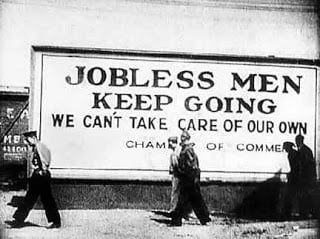





















 ΑΝΑΡΤΗΣΕΙΣ ΜΕ ΣΗΜΑΣΙΑ3 μήνες πριν
 GEOPOLITICO1 μήνα πριν

 ΑΝΑΡΤΗΣΕΙΣ ΜΕ ΣΗΜΑΣΙΑ2 μήνες πριν
 GEOPOLITICO4 εβδομάδες πριν
 Αναλύσεις3 μήνες πριν