Ακολουθήστε μας

Διεθνή

Το τέλος μιας “στρατηγικής” σχέσης; Πώς οι αμερικανο-τουρκικές σχέσεις χτύπησαν ιστορικό χαμηλό
Δημοσιεύτηκε στις

 The End of a “Strategic” Relationship? How American-Turkish Relations Hit Historic Lows
Michael A. Reynolds*
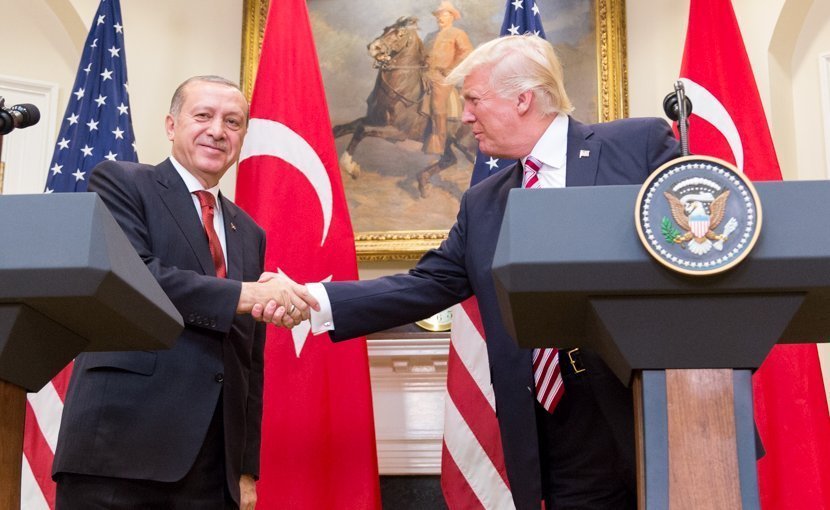
The onset of fall finds American-Turkish relations undergoing the most severe crisis in their history. In August, the Trump administration slapped sanctions on Turkey and imposed tariffs on some Turkish imports. These steps sent the vulnerable Turkish lira tumbling in currency markets. In response, Turks from across the political spectrum, including President Recep Tayyıp Erdoğan, charged the United States with waging economic war on Turkey and vowed to resist. Turkey and the United States have cultivated close ties for over six decades. Today, not only is the possibility of a full break real, but some mainstream American foreign policy experts are advising Washington precisely to do just that: end the partnership.

Yet, as the current disarray in America’s Syria policy demonstrates, the consequences of a break with Turkey will be significant. In 2011, while a mass uprising was sweeping Syria, American President Barak Obama declared that Syria’s dictator, President Bashar al-Assad, must go. It was a directive, and Obama and his administration issued it with the expectation that they could oversee Assad’s ouster on the cheap, i.e. relying on proxies and covert action to overthrow the Assad regime without the direct commitment of U.S. forces. They miscalculated. Seven years later, despite the presence of U.S. military units inside Syria’s borders, Assad’s army, with the support of Russia and Iran, is preparing to launch an offensive against the remnants of the armed opposition, who are holed up in the city of Idlib in northwestern Syria. Victory in Idlib will cement the triumph of Assad and of Russia and Iran, who have outplayed and outhustled the U.S. in Syria. American policymakers can regard this outcome only as a decisive defeat.

As Dennis Ross, a fixture of American Middle East diplomacy, conceded in an op-ed in the Wall Street Journal on September 9, the U.S. now has no choice but to compromise with Russia in Syria. The U.S. can still attain a satisfactory outcome in Syria, Ross proposes, but warns that this is possible only if the U.S. can draw on support from Turkey and Israel. In what can only be described as an act of desperation, the Wall Street Journal, formerly known for its trenchant criticism of Erdoğan, opened its pages the very next day to an op-ed from the Turkish president calling for immediate coordinated action to halt the Syrian government from retaking Idlib. The desperation runs both ways. Erdoğan and his ministers in recent weeks have been verbally assailing America and representing it to the Turkish public as an enemy, yet now openly plead for cooperation in American newspapers.

Wellsprings of Discord

The current locus of tension in Turkish-American relations is the status of Andrew Brunson, an American pastor of a small church in Izmir, Turkey. In late 2016, Turkish authorities arrested Brunson and subsequently charged him with a number of violations, including being a member of the network of Fethullah Gülen, collaborating with the Kurdistan Workers’ Party (Partiya Karkerên Kurdistanê, or PKK), and assisting the attempted coup of 2016. In September 2017, Erdoğan publicly suggested that Turkey might swap one American pastor, Brunson, for another Turkish one, Fethullah Gülen.
Gülen fled Turkey in 1999 and took up residence in Pennsylvania, where he has remained. His followers over the course of more than three decades have established a global empire of schools, test centers, businesses, and organizations. More to the point, they have also been implicated in various forms of systemic financial and visa fraud in multiple American jurisdictions and far more serious crimes in Turkey, including the failed 2016 coup attempt.[1] The Turkish public, as well as the government, overwhelmingly desire his extradition and trial. American authorities thus far, however, have regarded as insufficient the evidence the Turks have presented.
If Erdoğan thought the seizure of Brunson might be a creative solution to the problem of obtaining Gülen’s extradition, he miscalculated terribly. The gambit created the impression that the Turks were attempting to coerce America via a hostage swap. It only hardened the attitude of the Trump administration, which in August 2018 took the unprecedented step of sanctioning two Turkish officials involved in Brunson’s detention. In the meantime, the lira’s fall against the dollar only accelerated, spurring the aforementioned belief that Turkey is a victim of an economic war. Given the stock both Trump and Erdoğan put in their personal images of dominance and the high profile of Brunson’s case in Turkey and the U.S., it is quite possible that both sides will now stubbornly refuse any compromise resolution and Brunson will remain in Turkish custody for years to come.
A plausible interpretation of this standoff would be that it is the product of a contest between two headstrong, bombastic, and mercurial heads of state. That would be a mistake, and not simply because such assessments underestimate the considerable political skills of Trump and Erdoğan. The wellsprings of discord lie deeper. The tensions driving Washington and Ankara apart are not new, but for a decade and a half now they have been outpacing the bonds of mutual interest that have held the two countries together. Washington’s desire for a reliable and pliant client in a part of the world it would prefer to forget has been clashing with Ankara’s aspiration to achieve full or total independence, i.e. the ability to stand wholly on its own without need for allies or partners. This goal is encoded in the Turkish Republic’s very DNA.
Security concerns have always been at the core of the Turkish-American relationship. The two countries began drawing nearer to each other in the waning days of World War II. Not only was it becoming increasingly clear that the Soviet Union would emerge from the war as the dominant power in Eurasia, but Stalin had already started making demands, including territorial ones, on Turkey. In response, the Turkish Republic’s second president and confidant of Mustafa Kemal Atatürk, İsmet İnönü, began drawing closer to the Western powers, declaring war on Germany and Japan. For much the same reasons, he introduced a simulacrum of multi-party politics to Turkey 1946 and then in 1950 oversaw Turkey’s first openly contested elections, which his party lost decisively. Turkey’s moves toward the West culminated with its formal entry into the North Atlantic Treaty Organization (NATO) in 1952.
The U.S. and Turkey subsequently developed a close, albeit far from untroubled, security partnership. Over the course of the next six decades, however, they failed to build up other aspects of their relations to the same degree, and their relationship remained lopsidedly focused on security concerns. Ties in the spheres of economy and culture, for example, remained comparatively undeveloped.
Thus, at the end of the Cold War, many Turks feared that the disappearance of the Soviet threat that had motivated and sustained the Turkish-American partnership would precipitate the end of that partnership. That threat had guaranteed Turkey’s value as the guardian of the southern flank of NATO. Its evaporation, Turks anxiously concluded, would entail a waning of American interest in Turkey and inevitably Washington would discard its Cold War ally. They were mistaken. America’s standoffs with Iraq and Iran, as well as its compulsion to expand, not dismantle, NATO, led Washington to continue to assign value to Turkey through the 1990s and into the 21st century.
Ironically, it was in Ankara where the more profound recalculation of interests occurred. The dissolution of the Soviet Union and the absence of a common border with Russia meant that Turkey, perhaps for the first time since the beginning of the 19th century, had no pressing need for a great power patron to protect it. Moreover, the rise of the Justice and Development Party (AK Party), of which Erdoğan is a founder and member, in 2002 represented a sea change in Turkish politics as a rising class representing the Anatolian heartland displaced the old republican elites with roots in the Balkans and the Aegean coast.
The AK Party was, and remains, a comparatively mild Islamist party—it has not pursued anything like a sharia agenda and indeed the majority of its members neither want a sharia-based order nor have a concept of what that might even look like. Nonetheless, the crucial fact remains that its leaders and members do assign high importance to their identities as Muslims and conceive of that identity as distinct from, and often in opposition to, the West. The arrival of a Turkish elite that looks askance at the West represents less a rupture with the past than the ineluctable product of a process of evolution.
Although Turkish elites through the second half of the 20th century qualified as pro-Western on the basis of their opposition to Soviet Communism, membership in NATO, commitment to secularism, and faith in the possibility of science and technology for the improvement of human society, an abiding ambivalence toward the West qualified their worldview. The founding narrative of the Turkish Republic is a story of the defiance of the Western imperial powers and their regional partners. It highlights the victimization of the Turkish nation at the hands of the European Great Powers and promises to deliver that nation from future exploitation by forging a state that will be able to stand on its own, wholly independent of outside entities, and defend its interests against the Great Powers. The ascent of a political leadership that was more confident and assertive in its non-Western identity was inevitable.
This political transformation coincided with two other novel developments. The first was a period of sustained economic growth that endowed Turkey with unaccustomed resources and confidence. The second was the opening of an exceptionally fluid environment in regional politics, made possible first by the withdrawal of Soviet power in the 1990s and then by the destabilization of the Middle East following the U.S. invasion of Iraq in 2003. This new environment granted Turkey unprecedented scope for activity, allowing it in some areas to act on and pursue new regional ambitions (e.g., Qatar, Libya, Egypt, Sudan, and Somalia), and in others compelling it to act (such as with Iran, Iraq, and Syria).
In this new environment, Turkey’s interests and actions sometimes aligned with those of the U.S., while, at other times, they came into direct conflict. The clashes between Washington and Ankara varied in significance. Some of Ankara’s actions, such as accommodation of Iran and challenges to Israel, contradicted fundamental American policies, and Washington could not write them off easily. The scuffling gradually corroded mutual trust.
From the Turks’ perspective, the Americans have been, at best, cavalier about Turkey’s interests and even security. A great many Turks, whose numbers span both opponents and supporters of the government, suspect worse, namely that the Americans are deliberately subverting their country. The American intervention in Iraq did create severe headaches for Turkish security planners, particularly as the chaos began to spill out of Iraq and into Syria. The question of the future of Iraq’s Kurdish north, Iranian penetration into Iraq, and the intensification of sectarian warfare were intertwined, and all were necessarily of primal concern to Ankara. Some Turks came to believe that the Americans were stoking disorder in Iraq deliberately as a way to keep Turkey and other Middle Eastern states off balance and preoccupied. It was a baseless, even absurd, notion. But when, for example, ISIS acquired its formidable arsenal by taking possession of abundant amounts of captured American weapons, including M1 Abrams tanks (and Iranian militias also laid their hands on captured M-1 tanks), for some the belief that the Americans were playing double games became difficult to shake.
But the revelation that the American military was working closely with the Kurdish Democratic Union Party (Partiya Yekîtiya Demokrat‎, or PYD) in Syria was something that earlier only paranoid Turkish nationalists could have imagined. To the Americans planning the military campaign against ISIS, the militias of the PYD were natural, and perhaps essential, partners. In order to vanquish ISIS, the Americans needed allies on the ground, and those militias are disciplined, capable, and bitter enemies of ISIS. They possess both the necessary attributes and motivation to counter ISIS. But what the Americans overlooked, whether out of neglect or indifference, was the PYD’s status as a subsidiary of the PKK. The PKK is an organization that has been waging a sustained violent campaign against the Turkish Republic, utilizing tactics that have included suicide bombing, over the course of more than three decades. Indeed, in 1997, the U.S. Department of State designated the PKK as a foreign terrorist organization.
Turkey has no more dangerous or tenacious foe than the PKK, and the sense of betrayal that American collaboration with the PYD provoked is impossible to overestimate. Washington, however, has by all appearances regarded the matter as something akin to an inconvenience to Turkey. Moreover, in directing their outrage at Ankara for its backing of jihadist elements opposed to the Assad regime in Syria, American critics of Ankara too conveniently overlook both the cooperation with the PYD as well as American efforts to mobilize so-called “moderates” from jihadist ranks, including from groups affiliated with al-Qaeda.
American strategic myopia has unquestionably been a crucial factor compounding the disintegration of the Turkish-American relationship. As I have written elsewhere, American inattention facilitated Russia’s efforts to draw Turkey closer. Those efforts, while thus far falling short of pulling Turkey decisively away from the West, have been remarkably successful in stoking Turkish recalcitrance by feeding into Turkish delusions of having a viable strategic alternative to the United States. Coming after the sharp clash between Turkey and Russia over Syria that resulted in Turkey downing a Russian jet in 2015, the Russian success, and concomitant American failure, is all the more remarkable. Yet, there is no denying that Turkish ambitions, be they misplaced or sound, are the key driver in the unraveling of the relationship, and the salvaging of the relationship is not solely in Washington’s hands.

Emotional Breakdown

It is common, indeed stereotypical, for practitioners of international and security affairs proudly to forswear sentiment in favor of “cool” and “hard” reasoning and “logical” analysis. The reality, however, is that emotion is no less a factor in international politics than in any other form of politics. Emotion has exacerbated and deepened the sense of betrayal in America and Turkey alike. Turkish-American relations are unraveling against a background of grand foreign policy failures for both countries. These foreign policy failures and embarrassments color attitudes and thought processes in Washington and Ankara.
For nearly two decades, the Middle East has served as the focus of American foreign policy. Despite the expenditure of inordinate attention, exorbitant amounts of money, and considerable blood, American policy has yielded results precisely the opposite of what policymakers promised. Fiasco is perhaps the proper description.
Far from becoming a beacon of pro-Western democracy, Iraq became both a font of instability and a vassal of Iran. The Arab Spring, initially ballyhooed as the overdue democratic windfall from the overthrow of Saddam Hussein’s Ba‘thist dictatorship, failed, and in doing so reinforced the cycle of government repression and Islamist opposition that American intervention was supposed to break. Al-Qaeda has not been vanquished. Indeed, radical Islam has proven resilient, making bids for power in Syria, Egypt, Libya, and elsewhere and metastasizing into still more virulent forms, notably the Islamic State, powerful enough to dictate the course of U.S. policy. The rise of the Islamic State made shreds of Obama’s much-heralded pivot to East Asia. In Afghanistan, despite 17 years of fighting, all the U.S. can do is hold on to prevent the Taliban from triumphing.
Amidst this unfolding string of disappointments and failures, Turkey, formerly taken for granted as a pro-Western pillar of stability and a promising example of democracy in the region, emerged as a cantankerous and quarrelsome partner, or even rival. Turkey’s newfound defiance was yet another indication of a flailing American policy and flagging American power. Turkey’s diffidence in the face of Russia’s trouncing of Georgia in 2008 was one example. Although Georgia’s bid to reconquer South Ossetia was indisputably reckless, because Washington had already billed Georgia as a beacon of democracy and close ally, Ankara’s reticence to back the U.S. and Georgia was a telling indicator of a decline in American power. Similarly, Turkey’s collaborative effort with Brazil in 2010 to offer a nuclear fuel swap to Iran represented a brash challenge to American leadership and efforts to deter Iran from developing a nuclear weapons program. Turkey’s decision to sign a contract to purchase the Russian S-400 air defense system for $2.5 billion in December 2017 represented an unprecedented move by a NATO country and was a deliberate act of defiance toward the United States.

Turkey: Irreplaceable, but not Indispensable

After years of emitting a steadily increasing stream of complaints, criticisms, and expressions of outrage at Turkish policies, American policymakers and Turkey watchers are now calling to end the pretense that any meaningful partnership exists with Turkey. One forthright such call has come from Steven Cook of the Council on Foreign Relations (CFR), who states flatly, “Turkey is no longer an ally or a partner.” This is not bomb throwing for effect or clickbait. The CFR is as centrist and sober as an American think tank can get. Indeed, the President of the CFR, Richard Haass, similarly declared the Western partnership with Turkey finished and is calling for America and Europe to adjust accordingly. Haass is not a Turkey-watcher, but a senior diplomat, prolific author, and president of the CFR, and his judgment is indicative of mainstream thinking. The aggrieved tone of his analysis betrays a powerful emotional undercurrent in American thinking.
That America can manage without Turkey is an unassailable proposition. Indeed, America can thrive without Turkey. What it cannot do without Turkey, however, is to continue to pursue the same policy goals in the Middle East, Eurasia, and Eastern Europe that it has been pursuing for the past decade and a half or more. The strategic value of Turkey’s geography is a cliché. And for good reason: it reflects a truth.
The adjective “strategic” is one of the most abused and overused in the English language. Among the common tasks that American commentators use that adjective to fulfill is to imbue remote, poorly understood, and “exotic” lands with significance. Commentators routinely tag Afghanistan, for example, as “strategic,” despite the fact that it is poor, landlocked, and near the center of the Eurasian landmass, remote from any appreciable center of power, and incapable of projecting any real power beyond itself. To be sure, Afghanistan neighbors “strategic” territories, such as Iran, Pakistan, and China, but its innate strategic importance to the United States is marginal.

The Ellipse of Instability and Its Center

Turkey is not Afghanistan. Here, the adjective strategic is meaningful and multidimensional. Turkey’s service as the guardian of the southern flank of NATO against Soviet invasion secured its importance in the Cold War, but it also supported U.S. efforts in the Middle East during that period. Ankara served as the headquarters of the Central Treaty Organization from 1958 to 1979. Following the Iranian revolution, Turkey hosted American and European listening posts expelled from Iran, and it lent its territory as a platform for the conduct of surveillance and other intelligence operations against revolutionary Iran, Iraq, and others in the Middle East. A partial list of the U.S. military operations and international flash points that have erupted in Turkey’s neighborhood since 1991 make clear Turkey’s strategic value: Yugoslav wars (1991-1995), Kosovo (1998-1999), Nagorno-Karabakh (1988-1994), Iraq (Gulf War, 1990-1991; Operations Supply Comfort and Northern Watch, 1991-2003; Operation Iraqi Freedom, 2003-2011), Syrian Civil War (2011-current), Russo-Georgian War (2008), and the Russian annexation of Crimea (2014). To have at the center of this ellipse of instability a resilient state and durable host of American military facilities has been a boon for American policy. The death of the Turkish-American partnership will reverberate throughout the regions that ring Turkey.
The containment of Iran, the containment of Russia, and the containment of radical Islam are three of the most pressing objectives of American foreign policy. Critics of Turkey are correct to question Turkey’s contributions toward these goals. Turkey’s intention to purchase the S-400 air defense missile system from Russia, the role of Turkish bankers in subverting sanctions on Iran, and Ankara’s collaboration with jihadists in Syria and sympathy for Hamas and Egypt’s Muslim Brotherhood illustrate how in recent years Turkish priorities have been at cross-purposes with American.
Washington is experiencing difficulty pursuing each of the three objectives named above. The rout of the Islamic State in 2017-2018 did represent a victory in the struggle against radical Islam, but there is no reason to believe that it represents a decisive blow to radical Islam, especially given the inability of the U.S. earlier to even anticipate ISIS. In addition, the U.S. and its allies were not alone in battling ISIS. It had picked fights with multiple local constituencies, and Russia and Iran contributed to its defeat as well. As for containing Russia and Iran, the successes that those two countries have achieved in Syria testify to the ineffectiveness of American policy there. Russia’s defeat of Georgia in 2008 and annexation of Crimea in 2014 cannot be considered American successes either. Israeli, Saudi, and Gulf state expressions of fear of Iran, as well as European alarmism over Russia, may be exaggerated and directed at extracting benefits from Washington, but the increase in expressions of anxiety sooner testifies to the erosion of containment than its fulfillment.
Breaking with Turkey may help clarify the diplomatic terrain. The stripping of illusions is always a prerequisite for sound planning and action. But such a break will not advance American efforts toward achieving the aforementioned three goals. Depending upon the nature of the break, it may so significantly impair American policies as to render those goals impossible to achieve. An actively anti-American Turkey could create multiple headaches for Washington in each of the three policy areas. Although Turkey’s relations with the countries of Western Europe are also strained, there is little reason to expect that the Europeans would follow the American lead and downgrade their relations with Ankara. This is particularly the case for Germany, which has a long and complex relationship with Turkey, one that is inherently contentious, but also robust and, unlike the American, multifaceted and more durable. Not least important, because NATO has no mechanism for expelling members, a recusant Turkey could sabotage and gum up Washington’s efforts to mobilize NATO. The failure of Western policy elites, and particularly American, to restructure NATO prior to pushing its expansion is one more indictment of their carelessness after the end of the Cold War. It may very well be true that Turkey has been an overrated, uncooperative, and at times even troublesome partner for the past five decades. But from this fact it does not follow that a hostile Turkey inside NATO will be incapable of working against U.S. policy effectively. This could deliver to Russia in particular enormous benefit. Undoubtedly, one of the motives for Moscow’s courtship of Ankara in recent years has been the chance to stoke dysfunction and friction within NATO. On the other hand, in the event such a scenario comes to pass, creative American policymakers perhaps could exploit it to create a new alliance system to supersede NATO.
If the loss of Turkey as a partner will force Washington to reconsider core foreign policy goals, a break with America will have still greater consequences for Turkey. Some will be grim. There is no other country that can replace the U.S. for Turkey. Although it is true that Russia does much larger volumes of trade with Turkey than does the U.S. and could also go far to supplant America as an arms supplier, a close partnership with Moscow would be difficult—and dangerous—for Ankara to sustain. Turkey is an energy poor country, and is among the world’s most dependent upon imports. Russia supplies over half of Turkey’s natural gas and is that country’s third-largest source of oil. Turkey is pursuing a nuclear power program precisely to lower its dependency upon imported gas and oil. The rub here is that Turkey has chosen Russia to supply the nuclear technology and expertise it needs. Russia is the lead partner in building the first Turkish nuclear power plant at Akkuyu on the Mediterranean coast.
Russia thus holds formidable leverage over Turkey in the area of energy. To be sure, it is true that economic dependency often runs two ways. If Turkey depends on energy from Russia, Russia needs the income generated by those sales. Yet, we already know that the Russo-Turkish relationship is asymmetrically structured in Russia’s favor. As Vladimir Putin demonstrated in the wake of Turkey’s shooting down of a Russian jet in 2015, Moscow can and will use economic leverage to bend Ankara to its will.
What is more, Russia has more than economic leverage at its disposal. Throughout the 19th and 20th centuries, Russia posed the greatest of military and political threats to Turkey. Although Turkey and Russia no longer share a border, Russia through its intervention in Syria is again in position to squeeze Turkey politically and militarily, including through the sponsorship of Kurdish separatism, a force that Russia began cultivating in the 19th century. The future of the Kurds in Syria is one of the questions that awaits resolution, and, however it is decided, it will impact Turkey’s future prospects for civil peace and prosperity. The PKK in the past used Syrian territory as grounds for training and staging operations into Turkey. Although as of late Russia has seemingly been solicitous of Turkish concerns about the PYD in Syria, it can, of course, change its attitude. Moreover, should Russia in the future opt to play the Kurdish card, Turkey would find itself alone. However justly Turks might lament America’s recent cooperation with the PYD, it is a fact that the U.S. has a long record of backing Turkey in its fight against the PKK. Not the least illustrative example is the assistance the U.S. provided to make possible the tracking and capture of Abdullah Ocalan, the founder and leader of the PKK, in Kenya in 1999. A Turkey without America will be more vulnerable, not less, to subversion, chronic insurrection, and potentially even partition.

Is There a Way Out?

As discussed above, behind the current crisis in Turkish-American relations are the sharply differing worldviews of Turkish and American political elites. Although these worldviews are not so starkly divergent so as to dictate a breakup in ties—see the oscillation on the editorial pages of the Wall Street Journal—they do create a predisposition on both sides to magnify, rather than minimize, disagreement. Miscommunication, discoordination (particularly in Syria), and negligence on both sides have exacerbated those differences, contributing to what has become the most sustained and serious crisis in the history of Turkish-American relations.
One step that Washington could take that would advance U.S. interests and improve relations with Turkey while at the same time also bolstering the principle of the rule of law would be to take seriously the Turkish request for the extradition of Fethullah Gülen. Given the litany of documented crimes and subversive activities that Gülenists have perpetrated in Turkey, presenting a credible case for extraditing Gülen should not be impossible. Yet, by all reports, American authorities have deemed the evidence submitted by the Turkish government thus far as not sufficient for extradition. If the Turkish request is incomplete or incompetently presented, professional help should be rendered to remedy this situation. If the Turkish request for extradition is too tainted by legal and procedural irregularities to accept, there is the option of putting Gülen under investigation for the multitude of crimes and infractions he and some of his followers committed in the U.S. In itself, putting Gülen on trial will not repair Turkish-American relations, but it would send an important message that the U.S. understands the concerns of the Turkish public (not to mention the signal it would send to the American taxpayers defrauded by Gülen’s network). Given the current state of relations and the depth of suspicions, that message could spur both sides to step back and evaluate their mutual interests more dispassionately and to ask what unites them rather than dwell on what should divide them.
[1] For more on Gülen, see my analysis for FPRI https://www.fpri.org/article/2016/09/damaging-democracy-u-s-fethullah-gulen-turkeys-upheaval/. See, also, Dexter Filkins’ New Yorker article, https://www.newyorker.com/magazine/2016/10/17/turkeys-thirty-year-coup; and the edited volume of M. Hakan Yavuz and Bayram Balcı, Turkey’s July 15th Coup: What Happened and Why (Salt Lake City: University of Utah Press, 2018).
*Michael A. Reynolds is a 2018-19 Robert A. Fox Fellow in the Foreign Policy Research Institute’s Program on the Middle East and an Associate Professor in Princeton’s Department of Near Eastern Studies.

Αναλύσεις

Η Κίνα βρίσκει δρόμο που παρακάμπτει το Πακιστάν – Ο διάδρομος Ουαχάν αλλάζει τις γεωπολιτικές ισορροπίες

Μία νέα οδική αρτηρία μήκους 121 χιλιομέτρων στο βορειοανατολικό Αφγανιστάν δημιουργεί τις προϋποθέσεις για απευθείας χερσαία σύνδεση με την Κίνα, χωρίς διέλευση από το Πακιστάν. Η ολοκλήρωση του δρόμου στον ιστορικό διάδρομο Ουαχάν αποκτά ιδιαίτερη γεωπολιτική σημασία, καθώς το Πεκίνο αντιμετωπίζει σοβαρά προβλήματα ασφαλείας με τις επενδύσεις του στο Πακιστάν, ενώ η Καμπούλ επιδιώκει να μειώσει την εξάρτησή της από το Ισλαμαμπάντ.
Δημοσιεύτηκε

στις

από τον

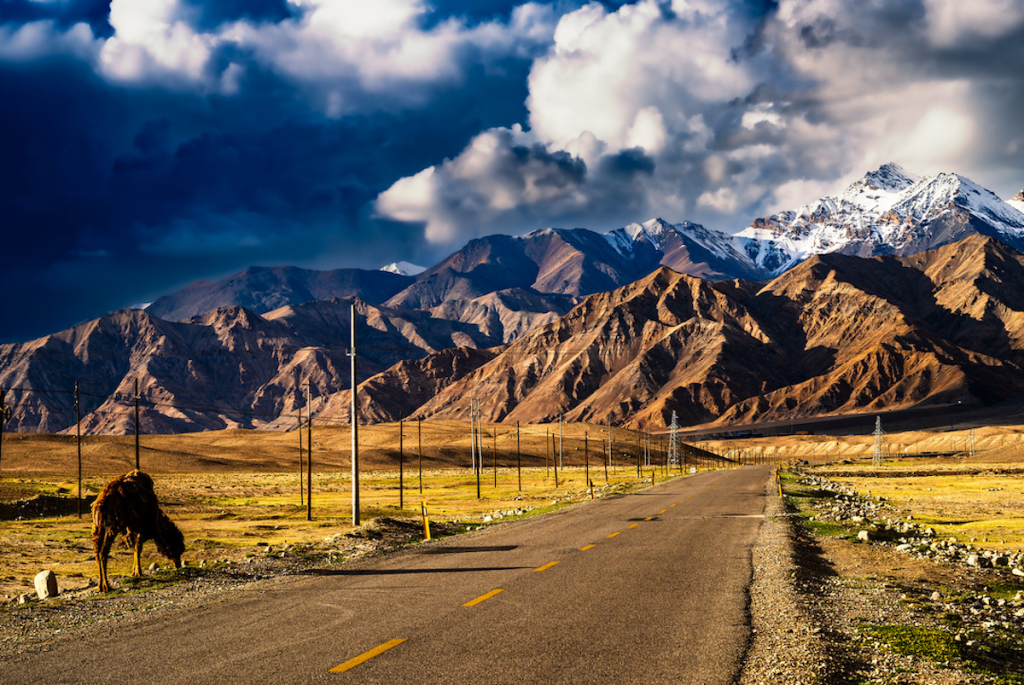
Μία σημαντική εξέλιξη στις χερσαίες μεταφορές και στις γεωπολιτικές ισορροπίες της Κεντρικής Ασίας καταγράφεται στο Αφγανιστάν, με την ολοκλήρωση νέου δρόμου στον στρατηγικής σημασίας διάδρομο Ουαχάν.

Σύμφωνα με ανάλυση του Imran Khurshid που δημοσιεύθηκε στις 9 Οκτωβρίου 2026 στο Asia Times, οι αφγανικές αρχές εγκαινίασαν οδική διαδρομή 121 χιλιομέτρων, η οποία εκτείνεται από την περιοχή Μπρογκίλ έως τα σύνορα με την Κίνα, στην επαρχία Μπανταχσάν.

Το έργο κόστισε περίπου 365 εκατομμύρια αφγάνι, ποσό που αντιστοιχεί σε περίπου 5,5 εκατομμύρια δολάρια.

Κατά τις αφγανικές ανακοινώσεις, κατασκευάστηκε από ντόπιους μηχανικούς και εργαζομένους, χωρίς τη συμμετοχή ξένων τεχνικών συμβούλων.

Η νέα διαδρομή φθάνει στα σινοαφγανικά σύνορα. Αυτό, ωστόσο, δεν σημαίνει ότι λειτουργεί ήδη πλήρης διεθνής εμπορευματικός διάδρομος, καθώς εξακολουθούν να υπάρχουν σημαντικοί τεχνικοί και συνοριακοί περιορισμοί.

Γιατί ο διάδρομος Ουαχάν έχει στρατηγική σημασία

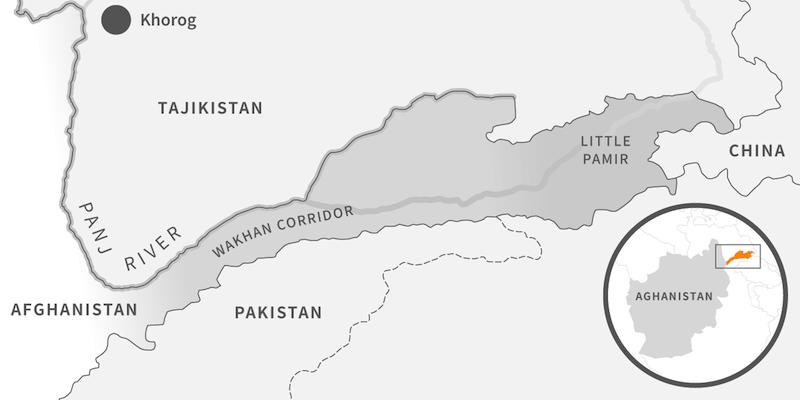
Ο διάδρομος Ουαχάν αποτελεί μια στενή λωρίδα αφγανικού εδάφους ανάμεσα στο Τατζικιστάν, το Πακιστάν και την Κίνα.

Η γεωγραφική του διαμόρφωση συνδέεται με τον ανταγωνισμό της Βρετανικής και της Ρωσικής Αυτοκρατορίας κατά τον 19ο αιώνα.

Η περιοχή διατηρήθηκε ως ζώνη διαχωρισμού των δύο αυτοκρατορικών σφαιρών επιρροής, αποτελώντας ένα από τα χαρακτηριστικότερα γεωγραφικά κατάλοιπα του λεγόμενου «Μεγάλου Παιχνιδιού».

Σήμερα, η ίδια περιοχή αποκτά νέα σημασία, αυτή τη φορά λόγω της προσπάθειας σύνδεσης της Κίνας με το Αφγανιστάν και ευρύτερα με την Κεντρική Ασία.

Ο δρόμος ανοίγει τη δυνατότητα δημιουργίας μιας εναλλακτικής οδού μεταφορών, περιορίζοντας δυνητικά την ανάγκη διέλευσης από το πακιστανικό έδαφος.
Το πρόβλημα της Κίνας με τον οικονομικό διάδρομο CPEC

Το ενδιαφέρον της εξέλιξης εντοπίζεται κυρίως στην προσπάθεια του Πεκίνου να περιορίσει την εξάρτησή του από ευάλωτες υποδομές.

Ο Οικονομικός Διάδρομος Κίνας–Πακιστάν, γνωστός ως CPEC, αποτελεί ένα από τα σημαντικότερα προγράμματα της κινεζικής πρωτοβουλίας Belt and Road.

Μέσω του συγκεκριμένου σχεδίου, η Κίνα επιχειρεί να ενισχύσει τις εμπορικές και ενεργειακές συνδέσεις της με τη Νότια Ασία και την Αραβική Θάλασσα.

Ωστόσο, η υλοποίηση των έργων έχει αντιμετωπίσει σοβαρές δυσκολίες.

Στην επαρχία Μπαλουχιστάν, οργανώσεις αυτονομιστών έχουν πραγματοποιήσει επανειλημμένες επιθέσεις εναντίον κινεζικών συμφερόντων, εγκαταστάσεων και εργαζομένων.

Οι επιθέσεις αυτές έχουν επιβαρύνει την ασφάλεια των υποδομών και έχουν αυξήσει το κόστος προστασίας των κινεζικών επενδύσεων.

Παράλληλα, έχουν διατυπωθεί καταγγελίες για καθυστερήσεις, κακοδιαχείριση και προβλήματα διαφάνειας σε επιμέρους προγράμματα του CPEC.

Η εδαφική διαμάχη με την Ινδία

Μια επιπλέον γεωπολιτική δυσκολία συνδέεται με τη διέλευση του CPEC από το Γκιλγκίτ–Μπαλτιστάν.

Η περιοχή διοικείται από το Πακιστάν, αλλά διεκδικείται από την Ινδία, στο πλαίσιο της ευρύτερης διαμάχης για το Κασμίρ.

Το Νέο Δελχί έχει αντιταχθεί επανειλημμένα σε έργα που διέρχονται από εδάφη τα οποία θεωρεί τμήμα της δικής του επικράτειας.

Αυτό σημαίνει ότι ο οικονομικός διάδρομος Κίνας–Πακιστάν δεν αποτελεί μόνο αναπτυξιακό πρόγραμμα, αλλά συνδέεται με μία από τις πιο ευαίσθητες εδαφικές αντιπαραθέσεις της Ασίας.

Η δημιουργία εναλλακτικών διαδρομών μέσω του Αφγανιστάν θα μπορούσε μακροπρόθεσμα να προσφέρει στο Πεκίνο μεγαλύτερη ευελιξία.

Δεν υπάρχει, πάντως, ένδειξη ότι ο δρόμος του Ουαχάν μπορεί σήμερα να αντικαταστήσει τις μεγάλες μεταφορικές υποδομές του CPEC.

Η Καμπούλ επιχειρεί να μειώσει την εξάρτησή της από το Ισλαμαμπάντ

Για την κυβέρνηση των Ταλιμπάν, το έργο έχει και μία σαφή πολιτική διάσταση.

Το Αφγανιστάν εξαρτάται σε σημαντικό βαθμό από συνοριακές διαβάσεις και μεταφορικούς άξονες που περνούν από το Πακιστάν.

Οι επανειλημμένες εντάσεις ανάμεσα στις δύο χώρες έχουν προκαλέσει κλείσιμο συνοριακών περασμάτων, διακοπές εμπορικών ροών και επιβάρυνση της αφγανικής οικονομίας.

Μια εναλλακτική χερσαία διέξοδος προς την Κίνα θα μπορούσε, εφόσον αναπτυχθεί και καταστεί λειτουργική, να μειώσει τη δυνατότητα του Πακιστάν να χρησιμοποιεί τη γεωγραφική του θέση ως μέσο πίεσης προς την Καμπούλ.

Η αφγανική πλευρά αντιμετωπίζει το έργο ως σημαντική υποδομή οικονομικής και στρατηγικής αυτονομίας.

Η στάση της Κίνας και της Ρωσίας

Παρά την προοπτική άμεσης σύνδεσης, το Πεκίνο δεν έχει εγκαταλείψει τον οικονομικό διάδρομο CPEC ούτε έχει ανακοινώσει ότι ο Ουαχάν θα τον αντικαταστήσει.

Η Κίνα εξακολουθεί να διατηρεί σημαντικά οικονομικά και στρατηγικά συμφέροντα στο Πακιστάν.

Αντίστοιχα, η Ρωσία ενδιαφέρεται για τη σταθερότητα του Αφγανιστάν και για την ανάπτυξη νέων δικτύων επικοινωνίας στην Κεντρική Ασία.

Η δημιουργία περισσότερων επιλογών διασύνδεσης ενδέχεται να περιορίσει την αποκλειστική σημασία ορισμένων παραδοσιακών μεταφορικών διαδρομών.

Η πραγματική αξία του Ουαχάν θα εξαρτηθεί από τη βελτίωση των οδικών υποδομών, τη λειτουργία συνοριακών και τελωνειακών εγκαταστάσεων, τις καιρικές συνθήκες και τις πολιτικές αποφάσεις της Κίνας.

Το μήνυμα προς το Πακιστάν

Η νέα διαδρομή αναδεικνύει μια σημαντική γεωπολιτική πραγματικότητα: η γεωγραφική θέση ενός κράτους προσφέρει στρατηγικά πλεονεκτήματα, αλλά η αξιοποίησή τους εξαρτάται από την ασφάλεια και την αξιοπιστία των μεταφορικών του δικτύων.

Το Πακιστάν εξακολουθεί να αποτελεί κρίσιμο εταίρο της Κίνας, ιδιαίτερα στο πλαίσιο του CPEC.

Ταυτόχρονα, όμως, η αστάθεια, οι επιθέσεις σε κινεζικά συμφέροντα και οι αντιπαραθέσεις με το Αφγανιστάν δημιουργούν κίνητρα αναζήτησης εναλλακτικών επιλογών.

Ο διάδρομος Ουαχάν δεν έχει ακόμη μετατραπεί σε μεγάλο εμπορικό πέρασμα. Η κατασκευή του δρόμου, ωστόσο, καταδεικνύει ότι το Αφγανιστάν επιχειρεί να αποκτήσει πρόσθετες διεθνείς συνδέσεις και ότι η αποκλειστική εξάρτηση από το Πακιστάν δεν αποτελεί πλέον τη μοναδική γεωγραφική επιλογή.

Για το Ισλαμαμπάντ, η εξέλιξη αποτελεί μια νέα στρατηγική παράμετρο που θα πρέπει να συνυπολογίσει στις σχέσεις του με το Πεκίνο και την Καμπούλ.

Συνέχεια ανάγνωσης

Διεθνή

Γερμανία: Το ρωσικό φυσικό αέριο επιστρέφει έμμεσα μέσω των λιπασμάτων, παρά τους ευρωπαϊκούς δασμούς
Δημοσιεύτηκε

στις

Οι εισαγωγές ρωσικών αζωτούχων λιπασμάτων μειώθηκαν κατά 66% το 2025-2026, αλλά παραμένουν 53% υψηλότερες από τα επίπεδα πριν από τον πόλεμο στην Ουκρανία.

Το υψηλό ενεργειακό κόστος στη Γερμανία διατηρεί ανταγωνιστικά τα ρωσικά προϊόντα, σύμφωνα με στοιχεία που δημοσίευσε η Berliner Zeitung. Η Γερμανία εξακολουθεί να συνδέεται εμπορικά με το ρωσικό φυσικό αέριο, παρά τις ευρωπαϊκές προσπάθειες περιορισμού της ενεργειακής εξάρτησης από τη Μόσχα.

Αυτή τη φορά, η σύνδεση δεν αφορά αποκλειστικά την άμεση προμήθεια φυσικού αερίου, αλλά τις εισαγωγές λιπασμάτων που παράγονται με τη χρήση ρωσικού αερίου ως πρώτης ύλης και πηγής ενέργειας. Σύμφωνα με δημοσίευμα της γερμανικής εφημερίδας, που βασίζεται σε στοιχεία του Γερμανικού Ομοσπονδιακού Στατιστικού Γραφείου και του Συνδέσμου Αγροτικής Βιομηχανίας (IVA), οι εισαγωγές αζώτου μέσω ρωσικών λιπασμάτων μειώθηκαν σημαντικά κατά το 2025-2026. Ωστόσο, εξακολουθούν να βρίσκονται πάνω από τα επίπεδα που καταγράφονταν πριν από τη ρωσική εισβολή στην Ουκρανία.

Τα στοιχεία των εισαγωγών και η σύγκριση με την προπολεμική περίοδο

Το 2025-2026, η Γερμανία εισήγαγε 48.800 τόνους αζώτου μέσω λιπασμάτων ρωσικής προέλευσης. Η ποσότητα αυτή είναι μειωμένη κατά περίπου 66% σε σύγκριση με το προηγούμενο έτος, αλλά παραμένει κατά 53% υψηλότερη από τους 31.800 τόνους που είχαν καταγραφεί το 2020-2021, πριν από τον πόλεμο.

Η εξέλιξη των εισαγωγών δείχνει πόσο έντονη ήταν η αύξηση μετά το 2022. Το 2021-2022 οι εισαγωγές έφτασαν τους 56.800 τόνους αζώτου, ενώ το 2022-2023 εκτοξεύθηκαν στους 185.100 τόνους. Στη συνέχεια καταγράφηκαν 140.200 τόνοι το 2023-2024 και 143.800 τόνοι το 2024-2025, προτού σημειωθεί η μεγάλη υποχώρηση της τελευταίας περιόδου. Τα στοιχεία αφορούν την ποσότητα του αζώτου που περιέχεται στα εισαγόμενα λιπάσματα και όχι το συνολικό βάρος των προϊόντων.

Τα λιπασματικά έτη υπολογίζονται από τον Ιούλιο έως τον Ιούνιο. Η ποσότητα αζώτου που εισήχθη στη Γερμανία μέσω ρωσικής ουρίας μειώθηκε από 71.600 τόνους σε 27.600 τόνους, καταγράφοντας πτώση άνω του 61%. Παρά τη μείωση, η ποσότητα εξακολουθεί να είναι σχεδόν τριπλάσια από τους 9.900 τόνους του 2020-2021. Η συγκεκριμένη εξέλιξη αναδεικνύει το βασικό πρόβλημα της ευρωπαϊκής πολιτικής περιορισμού των εμπορικών δεσμών με τη Ρωσία. Ακόμη και όταν περιορίζονται οι εισαγωγές συγκεκριμένων προϊόντων, οι οικονομικές σχέσεις μπορούν να διατηρούνται μέσω άλλων κατηγοριών αγαθών, ιδιαίτερα όταν αυτά έχουν χαμηλότερο κόστος παραγωγής.

Γιατί οι ρωσικές εισαγωγές παραμένουν ανταγωνιστικές

Καθοριστικός παράγοντας είναι το υψηλό ενεργειακό κόστος στη Γερμανία και στην υπόλοιπη Ευρώπη. Η παραγωγή αζωτούχων λιπασμάτων απαιτεί μεγάλες ποσότητες φυσικού αερίου, το οποίο χρησιμοποιείται τόσο ως πρώτη ύλη όσο και ως πηγή ενέργειας. Σύμφωνα με τον Σύνδεσμο Αγροτικής Βιομηχανίας (IVA), οι ευρωπαϊκοί δασμοί, που τέθηκαν σε ισχύ τον Ιούλιο του 2025, περιόρισαν σημαντικά τις εισαγωγές ρωσικών λιπασμάτων. Ωστόσο, δεν εξάλειψαν το ανταγωνιστικό πλεονέκτημα των ρωσικών προϊόντων. Ο σύνδεσμος επισημαίνει ότι οι υψηλές τιμές ενέργειας δυσκολεύουν τις ευρωπαϊκές επιχειρήσεις να αυξήσουν την εγχώρια παραγωγή και να καλύψουν μεγαλύτερο μέρος των αναγκών της αγοράς. Ως αποτέλεσμα, τα ρωσικά λιπάσματα εξακολουθούν να παραμένουν ελκυστικά, ακόμη και μετά την επιβολή πρόσθετων δασμών.

Παράλληλα, σύμφωνα με τον IVA, είναι πιθανό ορισμένες ποσότητες ρωσικών προϊόντων να φτάνουν στη γερμανική αγορά μέσω άλλων κρατών-μελών της Ευρωπαϊκής Ένωσης. Το μέγεθος αυτών των έμμεσων εισαγωγών, ωστόσο, δεν μπορεί να προσδιοριστεί με ακρίβεια από τα διαθέσιμα στοιχεία.

Δεν αποδίδονται οι αυξήσεις των τιμών αποκλειστικά στους δασμούς

Το ζήτημα έχει άμεση σημασία για τους Γερμανούς αγρότες, καθώς το κόστος των λιπασμάτων επηρεάζει την παραγωγή και, τελικά, την οικονομική βιωσιμότητα των καλλιεργειών. Ο IVA υποστηρίζει ότι η μείωση των ρωσικών εισαγωγών δεν έχει προκαλέσει μέχρι στιγμής σαφή αύξηση των τιμών εξαιτίας των δασμών. Σύμφωνα με τον σύνδεσμο, η εγχώρια παραγωγική δυναμικότητα και οι εισαγωγές από άλλες χώρες, μεταξύ των οποίων η Αίγυπτος, επαρκούν για την κάλυψη των αναγκών της αγοράς. Την ίδια στιγμή, ο σύνδεσμος αποδίδει τις υψηλές τιμές των λιπασμάτων το 2026 στις διεθνείς ενεργειακές αναταράξεις, στον πόλεμο με το Ιράν και στην κρίση γύρω από τα Στενά του Ορμούζ, παράγοντες που επηρεάζουν το κόστος μεταφοράς και τις παγκόσμιες τιμές ενέργειας και λιπασμάτων.

Οι εκτιμήσεις αυτές αποτελούν τις θέσεις του κλαδικού συνδέσμου και δεν συνιστούν από μόνες τους ανεξάρτητη αξιολόγηση όλων των παραγόντων που διαμορφώνουν τις τιμές.

Νέες πιέσεις για περιορισμό των ρωσικών εισαγωγών

Με αφορμή τα στοιχεία, ο IVA ζητά να εξεταστεί η επιβολή πρόσθετων δασμών στις εισαγωγές καλιούχων λιπασμάτων από τη Ρωσία και τη Λευκορωσία. Το κάλιο αποτελεί βασικό θρεπτικό στοιχείο για τις καλλιέργειες και αντιπροσωπεύει μια ακόμη κατηγορία προϊόντων στην οποία η ευρωπαϊκή αγορά διατηρεί εμπορικές σχέσεις με τις δύο χώρες.

Ο σύνδεσμος εκτιμά ότι η ευρωπαϊκή βιομηχανία μπορεί να καλύψει τις ανάγκες της γεωργίας χωρίς να εξαρτάται από τις συγκεκριμένες εισαγωγές και υποστηρίζει ότι πρόσθετοι δασμοί δεν θα πρέπει να οδηγήσουν αναγκαστικά σε αυξήσεις τιμών. Η συζήτηση, ωστόσο, αποτυπώνει το ευρύτερο δίλημμα της ευρωπαϊκής οικονομικής πολιτικής. Η μείωση της εξάρτησης από τη Ρωσία απαιτεί όχι μόνο εμπορικούς περιορισμούς, αλλά και ανταγωνιστική εγχώρια παραγωγή, προσιτό ενεργειακό κόστος και εναλλακτικές πηγές προμήθειας.

Τα δεδομένα της γερμανικής αγοράς δείχνουν ότι οι δασμοί μπορούν να περιορίσουν σημαντικά τις εισαγωγές, χωρίς όμως να εξαλείψουν αυτομάτως τις οικονομικές σχέσεις που στηρίζονται σε διαφορές κόστους παραγωγής. Για τη Γερμανία και την Ευρωπαϊκή Ένωση, η πρόκληση παραμένει η εξισορρόπηση τριών στόχων: της ενεργειακής και οικονομικής ασφάλειας, της στήριξης της εγχώριας βιομηχανίας και της διατήρησης προσιτού κόστους για τον αγροτικό τομέα.

Με πληροφορίες του Συνδέσμου Αγροτικής Βιομηχανίας (IVA) και του Γερμανικού Ομοσπονδιακού Στατιστικού Γραφείου.

Συνέχεια ανάγνωσης

Αναλύσεις

Πακιστάν: Μειώθηκαν οι τρομοκρατικές επιθέσεις, αλλά αυξάνονται οι απειλές – Αντάρτικες οργανώσεις αναπτύσσουν νέες τακτικές και στρατολογούν γυναίκες

Η νέα έκθεση του Pakistan Institute for Conflict and Security Studies (PICSS) αποκαλύπτει ένα αντιφατικό περιβάλλον ασφαλείας: Λιγότερες επιθέσεις και θύματα, αλλά αναδιοργάνωση ένοπλων ομάδων, χρήση drones, εσωτερικές συγκρούσεις και αυξανόμενη αστάθεια στο Μπαλουχιστάν. Η πολιτική κρίση επιβαρύνει την προσπάθεια αντιμετώπισης της τρομοκρατίας.
Δημοσιεύτηκε

στις

από τον

Μια εξαιρετικά σύνθετη εικόνα για την ασφάλεια στο Πακιστάν αποτυπώνει η νέα εβδομαδιαία ανάλυση του Pakistan Institute for Conflict and Security Studies (PICSS), η οποία δημοσιεύθηκε στις 10 Οκτωβρίου 2026. Παρά τη μείωση των επιθέσεων από ένοπλες οργανώσεις κατά την πρώτη εβδομάδα του μήνα, οι εξελίξεις στο εσωτερικό των εξτρεμιστικών και αυτονομιστικών ομάδων δημιουργούν σοβαρά ερωτήματα για την πραγματική αποτελεσματικότητα των επιχειρήσεων ασφαλείας.

Η έκθεση με τίτλο «Pakistan’s Security Paradox: Militant Attacks Decline as Militant Groups Signal New Developments» καταγράφει υποχώρηση των επιθέσεων, αλλά παράλληλα εντοπίζει ενδείξεις οργανωτικής αναδιάρθρωσης, νέων επιχειρησιακών μεθόδων και εντατικοποίησης της προπαγανδιστικής δραστηριότητας.

Μείωση 18% στις επιθέσεις – Παραμένει σοβαρή η απειλή

Σύμφωνα με το PICSS, από τις 2 έως τις 8 Οκτωβρίου καταγράφηκαν συνολικά 46 επιθέσεις ενόπλων οργανώσεων στο Πακιστάν, έναντι 56 την αμέσως προηγούμενη εβδομάδα.

Η μείωση ανέρχεται στο 18%, ενώ αισθητή είναι και η υποχώρηση του αριθμού των θυμάτων.

Οι νεκροί μειώθηκαν από 52 σε 42 και οι τραυματίες από 53 σε 23.

Ωστόσο, η εικόνα δεν είναι ομοιόμορφη σε ολόκληρη τη χώρα.

Στην επαρχία Μπαλουχιστάν, όπου δραστηριοποιούνται ιδιαίτερα ενεργές αυτονομιστικές οργανώσεις, οι απώλειες αυξήθηκαν παρά τη μείωση του αριθμού των επιθέσεων.

Το στοιχείο αυτό δημιουργεί προβληματισμό για το κατά πόσον οι ένοπλες ομάδες μεταβάλλουν τις τακτικές τους, πραγματοποιώντας λιγότερες αλλά δυνητικά πιο φονικές επιχειρήσεις.

Οι Πακιστανοί Ταλιμπάν αλλάζουν τακτική – Drones και ελεύθεροι σκοπευτές

Ιδιαίτερο ενδιαφέρον παρουσιάζουν οι εξελίξεις στο εσωτερικό της Tehrik-i-Taliban Pakistan (TTP), της οργάνωσης που είναι γνωστή ως Πακιστανοί Ταλιμπάν.

Σύμφωνα με την ανάλυση, η TTP επέβαλε περιορισμούς στη χρήση των μέσων κοινωνικής δικτύωσης από τα μέλη της.

Η συγκεκριμένη απόφαση αποκτά σημασία σε μια περίοδο κατά την οποία οι ένοπλες οργανώσεις χρησιμοποιούν τις ψηφιακές πλατφόρμες τόσο για προπαγάνδα όσο και για την προβολή των επιχειρησιακών τους δυνατοτήτων.

Την ίδια στιγμή, η TTP δημοσιοποίησε οπτικό υλικό στο οποίο υποστηρίζει ότι καταγράφονται επιθέσεις με τετρακόπτερα μη επανδρωμένα αεροσκάφη και ενέργειες ελεύθερων σκοπευτών.

Οι ισχυρισμοί αυτοί δεν συνιστούν ανεξάρτητη επιβεβαίωση της αποτελεσματικότητας ή της έκτασης χρήσης των συγκεκριμένων μέσων.

Παρ’ όλα αυτά, η προβολή τέτοιων επιχειρήσεων εντάσσεται σε μια ευρύτερη προσπάθεια των οργανώσεων να παρουσιάσουν εικόνα τεχνολογικής προσαρμογής και να ενισχύσουν την επιρροή τους.

Εσωτερικές συγκρούσεις στις ένοπλες οργανώσεις

Την ίδια περίοδο, η Jamaat-ul-Ahrar, οργάνωση που έχει συνδεθεί με το δίκτυο των Πακιστανών Ταλιμπάν, ανακοίνωσε ότι πραγματοποίησε 122 επιθέσεις κατά τη διάρκεια του Σεπτεμβρίου.

Πρόκειται για αριθμό που προέρχεται από τους ισχυρισμούς της ίδιας της οργάνωσης και δεν πρέπει να συγχέεται με τα ανεξάρτητα καταγεγραμμένα περιστατικά του PICSS.

Παράλληλα, αναφέρθηκαν αιματηρές συγκρούσεις ανάμεσα σε μαχητές της Jamaat-ul-Ahrar και αντίπαλης φράξιας της TTP στην περιοχή Ορακζάι.

Οι πληροφορίες αυτές αναδεικνύουν ένα επιπλέον πρόβλημα για την ασφάλεια του Πακιστάν: τον κατακερματισμό του περιβάλλοντος των ενόπλων οργανώσεων.

Οι εσωτερικές συγκρούσεις ενδέχεται να αποδυναμώνουν προσωρινά ορισμένα δίκτυα, αλλά μπορούν επίσης να προκαλέσουν νέες αντιπαραθέσεις, ανακατατάξεις και αποσχίσεις.

Μπαλουχιστάν: Ένοπλη γυναικεία μονάδα και κλιμάκωση της προπαγάνδας

Σημαντικές εξελίξεις καταγράφονται και στο Μπαλουχιστάν, την επαρχία του νοτιοδυτικού Πακιστάν που συνορεύει με το Ιράν και το Αφγανιστάν και έχει στρατηγική σημασία λόγω των φυσικών πόρων και της πρόσβασής της στην Αραβική Θάλασσα.

Το Balochistan Liberation Front (BLF), μία από τις οργανώσεις που επιδιώκουν την ανεξαρτησία του Μπαλουχιστάν, δημοσιοποίησε υλικό για τη συγκρότηση νέου γυναικείου ένοπλου σχηματισμού.

Η συγκεκριμένη κίνηση προβάλλεται από την οργάνωση ως οργανωτική εξέλιξη. Δεν υπάρχουν, ωστόσο, επαρκή ανεξάρτητα στοιχεία στο δημόσιο απόσπασμα της έκθεσης για τον αριθμό των μελών ή τις πραγματικές επιχειρησιακές δυνατότητες της νέας μονάδας.

Παράλληλα, ο Balochistan Liberation Army (BLA), άλλη σημαντική αυτονομιστική ένοπλη οργάνωση, απέρριψε κατηγορίες περί συνεργασίας με την TTP.

Ο BLA δημοσιοποίησε επίσης οπτικό υλικό από επιχειρήσεις που ισχυρίζεται ότι πραγματοποίησαν μέλη του.

Άλλες οργανώσεις των Μπαλούχων προχώρησαν σε ανάλογες κινήσεις, προβάλλοντας τη δράση τους και διατυπώνοντας ισχυρισμούς για δραστηριότητες συλλογής πληροφοριών.

Οι εξελίξεις καταδεικνύουν ότι η σύγκρουση στο Μπαλουχιστάν δεν περιορίζεται στις ένοπλες επιθέσεις, αλλά περιλαμβάνει και έναν παράλληλο αγώνα επιρροής, επικοινωνίας και πολιτικής νομιμοποίησης.

Πολιτική κρίση και αντιτρομοκρατία

Πέρα από την ένοπλη βία, η έκθεση του PICSS επισημαίνει ότι η εσωτερική πολιτική αστάθεια δυσχεραίνει τη διαμόρφωση αποτελεσματικής πολιτικής ασφαλείας.

Η κατάρρευση των διαπραγματεύσεων μεταξύ της κυβέρνησης και του Pakistan Tehreek-e-Insaf (PTI), του κόμματος που ίδρυσε ο πρώην πρωθυπουργός Ιμράν Χαν, περιπλέκει τις προσπάθειες συντονισμού στην επαρχία Χάιμπερ Παχτούνχβα.

Η περιοχή αποτελεί ένα από τα σημαντικότερα μέτωπα της δράσης των Πακιστανών Ταλιμπάν, λόγω της εγγύτητάς της με το Αφγανιστάν και της μακρόχρονης παρουσίας ένοπλων δικτύων.

Οι πολιτικές αντιπαραθέσεις μεταξύ κεντρικής κυβέρνησης και αντιπολίτευσης μπορούν να δυσχεράνουν τον συντονισμό, τη διοικητική συνεργασία και τη διαμόρφωση κοινής στρατηγικής για την αντιμετώπιση της τρομοκρατίας.

Το πρόβλημα αποκτά ιδιαίτερη σημασία όταν συνδυάζεται με την ανάγκη προστασίας παραμεθόριων περιοχών και αντιμετώπισης οργανώσεων με διασυνοριακές διασυνδέσεις.

Αφγανιστάν, Ινδία και περιφερειακές αμυντικές συμφωνίες

Οι προκλήσεις που αντιμετωπίζει το Ισλαμαμπάντ δεν περιορίζονται στο εσωτερικό της χώρας.

Οι σχέσεις με το Αφγανιστάν παραμένουν κρίσιμος παράγοντας ασφαλείας, καθώς το Πακιστάν αποδίδει σε ένοπλα δίκτυα που δρουν από αφγανικό έδαφος σημαντικό μέρος των επιθέσεων εναντίον του.

Την ίδια στιγμή, η αντιπαράθεση με την Ινδία εξακολουθεί να επηρεάζει τον στρατηγικό σχεδιασμό των πακιστανικών ενόπλων δυνάμεων.

Στο περιφερειακό περιβάλλον προστίθενται οι νέες αμυντικές διευθετήσεις και οι προσπάθειες του Πακιστάν να διατηρήσει ή να ενισχύσει τις στρατηγικές του συνεργασίες.

Η συνύπαρξη εσωτερικών απειλών, πολιτικής αβεβαιότητας και εξωτερικών δεσμεύσεων δημιουργεί αυξημένες απαιτήσεις για τον στρατιωτικό μηχανισμό και τις υπηρεσίες ασφαλείας.

Οι αριθμοί δεν λένε ολόκληρη την ιστορία

Η εβδομαδιαία έκθεση του PICSS θέτει ένα ουσιαστικό ερώτημα: αποτελεί η μείωση των τρομοκρατικών επιθέσεων ένδειξη βελτίωσης της ασφάλειας ή πρόκειται για προσωρινή υποχώρηση της βίας, ενώ οι οργανώσεις αναπροσαρμόζουν τις τακτικές και τις δομές τους;

Η απάντηση δεν μπορεί να προκύψει αποκλειστικά από την καταμέτρηση των επιθέσεων.

Η χρήση νέων επιχειρησιακών μέσων, οι εσωτερικές διαμάχες, η συγκρότηση νέων ένοπλων σχηματισμών και η αυξημένη προπαγανδιστική δραστηριότητα συνθέτουν μια εικόνα που απαιτεί διαρκή παρακολούθηση.

Άλλωστε, τα στοιχεία του PICSS για ολόκληρο τον Σεπτέμβριο είχαν καταγράψει 225 επιθέσεις, τον υψηλότερο μηνιαίο αριθμό εδώ και δώδεκα χρόνια, γεγονός που αναδεικνύει τη σοβαρότητα της κατάστασης παρά την πρόσφατη εβδομαδιαία υποχώρηση.

Το Πακιστάν βρίσκεται αντιμέτωπο με μια πολυεπίπεδη κρίση ασφαλείας, στην οποία αλληλεπιδρούν τζιχαντιστικές οργανώσεις, αυτονομιστικά κινήματα, πολιτικές αντιπαραθέσεις και περιφερειακοί ανταγωνισμοί.

Η μείωση της συχνότητας των επιθέσεων αποτελεί θετική ένδειξη σε επίπεδο εβδομαδιαίων στατιστικών. Δεν αρκεί, όμως, από μόνη της για να αποδείξει ότι οι απειλές περιορίζονται σε βάθος χρόνου.

Το κρίσιμο ζήτημα για το Ισλαμαμπάντ δεν είναι μόνο πόσες επιθέσεις καταγράφονται, αλλά κατά πόσον το κράτος μπορεί να αντιμετωπίσει τις οργανώσεις που εξακολουθούν να διαθέτουν δυνατότητα στρατολόγησης, προσαρμογής και πραγματοποίησης νέων επιχειρήσεων.

Συνέχεια ανάγνωσης

ΡΟΗ ΕΙΔΗΣΕΩΝ

GEOPOLITICO10 ώρες πριν

Πόλεμος συμφερόντων για το LNG – Το τουρκικό σχέδιο και η ελληνική απάντηση

Στο Direct News, ο Ανδρέας Μουντζουρούλιας παρουσιάζει τις πληροφορίες του για τον GSI, αναλύει τα τουρκικά δημοσιεύματα για την Γκίλφοϊλ...

Ιστορία - Πολιτισμός11 ώρες πριν

Arolsen Archives: Το αρχείο που αναζητά τα ίχνη εκατομμυρίων θυμάτων του ναζισμού

Στη γερμανική πόλη Μπαντ Άρολσεν φυλάσσεται μία από τις σημαντικότερες συλλογές τεκμηρίων για τα θύματα των ναζιστικών διώξεων. Περισσότερα από...

Αναλύσεις11 ώρες πριν

Πού βρίσκεται η Ελλάδα στον σχεδιασμό του IMEC;

Η επίκληση της ελληνικής κληρονομιάς, η κριτική για τις αμερικανικές τοποθετήσεις στα ελληνοτουρκικά και η ανάγκη μιας εθνικής στρατηγικής που...

GEOPOLITICO11 ώρες πριν

Νέα τουρκική πρόκληση νότια του Καστελλόριζου! NAVTEX της Άγκυρας στην περιοχή που θα περάσει το γαλλικό ερευνητικό για το καλώδιο Ελλάδας–Κύπρου

Η Άγκυρα εξέδωσε NAVTEX για περιοχή νότια του Καστελλόριζου, όπου έχει προγραμματιστεί η πολυεθνική άσκηση «EUNOMIA», αμφισβητώντας τη δικαιοδοσία του...

GEOPOLITICO11 ώρες πριν

EurAsia Review: Ποιοι προστατεύουν τα κυκλώματα λαθρεμπορίου στα σύνορα Ιράν, Πακιστάν και Αφγανιστάν – Ο σκοτεινός ρόλος παραγόντων ασφαλείας

Ένα εκτεταμένο σύστημα παράνομου εμπορίου, διαφθοράς και πολιτικής προστασίας περιγράφει σε ανάλυσή του το EurAsia Review. Από τα καύσιμα και...

Δημοφιλή