Διεθνή
Russia Returns to the Middle East
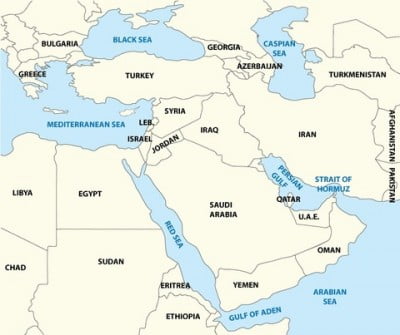
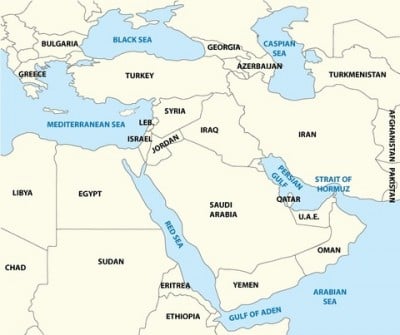
These autumn days are the most important in the Middle East
calendar. The Muslims celebrate Eid al Adha, the Feast of the Sacrifice;
the Jews fast at Yom Kippur, the Day of Atonement; and the Eastern
Orthodox Christians rejoice at Nativity of Our Lady Mary. It appears,
surprisingly, the best place to be at this time is Moscow, where Putin
received in quick succession the Israeli Prime Minister Bibi Netanyahu, the Palestinian President Mahmoud Abbas and the Turkish ruler Recep Erdogan.
They did not come for the lovely Indian summer that blessed Moscow
this week, not for the yellow and red leaves covering the maple and
birch trees, though this sumptuous new Xanadu is quite fetching this
time of the year; its streets refashioned at enormous expense, parks
tended by best gardeners; bicycle paths and sidewalks repaved and even
its feared traffic jams abated somewhat.
Ostensibly, Abbas and Erdogan came to unveil, together with Putin,
the grand new Cathedral Mosque of Moscow, a vast and opulent structure
where ten thousand worshippers can pray at once. This city has more
Muslims than many a Muslim city has; about two millions of its 14
million dwellers are nominal Muslims.

They unveiled the mosque all right, and used this occasion for a good lengthy talk with Putin. So did Benjamin Netanyahu, the Israeli PM, who gave a miss to the mosque. And he came with his top brass: the head of staff and the head of military intelligence, after a long-time no-see.
This sudden interest to Moscow is a sign that the Russian entry into the Syrian fray has been playing to a full house. When, some three weeks ago I reported on this decision of Kremlin, my report has been met with great doubt, to say the least. Could it be that Russia, after being licked in the Ukraine, will venture that far from home? They were supposed to sulk in the Kremlin under the heavy load of sanctions, not roam around. Now the facts on the ground had justified my previous report. Russian soldiers and marines, Russian weapons, jets and boats are seen on the shore; they are building a new base and fighting the enemy, giving a new lease of life to the embattled Syrian state.
The rumours of Russian demise and of Syrian collapse has been somewhat premature. Putin’s push for peace in the Ukraine (so condemned by hotheads) allowed him to stabilise Donbass. Half a million refugees poured back into this fertile and developed region, the Russian Ruhr. After calm in Donbass was established, Putin’s hands were free to act elsewhere, and he did.
Resilient Russia came back into the Middle East, and that’s an unexpected fact. Unexpected, as for a few years it seemed that the Russians lost interest in the Middle East. They were busy elsewhere: trying to make friends with Europe, staging the Olympics, and then keeping out of the Ukrainian trouble as much as they could. And then the US troops and tanks were stationed on the Russian border in the Baltic states, a few hours’ drive to St Petersburg. Only in the last moment, when the Syrian collapse seemed a matter of weeks if not days away, the Russians woke up and rode to save their ally Bashar al-Assad.
This move has changed the rules of the game. The US became interested in Russia again, and President Obama asked for a meeting with President Putin during his visit on September 28, 2015 to New York for the UN General Assembly Jubilee 70th Session. Just a few days ago such a meeting was completely out of consideration.
The US plans to dispose of Syria as they find fit were thrown to disarray by the Russian involvement. So were plans of Qatar and the Saudis. A new reality began to be informed, not a moment too early.
Turkey
Putin’s meeting with Recep Erdogan of Turkey came in a crucial moment. Turkey is a net victim of the Syrian crisis, despite being a contributor to its gravity. Erdogan believed the Americans and the Europeans who told him that Bashar Assad will fall in a few weeks. He accepted and invited Syrian refugees to his country, established huge camps for refugees, provided for them. Now Turkey has 2 million Syrian and Iraqi refugees and has spent eight billion dollars caring for them. This burden is a main reason for recent electoral defeat of Erdogan and his party: the refugee operation is just too costly and ruinous for the not-too-robust Turkish society.
The US proposal for Turkey to join the US-led coalition has been hesitantly accepted, but quickly it became clear that this road leads nowhere. The Turkish plans to establish a no-fly zone near the Syrian-Turkish border triggered the Russian involvement, for after its implementation, Bashar Assad and the Syrian state would be beyond saving. After the Russian decision, the Turks lost any way out.
They reacted by letting loose the wave of refugees upon Europe. The Europeans were rather upset, but they have to regret their own actions. They pushed for removal of Bashar Assad, supported anti-Assad fractions, and did not want to pay for the refugee stay in Turkey. The Turks could not keep all two million refugees pent up in their country without considerable support of Europe, and such support was not forthcoming. So the Turks allowed the Europeans to feel the stream of refugees on their own skin.
Probably we can add that the US did not object to the Turkish letting off the steam. The US ruling elites always thought that European countries are too homogeneous, and some dilution by immigrants will make them more similar to the US in their composition.
While in Moscow, President Erdogan called President Putin his “dear brother”, a title usually reserved to the kings of the region and close allies. His officials for the first time ever mouthed the main idea of Putin: any arrangement in Syria should be made with President Bashar Assad. Please remember that even a few days ago, before the Russians stepped in, the Turks were adamantly sticking to the American mantra “Assad must go”.
Now this important mental barrier was taken; Erdogan and Putin renewed their discussion of the South Stream gas pipeline that was frozen for a few months. The negotiations weren’t completed, but it seems that things began moving.
Israelis and Palestinians
For Israel the Russian involvement meant that their old freedom of bombing whomever they feel like is over, or at least has been restricted. It is one thing to bomb practically defenceless Syrians, as Israelis did a dozen times for last year, and quite a different thing to operate jets within lidless eyesight of the S-300 radar and Su-27 interceptors with the Russian aces in the cockpits. That’s why Netanyahu took himself to Moscow on the eve of Yom Kippur.
Netanyahu came to deliver an ultimatum of his own. The Russians, and their allies, Assad, Iran and Hezbollah have to choose whether they intend to save Bashar Assad or to fight Israel. Both missions can’t be accomplished. If they fight Israel, Israel will destroy Assad.
Putin said that they do not intend to fight Israel. Assad is in such a poor shape that he can’t fight Israel. Even saving him alone is hard enough as he controls between 20% and 30% of the national territory, though it is most populated part of Syria, while the rest of the territory is mainly desert.
Netanyahu claimed his freedom to bomb Iranians and Hezbollah wherever it suits him. He is still obsessed with Iran, as Iranians, in his view, re-arm Hezbollah, modernise Hezbollah’s weaponry, and plan to open a second front against Israel on the Golan Heights. While first two claims may be true, the third one is a sheer invention.
Netanyahu is worried that the advanced Russian weapons may find its way to Lebanon, and this will limit Israel’s God-given right to bomb Lebanon. The Russians do not want their advanced weapons to leak out of Syria, either, so there is no great disagreement between them and the Israelis. However, while Israelis say such leakage occurs, the Russians deny that vehemently. Now, and at their previous encounter, the Israeli leader claimed he knows (“trust me!”) that the most advanced Russian weapons found its way to Lebanon, while Putin dismissed the claim as an unproven one.
It seems that Netanyahu still smarts for a fight. The American president refused him his innocent wish to destroy Iran and made the agreement with his archenemy. Even worse, as we learned from his former Defence Minister Ehud Barak, Netanyahu’s generals also rebelled against Bibi’s plans to attack Iran. But Netanyahu does not give up. He seeks to destroy Iran or at least Hezbollah, the most potent fighting force in the area.
Israel is much stronger than Hezbollah, and it has no reason to be afraid of Hezbollah’s attack. If Israel does not attack, nobody attacks Israel. But this MAD-like equation is not acceptable for Netanyahu: he seeks immunity and impunity for his strikes. Hezbollah denies him this impunity and can demand a heavy price for a new bombing campaign.
A Hotline
At Netanyahu’s request, the Russians and the Israelis agreed to establish a hotline between their militaries in order to minimise the chance of their hostile encounter. This is a normal practice: such a hotline functioned in 1974 between warring Israel and Egypt during the cease-fire so a local shoot-out will not escalate into an unwanted general conflagration.
This is not cooperation, not joint planning, not an arrangement between the allies. Just a device to prevent unwanted firefights. And it is a good thing. Israel and Russia can’t be allies: they pursue mutually opposing aims and their allies are quite different. Israel befriended Jabhat an Nusra, a Syrian branch of al Qaeda, an extremist Sunni group. Two thousand Nusra fighters received medical treatment in Israel and returned to fight Assad. Israel is moderately hostile to Bashar Assad, bombed the Syrian Army’s positions and attacked their bases with the help of the Nusra. Israel is implacably hostile to Russia’s allies in Syria, Iran and Hezbollah, and is quite indifferent to Da’esh (ISIS). That’s why the talk of Russian-Israeli alliance in Syria is just an attempt to mislead you.
However, President Putin is very friendly to Israel and to Jews. His friendship will not cause him to surrender Syria or to break up with Iran, but even the greatest friend of Israel on this planet, the US, is mindful of its own interests. At many occasions Putin promised to save the Jews if things will go utterly wrong for them. It seems he has in mind a mass evacuation of Israeli Jews to Russia as the last resort, like Russia did for the Polish Jews in 1939 thus saving millions of them from the Nazi fury. Needless to say we are very far away from such an apocalyptic scenario.
It seems Putin has some close personal friends among the Russians in Israel, for he often stresses that the 1.5 million strong Russian community in Israel (actually, about 0.5 million at the best) is the bridge and the guarantee of their friendship. He made a generous present of some 5 billion roubles (90 million dollars) per annum to the Russian Jews in Israel for their pension fund. (The US gives much more, but mainly for weapons, and it goes to Israeli generals).
Putin received Netanyahu warmly, as his old-time friend. So was Netanyahu, who indicated that he is tired of Americans. Putin did not take this ball: he did not believe Netanyahu is likely to ditch the US and run away with the Russkies to the hayloft. But both enthused in their friendly vibes. Putin wished Bibi to be inscribed in the Book of Life, showing an unexpected knowledge of Jewish customs.
Putin and Jews
Putin is so friendly with the Jews in Russia that the Israeli newspaper Haaretz said the Russian Jews never had it that good. He allows the Chabad Hassids to build anew the Jewish community in Russia, as the old one disintegrated after mass emigration to Israel and as a result of assimilation and intermarriage. In Moscow alone, they build thirty synagogues (comparing with just two mosques and some three hundred churches), though there are just a few hundred synagogue-going Jews in the whole of Moscow, at best.
The Chabad imports Jewish families from Israel, from the US and from Europe, and they are frequently seen around town in their distinctive garb. It remains to be seen whether they plan to establish a new Jewish community, or use it for a big-time real estate grab, as some people claim. Practically in every Russian city there is a synagogue and a community centre on the most desirable and expensive plot of land established and run by the Chabad, while traditional Jewish communities were dispossessed by the Chabad and disappeared.
Is Putin so Jews-friendly because he thinks it is a good strategy? Perhaps. Even now he is often described in the Western media as a new Hitler, how much worse it would be if the Jews in Russia or Israel would consider him an enemy. On the other hand, he can be sincere, as he read law in St Petersburg U and had had many Jewish friends. He also worked with the mayor of St Petersburg who had many Jews in his entourage. His choice of Chabad is not so easy to justify, but perhaps they were prepared to build Jewish life while staying away from politics.
Judo Master
His good relations with Netanyahu cause him no harm, either. Netanyahu is still a very powerful man, able to summon a majority in the US Senate, and an ally of Saudi Arabia, the strongman of the Arab world. Putin’s manners are non-confrontational; a Judo master, he does not argue with his opponent, rarely voices his disagreement. Thus he agreed with Netanyahu’s proposal of the hotline, or a joint commission of the military. I doubt this commission will be fruitful. If Bibi will forewarn the Russians of his planned attacks on the Syrian positions, the attacks will be useless; still the commission and the hotline will reduce the danger of unintentional confrontation.
Almost immediately after meeting with Netanyahu, Putin also met with Palestinian President Mahmoud Abbas. This meeting was also very friendly. Abbas told him of the trouble around Al Aqsa Mosque in Jerusalem, where Jewish religious fanatics play havoc and cause confrontations. He mentioned the seizure of Christian lands near Beit Jalla and other multiple troubles, including new Israeli licence to shoot Palestinian children with live fire of 0.22 calibre. Abbas encouraged Putin to save Syria from disintegration, and heard Putin’s explanation of Russian plans. It appears that Mahmoud Abbas will not retire and return the keys of the PNA at the UN General Assembly in a few days, as some observers expected, though this is not final yet.
This double meeting raised the Russian diplomacy to a new level. Until now, only American presidents were able to meet both Israeli and Palestinians in a friendly way and extend their patronage. Now Russia graduated to this supreme position, and that is certainly a great achievement of Putin, already justifying his decision to engage in Syria.
In the follow up, we shall deal with Russian-American discussion of Syrian crisis and see what they say to each other.
Israel Shamir can be reached on adam@israelshamir.net







Διεθνή
Ένοπλος Αζέρος πέρασε στην Αρμενία και πυροβόλησε μητέρα μπροστά στα παιδιά της! Σε πόλη αδελφοποιημένη με τη Νέα Σμύρνη το περιστατικό
Απαγγέλθηκαν συνολικά πέντε κατηγορίες, μεταξύ των οποίων παράνομη διέλευση των κρατικών συνόρων της Αρμενίας, λαθρεμπόριο στρατιωτικού υλικού, πυροβόλων όπλων και πυρομαχικών, παράνομη διακίνηση όπλων και πυρομαχικών, παράνομη είσοδος σε κατοικία παρά τη θέληση του ιδιοκτήτη και πρόκληση βαριάς σωματικής βλάβης υπό επιβαρυντικές περιστάσεις, μεταξύ άλλων με τη χρήση πυροβόλου όπλου.
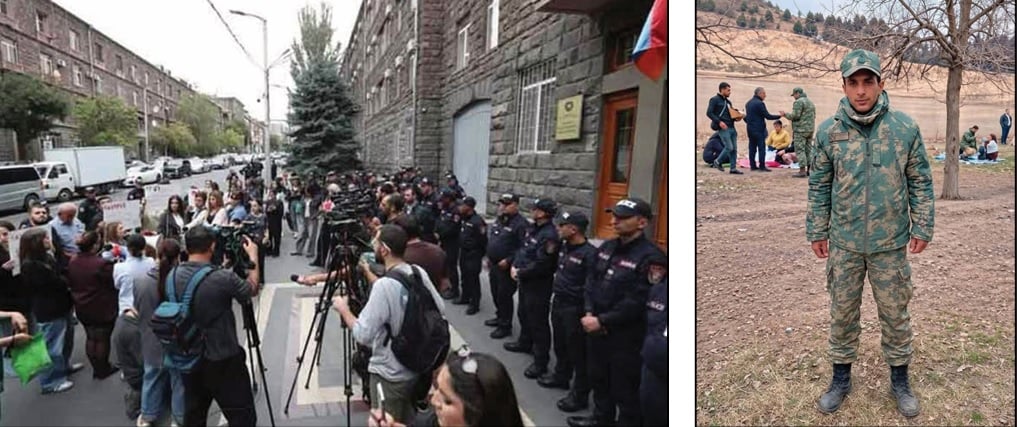
Αρμενικό δικαστήριο διέταξε την προφυλάκιση, για διάστημα δύο μηνών, του Αζέρου στρατιωτικού Νασίμ Ογλού Ραχίμ Μουσάγιεβ, ο οποίος κατηγορείται ότι πέρασε παράνομα στην Αρμενία και πυροβόλησε μια γυναίκα μέσα στο σπίτι της, στον οικισμό Σάκι της επαρχίας Σιουνίκ. Η πόλη απέχει 15 χιλιόμετρα από τα σύνορα και 3 χιλιόμετρα από την πόλη Σισιάν που είναι πόλη αδελφοποιημένη με την Νέα Σμύρνη.
Σε βάρος του Μουσάγιεβ έχουν απαγγελθεί συνολικά πέντε κατηγορίες, μεταξύ των οποίων παράνομη διέλευση των κρατικών συνόρων της Αρμενίας, λαθρεμπόριο στρατιωτικού υλικού, πυροβόλων όπλων και πυρομαχικών, παράνομη διακίνηση όπλων και πυρομαχικών, παράνομη είσοδος σε κατοικία παρά τη θέληση του ιδιοκτήτη και πρόκληση βαριάς σωματικής βλάβης υπό επιβαρυντικές περιστάσεις, μεταξύ άλλων με τη χρήση πυροβόλου όπλου.
Δύο από τις κατηγορίες προστέθηκαν την Παρασκευή. Αρχικά, η Γενική Εισαγγελία είχε ανακοινώσει κατηγορίες για πρόκληση βαριάς σωματικής βλάβης με τη χρήση όπλου, παράνομη κατοχή πυροβόλου όπλου και παραβίαση του απαραβίαστου της κατοικίας. Η παράνομη διέλευση των συνόρων δεν περιλαμβανόταν αρχικά, παρά το γεγονός ότι το ίδιο το Αζερμπαϊτζάν είχε επιβεβαιώσει πως ο στρατιωτικός είχε περάσει στην Αρμενία.
Την Παρασκευή οι εισαγγελικές αρχές ξεκίνησαν ξεχωριστή ποινική διαδικασία για την παράνομη διέλευση των συνόρων και το λαθρεμπόριο όπλων, η οποία στη συνέχεια συγχωνεύθηκε με την κύρια υπόθεση.
Σύμφωνα με τις αρμενικές αρχές, ο Μουσάγιεβ πέρασε παράνομα τα σύνορα και εισήλθε σε κατοικία στον οικισμό Σάκι την Πέμπτη 1η Οκτωβρίου. Όταν έγινε αντιληπτός, άνοιξε πυρ. Η 39χρονη ιδιοκτήτρια του σπιτιού τραυματίστηκε από σφαίρα στο πόδι, μπροστά στα τρία παιδιά της. Η γυναίκα διακομίστηκε αρχικά στο Ιατρικό Κέντρο Σισιάν και στη συνέχεια μεταφέρθηκε στο Γερεβάν. Η κατάστασή της είναι σταθερή και η ζωή της δεν διατρέχει κίνδυνο.
Κατά τη διάρκεια του περιστατικού τραυματίστηκαν επίσης δύο από τα παιδιά της. Σύμφωνα με το Armenpress, πρόκειται για ένα 15χρονο παιδί, το οποίο υπέστη κάταγμα στον δεξιό καρπό, και ένα 12χρονο, που υπέστη κάκωση μαλακών μορίων. Η κατάσταση της υγείας τους χαρακτηρίζεται ικανοποιητική, ενώ τα παιδιά έλαβαν ιατρική και ψυχολογική υποστήριξη.
Μετά το περιστατικό, ο Μουσάγιεβ διέφυγε από το σπίτι. Εντοπίστηκε αργότερα σε άλλη διεύθυνση στον ίδιο οικισμό και συνελήφθη. Σύμφωνα με τις τοπικές αρχές, όταν εντοπίστηκε δεν φορούσε στρατιωτική στολή. Οι αστυνομικοί ακολούθησαν ίχνη αίματος που είχε αφήσει πίσω του, καθώς και ο ίδιος είχε τραυματιστεί. Μετά τη σύλληψή του μεταφέρθηκε με ασθενοφόρο υπό αστυνομική φρουρά.
Ιδιαίτερη σημασία έχει το γεγονός ότι το περιστατικό σημειώθηκε μόλις δύο ημέρες μετά την επίσημη ενημέρωση της αρμενικής πλευράς από την Υπηρεσία Κρατικής Ασφάλειας του Αζερμπαϊτζάν. Στις 29 Σεπτεμβρίου, το Μπακού είχε ενημερώσει την Εθνική Υπηρεσία Ασφάλειας της Αρμενίας ότι ένας στρατιώτης είχε εγκαταλείψει τη μονάδα του υπό άγνωστες συνθήκες και ότι δεν μπορούσε να αποκλειστεί το ενδεχόμενο να είχε περάσει στην Αρμενία.
Μετά την ενημέρωση αυτή, αρμενικές και αζερικές υπηρεσίες ξεκίνησαν επιχειρήσεις για τον εντοπισμό του. Ωστόσο, ο Μουσάγιεβ κατάφερε να φτάσει σε κατοικημένη περιοχή του Σιουνίκ και να εισέλθει σε σπίτι, όπου άνοιξε πυρ εναντίον μιας οικογένειας.
Η εξέλιξη αυτή δημιουργεί ερωτήματα για το πώς ένας ένοπλος στρατιωτικός, για την παρουσία του οποίου είχε ήδη ενημερωθεί το Γερεβάν, κατάφερε να φτάσει μέχρι κατοικημένη περιοχή χωρίς να εντοπιστεί. Παραμένει επίσης άγνωστο εάν οι κάτοικοι του Σάκι και των γειτονικών κοινοτήτων είχαν ενημερωθεί για την πιθανή παρουσία ένοπλου Αζέρου στρατιωτικού στην περιοχή.
Η υπόθεση έχει προκαλέσει αντιδράσεις στην Αρμενία. Την Παρασκευή, η νεολαία της Αρμενικής Επαναστατικής Ομοσπονδίας (ARF) πραγματοποίησε συγκέντρωση διαμαρτυρίας έξω από το κτίριο της Εθνικής Υπηρεσίας Ασφάλειας στο Γερεβάν. Οι διαδηλωτές ζήτησαν να μην παραδοθεί ο Μουσάγιεβ στο Αζερμπαϊτζάν χωρίς όρους και προϋποθέσεις και να εξεταστεί το ενδεχόμενο ανταλλαγής του με Αρμένιους που κρατούνται στο Αζερμπαϊτζάν.
Η Γενική Εισαγγελία του Αζερμπαϊτζάν ανακοίνωσε το βράδυ της Πέμπτης ότι ξεκίνησε δική της ποινική έρευνα σχετικά με την παράνομη είσοδο του στρατιωτικού στην Αρμενία. Το υπουργείο Άμυνας του Αζερμπαϊτζάν, ωστόσο, δεν έχει μέχρι στιγμής προβεί σε επίσημη δήλωση για την υπόθεση.
Το περιστατικό θυμίζει ανάλογη υπόθεση που σημειώθηκε στο Σιουνίκ τον Απρίλιο του 2023, όταν δύο Αζέροι στρατιωτικοί εγκατέλειψαν τις θέσεις τους και πέρασαν στην Αρμενία. Ο ένας, ο Χουσεΐν Αχούντοφ, καταδικάστηκε αργότερα σε ισόβια κάθειρξη για τη δολοφονία Αρμένιου φρουρού ασφαλείας, ενώ ο δεύτερος καταδικάστηκε σε 11 χρόνια φυλάκισης. Τον Δεκέμβριο του 2023, και οι δύο επέστρεψαν στο Αζερμπαϊτζάν στο πλαίσιο ανταλλαγής κρατουμένων, κατά την οποία το Μπακού απελευθέρωσε 32 Αρμένιους κρατουμένους.
Πηγή: Εφημερίδα Αζάτ Ορ
GEOPOLITICO
Ο Αλίγιεφ αποκαλεί τους πρώην ηγέτες της Αρμενίας και του Αρτσάχ «εγκληματίες πολέμου» και δηλώνει ότι το Αζερμπαϊτζάν πρέπει να είναι «δέκα φορές ισχυρότερο»
Ο Αλίγιεφ έχει δικαίωμα να υπερασπίζεται τα συμφέροντα του Αζερμπαϊτζάν. Δεν έχει, όμως, το δικαίωμα να μετατρέπει την ισχύ των όπλων σε μέτρο δικαιοσύνης, να αποδίδει συλλογική ενοχή σε έναν ολόκληρο λαό και ταυτόχρονα να ζητά από τον κόσμο να πιστέψει ότι η στρατιωτική υπεροχή αποτελεί εγγύηση ειρήνης.
του Αρντασές Γιαγουπιάν
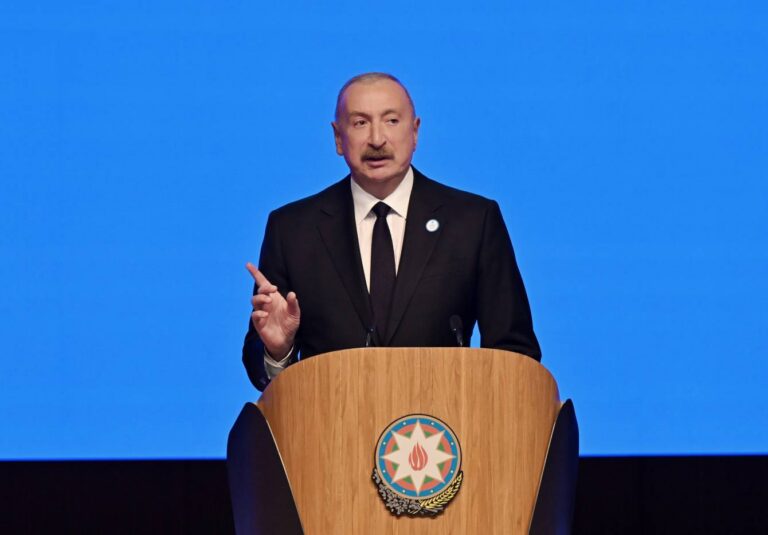
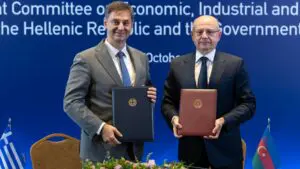
Ενώ στην Αθήνα πραγματοποιούνταν η 6η Σύνοδος της Μικτής Διυπουργικής Επιτροπής Ελλάδας–Αζερμπαϊτζάν και το Επιχειρηματικό Συνέδριο Ελλάδας–Αζερμπαϊτζάν, με τη συμμετοχή του Χάρη Θεοχάρη και του Αζέρου υπουργού Ενέργειας για την διεύρυνση της διμερούς συνεργασίας, ο Αλίγιεφ την ίδια ημέρα εκφωνούσε μια ιδιαίτερα σκληρή ομιλία για την Αρμενία, μιλώντας για στρατιωτική υπεροχή «δέκα φορές μεγαλύτερη»
Σε μια ακόμη επιθετική και αποκαλυπτική ομιλία του, στις 2 Οκτωβρίου στο Μπακού, ο Ιλχάμ Αλίγιεφ αποκάλεσε συλλήβδην τους πρώην ηγέτες της Αρμενίας «εγκληματίες πολέμου» και δήλωσε ότι «πρέπει να εκτίσουν τις ποινές τους», χωρίς να αναφέρει συγκεκριμένες δικαστικές καταδίκες ή να εξετάζει ατομικές ευθύνες.
Παράλληλα, παρουσίασε τον πόλεμο του 2020 και την επίθεση του Αζερμπαϊτζάν στο Αρτσάχ τον Σεπτέμβριο του 2023 ως «στρατιωτικές νίκες» και ως αποκατάσταση της εδαφικής ακεραιότητας της χώρας του. Ωστόσο, στην ίδια ομιλία παραδέχθηκε ότι το Μπακού πραγματοποίησε ενδιάμεσες στρατιωτικές επιχειρήσεις προκειμένου να αλλάξει τις συνθήκες επί του πεδίου και να προετοιμάσει την τελική επίθεση του 2023.
Η επίθεση της 19ης Σεπτεμβρίου 2023, μετά από εννέα μήνες αποκλεισμού του Αρτσάχ, κατέληξε στην κατάλυση της de facto αρμενικής διοίκησης και στη μαζική εκτόπιση του αρμενικού πληθυσμού. Ο Αλίγιεφ εξακολουθεί να την αποκαλεί «αντιτρομοκρατική επιχείρηση» και να πανηγυρίζει την έκβασή της.
Την ίδια στιγμή, ενώ δηλώνει ότι «δεν υπάρχει πλέον σύγκρουση» και ότι υπάρχει ειρήνη στα σύνορα, ανακοινώνει ότι το Αζερμπαϊτζάν πρέπει «πάντα να είναι δέκα φορές ισχυρότερο» από την Αρμενία. Περίπου 9 δισεκατομμύρια μανάτ, σύμφωνα με τον ίδιο, θα κατευθυνθούν σε ζητήματα άμυνας και ασφάλειας.
Ο Αλίγιεφ δεν περιορίστηκε στην αναφορά του παρελθόντος. Καθιέρωσε ουσιαστικά την 8η Νοεμβρίου 2020 και την 20ή Σεπτεμβρίου 2023 ως δύο κεντρικές ημερομηνίες της κρατικής αφήγησης του Αζερμπαϊτζάν. Την πρώτη ως «ημέρα νίκης» του πολέμου των 44 ημερών και τη δεύτερη ως την ημέρα κατά την οποία, σύμφωνα με την επίσημη αζερική αφήγηση, αποκαταστάθηκε πλήρως η κυριαρχία του Μπακού στο Αρτσάχ. Και ενώ μιλά για ειρήνη, ο ίδιος ο Αλίγιεφ δηλώνει ότι η χώρα του πρέπει να είναι «δέκα φορές ισχυρότερη» από την Αρμενία και αφήνει να εννοηθεί ότι, αν το Αζερμπαϊτζάν δεν είχε «σταματήσει εγκαίρως», μια τρίτη Αψίδα του Θριάμβου θα μπορούσε να βρίσκεται σήμερα στο κέντρο του Γερεβάν. Πρόκειται για μια ευθεία υπενθύμιση ότι, πίσω από τη σημερινή ρητορική περί ειρήνης, το Μπακού εξακολουθεί να αντιλαμβάνεται τη στρατιωτική ισχύ και την επιβολή ως βασικά εργαλεία της πολιτικής του. Παράλληλα, κατηγόρησε τους Αρμενίους για «αχαριστία» και υποστήριξε ότι «μας μαχαίρωσαν πισώπλατα», επαναφέροντας γνωστά μοτίβα της τουρκοαζερικής ρητορικής περί αρμενικής «προδοσίας».
Οι δηλώσεις αυτές αποκαλύπτουν μια σοβαρή αντίφαση. Από τη μία πλευρά το Μπακού μιλά για ειρήνη, εμπόριο και τέλος της σύγκρουσης και από την άλλη, ο πρόεδρός του μιλά για μόνιμη στρατιωτική υπεροχή, χαρακτηρίζει ολόκληρες πολιτικές ηγεσίες «εγκληματίες πολέμου» και αφήνει ανοιχτές απειλητικές αναφορές ακόμη και για το Γερεβάν.
Η ειρήνη δεν οικοδομείται με το «να είμαστε δέκα φορές ισχυρότεροι», ούτε με απειλές, ιστορικούς συμψηφισμούς και συλλογικές κατηγορίες. Και ασφαλώς δεν οικοδομείται όταν η στρατιωτική κατάκτηση μιας περιοχής και η εκδίωξη του γηγενούς πληθυσμού παρουσιάζονται ως λόγος εθνικής υπερηφάνειας.
Ο Αλίγιεφ έχει δικαίωμα να υπερασπίζεται τα συμφέροντα του Αζερμπαϊτζάν. Δεν έχει, όμως, το δικαίωμα να μετατρέπει την ισχύ των όπλων σε μέτρο δικαιοσύνης, να αποδίδει συλλογική ενοχή σε έναν ολόκληρο λαό και ταυτόχρονα να ζητά από τον κόσμο να πιστέψει ότι η στρατιωτική υπεροχή αποτελεί εγγύηση ειρήνης.
Η πραγματική ειρήνη δεν χρειάζεται δέκα φορές περισσότερα όπλα. Χρειάζεται σεβασμό, αυτοσυγκράτηση, δικαιοσύνη και κυρίως εγκατάλειψη της λογικής ότι ο ισχυρότερος έχει πάντα δίκιο.
Και η Ελλάδα δεν πρέπει να είναι συμμέτοχη σε αυτή την λογική.
Διεθνή
Οι πρέσβεις των χωρών της ΕΕ στο Σουνίκ της Αρμενίας
Σύμφωνα με την πρεσβεία της Ολλανδίας στην Αρμενία, «αυτές οι συναντήσεις αποτελούν μια σημαντική πλατφόρμα όχι μόνο για την αποτίμηση των αποτελεσμάτων, αλλά και για τον από κοινού καθορισμό των μελλοντικών κατευθύνσεων της συνεργασίας μας.
Από την Αρμενική εφημερίδα Αζάτ Ορ
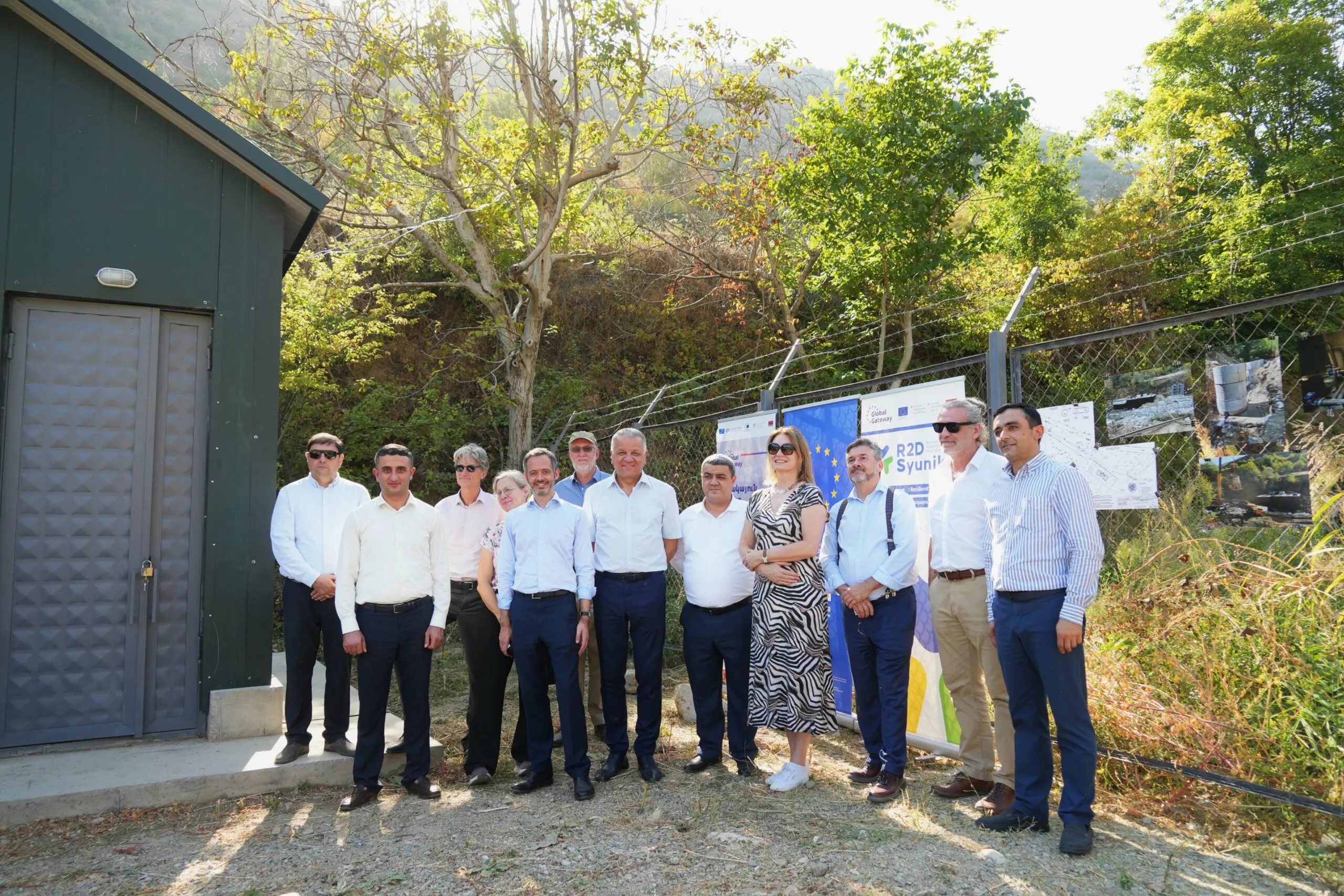
Οι πρέσβεις των κρατών μελών της ΕΕ με τον πρέσβη της ΕΕ στη Αρμενία Βασίλη Μαραγκό συνόψισαν τα αποτελέσματα του έργου που πραγματοποιήθηκε στο πλαίσιο της πρωτοβουλίας «Βιώσιμο Σουνίκ — Ομάδα της Ευρώπης» και συζήτησαν τις μελλοντικές προτεραιότητες της διοίκησης της περιφέρειας Σουνίκ.
Σύμφωνα με την πρεσβεία της Ολλανδίας στην Αρμενία, «αυτές οι συναντήσεις αποτελούν μια σημαντική πλατφόρμα όχι μόνο για την αποτίμηση των αποτελεσμάτων, αλλά και για τον από κοινού καθορισμό των μελλοντικών κατευθύνσεων της συνεργασίας μας.
Ήταν ιδιαίτερα πολύτιμο να ακούσουμε την άποψη της περιφερειακής διοίκησης σχετικά με αυτό το θέμα», σημείωσε η πρέσβης της Ολλανδίας Μαρίκε ΜονρόιΒίντερ.
Κατά τη διάρκεια της επίσκεψης, τα μέλη της αντιπροσωπείας επισκέφθηκαν γαλακτοκομείο στο Καπάν, ενημερώθηκαν για τις εργασίες βελτίωσης της πρόσβασης σε πόσιμο νερό στο Λεχβάζ και επισκέφθηκαν την εταιρεία MeghriFruits.
Με την υποστήριξη του οργανισμού «Ομάδα Ευρώπη», η εταιρεία MeghriFruits επέκτεινε την παραγωγή της, δημιούργησε νέες θέσεις εργασίας και εισήλθε σε νέες εξαγωγικές αγορές.
Διαβάστε τα υπόλοιπα άρθρα της εφημερίδας στο PDF


Θεσσαλονίκη: Αλιείς «έσπασαν» την απεργία και αγόρασαν ψάρια από τουρκικό φορτηγό
Ένταση προκαλεί στη Θεσσαλονίκη υπόθεση αγοραπωλησίας αλιευμάτων εκτός ιχθυόσκαλας, την ώρα που ο κλάδος βρίσκεται σε κινητοποιήσεις. Βίντεο που παρουσίασε...

Σμαραγδής: «Στην Ελλάδα είναι επικίνδυνο να είσαι Έλληνας» – Ο Κολοκοτρώνης, η εθνική ταυτότητα και η απάντηση στους επικριτές
Ο σκηνοθέτης μίλησε στην Όλγα Λαθύρη στον Star Κεντρικής Ελλάδας για τη νέα ταινία με επίκεντρο τον Γέρο του Μωριά,...

Κάλλιο να πείσεις την Ουάσιγκτον να δεχθεί τα Εθνικά Χωρικά Ύδατα σου στα 12 ν.μ. στο Αιγαίο, παρά να κινδυνεύουν τα κυριαρχικά δικαιώματά σου από την Άγκυρα…
Του ΠΑΝΑΓΙΩΤΗ ΠΑΥΛΟΥ, Hellas Journal – Όσλο Ο Αμερικανός υπουργός Εξωτερικών Μάρκο Ρούμπιο έρχεται στην Ελλάδα στον απόηχο του θορύβου...
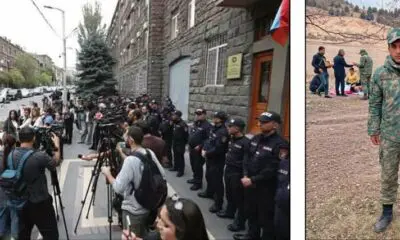

Ένοπλος Αζέρος πέρασε στην Αρμενία και πυροβόλησε μητέρα μπροστά στα παιδιά της! Σε πόλη αδελφοποιημένη με τη Νέα Σμύρνη το περιστατικό
Απαγγέλθηκαν συνολικά πέντε κατηγορίες, μεταξύ των οποίων παράνομη διέλευση των κρατικών συνόρων της Αρμενίας, λαθρεμπόριο στρατιωτικού υλικού, πυροβόλων όπλων και...


Μονή Σινά: Στο Ευρωκοινοβούλιο το ζήτημα – Ο διπλωματικός αγώνας
Υστερα από την επίσκεψη του ευρωβουλευτή Νικόλα Φαραντούρη στο Σινά και στο Υπουργείο Εξωτερικών της Αιγύπτου.
-
 Αναλύσεις3 εβδομάδες πριν
Το τελεσίγραφο Καλίν την ώρα που η Τουρκία προετοιμάζεται για πόλεμο!
-
 Άμυνα3 μήνες πριν
Ρωσσικό ΜΜΕ: Ελληνικό «μπλόκο» στην απαίτηση για Patriot – Πώς γνωρίζει το Κίεβο απόρρητα στοιχεία για τους πυραύλους μας;
-

 ΑΝΑΡΤΗΣΕΙΣ ΜΕ ΣΗΜΑΣΙΑ2 μήνες πριν
Πακιστανός με καναδική υπηκοότητα ο υπαίτιος της πυρκαγιάς στον Έβρο! Πιθανόν να μετέφερε μετανάστες
-

 GEOPOLITICO1 μήνα πριν
Το διέρρευσε ο Παπαχελάς! Έφεραν τον Καλίν στο Μαξίμου – Τί συζήτησε με τον Μητσοτάκη;
-
 Αναλύσεις1 μήνα πριν
Καραγκιούλ: «Αν Ελλάδα, Κύπρος και Ισραήλ επιτεθούν στην Τουρκία, ο χάρτης του Αιγαίου θα αλλάξει»
-

 ΑΝΑΡΤΗΣΕΙΣ ΜΕ ΣΗΜΑΣΙΑ2 μήνες πριν
Ξέσπασμα της μητέρας της Μυρτούς για την υπόθεση Τζαβέντ Ασλάμ: «Δεν ξεχνώ ποτέ» – «Δήμαρχος των Πακιστανών ο Δούκας»
-

 GEOPOLITICO3 εβδομάδες πριν
Τί λέει Τούρκος δημοσιογράφος για Σάββα Καλεντερίδη; «Έκανε πολύ καλά τη δουλειά του για τη χώρα του – Δεν μπορούσε να τον στριμώξει η ΜİΤ»
-

 Αναλύσεις3 μήνες πριν
Εάν η Τουρκία απορρίψει τη συμφωνία αποχώρησης από την Κύπρο θα απομακρυνθεί δια της βίας