Ακολουθήστε μας

Διεθνή

Η πανισλαμιστική πολιτική της Τουρκίας – Διαβάστε το έστω και με Google Translate

Δημοσιεύτηκε στις

Turkey’s Pan-Islamist Foreign Policy

Understanding Turkey’s diplomatic moves post-2011 by looking back to the Ottoman conception of ittihad-i Islam
By 

Turkey’s President Recep Tayyip Erdoğan at an election rally in the Yenikapi district of Istanbul, March 24, 2019. Kayhan Ozer/Turkish Presidency/Handout/Anadolu Images
When he called on Egypt’s Hosni Mubarak to heed “the people’s calls and their most humane demands” in February 2011, Turkey’s strongman Recep Tayyip Erdoğan essentially committed Turkey to embracing the unfolding Arab Spring. It was a fateful statement. Erdoğan essentially put at risk all the political and economic gains Turkey had made in the Arab World until that point. In fact, three years later Turkey found itself totally isolated in the region and deeply embroiled in the civil war raging in neighboring Syria. 

Why did Turkey take the risky path and embrace the Arab Spring? Making sense of what proved to be a disastrous choice is only possible if we take into account the Islamist ideology of foreign policymakers in Ankara. More specifically, analysts need to consider the concept of ittihad-i Islam, which has always been a critical component of Islamism in Turkey and as such the prism through which the Islamist-leaning leadership of the current ruling Justice and Development Party (Adalet ve Kalkınma Partisi or simply AKP) has interpreted regional and world developments. In the eyes of Turkish Sunni Islamists, who make up the AKP leadership, the Arab Spring was a harbinger of popular Islamist transformation in the Middle East and North Africa (MENA). 

The obvious question here is what, if at all, does Islamist foreign policy in the Turkish context prescribe before 2011, and in the radically transformed MENA region post-2011? 
“Unity of Islam” in the Ottoman State
The religion of Islam certainly has teachings that can easily be interpreted as direct orders for Muslims to help and cooperate with one another and act in unity in the realm of foreign policy. An oft-quoted Quranic verse, for example, states, “And hold firmly to the rope of Allah all together and do not get disunited. And remember the blessings/gifts of Allah upon you. When you were enemies, He reconciled your hearts and with His blessing you became brothers (3:103).” Similarly, a well-known Islamic saying states, “The believers are just like a human body in mutual affection, compassion and sympathy. When any part aches, the other parts also ache.” 
These and similar verses inspired a number of religious scholars and intellectuals in the nineteenth century to call for the development of closer cooperation and stronger relations among Muslims of all ethnicities and sects. Coined as ittihad-i Islam in Ottoman Turkish, or wahdat al-Islam in Arabic—in both cases, literally meaning “unity or union of Islam”—this call also found an echo among statesmen and bureaucrats of the Ottoman Empire, the state that many Muslims had turned to for financial, military, and diplomatic aid throughout that long century. The Ottoman Empire had even pursued pan-Islamism—a phrase coined by Europeans to refer to the foreign policy of Muslim unity during the reign of Sultan Abdul Hamid II (ruled 1878–1909). 
It was in the nineteenth century that many in the Muslim-majority world came to realize that there was a stark and ever-growing power disparity between Europe and the Muslim world. This power disparity could perhaps be conveniently ignored if it had not created a hostile international environment: European powers, especially Britain, France, and Russia, were colonizing the Islamic world bit-by-bit and various Muslim rulers had failed to thwart these colonial powers. In reaction to what appeared to be a united European assault on Muslim lands, the idea of ittihad-i Islam was born and gained popularity from Karachi to Rabat. 
The idea made sense. By cooperating with one another, Muslims could stand against Europe and protect their interests. However, even though the Ottoman Sultan Abdul Hamid II embraced this concept, the idea failed to help the Ottoman Empire and others prevent total European domination by the Congress of Berlin in 1878 and the Berlin Conference in 1884–1885. The process of Western domination of the Muslim-majority world only intensified in the twentieth century following the end of World War I and the dissolution of the Ottoman state. 
By the second quarter of the twentieth century, only a few Muslim states had remained independent from Europe. Turkey was one of them, having established a republic in the embers of the Ottoman Empire in 1923 and then abolishing the Caliphate in 1924. Yet, Republican Turkey adopted a purely nationalistic foreign policy agenda that held no pretension toward advancing and protecting the interests of other Muslims outside of Turkey. The idea of ittihad-i Islam, however, survived in Turkey, essentially becoming ingrained in what was to become Turkish Islamism in the second half of the twentieth century. 
A critical figure in this transition was Said Nursi (1878–1960), who lived through the collapse of the Ottoman Empire and the subsequent foundation of the republic. Nursi embraced pan-Islamism well before the collapse of the empire. In an article he penned in 1909, for example, he declared the unity of Islam as the greatest obligatory act (fardh) for Muslims. During the Republican era, Nursi continued to cherish ittihad-i Islam as an ideal to be realized and worked to establish contacts with religious figures and leaders elsewhere in the Muslim world. 
Islamist–Kemalist Conflict in Turkey
Even though Turkish or Anatolian Islamism originated in the nineteenth century, it evolved and took its prime features in a dialectical conflict primarily with the dominant statist ideology: Kemalism, named after the founder of the Republic of Turkey, Mustafa Kemal Atatürk. 
In the first quarter century of the Turkish Republic, Kemalist leaders implemented a series of secularizing reforms that drastically restricted the roles of religion and took harsh measures against religious activists and groups. Islamism’s judgement of Kemalism was, in reaction, excessively harsh. According to Islamists, Kemalism was essentially an anti-religious ideology and in the eyes of religious figures such as Nursi, Atatürk himself embodied none other than Islam’s anti-Christ, Sufyan or Dejjal. 
For Islamism, Kemalism was alien to Anatolia—the rural hinterland of Turkey populated by Turkish and Kurdish villagers. This accusation became more and more pronounced as Islamism in Turkey grew more populist in its belief in the innate piety of ordinary Muslims. After 1924—stripped of the ideal of the Caliphate—Islamism became focused not in the Ottoman palaces and mosques of cosmopolitan Istanbul, but instead among the commoners of Anatolia. Islamism in the early republic was a secret truth almost, rarely acknowledged by the power elite of the big cities. Islamism advocated that Muslims in Turkey were still consciously and subconsciously attached to Islam, no matter how much the Republican–Kemalist state pronounced otherwise.
In the particular context of Turkey, where more traditional forms of Islam had remained strong and the political system allowed for electoral politicking, Islamism’s limited radicalism completely vanished over time and its populism gained further strength. The belief in Muslims’ innate attachment to Islam was critical as it served Islamists to portray their ideology as the one native ideology of the land and Islamism’s adherents as the most authentic representatives of the masses. The other popular ideologies in the early Republican era— Kemalism and Communism—were alien to the land, said Islamist leaders, as those other ideologies sought to transform the ordinary people along lines inspired by the West. 
Abdullah from Minya: Turkish Islamists’ Worldview
Islamism in Turkey came to hold the view that all the post-colonial regimes in the Middle East (including the Kemalist state in Ankara) pursued anti-religious policies and adopted foreign ideologies which were against Muslims. Hence, said many Turkish Islamists, all of these states were not authentic representatives of their peoples. More critically, Islamism came to hold that repressive secular regimes in the twentieth century artificially divided the Middle East, alienated the peoples of the region from one another, sowed enmity among them, and harmed their religious and cultural brotherhood and friendship. 
To put it in another way, Turkish Islamism essentially held that throughout the twentieth century, Islamists, or pious Muslims, had lived under anti-religious regimes throughout the region. This perception was most vividly portrayed in a novel, which became a bestseller and inspired a movie in Turkey. 
The novel narrates the various difficulties faced by a man named Abdullah from Minya, Egypt (hence, its title, Minyeli Abdullah—literally Abdullah from Minya province). In the story, Abdullah has to endure injustice in Egypt simply because he is a pious Muslim. The publisher of this novel, Timaş, tellingly describes the book in the following words: “Minyeli Abdullah narrates the story of the Muslim in the twentieth century. It is the story of the Abdullahs living in Egypt as well as in Syria, Iraq, Algeria, Pakistan, Nigeria, Turkey or anywhere else in the world, who searched and found the true path to the light [nur] in the darkness of this century of infidelity (kufr) and heresy (dalalet).” 
Despite this declaration, Minyeli Abdullah was certainly allegorical: it was more about Turkey than it was about Egypt. However, this should not hide the fact that Islamism in Turkey developed a sympathy for various Turkish and non-Turkish Muslim groups and ethnicities. Islamism in Turkey achieved this by incorporating into its victimology the persecution of such figures as Hassan El-Banna, Sayyid Qutb (both of whom are described in Turkish Islamist literature as martyrs), the Muslim Brotherhood in Egypt, the Islamic Salvation Front in Algeria, and various revolutionary Muslim groups representing oppressed Muslim-majority peoples such as the Palestinians, Kashmiris, Chechens, Bosnians, and Uyghurs. 
The Political Islamism of Erbakan and Erdoğan’s AKP
Erdoğan’s ruling AKP came to power in Turkey in 2002, calling itself conservative and democratic. Yet, the party’s leadership cadres hailed from Turkey’s Islamist backbench, all being former followers and associates of Necmettin Erbakan (1926-2011). 
Erbakan was Turkey’s leading Islamist from the 1960s until the rise of Erdoğan and the founding of the AKP in 2001. Throughout his political career, Erbakan advocated that Turkey should develop stronger relations with the Muslim world, not with the West. For example, he called the European Union—to which Turkey applied for membership—“a Christian club,” and led the establishment of a Muslim international organization known as D8, which was formed by eight major Muslim countries. However, Erbakan could not achieve much. He never came to power at the head of a majority political party, and therefore had to cut deals with other political parties when in the government and faced a formidable Kemalist establishment that was made stronger by the Kemalists’ control of the armed forces, the judiciary, the universities, and the media. 
Receiving a painful lesson from Erbakan’s failure to challenge the Kemalist establishment, the leadership of the AKP—once in power in 2002—softened their ideological rhetoric, embraced democracy and even secularism, and managed to build a broad societal coalition. Coming to power in their first elections after breaking away with Erbakan, the AKP leaders started a long process of dismantling the Kemalist establishment, which took almost a decade. 
During this initial decade (2002–2011), the AKP heads remained more or less loyal to Turkey’s traditional foreign policy prerogatives. The AKP even pursued a political reform program to join the European Union, an action more ambitious than any previous Turkish government. Erdoğan and the AKP also kept Turkey’s commitment to NATO and worked to improve Turkey’s relations with the United States. In the beginning of the U.S. invasion of Iraq, for example, as Turkey’s prime minister, Erdoğan published an opinion piece in the Wall Street Journal, tellingly titled “My Country Is Your Faithful Ally and Friend.” Erdoğan even stated in this piece, “We are determined to maintain our close cooperation with the U.S. We further hope and pray that the brave young men and women return home with the lowest possible casualties, and that the suffering in Iraq ends as soon as possible.”
However, on another level the AKP pursued a rather subtle Islamist foreign policy. Hailing from Turkish Islamist thought, the AKP leaders believe that Muslims are one nation, but superficially divided into national-ethnic-sectarian identities. However, many AKP leaders feel that Muslims should aspire to go beyond whatever divides them and work to develop into one Muslim state. Therefore, under successive AKP governments from 2002 until 2011, Turkey aimed to realize this political ideal, no matter how utopic (or dystopic depending on where you stand) it might seem. 
The Rise of Islamist Foreign Policies
It was not obvious in the 2000s, but by 2010–2011, after the AKP had negated almost all the Kemalist influence in and over the state, the Islamists in Turkey began to speak louder about the AKP’s Islamist-leaning foreign policy objectives. It was in the 2010s that the hard-core Islamist supporters of the AKP’s media wing began to portray Erdoğan in a more religious role, often repeating the now famous slogan, “you [in reference to Erdoğan] are this ummah’s dream come true.” 
Beyond slogans and media portrayals, Turkey under Erdoğan has taken concrete steps to develop ties with non-Turkish Muslims. For example, Turkey has increased its overall trade with the Muslim world eightfold. Thanks to the efforts of the AKP leaders in various capacities, Turkey’s trade with Muslim-majority nations increased from $8.4 billion in 2002 to $69 billion in 2018. In a bid to improve relations with Muslim-majority countries, the Erdoğan-led state also has worked to mutually cancel visa requirements, establish high-level consultation mechanisms, be involved in mediation efforts in some perennial intra-state and inter-state conflicts, and take part in regional organizations, such as the Gulf Cooperation Council and the Arab League. 
Turkey has promoted close cooperation with non-governmental organizations from the Muslim world, worked to revitalize the Organization of Islamic Cooperation, hosted dozens of international conferences attended by prominent religious figures as well as secular intellectuals/academics from the Middle East and Southeast Asia, undertaken numerous renovation projects of Ottoman heritage, and delivered various forms of international humanitarian aid—primarily to Muslims in need. Through the AKP’s and Erdoğan’s efforts to strengthen their historical ties with the Muslim Brotherhood and other Islamic religious movements, Turkey has become a hub where transnational Islamic religious opinion makers can meet and discuss common problems. 
Embracing the Arab Spring as a vehicle for ittihad-i Islam—like their Islamist brethren elsewhere in the Middle East—Turkey’s Islamists became jubilant about the Arab Spring. Then-Turkish Minister of Foreign Affairs Ahmet Davutoğlu’s view of the Arab Spring perhaps best exemplifies what the AKP saw in the early days of 2011. Speaking at the Al-Jazeera Forum in Doha, Qatar, in March 2011, Davutoğlu claimed that since the collapse of the Ottoman Empire, the Middle East had gone through two tragic experiences, each of which simply deepened the alienation among the peoples of the region. The first experience was colonialism and the other was the Cold War. However, this whole period was, Davutoğlu claimed, an unnatural aberration, an abnormality in the history of the region. 
With the end of the Cold War, Davutoğlu explained, this abnormality should have ended. However, it did not because the region had not been democratized. Davutoğlu bombastically argued in his speech that the Arab Spring was in fact normalizing Middle Eastern history. “The events around us today,” said Davutoğlu, “are normal developments. Of course, they develop spontaneously, but we have to see them as natural reflections of the natural flow of history.” 
It seems that, in his view, the Arab Spring was putting to rights the history of the Middle East, using one of his metaphors, closing “the 100-year-old parenthesis” in the region or breaking “the template drawn by Sykes-Picot” by bringing to power political parties that truly represented the peoples of the Middle East and the Islamists of the region. 
Turkey utterly embraced the Arab Spring more than any other country, even though it had excellent economic and political relations with all the pre-Arab Spring states and regimes, including Syria. There was no compelling economic or geopolitical reason behind such a wholehearted embrace except that the AKP leadership thought that the Arab Spring was paving the way for ittihad-i Islam. And as we have seen, this has always been the political goal and ideal of Islamists in Turkey. 
Two years after his Al-Jazeera Forum speech, Davutoğlu was more confident of the future that awaited ittihad-i Islam in the Middle East. In a speech he delivered at Dicle University in Diyarbakir, Turkey, in March 2013, Davutoğlu declared, “We will render the borders meaningless in these winds of change [blowing] in the Middle East, [working] together with the administrations that came to and will come to power.” 
Only four months after this speech was made, Turkey’s dreams about the future of the Middle East were dashed to dust by events in Egypt and the ouster of the Muslim Brotherhood president, Mohammed Morsi. Furthermore, the continuing and deepening civil conflict in Syria, Libya, and Yemen had already been signaling that the tides of history would not flow as desired by Davutoğlu and other Turkish Islamists. In the late summer of 2013, Turkey found itself isolated in the region and turned to the only other country in the Middle East facing a similar setback, Qatar. 
Events Post-2013 and Erdoğan’s Continued Isolation
The year 2013 was dramatic in some other ways. Massive street protests, known as the Gezi Park protests, erupted in Istanbul in late May 2013 and spread to other major Turkish cities, and a corruption investigation—which was launched in December 2013—implicated dozens of high-ranking AKP officials. The AKP’s Islamist supporters interpreted all these developments without a critical eye. By dismissing these charges, the base of the AKP, Turkish Islamists, gave credit to their century-old ittihad-i Islam historical imagination on the Middle East. As many Islamists explained to Turkish readers in newspaper columns and opinion pieces, powerful “international actors” were surreptitiously at work collaborating against Erdoğan and his administration. The military takeover in Egypt, the Gezi Park protests, and the corruption investigation all aimed—said Turkish Islamist pundits in 2013 and 2014—at preserving the status quo in the Middle East so that the exploitative global system, which benefited none but the United States and Europe, could continue. 
Since 2013–2014, Turkey has seen much change at home and abroad. All in all, however, Erdoğan has swum through the tidal waves of the year 2013 and even consolidated his power. In the meantime, Turkey’s foreign policy orientation has also changed. Turkey’s ambition to play an active and leading role in the Middle East has not diminished. However, Turkey has also seriously revised its priorities in the Middle East as Erdoğan himself has allied with Turkish nationalists in order to maintain his power at home. Sounding like good Turkish nationalists, Erdoğan and the rest of the AKP leadership now state that Turkey’s prime objective in the Middle East is to totally eradicate from northern Syria the People’s Protection Units, or YPG, considered by the Turkish state to be the Syrian branch of the Kurdistan Workers’ Party, or PKK, and hence a security threat. To this end, Turkey has undertaken two major military incursions and is now making preparations for a third. Yet, at the end of the day, no matter how much Erdoğan moves toward Turkish nationalists to remain in power, the AKP and the base of the president’s support are with Turkish Islamists. 
Islamism is what Islamists say it is. Whether Turkey’s new foreign policy orientation is compatible with a global understanding of Islamism is not an issue an outsider can settle. Suffice it to say, many Islamists in Turkey and abroad have had—at least publicly—to embrace the Erdoğan regime’s employment of a foreign policy centered on Islamism. Many Turkish Islamists continue to see Erdoğan as a reincarnation of such historical figures as Ertuğrul Ghazi and Abdul Hamid II, as vividly portrayed in two popular Turkish series: Diriliş Ertuğrul and Payitaht. Ertuğrul Ghazi was the father of Osman Ghazi, the founder of the Ottoman Empire, and Turkish Islamists contend that Ertuğrul survived and defeated many domestic and international conspiracies. Abdul Hamid II was the nineteenth century Ottoman sultan mentioned earlier in this text. A large number of Islamists believe Abdul Hamid II supported Muslims across the world and used the institution of the Caliphate to confront Western imperialism. 
Islamists’ Use of Foreign Policy
Foreign policy analysts often contend that states use religion or mobilize religious actors to simply serve interests empty of any real religious significance or identity. These analysts view a nation’s foreign policy as a reflection of political and economic concerns within the country. Such an approach, however, does not get us the full picture, especially when “religiously motivated” politicians formulate and execute these foreign policies. The limitation of this approach is most evident when looking at why Turkey embraced the Arab Spring. 

No obvious or compelling economic or political reason seems to have driven Turkey’s embrace of the Arab Spring. Following the Arab Spring, the main force behind Turkish foreign policy has instead been connected to the ideological factor. Hailing from an Islamist background, the leadership of Turkey’s ruling AKP saw in the Arab Spring a historic opportunity that could sweep away the culturally alienated ruling elite in the Arab World and bring the “true voice” of the people to power. In the minds of the AKP leaders, the masses in the Arab World were, as a majority, naturally inclined toward Islamists, and any democratic opening would bring to power opposition groups such as the Muslim Brotherhood that reflected the piety of the Arab street. As understood by Turkish Islamists, the Arab Spring then was unleashing a transformation that could potentially help Turkey’s Islamists realize their long-held dream of ittihad-i Islam across the Muslim world. 
Birol Baskan is non-resident scholar at the Middle East Institute. He is the author of Turkey and Qatar in the Tangled Geopolitics of the Middle East and From Religious Empires to Secular State. He has taught at Georgetown University’s School of Foreign Service in Qatar, Qatar University, and the State University of New York-Fredonia. 

Ο Σάββας Καλεντερίδης γεννήθηκε στη Βέργη Σερρών το 1960. Το 1977 εισήλθε στη Στρατιωτική Σχολή Ευελπίδων, από την οποία αποφοίτησε το 1981, ως ανθυπίλαρχος. Υπηρέτησε σε διάφορες μονάδες των τεθωρακισμένων και των καταδρομών και σε κρίσιμες θέσεις στο εξωτερικό. Το Μάρτιο του 2000, ενώ φοιτούσε στην Ανωτάτη Σχολή Πολέμου, παραιτήθηκε από τις τάξεις του Ελληνικού Στρατού, με το βαθμό του αντισυνταγματάρχη. Από το φθινόπωρο του 2000 ίδρυσε και διευθύνει τον εκδοτικό οίκο Ινφο-Γνώμων. Με το ψευδώνυμο Κώστας Νικοπολίδης μετέφρασε από τα τουρκικά και επιμελήθηκε την έκδοση του βιβλίου "Κράτος συμμορία", Εκδόσεις Τουρίκη, ενώ μετέφρασε από τα τουρκικά και την "Έκθεση Σουσουρλούκ", που συμπεριλήφθηκε στο ομώνυμο βιβλίο των Εκδόσεων Α.Α. Λιβάνη. Σε συνεργασία με το ίδρυμα "Φίλοι Λαογραφικού Μουσείου Μέλπως Μερλιέ" συμμετείχε και προλόγισε την έκδοση του διπλού CD "Τραγούδια του Πόντου, Ηχογραφήσεις του 1930" και του CD "Τραγούδια από τις παράλιες πόλεις του Πόντου και της Μικράς Ασίας". Επιμελήθηκε επίσης της έκδοσης του δίτομου έργου "Ανάλυση της τουρκικής εξωτερικής πολιτικής, Μύθος και πραγματικότητα", του βιβλίου "Οι μειονότητες στην Τουρκία" και των ιστορικών ταξιδιωτικών οδηγών "Κάτω Ιταλία - Μεγάλη Ελλάδα", "Σικελία", "Ρόδος - Σύμη - Καστελόριζο - Καρία - Λυκία", "Χίος - Σμύρνη", "Βουλγαρία - Ανατολική Ρωμυλία", "Καππαδοκία - Κεντρική Ανατολία" και "Κωνσταντινούπολη - Μαρμαράς". Έγραψε τους ιστορικούς ταξιδιωτικούς οδηγούς "Κοζάνη, στην αγκαλιά των βουνών", "Ιωνία, Σάμος - Έφεσος - Μίλητος - Πριήνη", "Δυτικός Πόντος, Βιθυνία - Παφλαγονία" και "Ανατολικός Πόντος, Κοτύωρα - Κερασούντα - Τραπεζούντα - Αργυρούπολη - Καρς". Αναλύσεις και άρθρα του Σάββα Καλεντερίδη, με κύριο θέμα την Τουρκία και άλλα περιφερειακά ζητήματα, έχουν δημοσιευθεί στις εφημερίδες "Κυριακάτικη Ελευθεροτυπία" και "Παρόν" και στα περιοδικά "Άμυνα και διπλωματία", "Απόρρητο Δελτίο" και "Διπλωματία".

Διεθνή

Ένοπλος Αζέρος πέρασε στην Αρμενία και πυροβόλησε μητέρα μπροστά στα παιδιά της! Σε πόλη αδελφοποιημένη με τη Νέα Σμύρνη το περιστατικό

Απαγγέλθηκαν συνολικά πέντε κατηγορίες, μεταξύ των οποίων παράνομη διέλευση των κρατικών συνόρων της Αρμενίας, λαθρεμπόριο στρατιωτικού υλικού, πυροβόλων όπλων και πυρομαχικών, παράνομη διακίνηση όπλων και πυρομαχικών, παράνομη είσοδος σε κατοικία παρά τη θέληση του ιδιοκτήτη και πρόκληση βαριάς σωματικής βλάβης υπό επιβαρυντικές περιστάσεις, μεταξύ άλλων με τη χρήση πυροβόλου όπλου.
Δημοσιεύτηκε

στις

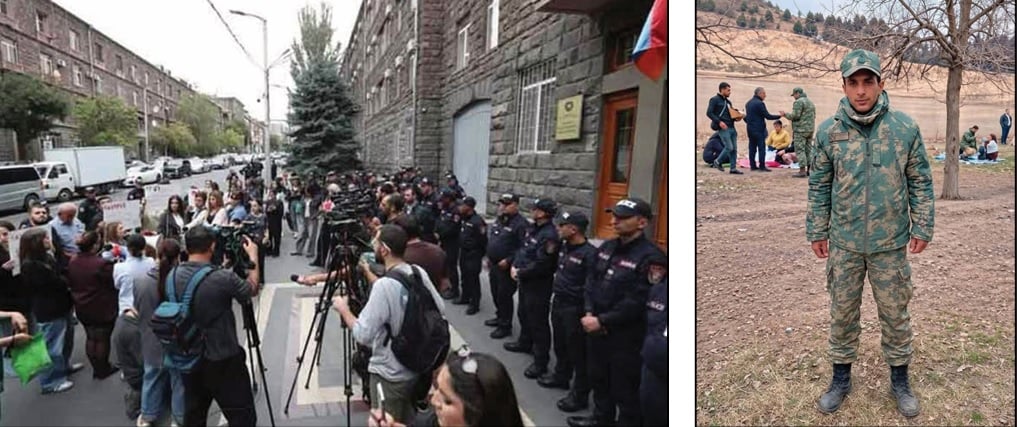
Αρμενικό δικαστήριο διέταξε την προφυλάκιση, για διάστημα δύο μηνών, του Αζέρου στρατιωτικού Νασίμ Ογλού Ραχίμ Μουσάγιεβ, ο οποίος κατηγορείται ότι πέρασε παράνομα στην Αρμενία και πυροβόλησε μια γυναίκα μέσα στο σπίτι της, στον οικισμό Σάκι της επαρχίας Σιουνίκ. Η πόλη απέχει 15 χιλιόμετρα από τα σύνορα και 3 χιλιόμετρα από την πόλη Σισιάν που είναι πόλη αδελφοποιημένη με την Νέα Σμύρνη.

Σε βάρος του Μουσάγιεβ έχουν απαγγελθεί συνολικά πέντε κατηγορίες, μεταξύ των οποίων παράνομη διέλευση των κρατικών συνόρων της Αρμενίας, λαθρεμπόριο στρατιωτικού υλικού, πυροβόλων όπλων και πυρομαχικών, παράνομη διακίνηση όπλων και πυρομαχικών, παράνομη είσοδος σε κατοικία παρά τη θέληση του ιδιοκτήτη και πρόκληση βαριάς σωματικής βλάβης υπό επιβαρυντικές περιστάσεις, μεταξύ άλλων με τη χρήση πυροβόλου όπλου.

Δύο από τις κατηγορίες προστέθηκαν την Παρασκευή. Αρχικά, η Γενική Εισαγγελία είχε ανακοινώσει κατηγορίες για πρόκληση βαριάς σωματικής βλάβης με τη χρήση όπλου, παράνομη κατοχή πυροβόλου όπλου και παραβίαση του απαραβίαστου της κατοικίας. Η παράνομη διέλευση των συνόρων δεν περιλαμβανόταν αρχικά, παρά το γεγονός ότι το ίδιο το Αζερμπαϊτζάν είχε επιβεβαιώσει πως ο στρατιωτικός είχε περάσει στην Αρμενία.

Την Παρασκευή οι εισαγγελικές αρχές ξεκίνησαν ξεχωριστή ποινική διαδικασία για την παράνομη διέλευση των συνόρων και το λαθρεμπόριο όπλων, η οποία στη συνέχεια συγχωνεύθηκε με την κύρια υπόθεση.

Σύμφωνα με τις αρμενικές αρχές, ο Μουσάγιεβ πέρασε παράνομα τα σύνορα και εισήλθε σε κατοικία στον οικισμό Σάκι την Πέμπτη 1η Οκτωβρίου. Όταν έγινε αντιληπτός, άνοιξε πυρ. Η 39χρονη ιδιοκτήτρια του σπιτιού τραυματίστηκε από σφαίρα στο πόδι, μπροστά στα τρία παιδιά της. Η γυναίκα διακομίστηκε αρχικά στο Ιατρικό Κέντρο Σισιάν και στη συνέχεια μεταφέρθηκε στο Γερεβάν. Η κατάστασή της είναι σταθερή και η ζωή της δεν διατρέχει κίνδυνο.

Κατά τη διάρκεια του περιστατικού τραυματίστηκαν επίσης δύο από τα παιδιά της. Σύμφωνα με το Armenpress, πρόκειται για ένα 15χρονο παιδί, το οποίο υπέστη κάταγμα στον δεξιό καρπό, και ένα 12χρονο, που υπέστη κάκωση μαλακών μορίων. Η κατάσταση της υγείας τους χαρακτηρίζεται ικανοποιητική, ενώ τα παιδιά έλαβαν ιατρική και ψυχολογική υποστήριξη.

Μετά το περιστατικό, ο Μουσάγιεβ διέφυγε από το σπίτι. Εντοπίστηκε αργότερα σε άλλη διεύθυνση στον ίδιο οικισμό και συνελήφθη. Σύμφωνα με τις τοπικές αρχές, όταν εντοπίστηκε δεν φορούσε στρατιωτική στολή. Οι αστυνομικοί ακολούθησαν ίχνη αίματος που είχε αφήσει πίσω του, καθώς και ο ίδιος είχε τραυματιστεί. Μετά τη σύλληψή του μεταφέρθηκε με ασθενοφόρο υπό αστυνομική φρουρά.

Ιδιαίτερη σημασία έχει το γεγονός ότι το περιστατικό σημειώθηκε μόλις δύο ημέρες μετά την επίσημη ενημέρωση της αρμενικής πλευράς από την Υπηρεσία Κρατικής Ασφάλειας του Αζερμπαϊτζάν. Στις 29 Σεπτεμβρίου, το Μπακού είχε ενημερώσει την Εθνική Υπηρεσία Ασφάλειας της Αρμενίας ότι ένας στρατιώτης είχε εγκαταλείψει τη μονάδα του υπό άγνωστες συνθήκες και ότι δεν μπορούσε να αποκλειστεί το ενδεχόμενο να είχε περάσει στην Αρμενία.

Μετά την ενημέρωση αυτή, αρμενικές και αζερικές υπηρεσίες ξεκίνησαν επιχειρήσεις για τον εντοπισμό του. Ωστόσο, ο Μουσάγιεβ κατάφερε να φτάσει σε κατοικημένη περιοχή του Σιουνίκ και να εισέλθει σε σπίτι, όπου άνοιξε πυρ εναντίον μιας οικογένειας.

Η εξέλιξη αυτή δημιουργεί ερωτήματα για το πώς ένας ένοπλος στρατιωτικός, για την παρουσία του οποίου είχε ήδη ενημερωθεί το Γερεβάν, κατάφερε να φτάσει μέχρι κατοικημένη περιοχή χωρίς να εντοπιστεί. Παραμένει επίσης άγνωστο εάν οι κάτοικοι του Σάκι και των γειτονικών κοινοτήτων είχαν ενημερωθεί για την πιθανή παρουσία ένοπλου Αζέρου στρατιωτικού στην περιοχή.

Η υπόθεση έχει προκαλέσει αντιδράσεις στην Αρμενία. Την Παρασκευή, η νεολαία της Αρμενικής Επαναστατικής Ομοσπονδίας (ARF) πραγματοποίησε συγκέντρωση διαμαρτυρίας έξω από το κτίριο της Εθνικής Υπηρεσίας Ασφάλειας στο Γερεβάν. Οι διαδηλωτές ζήτησαν να μην παραδοθεί ο Μουσάγιεβ στο Αζερμπαϊτζάν χωρίς όρους και προϋποθέσεις και να εξεταστεί το ενδεχόμενο ανταλλαγής του με Αρμένιους που κρατούνται στο Αζερμπαϊτζάν.

Η Γενική Εισαγγελία του Αζερμπαϊτζάν ανακοίνωσε το βράδυ της Πέμπτης ότι ξεκίνησε δική της ποινική έρευνα σχετικά με την παράνομη είσοδο του στρατιωτικού στην Αρμενία. Το υπουργείο Άμυνας του Αζερμπαϊτζάν, ωστόσο, δεν έχει μέχρι στιγμής προβεί σε επίσημη δήλωση για την υπόθεση.

Το περιστατικό θυμίζει ανάλογη υπόθεση που σημειώθηκε στο Σιουνίκ τον Απρίλιο του 2023, όταν δύο Αζέροι στρατιωτικοί εγκατέλειψαν τις θέσεις τους και πέρασαν στην Αρμενία. Ο ένας, ο Χουσεΐν Αχούντοφ, καταδικάστηκε αργότερα σε ισόβια κάθειρξη για τη δολοφονία Αρμένιου φρουρού ασφαλείας, ενώ ο δεύτερος καταδικάστηκε σε 11 χρόνια φυλάκισης. Τον Δεκέμβριο του 2023, και οι δύο επέστρεψαν στο Αζερμπαϊτζάν στο πλαίσιο ανταλλαγής κρατουμένων, κατά την οποία το Μπακού απελευθέρωσε 32 Αρμένιους κρατουμένους.

Πηγή: Εφημερίδα Αζάτ Ορ

Συνέχεια ανάγνωσης

GEOPOLITICO

Ο Αλίγιεφ αποκαλεί τους πρώην ηγέτες της Αρμενίας και του Αρτσάχ «εγκληματίες πολέμου» και δηλώνει ότι το Αζερμπαϊτζάν πρέπει να είναι «δέκα φορές ισχυρότερο»

Ο Αλίγιεφ έχει δικαίωμα να υπερασπίζεται τα συμφέροντα του Αζερμπαϊτζάν. Δεν έχει, όμως, το δικαίωμα να μετατρέπει την ισχύ των όπλων σε μέτρο δικαιοσύνης, να αποδίδει συλλογική ενοχή σε έναν ολόκληρο λαό και ταυτόχρονα να ζητά από τον κόσμο να πιστέψει ότι η στρατιωτική υπεροχή αποτελεί εγγύηση ειρήνης.
Δημοσιεύτηκε

στις

του Αρντασές Γιαγουπιάν

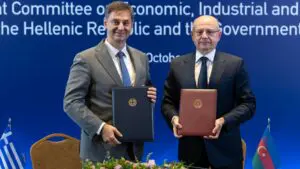
Ενώ στην Αθήνα πραγματοποιούνταν η 6η Σύνοδος της Μικτής Διυπουργικής Επιτροπής Ελλάδας–Αζερμπαϊτζάν και το Επιχειρηματικό Συνέδριο Ελλάδας–Αζερμπαϊτζάν, με τη συμμετοχή του Χάρη Θεοχάρη και του Αζέρου υπουργού Ενέργειας για την διεύρυνση της διμερούς συνεργασίας, ο Αλίγιεφ την ίδια ημέρα εκφωνούσε μια ιδιαίτερα σκληρή ομιλία για την Αρμενία, μιλώντας για στρατιωτική υπεροχή «δέκα φορές μεγαλύτερη»
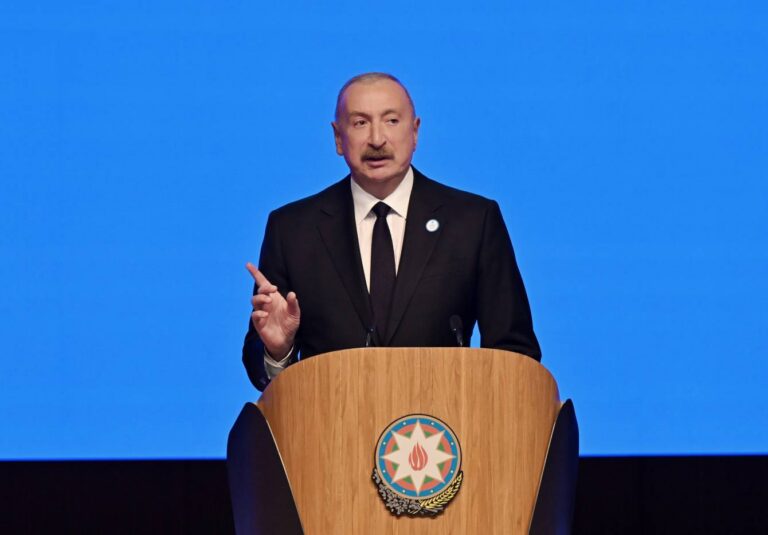
Σε μια ακόμη επιθετική και αποκαλυπτική ομιλία του, στις 2 Οκτωβρίου στο Μπακού, ο Ιλχάμ Αλίγιεφ αποκάλεσε συλλήβδην τους πρώην ηγέτες της Αρμενίας «εγκληματίες πολέμου» και δήλωσε ότι «πρέπει να εκτίσουν τις ποινές τους», χωρίς να αναφέρει συγκεκριμένες δικαστικές καταδίκες ή να εξετάζει ατομικές ευθύνες.

Παράλληλα, παρουσίασε τον πόλεμο του 2020 και την επίθεση του Αζερμπαϊτζάν στο Αρτσάχ τον Σεπτέμβριο του 2023 ως «στρατιωτικές νίκες» και ως αποκατάσταση της εδαφικής ακεραιότητας της χώρας του. Ωστόσο, στην ίδια ομιλία παραδέχθηκε ότι το Μπακού πραγματοποίησε ενδιάμεσες στρατιωτικές επιχειρήσεις προκειμένου να αλλάξει τις συνθήκες επί του πεδίου και να προετοιμάσει την τελική επίθεση του 2023.

Η επίθεση της 19ης Σεπτεμβρίου 2023, μετά από εννέα μήνες αποκλεισμού του Αρτσάχ, κατέληξε στην κατάλυση της de facto αρμενικής διοίκησης και στη μαζική εκτόπιση του αρμενικού πληθυσμού. Ο Αλίγιεφ εξακολουθεί να την αποκαλεί «αντιτρομοκρατική επιχείρηση» και να πανηγυρίζει την έκβασή της.

Την ίδια στιγμή, ενώ δηλώνει ότι «δεν υπάρχει πλέον σύγκρουση» και ότι υπάρχει ειρήνη στα σύνορα, ανακοινώνει ότι το Αζερμπαϊτζάν πρέπει «πάντα να είναι δέκα φορές ισχυρότερο» από την Αρμενία. Περίπου 9 δισεκατομμύρια μανάτ, σύμφωνα με τον ίδιο, θα κατευθυνθούν σε ζητήματα άμυνας και ασφάλειας.

Ο Αλίγιεφ δεν περιορίστηκε στην αναφορά του παρελθόντος. Καθιέρωσε ουσιαστικά την 8η Νοεμβρίου 2020 και την 20ή Σεπτεμβρίου 2023 ως δύο κεντρικές ημερομηνίες της κρατικής αφήγησης του Αζερμπαϊτζάν. Την πρώτη ως «ημέρα νίκης» του πολέμου των 44 ημερών και τη δεύτερη ως την ημέρα κατά την οποία, σύμφωνα με την επίσημη αζερική αφήγηση, αποκαταστάθηκε πλήρως η κυριαρχία του Μπακού στο Αρτσάχ. Και ενώ μιλά για ειρήνη, ο ίδιος ο Αλίγιεφ δηλώνει ότι η χώρα του πρέπει να είναι «δέκα φορές ισχυρότερη» από την Αρμενία και αφήνει να εννοηθεί ότι, αν το Αζερμπαϊτζάν δεν είχε «σταματήσει εγκαίρως», μια τρίτη Αψίδα του Θριάμβου θα μπορούσε να βρίσκεται σήμερα στο κέντρο του Γερεβάν. Πρόκειται για μια ευθεία υπενθύμιση ότι, πίσω από τη σημερινή ρητορική περί ειρήνης, το Μπακού εξακολουθεί να αντιλαμβάνεται τη στρατιωτική ισχύ και την επιβολή ως βασικά εργαλεία της πολιτικής του. Παράλληλα, κατηγόρησε τους Αρμενίους για «αχαριστία» και υποστήριξε ότι «μας μαχαίρωσαν πισώπλατα», επαναφέροντας γνωστά μοτίβα της τουρκοαζερικής ρητορικής περί αρμενικής «προδοσίας».

Οι δηλώσεις αυτές αποκαλύπτουν μια σοβαρή αντίφαση. Από τη μία πλευρά το Μπακού μιλά για ειρήνη, εμπόριο και τέλος της σύγκρουσης και από την άλλη, ο πρόεδρός του μιλά για μόνιμη στρατιωτική υπεροχή, χαρακτηρίζει ολόκληρες πολιτικές ηγεσίες «εγκληματίες πολέμου» και αφήνει ανοιχτές απειλητικές αναφορές ακόμη και για το Γερεβάν.

Η ειρήνη δεν οικοδομείται με το «να είμαστε δέκα φορές ισχυρότεροι», ούτε με απειλές, ιστορικούς συμψηφισμούς και συλλογικές κατηγορίες. Και ασφαλώς δεν οικοδομείται όταν η στρατιωτική κατάκτηση μιας περιοχής και η εκδίωξη του γηγενούς πληθυσμού παρουσιάζονται ως λόγος εθνικής υπερηφάνειας.

Ο Αλίγιεφ έχει δικαίωμα να υπερασπίζεται τα συμφέροντα του Αζερμπαϊτζάν. Δεν έχει, όμως, το δικαίωμα να μετατρέπει την ισχύ των όπλων σε μέτρο δικαιοσύνης, να αποδίδει συλλογική ενοχή σε έναν ολόκληρο λαό και ταυτόχρονα να ζητά από τον κόσμο να πιστέψει ότι η στρατιωτική υπεροχή αποτελεί εγγύηση ειρήνης.

Η πραγματική ειρήνη δεν χρειάζεται δέκα φορές περισσότερα όπλα. Χρειάζεται σεβασμό, αυτοσυγκράτηση, δικαιοσύνη και κυρίως εγκατάλειψη της λογικής ότι ο ισχυρότερος έχει πάντα δίκιο.

Και η Ελλάδα δεν πρέπει να είναι συμμέτοχη σε αυτή την λογική.

Συνέχεια ανάγνωσης

Διεθνή

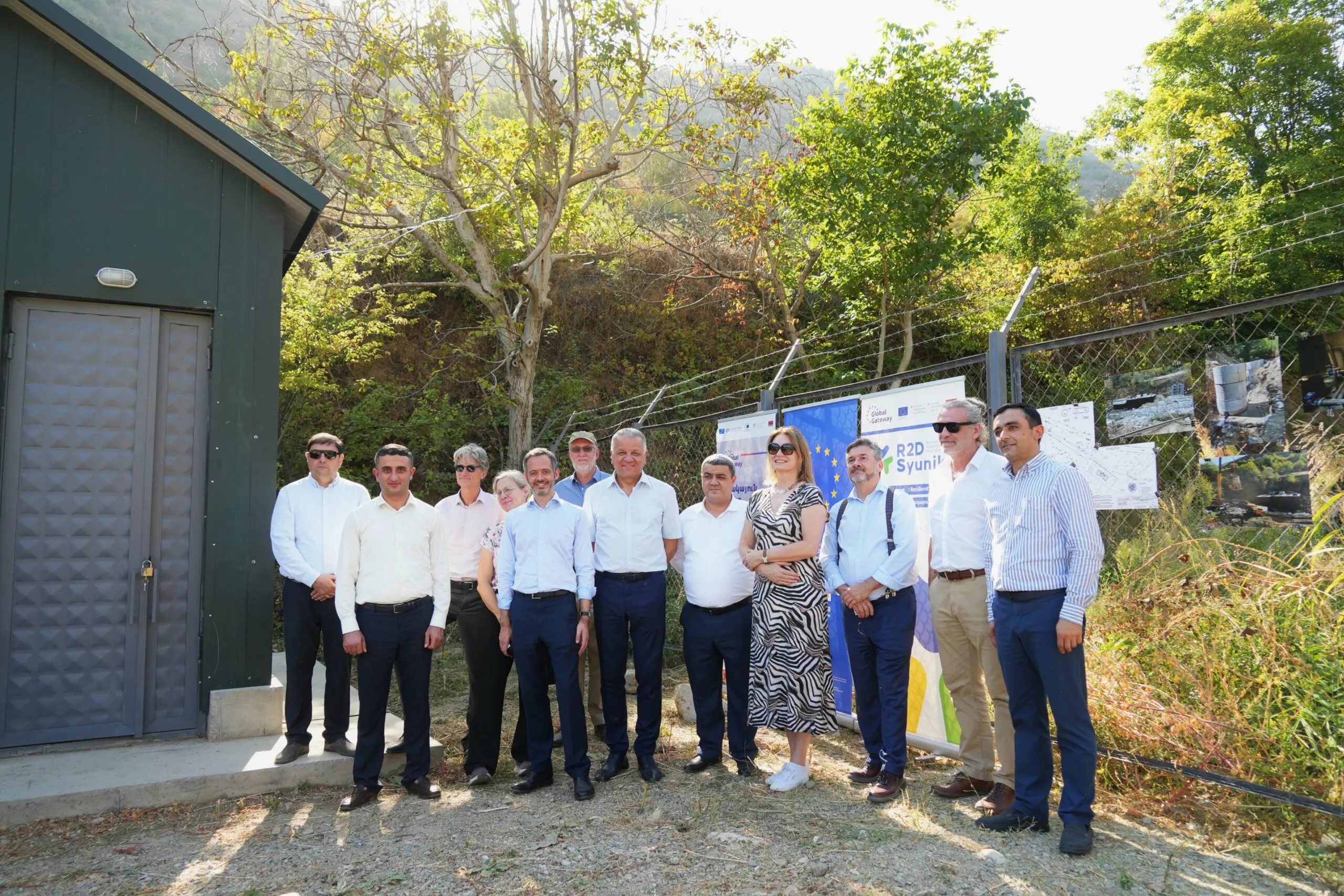
Οι πρέσβεις των χωρών της ΕΕ στο Σουνίκ της Αρμενίας

Σύμφωνα με την πρεσβεία της Ολλανδίας στην Αρμενία, «αυτές οι συναντήσεις αποτελούν μια σημαντική πλατφόρμα όχι μόνο για την αποτίμηση των αποτελεσμάτων, αλλά και για τον από κοινού καθορισμό των μελλοντικών κατευθύνσεων της συνεργασίας μας.
Δημοσιεύτηκε

στις

   Από την Αρμενική εφημερίδα Αζάτ Ορ

Οι πρέσβεις των κρατών μελών της ΕΕ με τον πρέσβη της ΕΕ στη Αρμενία Βασίλη Μαραγκό συνόψισαν τα αποτελέσματα του έργου που πραγματοποιήθηκε στο πλαίσιο της πρωτοβουλίας «Βιώσιμο Σουνίκ — Ομάδα της Ευρώπης» και συζήτησαν τις μελλοντικές προτεραιότητες της διοίκησης της περιφέρειας Σουνίκ.

Σύμφωνα με την πρεσβεία της Ολλανδίας στην Αρμενία, «αυτές οι συναντήσεις αποτελούν μια σημαντική πλατφόρμα όχι μόνο για την αποτίμηση των αποτελεσμάτων, αλλά και για τον από κοινού καθορισμό των μελλοντικών κατευθύνσεων της συνεργασίας μας.

Ήταν ιδιαίτερα πολύτιμο να ακούσουμε την άποψη της περιφερειακής διοίκησης σχετικά με αυτό το θέμα», σημείωσε η πρέσβης της Ολλανδίας Μαρίκε ΜονρόιΒίντερ.

Κατά τη διάρκεια της επίσκεψης, τα μέλη της αντιπροσωπείας επισκέφθηκαν γαλακτοκομείο στο Καπάν, ενημερώθηκαν για τις εργασίες βελτίωσης της πρόσβασης σε πόσιμο νερό στο Λεχβάζ και επισκέφθηκαν την εταιρεία MeghriFruits.

Με την υποστήριξη του οργανισμού «Ομάδα Ευρώπη», η εταιρεία MeghriFruits επέκτεινε την παραγωγή της, δημιούργησε νέες θέσεις εργασίας και εισήλθε σε νέες εξαγωγικές αγορές.


Διαβάστε τα υπόλοιπα άρθρα της εφημερίδας στο PDF

Συνέχεια ανάγνωσης

ΡΟΗ ΕΙΔΗΣΕΩΝ

school of gray fish school of gray fish
GEOPOLITICO9 ώρες πριν

Θεσσαλονίκη: Αλιείς «έσπασαν» την απεργία και αγόρασαν ψάρια από τουρκικό φορτηγό

Ένταση προκαλεί στη Θεσσαλονίκη υπόθεση αγοραπωλησίας αλιευμάτων εκτός ιχθυόσκαλας, την ώρα που ο κλάδος βρίσκεται σε κινητοποιήσεις. Βίντεο που παρουσίασε...
GEOPOLITICO10 ώρες πριν

Σμαραγδής: «Στην Ελλάδα είναι επικίνδυνο να είσαι Έλληνας» – Ο Κολοκοτρώνης, η εθνική ταυτότητα και η απάντηση στους επικριτές

Ο σκηνοθέτης μίλησε στην Όλγα Λαθύρη στον Star Κεντρικής Ελλάδας για τη νέα ταινία με επίκεντρο τον Γέρο του Μωριά,...

GEOPOLITICO11 ώρες πριν

Κάλλιο να πείσεις την Ουάσιγκτον να δεχθεί τα Εθνικά Χωρικά Ύδατα σου στα 12 ν.μ. στο Αιγαίο, παρά να κινδυνεύουν τα κυριαρχικά δικαιώματά σου από την Άγκυρα…

Του ΠΑΝΑΓΙΩΤΗ ΠΑΥΛΟΥ, Hellas Journal – Όσλο Ο Αμερικανός υπουργός Εξωτερικών Μάρκο Ρούμπιο έρχεται στην Ελλάδα στον απόηχο του θορύβου...
Διεθνή11 ώρες πριν

Ένοπλος Αζέρος πέρασε στην Αρμενία και πυροβόλησε μητέρα μπροστά στα παιδιά της! Σε πόλη αδελφοποιημένη με τη Νέα Σμύρνη το περιστατικό

Απαγγέλθηκαν συνολικά πέντε κατηγορίες, μεταξύ των οποίων παράνομη διέλευση των κρατικών συνόρων της Αρμενίας, λαθρεμπόριο στρατιωτικού υλικού, πυροβόλων όπλων και...
Πολιτική14 ώρες πριν

Μονή Σινά: Στο Ευρωκοινοβούλιο το ζήτημα – Ο διπλωματικός αγώνας

Υστερα από την επίσκεψη του ευρωβουλευτή Νικόλα Φαραντούρη στο Σινά και στο Υπουργείο Εξωτερικών της Αιγύπτου.

Δημοφιλή