Reuters: Three weeks that changed the world: How Trump turned against Ukraine and Europe
Behind the scenes and on-camera, combustible personalities and shifting politics in the U.S. and Europe resulted in decisions on security that could echo for years – including reopening the debate on nuclear weapons.
It took Europe just three weeks and a contentious Oval Office meeting to realize that its 75-year-old alliance with the United States was coming apart.
And when the Trump administration last week froze first the flow of American weapons to Ukraine and then the intelligence that warned of Russia’s impending missile launches and troop movements, a theoretical vulnerability became tangible.
The understanding that the American-led global order was over began dawning in Munich in mid-February, when U.S. Vice PresidentJD Vance harangued America’s closest allies at a conference usually known for displays of transatlantic unity.
Two weeks later it was cemented in the Oval Office,when a Ukrainian leader who had received little but standing ovations for three years was accused by Vance and U.S. President Donald Trump of disrespectful warmongering and expelled from the White House, his lunch untouched.
These were just two in a dizzying series of diplomatic events that played out on both sides of the Atlantic and which promise to reverberate across the globe for years to come.
In a blizzard of meetings and decisions, multiple European countries discussed forming a “coalition of the willing” to help Ukraine, France offered to consider extending its nuclear umbrella to European allies, shares of European arms manufacturers rose 20%, and hushed speculation about the death of NATO became an openly discussed probability.
Reuters spoke to more than two dozen European and U.S. political advisers and government officials for this story. Some described the backchannel jockeying by the Americans and Europeans as their alliance unraveled. Others recounted how shell-shocked European leaders first tried to mollify Trump, then publicly planned how to prop up Ukraine and defend themselves without the United States.
The reporting lays bare how American officials tried and failed to persuade Ukrainian President Volodymyr Zelenskiy to sign a crucial minerals deal and how their boiling frustration with the Ukrainian leader led to a disastrous White House encounter. Zelenskiy, for his part, said publicly he feared the deal was trying to force him to “sell our country.”
Relations had frayed badly even before the rancorous Feb. 28 Oval Office meetingbetween Trump and Vance on the one side and Zelenskiy on the other. Trump publicly had called Zelenskiy a dictator and falsely accused him of starting the war with Russia. The Ukrainian leader responded that Trump was living in a Russian-created “disinformation space.”
By early March, Trump appeared to dash any hopes that he might relent: The U.S. first froze weapons supplies to Ukraine, then suspended intelligence sharing, crucial for warning Ukraine of Russia’s impending missile launches and troop movements.
Reuters White House correspondent Jeff Mason talks about what made the series of White House meetings so remarkable.
Ukraine’s battlefield situation has deteriorated in recent weeks. Open-source maps reviewed by Reuters show thousands of Ukrainian troops who stormed into Russia’s Kursk region last summerare nearly surrounded by Russian forces. Russia, meanwhile, has ramped up drone and missile strikes, according to data collected by the Institute for the Study of War.
The phrase “peace through strength” that Trump claimed as his foreign policy mantra when he took office in his first term in 2017 has been invoked routinely on both sides of the Atlantic since the start of his second term.
But by the time Vance took the stage at the Munich Security Conference, those words were being used in vastly different ways.
Feb. 14
The Munich Security Conference is a place where, for six decades, world leaders have mixed grand public policy speeches with private deals in briefing rooms. For Europeans, the biggest issue for the third year running was Russia’s war on Ukraine – and how the new Trump administration planned to respond.
Vance was in Munich for the Friday keynote, with an entourage that included Secretary of State Marco Rubio, Keith Kellogg, the special envoy for Ukraine and Russia, and Republican Senator Lindsey Graham, one of Ukraine’s most consistent congressional supporters. Zelenskiy was there, and the expectation, both U.S. and Ukrainian officials say, was he would negotiate – and perhaps even sign – a deal to share Ukraine’s mineral wealth with the United States.
In the audience, NATO allies say they knew full well that Trump was skeptical of European military outlays during wartime, deeming them too low and demanding they spend 5% of GDP on defense, far above the 2% they’d previously agreed to. They braced for Vance’s policy address.
On one side of the table in Munich sat the Ukrainian team, including President Volodymyr Zelenskiy and his chief aide, Andriy Yermak. REUTERS/Leah Millis
The Americans were on the other side of the table, including U.S. Vice President JD Vance and Secretary of State Marco Rubio. The meeting ultimately satisfied no one. REUTERS/Leah Millis
“It was well-known that his policy speech was going to be about the vision of European security and we expected it to be about defense spending and all these things, including maybe some harsh language,” said a Western diplomat with knowledge of the meetings between U.S. and European officials in Munich that preceded Vance’s speech.
They were unprepared for what came next.
“Europe faces many challenges, but the crisis this continent faces right now, the crisis I believe we all face together, is one of our own making,” Vance said. He went on to say he believed Europe should fear Russia and China far less than its own – and especially Germany’s – reluctance to “being more responsive to the voices of your citizens.”
Germany’s election was just a week away, and support for the far-right AfD was rising. Europeans say they viewed Vance’s remark as a sharp jab against mainstream parties.
Later that evening, Vance and the other Americans sat across a long table from Zelenskiy and his advisors. The Ukrainians wanted security guarantees. The Americans just wanted him to agree to the mineral deal. No deal was struck. Everyone left the table dissatisfied, people on both sides say.
Many of the Europeans departed Munich shaken enough that they organized a high-level meeting the very next day to discuss the way forward. They had just learned that the Trump administration had organized peace talks with Russia in Saudi Arabia that excluded both European allies and Ukraine.
Feb. 17
As the Munich conference ended, British Prime Minister Keir Starmer wrote in Britain’s Telegraph he was ready to send British soldiers to Ukraine as peacekeepers. Then he hopped on a plane for Paris and what France described as an“informal meeting” of eight European leaders, as well as two top European Union officials and the NATO secretary-general.
As they converged on the presidential Elysee Palace, Trump reached out to French President Emmanuel Macron in what a White House official described as “a friendly call.”
Trump was regularly contacting Macron in impromptu communications and peppering him with questions about Ukraine, according to a French diplomatic official. The men rarely agreed, but the attitude from Macron was “talk to him as much as possible,” said the official, who spoke on condition of anonymity to disclose internal discussions.
Italian Prime Minister Giorgia Meloni said she objected to a meeting with European leaders in Paris that felt like an “anti-Trump” gathering. REUTERS/Gonzalo Fuentes
Italian Prime Minister Giorgia Meloni, who was the only European leader invited to Trump’s inauguration, arrived an hour late. She said nothing as she exited the Elysee and later told Italian media she objected to a gathering that had the appearance of an “anti-Trump” meeting.
German Chancellor Olaf Scholz left early and declared it was “completely premature and completely the wrong time to have this discussion” about troop deployments in Ukraine. European Commission President Ursula von der Leyen repeated the mantra of “peace through strength” for Ukraine.
Starmer’s offer to send peacekeepers would not be matched that night by any other country.
Feb. 18
The next day brought a 4½-hour meeting in Riyadh whose stated aim was to discuss ending the war in Ukraine. The participants were American and Russian, with Saudis mediating. The Ukrainians weren’t invited.
The Biden administration slogan – “nothing about Ukraine without Ukraine” – had reached its expiration date.
Rubio, the U.S. secretary of state who met with his Russian counterpart, described the meeting as a chance to identify “the extraordinary opportunities that exist should this conflict come to an acceptable end.” He did not detail the opportunities, but both Ukraine and Russia have dangled the possibility of mineral riches for the United States.
U.S. Middle East envoy Steve Witkoff, U.S. Secretary of State Marco Rubioand U.S. National Security Advisor Mike Waltz discuss their meeting with top Russian officials to discuss ending the war in Ukraine. REUTERS/Evelyn Hockstein/Pool
Russia reiterated that its red line was NATO membership for Ukraine.
Zelenskiy, who had cancelled a scheduled trip to Saudi Arabia to avoid what he called “coincidences,” was furious at being excluded.
“No decision can be made without Ukraine on how to end the war in Ukraine,” he said from a stop in Turkey.
The comeback from Trump, at his Mar-a-Lago base, astounded Europeans and especially Ukrainians: He blamed the Ukrainians for starting the war, which was launched by Russia with its full-scale invasion on Feb. 24, 2022.
“I think I have the power to end this war and I think it’s going very well. But today I heard, ‘Oh, well, we weren’t invited.’ Well, you’ve been there for three years,” Trump said, referring to the Ukrainian complaint. “You should have never started it. You could have made a deal.”
Feb. 19
Kellogg, the U.S. envoy to Ukraine, also was not present at the Saudi talks. He headed instead to Kyiv to again press the minerals deal and understand Zelenskiy’s concerns, a U.S. official and another person familiar with the matter said.
The meetings degenerated quickly, the two people said.
Zelenskiy’s top advisor, Andriy Yermak, initiated a separate communications channel with Commerce Secretary Howard Lutnik to circumvent Kellogg and get an Oval Office meeting with Trump against the advice of Kellogg, who wanted them not to wait to sign, the two people said.
By the time Kellogg learned about the call to Lutnik, a trip to Washington had been agreed, they said.
Talks in Kyiv between Ukrainian President Volodymyr Zelenskiy and U.S. Special Envoy to Ukraine and Russia Keith Kellogg ended without agreement. REUTERS/Thomas Peter
Multiple American officials told Reuters that Yermak has tried to play Trump allies off each other before. That dynamic, they said, added to growing frustration in the Trump administration.
But Zelenskiy had been emphasizing publicly for weeks that it was crucial for him to meet with Trump. Trump was asking for $500 billion in Ukrainian rare earth minerals to secure U.S. assistance – a deal Zelenskiy said was far more than the United States had supplied without any specific security guarantees in return.
“I defend Ukraine, I can’t sell our country. I said OK, give us some sort of positive. You write some sort of guarantees, and we will write a memorandum,” he said.
Yermak told Reuters that he believed at the time that the discussions with Kellogg were productive.
“At no point did we perceive the negotiation process to be at an impasse,” he wrote in a message. He said he suggested involving Lutnik, whom he knew from a previous meeting, “to enhance the scope of the discussions and ensure that teams started working together effectively.”
Kellogg expected to leave Kyiv with a signed deal, people familiar with his thinking say. Instead he headed to the station to catch a train for Poland and the plane awaiting him in Rzeszow, the Polish city that has become a critical crossroads in the supply of Western arms to Ukraine.
Feb. 24
It was the third anniversary of Russia’s full-scale invasion, marked in Ukraine by visits from von der Leyen, European Council President Antonio Costa and the leaders of Canada, Denmark, Iceland, Latvia, Lithuania, Finland, Norway, Spain and Sweden. No American officials publicly marked the day in Kyiv.
In Washington, the French president was scheduled to join Trump at the White House.
On the flight across the Atlantic, Macron had called Friedrich Merz to congratulate him on his party’s victory in the German elections, according to people on the plane who declined to be named to discuss the off-record journey. Macron also called Starmer to coordinate how to present Trump with a joint plan they’d crafted to deploy European peacekeepers to Ukraine.
Macron was guarded when he talked on the plane about how to play the encounter with Trump. He made a point of saying he’d even prepared a punchline in case it went badly, though he refused to tip his hand. The Elysee declined to comment on this and other details of the trip.
During 30 minutes of on-camera conversation ahead of their closed-door meeting, Macron interrupted Trump, gently putting his hand on the American’s forearm when Trump falsely said Europe had only loaned money to Ukraine, and that it was only fair for the U.S. to also get money back.
“We paid 60% of the total effort,” Macron said. “We provided real money to be clear.”
“If you believe that, it’s okay with me,” Trump retorted.
French President Emmanuel Macron was cautious after his White House meeting with U.S. President Donald Trump. REUTERS/Brian Snyder
Europe has been the biggest provider of aid to Ukraine, allocating 132 billion euros ($138.75 billion) of financial, military and humanitarian assistance since January 2022, just before Russia’s invasion, while the United States has provided 114 billion euros in total, according to the Kiel Institute for the World Economy.
During the post-lunch press conference, Trump called on Brian Glenn, a journalist for the conservative Real America’s Voice network, for the coveted first question. Glenn asked the president to comment on a poll that showed him with a high approval rating.
The French advisers and ministers in the front row shifted around to see who had spoken, puzzled at a question of so little consequence that was clearly intended to please Trump, according to one staffer present at the meeting who described the interaction on condition of anonymity.
With the meeting over between the two presidents, all eyes turned to the United Nations, where Ukraine and the European Union were hoping to pass a draft resolution marking the third anniversary of the war.
The draft repeated a long-held U.N. demand that Russia withdraw its troops from Ukraine and halt hostilities. The Trump administration pushed Ukraine and the EU to withdraw the draft.
The showdown had been brewing for days. The U.S. had put forward its own brief version, which used the word “conflict” rather than “war” and urged “lasting peace between Ukraine and Russia.”
“We encouraged Ukraine not to put forward its draft, which impedes progress toward a sustainable peace agreement,” Washington had said in a February 21lobbying messagesent to capital cities around the world and seen by Reuters. “We plan to vote against Ukraine’s draft resolution, and we are pursuing a short simple text that we believe ALL member states, including Ukraine and Russia, can agree to.”
European countries put forward amendments to the U.S. draft that proposed describing the conflict as “the full-scale invasion of Ukraine by the Russian Federation,” backing Ukraine’s sovereignty and territorial integrity and calling for a “just, lasting and comprehensive peace.”
The votes in both the General Assembly and the Security Council surprised many diplomats: The assembly stood firm in backing Ukraine despite the U.S. push for a more neutral stance, but then in the smaller Security Council, Washington managed to rally the support needed.
The assembly adopted the resolution drafted by Ukraine and European countries with 93 votes in favor, 65 abstentions and 18 no votes. Washington voted no, along with Russia, North Korea and Israel. America had switched sides against its longtime European allies.
The world body also agreed to the European amendments to the U.S. text, which was then adopted with 93 votes in favor, 73 abstentions and 8 no votes. The U.S. abstained from voting on its own resolution.
The focus then shifted to the Security Council, where it was unclear if the U.S. had enough support. A council resolution or any amendments can only pass with at least nine votes in favor and no vetoes by the U.S., Russia, China, France or Britain.
The Security Council adopted the original U.S. text with 10 votes in favor – including Washington, China and Russia. France, Britain, Denmark, Greece and Slovenia abstained.
Ahead of Macron’s trip, Paris had gamed out scenarios in case the meeting with Trump went badly. One option he considered was using France’s Security Council veto against the U.S. resolution, according to the people who accompanied him. But the French didn’t use their veto in the end and Macron publicly called the White House meeting “a turning point.” On the flight home, asked to assess the trip, Macron told reporters: “I’m cautious.”
Feb. 27
The British prime minister prepared extensively for his visit to Washington, to the point of specific suggestions to place his hands on Trump’s back when they met just outside the White House, according to people close to Starmer who described the planning. Among his papers was a crucial envelope, hand addressed to the American president.
Starmer appeared to initially forget his cue, video of the televised encounter shows, and fiddled uncomfortably with his cuffs as Trump greeted him. But then, once Trump’s left arm wrapped around his shoulders, he remembered, reciprocating with the back-touch.
British Prime Minister Keir Starmer prepared extensively for his White House meeting with U.S. President Donald Trump. REUTERS/Brian Snyder
Inside, Starmer thanked Trump for his hospitality, leadership and for “changing the conversation” to one about peace. With a flourish, he handed over a letter from King Charles, saying the monarch sent Trump “his best wishes and his regards.” For 16 seconds, Trump read silently, then looked up.
“That’s quite a signature, how beautiful.” He handed the paper back to Starmer and asked the prime minister to read aloud the “very important paragraph” – one containing an invitation to visit the king.
U.S. President Donald Trump said he was impressed by the signed letter from Britain’s King Charles. REUTERS/Kevin Lamarque
Starmer emphasized that it was a “really special” and “unprecedented” invitation that makes Trump the only U.S. president in modern times to have been invited to two state visits by a British monarch. Starmer’s office did not respond to a request for comment on his visit or the broader issues involving the Trump administration’s policies toward Europe.
Trump later said he’d updated Starmer on his plan to end the war in Ukraine and confirmed he’d meet the next morning with Zelenskiy. The short visit was quicklydeemed a success even by some of Starmer’s sharpest critics at home.
Feb. 28
The most visible of Zelenskiy’s trademarks is his informal military clothing, which he explains as solidarity with his nation’s soldiers during wartime. Winston Churchill, many have noted, did the same during World War II, wearing a powder-blue jumpsuit even when he visited the White House to ask for American support.
But it is a sartorial choice that has drawn criticism since the start of the war from many American conservatives, who say a suit shows more appropriate respect for authority in Washington.
Kellogg and Graham had warned the Ukrainian president for days that it was not the time for stubbornness when it came to attire, according to a U.S. official and another person familiar with the discussions.
Zelenskiy showed up at the White House in black military wear – a henley-style shirt emblazoned with the Ukrainian trident.
“You’re all dressed up today,” Trump commented sarcastically as the two men met that morning.
The gathering of U.S. President Donald Trump and Ukrainian President Volodymyr Zelenskiy was tense from the beginning and unraveled on-camera. REUTERS/Brian Snyder
Before the meeting started, it opened up for questions from reporters. Among the first called was Glenn, the White House correspondent who had been at the Macron meeting earlier in the week.
“Why don’t you wear a suit?” Glenn asked. “You’re at the highest level in this country’s office, and you refuse to wear a suit. Do you own a suit?”
Glenn did not respond to requests for comment on his questions during the meeting with Zelenskiy or the earlier one with Macron.
The already-tense meeting blew up when Vance stressed the need for diplomacy to end the war. His arms folded, Zelenskiy told Vance that Russian leader Vladimir Putin could not be trusted and cited a decade of failed diplomatic efforts with Moscow.
“What kind of diplomacy are you talking about, JD?” Zelenskiy asked.
“I’m talking about the kind of diplomacy that’s going to end the destruction of your country,” Vance replied.
Zelenskiy struggled to break into the conversation at this point, with both Vance and Trump speaking sharply to him.
“You’re gambling with World War III,” Trump said. “And what you’re doing is very disrespectful to the country, this country that’s backed you far more than a lot of people said they should have.”
Trump soon ended the meeting abruptly, asking Zelenskiy to leave.
“All right, I think we’ve seen enough,” Trump said. “What do you think? This is going to be great television. I will say that.”
Outside the Oval Office, White House kitchen staff waited patiently to serve a lunch of chicken, salad, and creme brulee.
Around an hour later, Rubio and national security adviser Mike Waltz told the Ukrainians, who had been waiting in a holding room, to leave.
In Europe, a WhatsApp group of EU foreign ministers was inundated with messages about the Oval Office meltdown, according to a diplomat with access to the group. It was quickly decided to show solidarity with Zelenskiy.
Macron was on the second day of a state visit in Portugal and about to enter an interview when news broke about the clash. Asked by the interviewer about what happened, Macron replied, “It was Putin who gambled with World War III.”
That evening, EU leaders offered their support for Ukraine one by one in messages on X, as did politicians from outside Europe. Zelenskiy retweeted each one, sending 38 messages over 15 hours thanking them for their support.
U.S. Senator Lindsey Graham, a longtime champion of Ukraine, harshly criticized the Ukrainian president after the Oval Office clash. REUTERS/Nathan Howard
Lindsey Graham, speaking to reporters, described the meeting as “a disaster.” Graham didn’t respond to a request for comment.
“What I saw in the Oval Office was disrespectful and I don’t know if we can ever do business with Zelenskiy again,” he said. “He either needs to resign and send somebody over that we can do business with or he needs to change.”
March 1
Kellogg advised Zelenskiy to apologize to the president, setting a deadline of March 4, when Trump was due to address Congress, a U.S. official with knowledge of the interaction said.
So did some of Ukraine’s European supporters, including NATO chief Mark Rutte, who said he spoke to Zelenskiy by phone.
“I said: I think you have to find a way, dear Volodymyr, to restore your relationship with Donald Trump and the American administration,” Rutte told the BBC. “That is important going forward.”
The Ukrainian president stopped in London on his way home, receiving a warm embrace from Starmer and an immediate invitation to visit King Charles at the monarch’s Sandringham estate.
Before leaving, Zelenskiy expressed gratitude for the welcome he received from the king.
“He’s met our warriors here, being trained in the UK, and we’re very thankful to the Royal Family for their support,” Zelenskiy said.
“The Kyiv regime and Zelenskiy do not want peace. They want the war to continue,” Kremlin spokesman Dmitry Peskov said. “It is very important that someone forces Zelenskiy himself to change his position.”
He suggested the Europeans might be able to do it. The Kremlin didn’t respond to a request for comment.
Germany’s likely next chancellor, Christian Democratic Union leader Merz, said he believed the entire Oval Office meeting was an ambush, which Reuters was unable to confirm independently.
“In my estimation, it was not a spontaneous reaction to interventions by Zelenskiy, but obviously a manufactured escalation of this meeting in the Oval Office,” said Merz, who did not respond to a request for comment.
Hours later, news broke that Trump had ordered a freeze on military aid to Ukraine.
March 4
Parties in talks to form Germany’s new government agreed to vastly ramp up military spending, a shift in mentality unprecedented since the end of the Cold War.
Merz had already questioned whether NATO could remain in its “current form” by mid-year, given the Trump administration’s actions.
Friedrich Merz, who is on track to become chancellor of Germany, has questioned whether NATO can continue to exist in its current form. REUTERS/Teresa Kroeger
“It is clear that this government does not care much about the fate of Europe,” he said.
Peskov described the U.S. decision to stop arming Ukraine as probably “the best contribution to the cause of peace.”
The White House did not respond to a request for comment on the major European policy shifts or the questions surrounding how the meeting with Zelenskiy unfolded.
Despite the sea-change in German military policy, a chastened Zelenskiy said he was ready to come to the negotiating table.
“Our meeting in Washington, at the White House on Friday, did not go the way it was supposed to be. It is regrettable that it happened this way. It is time to make things right,” Zelenskiy posted on X.
March 5
Two days after the weapons freeze, the United States announced it had cut off intelligence sharing with Ukraine.
Macron, in a grave national address, responded to the days of upheaval by making a dramatic offer: He said France was open to extending the protection offered by its nuclear arsenal to European allies, as requested by Germany, and he warned that Europe must face up to the threat from Russia.
For decades, the United States had shielded NATO allies from Russia under the U.S. nuclear umbrella. Macron said that he wanted to believe that the United States “will remain at our side,” while adding that Europe had to be ready if that was no longer the case.
“Russia has become a threat for France and Europe,” he said, adding that “to watch and do nothing would be madness.”
March 6
Cezary Tomczyk, Poland’s deputy defence minister, said the last scheduled American deliveries of weapons to Rzeszow airport had been warehoused.
“They are under the jurisdiction of American forces, because until this equipment is transferred to Ukraine, the United States government is its owner. Until there is a change in the decision of the Trump administration, this equipment will stay in Rzeszow,” he told TVN24.
A Patriot missile system stands at the ready at Poland’s Rzeszow-Jasionka airport, which has been a hub for weapons to Ukraine since the start of the war. REUTERS/Fabrizio Bensch
Tomczyk said about half the military hardware for Ukraine came from the U.S. The rest, from Europe, was still flowing. A U.S. official, speaking on condition of anonymity to describe the deliveries, said American weapons owned by Europeans were still headed to Ukraine.
Kellogg, hours before, defended the administration’s decision to block aid and intelligence to the Ukrainians.
“Very candidly, they brought it on themselves,” he said at a Council on Foreign Relations panel.
Later that day, in Brussels, European leaders backed plans to massively increase military spending and repeated their support for Ukraine.
“Europe must take up this challenge, this arms race,” said Polish Prime Minister Donald Tusk. “And it must win it.”
March 7
Overnight, Ukraine’s air force said Russia fired a salvo of 67 missiles and 194 drones at Ukraine, hitting energy and gas infrastructure in the first large-scale assault since the U.S. suspension of aid and intelligence. Ukraine said it downed about half the incoming explosives.
Trump proclaimed he would consider new sanctions on Russia, “based on the fact that Russia is absolutely ‘pounding’ Ukraine on the battlefield right now.”
“To Russia and Ukraine, get to the table right now, before it is too late,” he wrote on his social media platform. Neither side responded publicly.
By then, Tusk had issued his own warning: Poland, he said, should “reach for opportunities related to nuclear weapons.”
Είναι ο άγνωστος Χ, αλλά φυσικό πρόσωπο που βοηθάει στην παραγωγή ειδήσεων στο Geopolitico.gr, αλλά και τη δημιουργία βίντεο στο κανάλι του Σάββα Καλεντερίδη. Πολλοί τον χαρακτηρίζουν ως ανθρώπινο αλγόριθμο λόγω του όγκου των δεδομένων και πληροφοριών που αφομοιώνει καθημερινώς. Είναι καταδρομέας με ειδικότητα Χειριστή Ασυρμάτων Μέσων.
Ένοπλος Αζέρος πέρασε στην Αρμενία και πυροβόλησε μητέρα μπροστά στα παιδιά της! Σε πόλη αδελφοποιημένη με τη Νέα Σμύρνη το περιστατικό
Απαγγέλθηκαν συνολικά πέντε κατηγορίες, μεταξύ των οποίων παράνομη διέλευση των κρατικών συνόρων της Αρμενίας, λαθρεμπόριο στρατιωτικού υλικού, πυροβόλων όπλων και πυρομαχικών, παράνομη διακίνηση όπλων και πυρομαχικών, παράνομη είσοδος σε κατοικία παρά τη θέληση του ιδιοκτήτη και πρόκληση βαριάς σωματικής βλάβης υπό επιβαρυντικές περιστάσεις, μεταξύ άλλων με τη χρήση πυροβόλου όπλου.
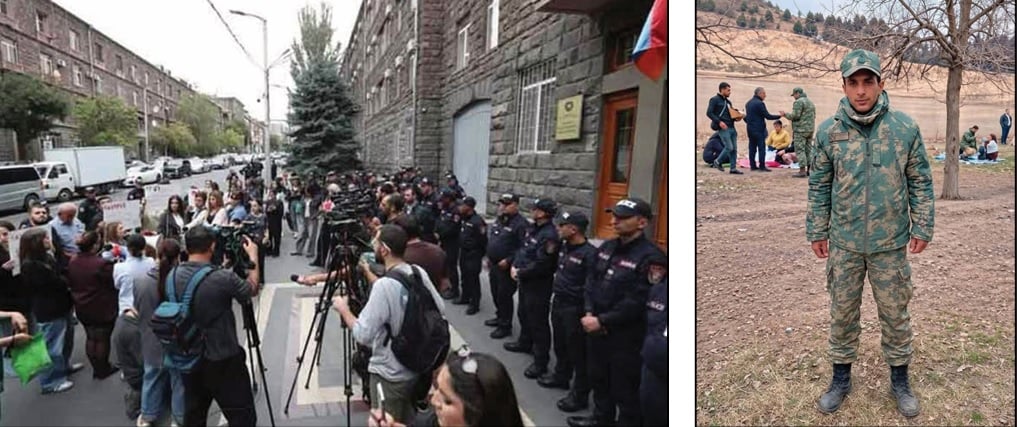
Αρμενικό δικαστήριο διέταξε την προφυλάκιση, για διάστημα δύο μηνών, του Αζέρου στρατιωτικού Νασίμ Ογλού Ραχίμ Μουσάγιεβ, ο οποίος κατηγορείται ότι πέρασε παράνομα στην Αρμενία και πυροβόλησε μια γυναίκα μέσα στο σπίτι της, στον οικισμό Σάκι της επαρχίας Σιουνίκ. Η πόλη απέχει 15 χιλιόμετρα από τα σύνορα και 3 χιλιόμετρα από την πόλη Σισιάν που είναι πόλη αδελφοποιημένη με την Νέα Σμύρνη.
Σε βάρος του Μουσάγιεβ έχουν απαγγελθεί συνολικά πέντε κατηγορίες, μεταξύ των οποίων παράνομη διέλευση των κρατικών συνόρων της Αρμενίας, λαθρεμπόριο στρατιωτικού υλικού, πυροβόλων όπλων και πυρομαχικών, παράνομη διακίνηση όπλων και πυρομαχικών, παράνομη είσοδος σε κατοικία παρά τη θέληση του ιδιοκτήτη και πρόκληση βαριάς σωματικής βλάβης υπό επιβαρυντικές περιστάσεις, μεταξύ άλλων με τη χρήση πυροβόλου όπλου.
Δύο από τις κατηγορίες προστέθηκαν την Παρασκευή. Αρχικά, η Γενική Εισαγγελία είχε ανακοινώσει κατηγορίες για πρόκληση βαριάς σωματικής βλάβης με τη χρήση όπλου, παράνομη κατοχή πυροβόλου όπλου και παραβίαση του απαραβίαστου της κατοικίας. Η παράνομη διέλευση των συνόρων δεν περιλαμβανόταν αρχικά, παρά το γεγονός ότι το ίδιο το Αζερμπαϊτζάν είχε επιβεβαιώσει πως ο στρατιωτικός είχε περάσει στην Αρμενία.
Την Παρασκευή οι εισαγγελικές αρχές ξεκίνησαν ξεχωριστή ποινική διαδικασία για την παράνομη διέλευση των συνόρων και το λαθρεμπόριο όπλων, η οποία στη συνέχεια συγχωνεύθηκε με την κύρια υπόθεση.
Σύμφωνα με τις αρμενικές αρχές, ο Μουσάγιεβ πέρασε παράνομα τα σύνορα και εισήλθε σε κατοικία στον οικισμό Σάκι την Πέμπτη 1η Οκτωβρίου. Όταν έγινε αντιληπτός, άνοιξε πυρ. Η 39χρονη ιδιοκτήτρια του σπιτιού τραυματίστηκε από σφαίρα στο πόδι, μπροστά στα τρία παιδιά της. Η γυναίκα διακομίστηκε αρχικά στο Ιατρικό Κέντρο Σισιάν και στη συνέχεια μεταφέρθηκε στο Γερεβάν. Η κατάστασή της είναι σταθερή και η ζωή της δεν διατρέχει κίνδυνο.
Κατά τη διάρκεια του περιστατικού τραυματίστηκαν επίσης δύο από τα παιδιά της. Σύμφωνα με το Armenpress, πρόκειται για ένα 15χρονο παιδί, το οποίο υπέστη κάταγμα στον δεξιό καρπό, και ένα 12χρονο, που υπέστη κάκωση μαλακών μορίων. Η κατάσταση της υγείας τους χαρακτηρίζεται ικανοποιητική, ενώ τα παιδιά έλαβαν ιατρική και ψυχολογική υποστήριξη.
Μετά το περιστατικό, ο Μουσάγιεβ διέφυγε από το σπίτι. Εντοπίστηκε αργότερα σε άλλη διεύθυνση στον ίδιο οικισμό και συνελήφθη. Σύμφωνα με τις τοπικές αρχές, όταν εντοπίστηκε δεν φορούσε στρατιωτική στολή. Οι αστυνομικοί ακολούθησαν ίχνη αίματος που είχε αφήσει πίσω του, καθώς και ο ίδιος είχε τραυματιστεί. Μετά τη σύλληψή του μεταφέρθηκε με ασθενοφόρο υπό αστυνομική φρουρά.
Ιδιαίτερη σημασία έχει το γεγονός ότι το περιστατικό σημειώθηκε μόλις δύο ημέρες μετά την επίσημη ενημέρωση της αρμενικής πλευράς από την Υπηρεσία Κρατικής Ασφάλειας του Αζερμπαϊτζάν. Στις 29 Σεπτεμβρίου, το Μπακού είχε ενημερώσει την Εθνική Υπηρεσία Ασφάλειας της Αρμενίας ότι ένας στρατιώτης είχε εγκαταλείψει τη μονάδα του υπό άγνωστες συνθήκες και ότι δεν μπορούσε να αποκλειστεί το ενδεχόμενο να είχε περάσει στην Αρμενία.
Μετά την ενημέρωση αυτή, αρμενικές και αζερικές υπηρεσίες ξεκίνησαν επιχειρήσεις για τον εντοπισμό του. Ωστόσο, ο Μουσάγιεβ κατάφερε να φτάσει σε κατοικημένη περιοχή του Σιουνίκ και να εισέλθει σε σπίτι, όπου άνοιξε πυρ εναντίον μιας οικογένειας.
Η εξέλιξη αυτή δημιουργεί ερωτήματα για το πώς ένας ένοπλος στρατιωτικός, για την παρουσία του οποίου είχε ήδη ενημερωθεί το Γερεβάν, κατάφερε να φτάσει μέχρι κατοικημένη περιοχή χωρίς να εντοπιστεί. Παραμένει επίσης άγνωστο εάν οι κάτοικοι του Σάκι και των γειτονικών κοινοτήτων είχαν ενημερωθεί για την πιθανή παρουσία ένοπλου Αζέρου στρατιωτικού στην περιοχή.
Η υπόθεση έχει προκαλέσει αντιδράσεις στην Αρμενία. Την Παρασκευή, η νεολαία της Αρμενικής Επαναστατικής Ομοσπονδίας (ARF) πραγματοποίησε συγκέντρωση διαμαρτυρίας έξω από το κτίριο της Εθνικής Υπηρεσίας Ασφάλειας στο Γερεβάν. Οι διαδηλωτές ζήτησαν να μην παραδοθεί ο Μουσάγιεβ στο Αζερμπαϊτζάν χωρίς όρους και προϋποθέσεις και να εξεταστεί το ενδεχόμενο ανταλλαγής του με Αρμένιους που κρατούνται στο Αζερμπαϊτζάν.
Η Γενική Εισαγγελία του Αζερμπαϊτζάν ανακοίνωσε το βράδυ της Πέμπτης ότι ξεκίνησε δική της ποινική έρευνα σχετικά με την παράνομη είσοδο του στρατιωτικού στην Αρμενία. Το υπουργείο Άμυνας του Αζερμπαϊτζάν, ωστόσο, δεν έχει μέχρι στιγμής προβεί σε επίσημη δήλωση για την υπόθεση.
Το περιστατικό θυμίζει ανάλογη υπόθεση που σημειώθηκε στο Σιουνίκ τον Απρίλιο του 2023, όταν δύο Αζέροι στρατιωτικοί εγκατέλειψαν τις θέσεις τους και πέρασαν στην Αρμενία. Ο ένας, ο Χουσεΐν Αχούντοφ, καταδικάστηκε αργότερα σε ισόβια κάθειρξη για τη δολοφονία Αρμένιου φρουρού ασφαλείας, ενώ ο δεύτερος καταδικάστηκε σε 11 χρόνια φυλάκισης. Τον Δεκέμβριο του 2023, και οι δύο επέστρεψαν στο Αζερμπαϊτζάν στο πλαίσιο ανταλλαγής κρατουμένων, κατά την οποία το Μπακού απελευθέρωσε 32 Αρμένιους κρατουμένους.
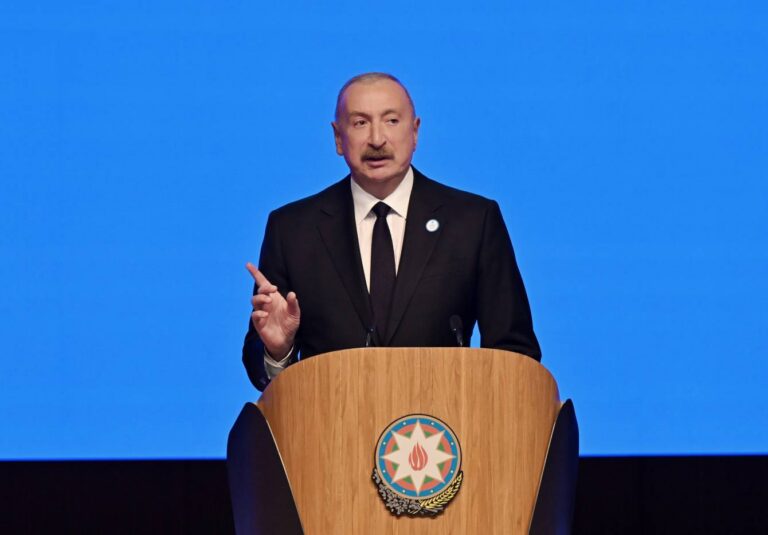
Ο Αλίγιεφ αποκαλεί τους πρώην ηγέτες της Αρμενίας και του Αρτσάχ «εγκληματίες πολέμου» και δηλώνει ότι το Αζερμπαϊτζάν πρέπει να είναι «δέκα φορές ισχυρότερο»
Ο Αλίγιεφ έχει δικαίωμα να υπερασπίζεται τα συμφέροντα του Αζερμπαϊτζάν. Δεν έχει, όμως, το δικαίωμα να μετατρέπει την ισχύ των όπλων σε μέτρο δικαιοσύνης, να αποδίδει συλλογική ενοχή σε έναν ολόκληρο λαό και ταυτόχρονα να ζητά από τον κόσμο να πιστέψει ότι η στρατιωτική υπεροχή αποτελεί εγγύηση ειρήνης.
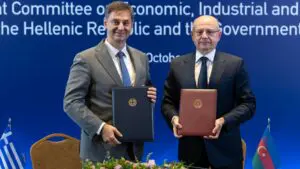
Ενώ στην Αθήνα πραγματοποιούνταν η 6η Σύνοδος της Μικτής Διυπουργικής Επιτροπής Ελλάδας–Αζερμπαϊτζάν και το Επιχειρηματικό Συνέδριο Ελλάδας–Αζερμπαϊτζάν, με τη συμμετοχή του Χάρη Θεοχάρη και του Αζέρου υπουργού Ενέργειας για την διεύρυνση της διμερούς συνεργασίας, ο Αλίγιεφ την ίδια ημέρα εκφωνούσε μια ιδιαίτερα σκληρή ομιλία για την Αρμενία, μιλώντας για στρατιωτική υπεροχή «δέκα φορές μεγαλύτερη»
Σε μια ακόμη επιθετική και αποκαλυπτική ομιλία του, στις 2 Οκτωβρίου στο Μπακού, ο Ιλχάμ Αλίγιεφ αποκάλεσε συλλήβδην τους πρώην ηγέτες της Αρμενίας «εγκληματίες πολέμου» και δήλωσε ότι «πρέπει να εκτίσουν τις ποινές τους», χωρίς να αναφέρει συγκεκριμένες δικαστικές καταδίκες ή να εξετάζει ατομικές ευθύνες.
Παράλληλα, παρουσίασε τον πόλεμο του 2020 και την επίθεση του Αζερμπαϊτζάν στο Αρτσάχ τον Σεπτέμβριο του 2023 ως «στρατιωτικές νίκες» και ως αποκατάσταση της εδαφικής ακεραιότητας της χώρας του. Ωστόσο, στην ίδια ομιλία παραδέχθηκε ότι το Μπακού πραγματοποίησε ενδιάμεσες στρατιωτικές επιχειρήσεις προκειμένου να αλλάξει τις συνθήκες επί του πεδίου και να προετοιμάσει την τελική επίθεση του 2023.
Η επίθεση της 19ης Σεπτεμβρίου 2023, μετά από εννέα μήνες αποκλεισμού του Αρτσάχ, κατέληξε στην κατάλυση της de facto αρμενικής διοίκησης και στη μαζική εκτόπιση του αρμενικού πληθυσμού. Ο Αλίγιεφ εξακολουθεί να την αποκαλεί «αντιτρομοκρατική επιχείρηση» και να πανηγυρίζει την έκβασή της.
Την ίδια στιγμή, ενώ δηλώνει ότι «δεν υπάρχει πλέον σύγκρουση» και ότι υπάρχει ειρήνη στα σύνορα, ανακοινώνει ότι το Αζερμπαϊτζάν πρέπει «πάντα να είναι δέκα φορές ισχυρότερο» από την Αρμενία. Περίπου 9 δισεκατομμύρια μανάτ, σύμφωνα με τον ίδιο, θα κατευθυνθούν σε ζητήματα άμυνας και ασφάλειας.
Ο Αλίγιεφ δεν περιορίστηκε στην αναφορά του παρελθόντος. Καθιέρωσε ουσιαστικά την 8η Νοεμβρίου 2020 και την 20ή Σεπτεμβρίου 2023 ως δύο κεντρικές ημερομηνίες της κρατικής αφήγησης του Αζερμπαϊτζάν. Την πρώτη ως «ημέρα νίκης» του πολέμου των 44 ημερών και τη δεύτερη ως την ημέρα κατά την οποία, σύμφωνα με την επίσημη αζερική αφήγηση, αποκαταστάθηκε πλήρως η κυριαρχία του Μπακού στο Αρτσάχ. Και ενώ μιλά για ειρήνη, ο ίδιος ο Αλίγιεφ δηλώνει ότι η χώρα του πρέπει να είναι «δέκα φορές ισχυρότερη» από την Αρμενία και αφήνει να εννοηθεί ότι, αν το Αζερμπαϊτζάν δεν είχε «σταματήσει εγκαίρως», μια τρίτη Αψίδα του Θριάμβου θα μπορούσε να βρίσκεται σήμερα στο κέντρο του Γερεβάν. Πρόκειται για μια ευθεία υπενθύμιση ότι, πίσω από τη σημερινή ρητορική περί ειρήνης, το Μπακού εξακολουθεί να αντιλαμβάνεται τη στρατιωτική ισχύ και την επιβολή ως βασικά εργαλεία της πολιτικής του. Παράλληλα, κατηγόρησε τους Αρμενίους για «αχαριστία» και υποστήριξε ότι «μας μαχαίρωσαν πισώπλατα», επαναφέροντας γνωστά μοτίβα της τουρκοαζερικής ρητορικής περί αρμενικής «προδοσίας».
Οι δηλώσεις αυτές αποκαλύπτουν μια σοβαρή αντίφαση. Από τη μία πλευρά το Μπακού μιλά για ειρήνη, εμπόριο και τέλος της σύγκρουσης και από την άλλη, ο πρόεδρός του μιλά για μόνιμη στρατιωτική υπεροχή, χαρακτηρίζει ολόκληρες πολιτικές ηγεσίες «εγκληματίες πολέμου» και αφήνει ανοιχτές απειλητικές αναφορές ακόμη και για το Γερεβάν.
Η ειρήνη δεν οικοδομείται με το «να είμαστε δέκα φορές ισχυρότεροι», ούτε με απειλές, ιστορικούς συμψηφισμούς και συλλογικές κατηγορίες. Και ασφαλώς δεν οικοδομείται όταν η στρατιωτική κατάκτηση μιας περιοχής και η εκδίωξη του γηγενούς πληθυσμού παρουσιάζονται ως λόγος εθνικής υπερηφάνειας.
Ο Αλίγιεφ έχει δικαίωμα να υπερασπίζεται τα συμφέροντα του Αζερμπαϊτζάν. Δεν έχει, όμως, το δικαίωμα να μετατρέπει την ισχύ των όπλων σε μέτρο δικαιοσύνης, να αποδίδει συλλογική ενοχή σε έναν ολόκληρο λαό και ταυτόχρονα να ζητά από τον κόσμο να πιστέψει ότι η στρατιωτική υπεροχή αποτελεί εγγύηση ειρήνης.
Η πραγματική ειρήνη δεν χρειάζεται δέκα φορές περισσότερα όπλα. Χρειάζεται σεβασμό, αυτοσυγκράτηση, δικαιοσύνη και κυρίως εγκατάλειψη της λογικής ότι ο ισχυρότερος έχει πάντα δίκιο.
Και η Ελλάδα δεν πρέπει να είναι συμμέτοχη σε αυτή την λογική.
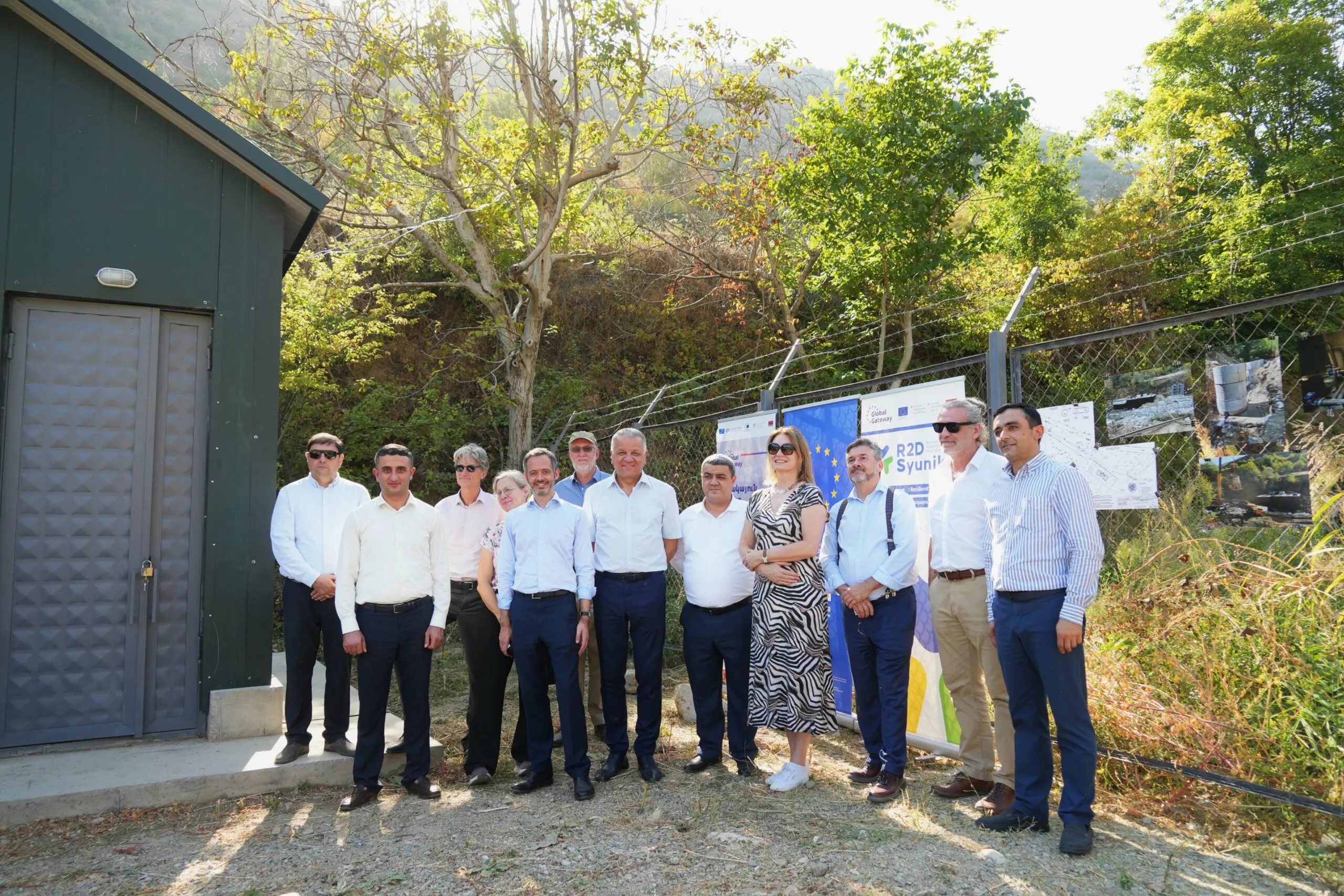
Οι πρέσβεις των χωρών της ΕΕ στο Σουνίκ της Αρμενίας
Σύμφωνα με την πρεσβεία της Ολλανδίας στην Αρμενία, «αυτές οι συναντήσεις αποτελούν μια σημαντική πλατφόρμα όχι μόνο για την αποτίμηση των αποτελεσμάτων, αλλά και για τον από κοινού καθορισμό των μελλοντικών κατευθύνσεων της συνεργασίας μας.
Οι πρέσβεις των κρατών μελών της ΕΕ με τον πρέσβη της ΕΕ στη Αρμενία Βασίλη Μαραγκό συνόψισαν τα αποτελέσματα του έργου που πραγματοποιήθηκε στο πλαίσιο της πρωτοβουλίας «Βιώσιμο Σουνίκ — Ομάδα της Ευρώπης» και συζήτησαν τις μελλοντικές προτεραιότητες της διοίκησης της περιφέρειας Σουνίκ.
Σύμφωνα με την πρεσβεία της Ολλανδίας στην Αρμενία, «αυτές οι συναντήσεις αποτελούν μια σημαντική πλατφόρμα όχι μόνο για την αποτίμηση των αποτελεσμάτων, αλλά και για τον από κοινού καθορισμό των μελλοντικών κατευθύνσεων της συνεργασίας μας.
Ήταν ιδιαίτερα πολύτιμο να ακούσουμε την άποψη της περιφερειακής διοίκησης σχετικά με αυτό το θέμα», σημείωσε η πρέσβης της Ολλανδίας Μαρίκε ΜονρόιΒίντερ.
Κατά τη διάρκεια της επίσκεψης, τα μέλη της αντιπροσωπείας επισκέφθηκαν γαλακτοκομείο στο Καπάν, ενημερώθηκαν για τις εργασίες βελτίωσης της πρόσβασης σε πόσιμο νερό στο Λεχβάζ και επισκέφθηκαν την εταιρεία MeghriFruits.
Με την υποστήριξη του οργανισμού «Ομάδα Ευρώπη», η εταιρεία MeghriFruits επέκτεινε την παραγωγή της, δημιούργησε νέες θέσεις εργασίας και εισήλθε σε νέες εξαγωγικές αγορές.















 ΑΝΑΡΤΗΣΕΙΣ ΜΕ ΣΗΜΑΣΙΑ2 μήνες πριν
 GEOPOLITICO1 μήνα πριν

 ΑΝΑΡΤΗΣΕΙΣ ΜΕ ΣΗΜΑΣΙΑ2 μήνες πριν
 GEOPOLITICO3 εβδομάδες πριν
 Αναλύσεις3 μήνες πριν